Luxury & premium e-commerce growth slows to 1.8% as industry enters “structural shift”, says Tradebyte report
Surge years give way to a new phase of disciplined growth driven by algorithmic discovery, price transparency and marketplace-led distribution. Read our quick overview with more details below.
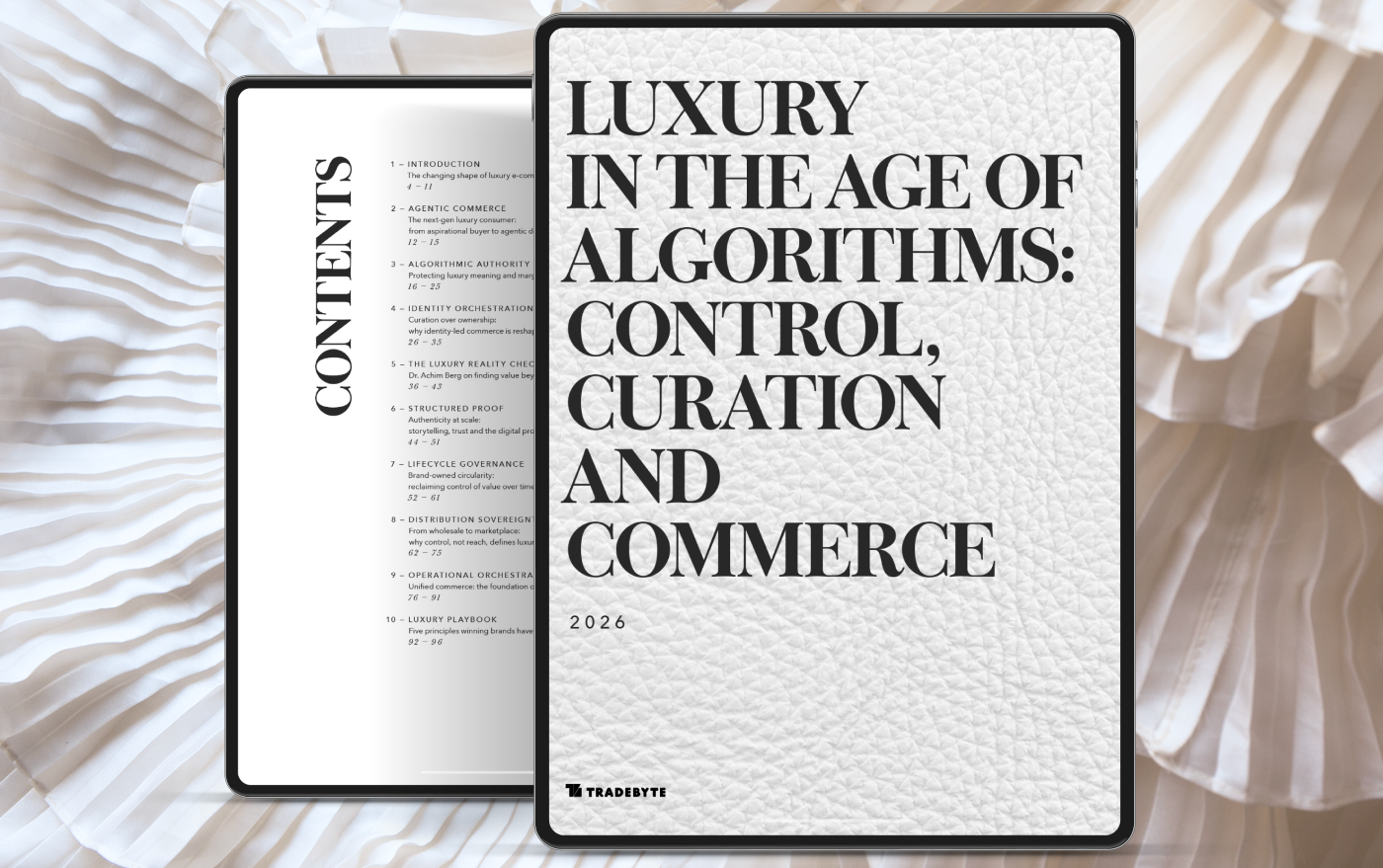
London, UK & Ansbach, Germany – 31st March 2026: Tradebyte, Europe’s leading integrator for fashion and lifestyle brands, today launched its latest report, “Luxury in the Age of Algorithms: Control, Curation and Commerce 2026”.
The report finds luxury digital commerce entering a new, more complex phase in which growth is increasingly shaped by control, curation and operational discipline rather than reach alone. As a result, many brands are shifting away from traditional wholesale distribution toward marketplace-led commerce to maintain pricing authority and brand control in an increasingly AI-driven retail landscape.
Across the Tradebyte ecosystem, luxury and premium e-commerce growth slowed to 1.8% in 2025, signalling the end of the sector’s recent surge years and a transition to more disciplined growth. Rather than declining demand, the report identifies this as a normalisation phase, driven by a structural shift in how luxury products are discovered, evaluated and purchased online. Accessibility, digital maturity and perceived value are driving performance further down the price spectrum, blurring traditional category boundaries.
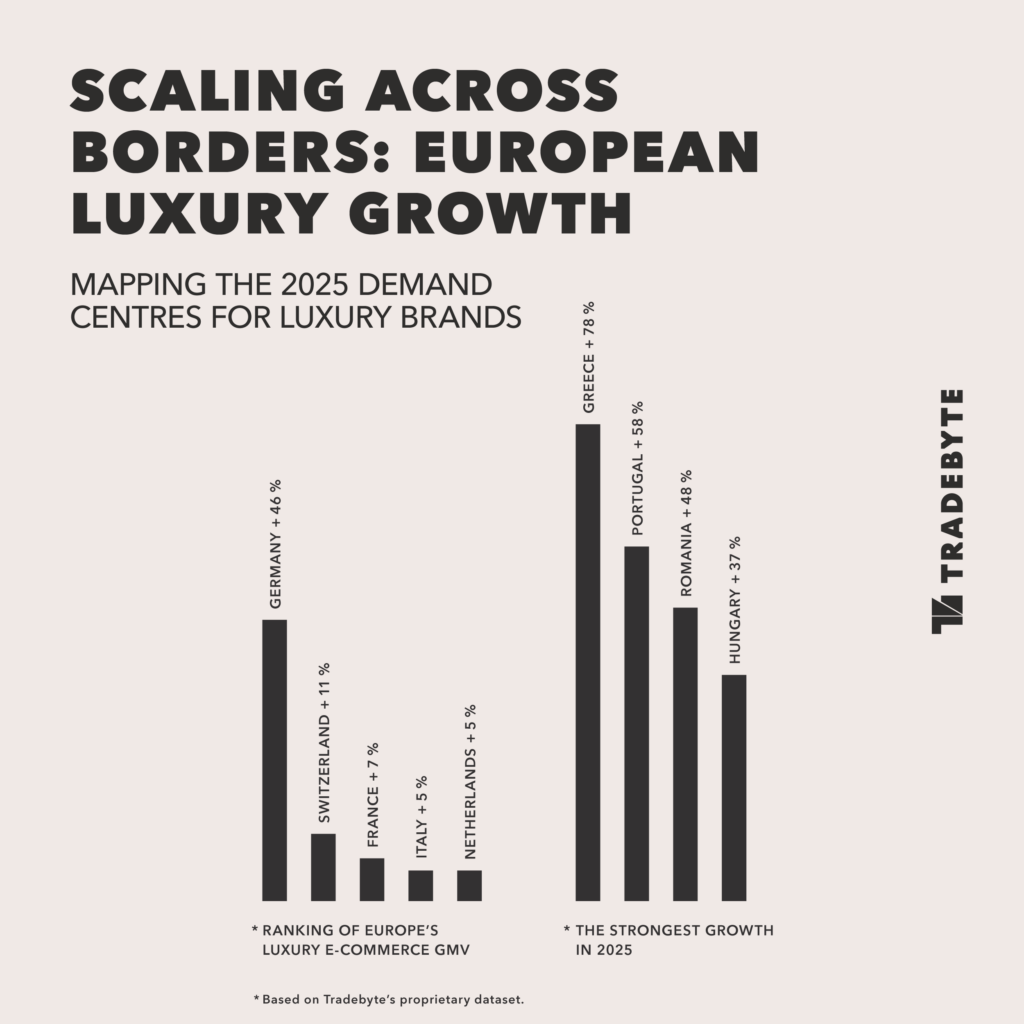
Tradebyte’s data also highlights a rebalancing of European luxury demand. Germany continues to dominate EU luxury e-commerce GMV with 46% share, while smaller markets such as Greece (+78%), Portugal (+58%) and Romania (+48%) recorded the fastest growth across the ecosystem in 2025. The UK experienced a sharp decline in GMV in 2025.
Four forces reshaping luxury commerce
According to the report, four structural pressures are redefining luxury e-commerce:
- AI-driven discovery, compressing comparison and purchase decisions
- Curated ecosystems replacing brand-led navigation, weakening traditional loyalty
- Radical price transparency as platforms surface and compare prices instantly
- Growing operational complexity as brands expand across regions, platforms and partners
As AI assistants increasingly default to recommending the lowest available price, pricing consistency has become inseparable from brand value. In this environment, brands that are absent from marketplaces risk losing influence over how their products are surfaced, compared and justified.
“During the frenzy, brands were dreaming the dream of reaching full direct-to-consumer. This meant eliminating wholesale and avoiding platforms. The idea was: full customer control, channel control and pricing control,” commented Dr. Achim Berg, Founder & Managing Director, FashionSIGHTS, in an interview for the report. “But now, in a world of declining sales, managers are more pragmatic. We see few brands pulling out of platforms these days. They cannot afford to. They want to reach broader customer groups.”
Brands shift from wholesale to marketplaces
The report explores how many luxury brands are reassessing traditional wholesale distribution as AI-driven commerce increases price transparency across digital channels.
Retailer-controlled pricing, fragmented product data, and inconsistent brand presentation can now be surfaced instantly by algorithms that compare products across platforms. As a result, more brands are adopting marketplace and hybrid distribution strategies to retain greater control over pricing, product data and brand presentation.
However, the report warns that executing a marketplace-led strategy introduces new operational complexity. Pricing consistency, inventory exposure and fulfilment performance must be coordinated across multiple platforms simultaneously.
Without unified systems, brands risk fragmented product data, inconsistent pricing signals and margin leakage. This makes unified commerce infrastructure critical, enabling brands to manage complexity and coordinate pricing, inventory and product data across marketplaces while maintaining consistent brand presentation.
“Luxury in the Age of Algorithms: Control, Curation and Commerce in 2026” is available to download now. If you’re interested in learning more about the future of the marketplace business, Tradebyte will be hosting the 11th edition of its ECD event in Munich on 12th May, featuring speakers from Adidas, TikTokShop, Nike, About You and Guess. Find more information at https://ecd-gate.com/.
Ends
Tradebyte makes e-commerce smarter and more sustainable, helping fashion and lifestyle brands optimise digital retail for long-term, profitable growth. It combines domain expertise, analytics, and steering tools to drive efficiency. Its 360° control panel ensures a unified view for agility across marketplaces, webshops, and fulfilment.
Supporting over 1,000 brands, including Jack1t, Tom Tailor, and Marc O’Polo, Tradebyte seamlessly connects to more than 90 top marketplaces such as ASOS, Zalando and TikTok Shop.
Founded in 2009, Tradebyte has been an independent Zalando subsidiary since 2016.