Best multi-brand channels in Germany & why customers love them
Discover the best multi-brand channels in Germany and learn why customers rave about their exceptional service and diverse product offerings.

For years, the idea was simple: Build your own shop, control the story, and own the customer. And for a while, yes, that worked. Then costs went up, attention got expensive, and customers kept shopping the same way they always had.
They didn’t stay loyal to one channel. They didn’t wait patiently inside one brand space. They moved, compared, checked and… left. Came back somewhere else.
That’s where multi-brand channels slipped back into the spotlight – as the place where decisions actually happen.
If you want to understand the best channels for brands in Germany in 2026, you need to start with behavior. Not strategy decks, not channel theory. Just people doing what feels easiest.
And in Germany, ease matters a lot.
What shoppers in Germany really do before they buy
German shoppers rarely go straight from “I want this” to “I buy it” in one click. They pause – check – compare.
A typical journey looks messy on paper but logical in real life. Someone sees a product somewhere. Maybe online, maybe in a store window. They don’t buy yet but open another tab or visit another shop. They also look for alternatives, check if it’s available nearby. And it’s no surprise anymore. People just want to feel confident before committing.
Multi-brand channels sit right in the middle of the journey.
They are the places people use to orient themselves. To understand price ranges, see how a product compares to others, answer the quiet question every shopper has: “Is this actually the right choice?”
Most customers don’t stick to one place because one place rarely gives the full picture. They want:
- context,
- options,
- and to know what else is out there before they decide.
That behavior is especially strong in Germany. Shoppers here tend to value careful decisions. They dislike surprises, just want clarity before spending money.
So instead of thinking in terms of “first click” or “last click,” it helps to think in terms of “decision space.” And in Germany, that space is very often a multi-brand environment.
Why people love multi-brand channels
There’s a simple reason customers feel more relaxed inside multi-brand channels.
They don’t feel pushed and they give opportunities.
When brands sit next to each other, the pressure drops. The customer is no longer inside a sales narrative, but inside a comparison space. And that changes everything.
Prices feel more grounded, assortments feel wider, and choices feel more honest. Customers can see variations, similar products, and different price points. That transparency builds trust without saying a word.
In Germany, this matters a lot. Shoppers here tend to research carefully and dislike friction in the buying process. They don’t want to jump through hoops to validate a decision. They want the validation built into the experience.
Multi-brand channels do exactly that.
- They remove the need to second-guess.
- They reduce the fear of overpaying.
- They make the decision feel informed, not emotional.
This is a big reason why these remain some of the best channels for brands in Germany – because they feel neutral. And neutrality builds confidence.
Offline still matters — and multi-brand stores win here
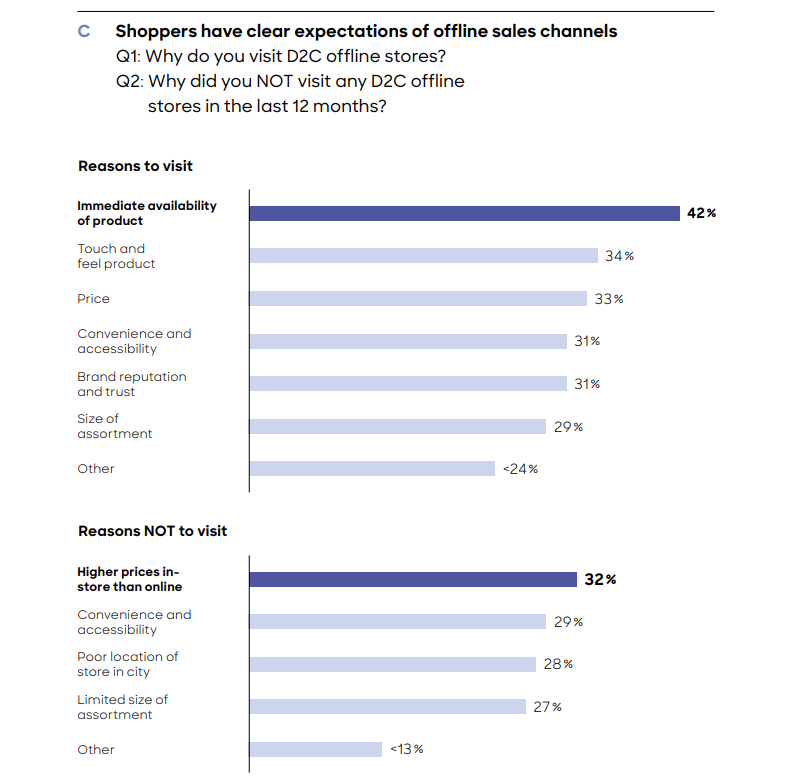
Physical retail in Germany never disappeared, it just became more selective. People don’t go to stores to browse endlessly anymore. They go with intent, want immediacy, want confidence, or to see the product now to know if it’s the right one.
Offline multi-brand channels match that mindset perfectly.
You walk in. You see options side by side. You touch the product and compare quality, fit, or finish on the spot. No waiting, guessing, and wondering if the alternative would have been better.
Single-brand stores often struggle here. They show one perspective and one price range. If something doesn’t fit or doesn’t feel right, the journey ends.
Multi-brand stores keep the journey going. Just see:
- If one option doesn’t work, there’s another right next to it.
- If one brand feels too expensive, there’s context for why.
- If a customer wants reassurance, the assortment provides it.
This matches how people shop in real life. Especially in Germany, where efficiency and clarity tend to beat spectacle.
Online multi-brand channels: where discovery actually happens
Online, the role of multi-brand channels becomes even clearer.
They work as comparison engines without feeling technical and act as inspiration hubs without forcing commitment. They also help shoppers narrow down choices without locking them in.
When people browse online multi-brand platforms, they’re often not ready to buy yet. They’re exploring, checking what exists, learning price ranges, and understanding what’s popular or available.
And very often, this is where the decision is shaped, even if the purchase happens somewhere else. The story may be simple:
- A customer might discover a product online.
- Then check availability offline.
- And in the end, they buy through social media.
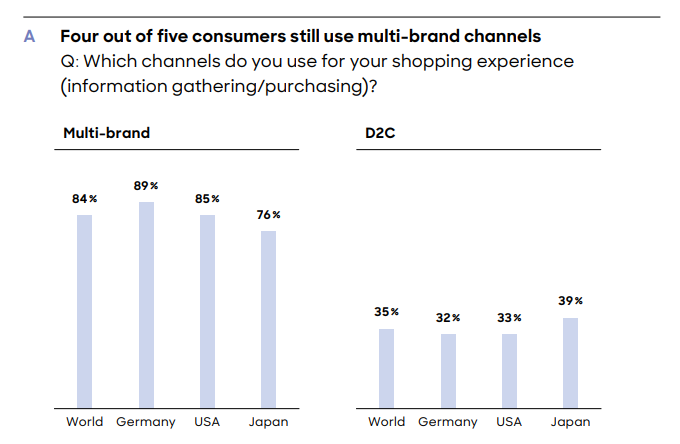
That makes online multi-brand channels decision-makers. And 84% of consumers access multi-brand channels, either online or offline.
They influence what ends up on the shortlist, define what feels “reasonable”, and frame expectations before money changes hands.
For the best channels for brands in Germany, visibility during this phase matters more than ownership of the final click.
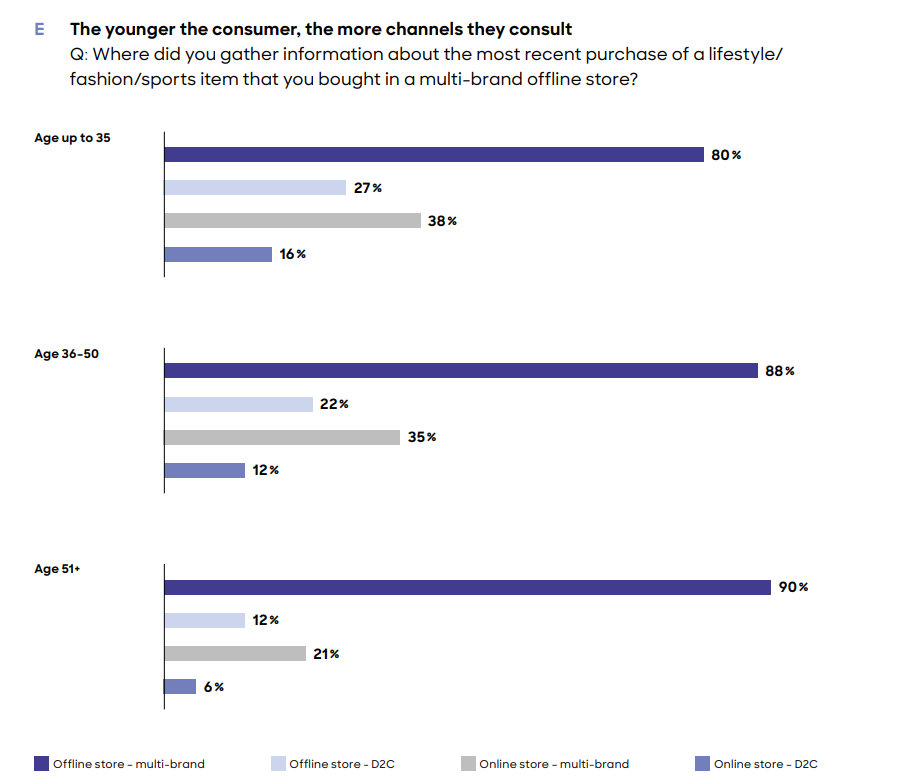
Younger shoppers, more channels, more jumping around
Age changes the pace. Younger shoppers tend to move faster. They switch channels more often and check more places in less time. That means they’re efficient in a different way. They:
- Scroll, compare, save, exit, return.
- Expect information to be available instantly.
- Don’t commit early.
If customers move this fast, where do brands need to show up? They need to be present where comparison happens, because that’s where decisions stabilize.
Multi-brand platforms give younger shoppers a reference point. A place to pause the chaos. A way to say, “Okay, these are my options.”
Without that anchor, the journey stays fragmented. With it, the path becomes clearer.
A short list of the best multi-brand channels in Germany in 2026
1. Amazon.de — Germany’s largest online marketplace, broadest reach across categories and demographics with massive visitor traffic and high conversion potential.
2. Zalando.de — Fashion-focused platform with strong discovery and inspiration features. It’s a key multi-brand channel for apparel, shoes, and accessories.
3. Otto.de — One of Germany’s biggest home-grown marketplaces, especially strong in fashion, lifestyle, and home categories with loyal local customers.
4. Kaufland.de — Rapidly growing general marketplace covering electronics, household goods, toys, and more, with strong local price visibility.
5. eBay.de — A long-standing generalist platform with a mix of new and used goods, offering flexible selling formats.
6. About You — A fashion and lifestyle marketplace gaining traction with younger shoppers and mobile-first audiences.
7. Niche & Specialized Marketplaces — Platforms like Etsy (for handmade/creative goods) or vertical niche marketplaces in electronics and hobby categories also act as multi-brand channels depending on product fit.
The role of multi-brand channels inside a smart channel mix
Strong channel setups don’t ask one channel to do everything. Each channel has a role. Some drive discovery, others support trust. Some help with immediacy, some work better for repeat purchases. Problems start when brands expect a single channel to cover the full journey.
Multi-brand channels play a specific role here:
- They create reach without heavy investment.
- They place brands inside real comparison moments.
- They scale visibility across regions and customer groups.
That’s why they sit comfortably next to other channels instead of competing with them. A smart mix lets multi-brand environments handle discovery and validation, while other channels focus on deeper engagement or availability.
This approach also reflects how people actually move. They mix online and offline, gather information in one place and buy in another. A channel mix that mirrors this behavior feels natural rather than forced.
For brands thinking about the best channels for brands in Germany, this balance matters more than perfection. The goal is presence where decisions form, not dominance everywhere.
What makes a multi-brand channel “the best” for brands in Germany
Not every multi-brand setup delivers the same value. The strongest multi-brand channels share a few quiet traits.
- Visibility comes first
Brands need to be easy to find inside the platform or store, not buried among noise. If customers have to work to notice you, the moment is already lost.
- Consistency follows
Prices, availability, and presentation should feel aligned with what customers expect elsewhere. German shoppers notice gaps quickly. Inconsistencies create doubt, even when the product is solid.
- Customer flow matters too
The best channels guide people naturally from browsing to decision. They don’t overwhelm. They don’t rush. They respect how long it takes customers to feel confident.
- Finally, fitting in with local shopping habits makes the difference
Channels that reflect how people in Germany research, compare, and buy tend to outperform those built for other markets. This includes how information is shown, how options are grouped, and how transparent the experience feels.
Brands just need to ask themselves if a channel supports these basics without adding friction. That’s often enough to separate the best from the rest.
Why customers keep coming back to multi-brand channels
At this point, you perhaps know the answer. Customers return for very simple reasons:
- They recognize the space.
- They know how it works.
- They trust what they see.
Multi-brand channels reduce effort. People don’t have to relearn the rules every time they shop. They know where to look for alternatives. They know how prices usually behave. That familiarity lowers the mental load.
Plus, seeing multiple brands together reassures customers that they’re making a grounded choice. They feel informed, not rushed. That feeling sticks.
And even after a purchase, many customers remember where they checked options. Next time, they go back to the same place because it helped them decide before.
This pattern shows up again and again in Germany, where careful evaluation is part of the shopping culture.
Customers come back because the experience respects how they think. Brands benefit because that thinking leads to real decisions. And that quiet alignment is hard to beat in 2026.
Over to you
Customers want a low-effort path to a good decision, and multi-brand channels fit that rhythm naturally. They sit where comparison happens, where trust forms, and where choices feel grounded rather than forced. So, if you are looking for the best channels for brands in Germany, look around here.