OOH delivery in DACH: Why consumers love it
Uncover the reasons behind the rising popularity of OOH delivery in the DACH region. Learn how it meets consumer needs for convenience and efficiency.
OOH delivery did not grow in DACH because e-commerce suddenly changed. It grew because everyday life did.
For years, home delivery shaped how people imagined online shopping. A courier arrived. Someone waited. A bell rang. That system worked when shopping online felt occasional. It started to strain once parcels became part of weekly routines.
In Germany, Austria, and Switzerland, people live faster, move more, and expect services to adapt around them. OOH delivery stepped into that gap quietly. Not as a bold innovation, but as a practical adjustment to how people already live.
Let’s unpack why consumers truly love OOH delivery in DACH — and why this model is shaping e-commerce.
How OOH delivery in DACH became mainstream
Europe adopted OOH delivery earlier than most regions, and DACH followed naturally. According to DHL’s e-commerce research, 35% of European shoppers already choose out-of-home locations for parcel delivery, compared with 25% globally.
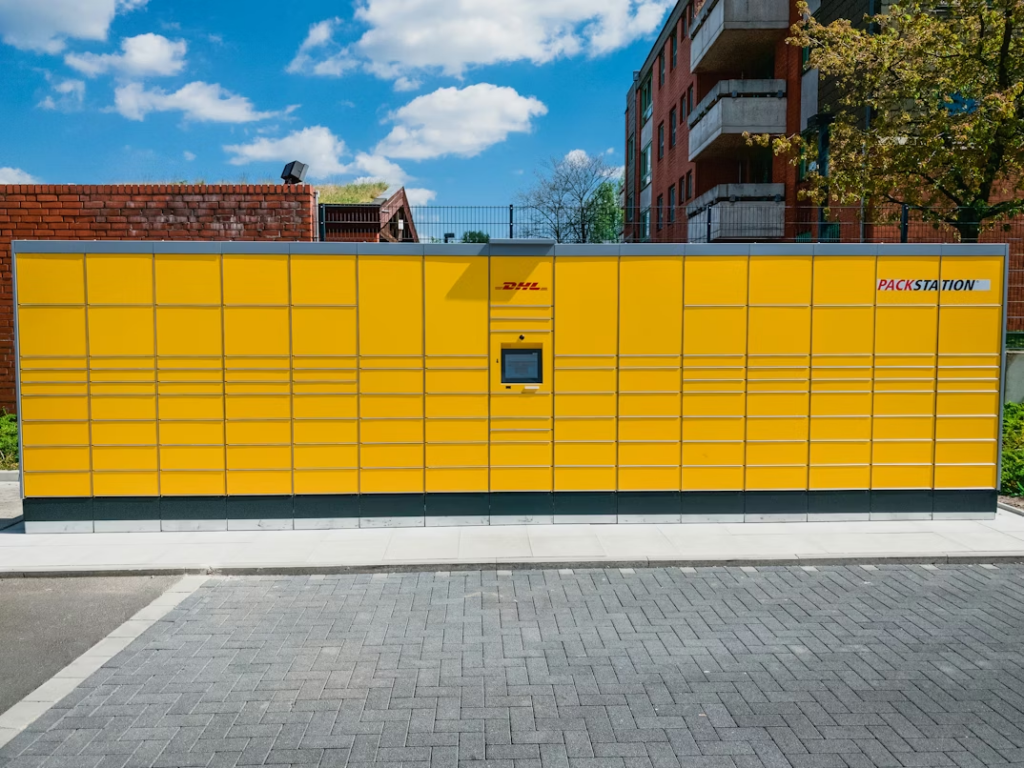
That difference signals maturity. OOH in DACH grew because infrastructure already existed. Cities are dense. Public transport is reliable. Retail locations sit close to residential areas. Adding lockers and parcel shops did not require consumers to change habits. It simply extended them.
What truly pushed OOH delivery in this region into the mainstream was repetition.
Consumers simply encountered lockers and parcel shops often enough that using them felt natural. Once pickup points appeared near supermarkets, transit stops, and residential areas, OOH delivery stopped feeling like a separate activity. It became part of the same flow as commuting, shopping, and running errands. Over time, familiarity replaced hesitation, and familiarity turned into preference.
Why convenience feels different in OOH in DACH
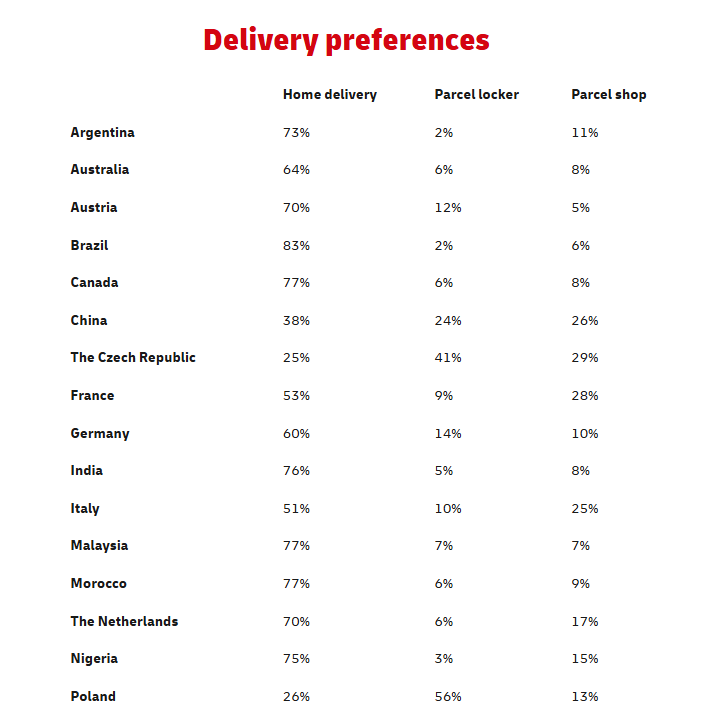
DACH consumers are pragmatic. Convenience means predictability for them. DHL’s data shows that 60% of shoppers in Germany still prefer home delivery. At the same time, 14% choose parcel lockers and 10% select parcel shops for delivery.
OOH delivery in DACH is redefining when and why it makes sense. Lockers remove the pressure to be present. Parcel shops add human interaction when needed. Consumers decide based on context.
But convenience in DACH also means a lot to mental relief.
Shoppers value knowing that a parcel is waiting safely, without needing to stay home or rearrange plans. This sense of calm matters more than shaving hours off delivery time. OOH delivery removes uncertainty, which reduces stress and builds confidence in the entire shopping process. That emotional benefit explains why many consumers choose lockers even when home delivery remains available.
Returns explain why OOH delivery feels natural
Returns behavior reveals real preferences faster than deliveries ever could. Across Europe, 53% of shoppers return items via parcel shops, while 26% use parcel lockers. Austria mirrors this pattern closely, with 45% choosing parcel shops and 47% lockers for returns!
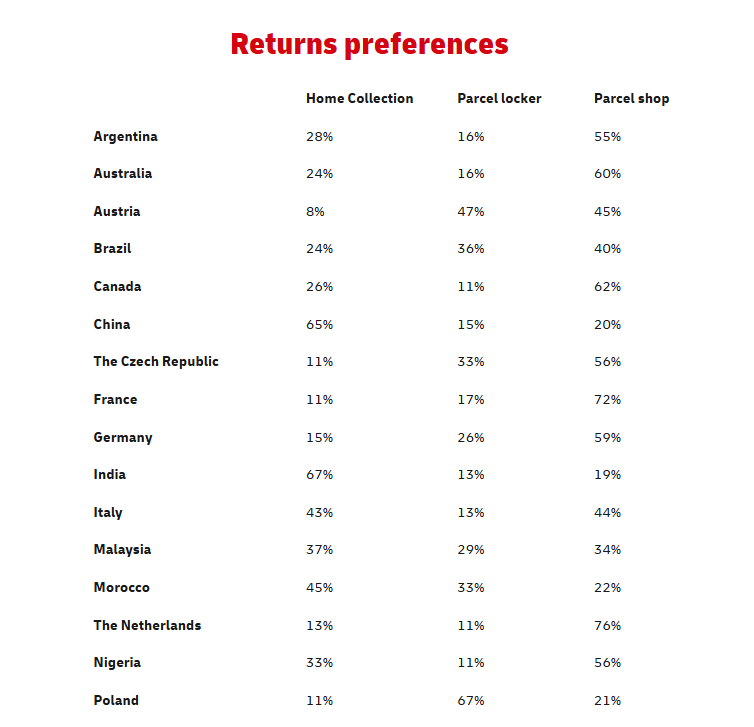
In addition, returns carry emotion. They involve uncertainty, time pressure, and effort. OOH delivery simplifies that moment. No waiting, scheduling, or awkward handovers.
So returns were the moment when trust formed. Dropping off a parcel without scheduling, printing labels, or interacting with a courier removes friction from an already uncertain situation. OOH turned returns into a quick task instead of a chore. Once consumers experienced that simplicity, the system felt dependable. That trust carried over into deliveries, where the same logic applied. OOH delivery became familiar through low-risk interactions before becoming a default choice.
Infrastructure density changed habits
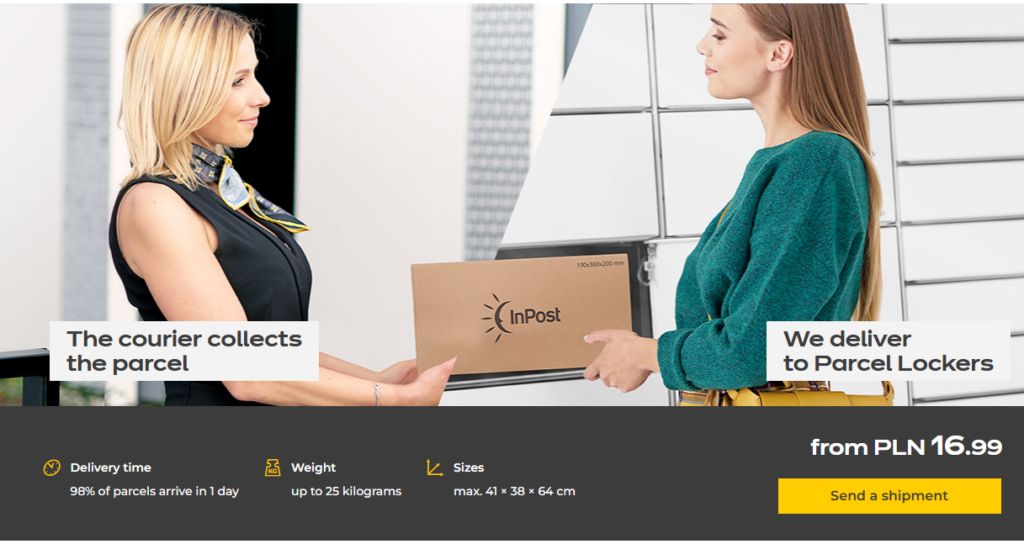
Let’s show Poland as a useful comparison point. The country operates more than 45,000 automated parcel machines and over 21,000 PUDO points. That scale reshaped daily behavior. The average distance to a locker in Polish urban areas is 350 meters, enabling 62% of users to collect parcels while already on the move.
OOH in DACH follows the same logic. The closer lockers sit to routine paths, the faster adoption grows. Convenience becomes invisible when access feels obvious.
Moreover, OOH delivery succeeded because access was visible and consistent. Consumers did not need to search for pickup points or learn new routes, because they appeared where people already passed every day. This constant visibility normalized the idea of collecting parcels outside the home. Over time, the presence of infrastructure shaped behavior without messaging. Habit followed proximity, and preference followed habit. That is why infrastructure mattered more than promotion.
Smart cities made OOH delivery feel expected
Cities across DACH increasingly treat logistics as part of infrastructure. As we have already mentioned, lockers appear almost in every strategic place: near transit hubs, supermarkets, petrol stations, and residential clusters. Their placement reflects how people move through space.
This integration matters. OOH delivery reduces failed attempts and unnecessary traffic without demanding effort from consumers. It supports walkability, cycling, and short trips naturally.
So we can say that OOH delivery aligns naturally with how modern cities function. Urban planning increasingly prioritizes walkability, reduced traffic, and mixed-use spaces. Lockers and parcel shops fit into this vision without disruption. They support shorter trips, reduce unnecessary vehicle stops, and blend into existing environments. For residents, OOH delivery feels like a logical extension of city life. It just works with the city instead of pushing against it.
Automation reshaped the last mile quietly
OOH delivery scales because automation made it efficient.
According to Alsendo’s analysis, a courier serving parcel lockers can deliver up to 1,500 parcels per day, compared with 150–250 parcels on traditional door-to-door routes.
That difference affects everyone involved. Routes stabilize. Costs drop. Delivery windows become predictable.
For consumers, this shows up as reliability. Parcels arrive when promised. Notifications match reality. Trust grows through consistency.
Behind the scenes, smarter routing and consolidated drop-offs reduced delays and inconsistencies. Consumers noticed this through accurate notifications and fewer delivery issues. OOH delivery benefited from this stability because lockers rely on precise timing and availability. When automation works well, the entire system feels dependable, even if users never see the technology itself.
Sustainability supports OOH delivery without effort
OOH models can cut CO₂ emissions by up to 82% compared to home delivery. The reduction comes from parcel consolidation and fewer failed attempts.
Consumers in DACH rarely cite emissions as their main motivation. Still, sustainability strengthens acceptance over time. People prefer systems that align with environmental goals without adding friction.
That quiet alignment matters in 2026. OOH delivery supports sustainability in a way that does not demand attention or sacrifice. Consumers are not asked to make greener choices actively. The system itself reduces unnecessary travel and wasted attempts. This passive benefit strengthens long-term acceptance, especially in regions where environmental awareness is high. OOH delivery fits neatly into broader expectations around responsible consumption, without requiring changes in behavior or mindset.
Generational differences shape how OOH delivery is used
Age influences behavior. DHL’s data shows that 27% of Gen Z and 23% of Millennials return parcels via lockers. Parcel shops dominate among Baby Boomers, with 54% preferring that option. Delivery preferences vary less. Home delivery still leads across generations. Experience reduces hesitation over time.
Once users learn the process, OOH delivery becomes routine regardless of age.
Of course, different age groups approach OOH delivery with different motivations. Younger consumers value flexibility and independence, while older users often appreciate structure and predictability. Despite these differences, experience tends to flatten the gap. Once the process feels familiar, age becomes less relevant. OOH delivery adapts well to varying needs, which allows it to serve a wide audience without customization or complexity.
OOH in DACH is moving toward shared networks
The next phase of OOH delivery in DACH focuses on openness.
GLS and DPD Germany jointly operate more than 10,000 shared OOH locations. Their goal is to reach 20,000 provider-open points in the coming years.
Shared networks reduce confusion. Consumers prefer one nearby solution that works across carriers. Retailers avoid redundant installations. Cities preserve space.
Shared OOH networks change how consumers perceive delivery infrastructure. When pickup points work across providers, the system feels simpler and more trustworthy. Shoppers no longer think in terms of carriers. They think in terms of locations. This shift reduces confusion and increases usage. OOH in DACH benefits from this approach because it treats delivery as a shared service.
Retailers discovered unexpected value
Retail partners such as Getränkemarkgrafen and INTERSPORT report increased foot traffic after adding OOH locations to their stores. Customers combine parcel pickup with shopping, turning logistics into a daily service touchpoint.
This model benefits both sides. Consumers save time. Retailers gain visibility and visits without aggressive promotion.
OOH delivery becomes part of neighborhood life. For retailers, OOH delivery added relevance beyond logistics. Pickup points bring regular foot traffic and keep stores connected to daily routines. Customers associate these locations with convenience and reliability, which reflects positively on the retail brand. Over time, OOH delivery turns physical locations into service hubs. That added role strengthens customer relationships without aggressive marketing.
Couriers are adapting
OOH delivery changes roles. Failed home deliveries cost more than €14 per shipment in Germany. OOH delivery reduces that burden while freeing couriers to handle complex deliveries, large items, and special cases.
The result is a hybrid model. Lockers manage volume efficiently. Couriers focus on value-driven interactions.
So thanks to OOH, couriers focus more on complex deliveries and less on repetitive stops. This change improves working conditions and service quality. For consumers, the result is fewer missed deliveries and clearer expectations. OOH delivery supports a more balanced system where human effort is applied where it adds the most value.
What OOH delivery means for e-commerce in 2026
OOH delivery shapes expectations early.
DHL reports that 81% of shoppers abandon checkout when their preferred delivery option is missing, while 79% leave when returns feel inconvenient.
OOH in DACH sets the benchmark. Brands that integrate lockers and parcel shops early in checkout feel local. Brands that hide them feel outdated.
OOH delivery respects how people live. And that respect drives loyalty more than speed ever could.
Last words
If OOH delivery still feels risky to you, starting small is often enough. One locker option, one clear pickup flow, one simple return path can already change how customers experience your brand. In OOH in DACH, success rarely comes from bold moves or full rollouts. It comes from fitting gently into everyday life. When delivery adapts to real routines instead of forcing new ones, trust grows naturally. That is usually where long-term adoption begins.