Sustainable growth in German marketplaces: how to protect margins when GMV drops
Protect your margins in German marketplaces as GMV drops. Learn how automation helps sellers reduce costs, improve efficiency, and drive sustainable growth. (Ad)

For sellers across major DACH marketplaces, growth no longer automatically means progress. In today’s environment, sustainable success depends on one thing above all else: protecting margins while external pressures keep rising.
More orders do not mean healthier businesses
At first glance, higher order volume looks like momentum.
In reality, it often masks deeper issues like sellers handling more listings, more price changes, and more operational work, while each order delivers less value than before. Marketplace expansion multiplies effort without fixing the underlying economics.
The ChannelEngine Marketplace seller trends report shows that sellers operate across an average of six marketplaces. Each one adds fees, shipping rules, content requirements, and pricing constraints. Without strong operational leverage, scale can turn into friction.
Fees and shipping costs take the biggest bite
When sellers point to what hurts margins most, the answers stay consistent.
- High marketplace fees affect 35% of sellers
- Shipping costs hit 29% of sellers
Those two factors alone outpace stock issues, pricing mistakes, or returns as profit killers.
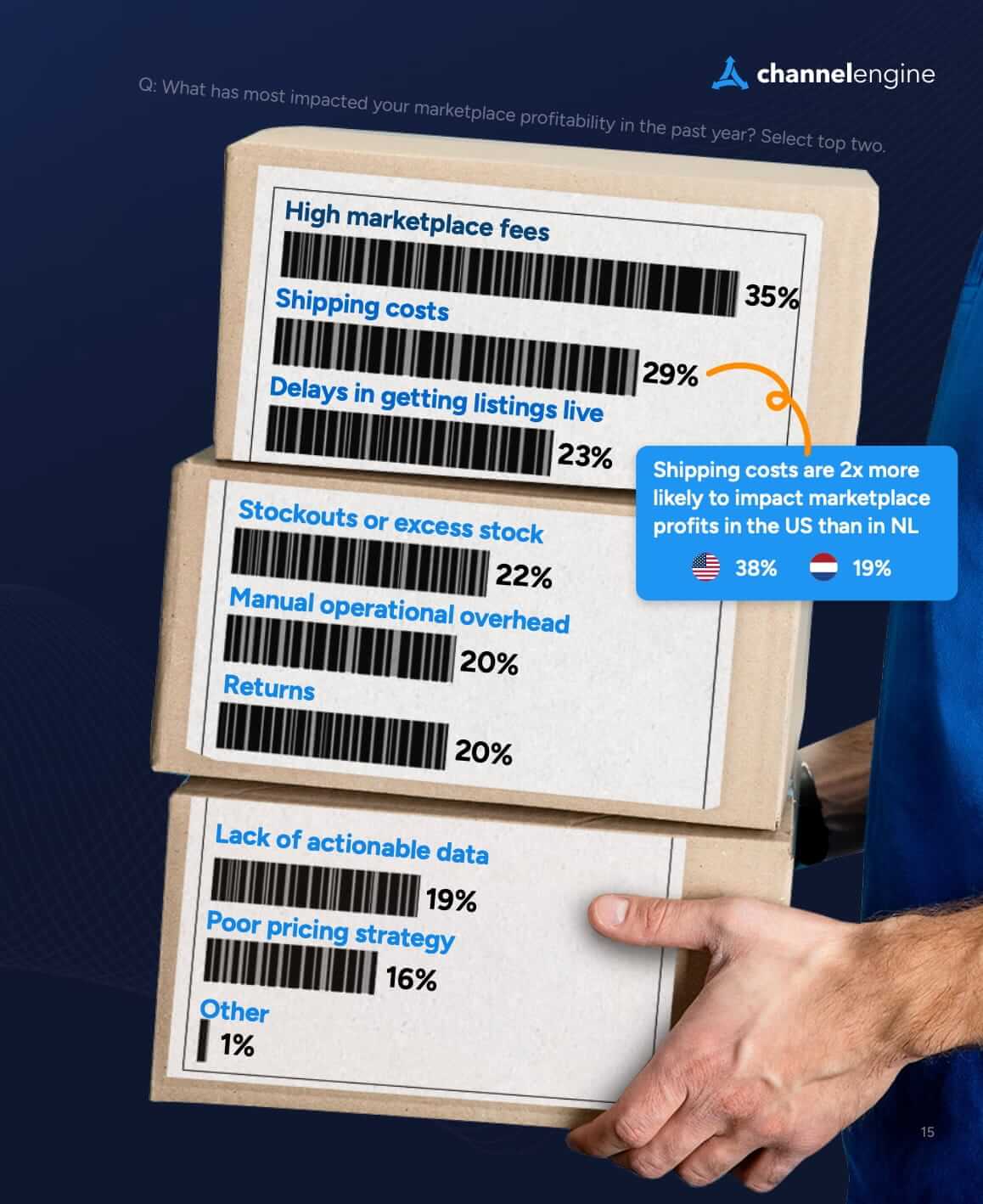
Neither fees nor shipping rates sit fully under seller control. Marketplaces adjust commissions. Carriers raise prices. External pressure keeps rising, regardless of internal effort.
What sellers can control is how much inefficiency amplifies those costs.
Manual work turns cost pressure into margin collapse
The Marketplace seller trends report highlights a second layer of the problem. Sellers spend an average of 36% of their working week on manual marketplace tasks. For many teams, that equals almost two full days lost to repetitive work like pricing updates, inventory checks, or listing fixes.
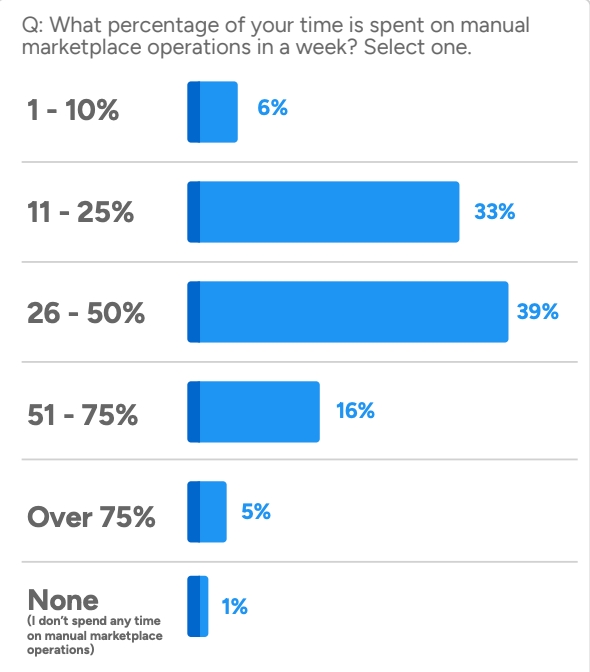
Manual operations create hidden margin leaks:
- Prices react too slowly to market shifts
- Stock sync lags behind real demand
- Errors trigger cancellations or penalties
- Teams focus on maintenance instead of optimization
When margins shrink, inefficiency hurts more than ever. A small delay or pricing mistake wipes out profit that no longer exists as a buffer.
When growth steals focus from profitability
One of the most revealing signals in the report is not about costs or GMV – it’s about where sellers put their attention.
As the study shows, 32% of sellers list “increasing sales on existing channels” as their top priority, while 27% explicitly prioritize boosting profitability.
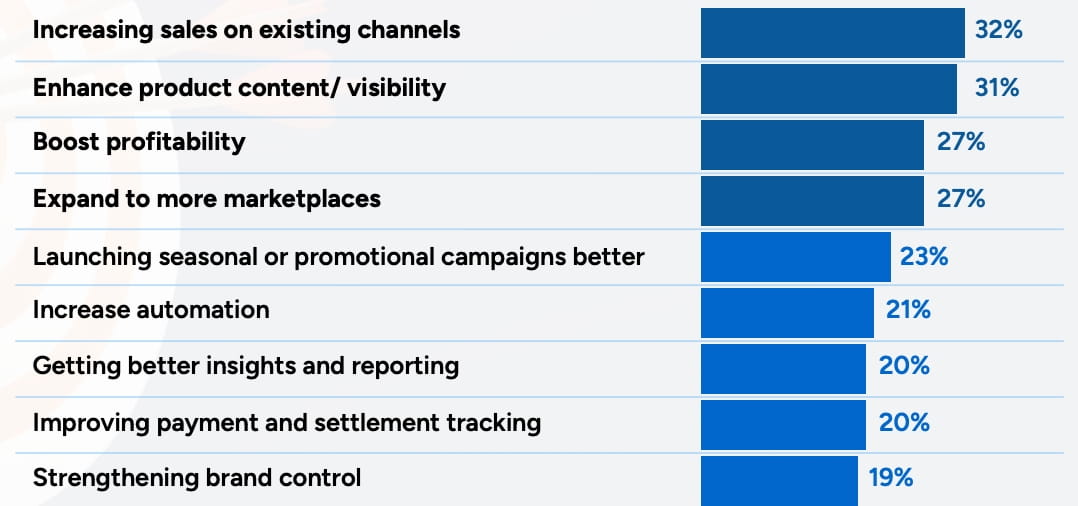
That imbalance explains why many German sellers may feel stuck:
effort flows toward activity, not outcome.
Marketplace growth rewards motion. More listings. More channels. More campaigns. But motion without control increases exposure to fees, logistics costs, and operational errors. Each new marketplace multiplies complexity, while profitability remains fragile.
The report also shows that sellers operate on six marketplaces on average, with 23% active on seven or more:
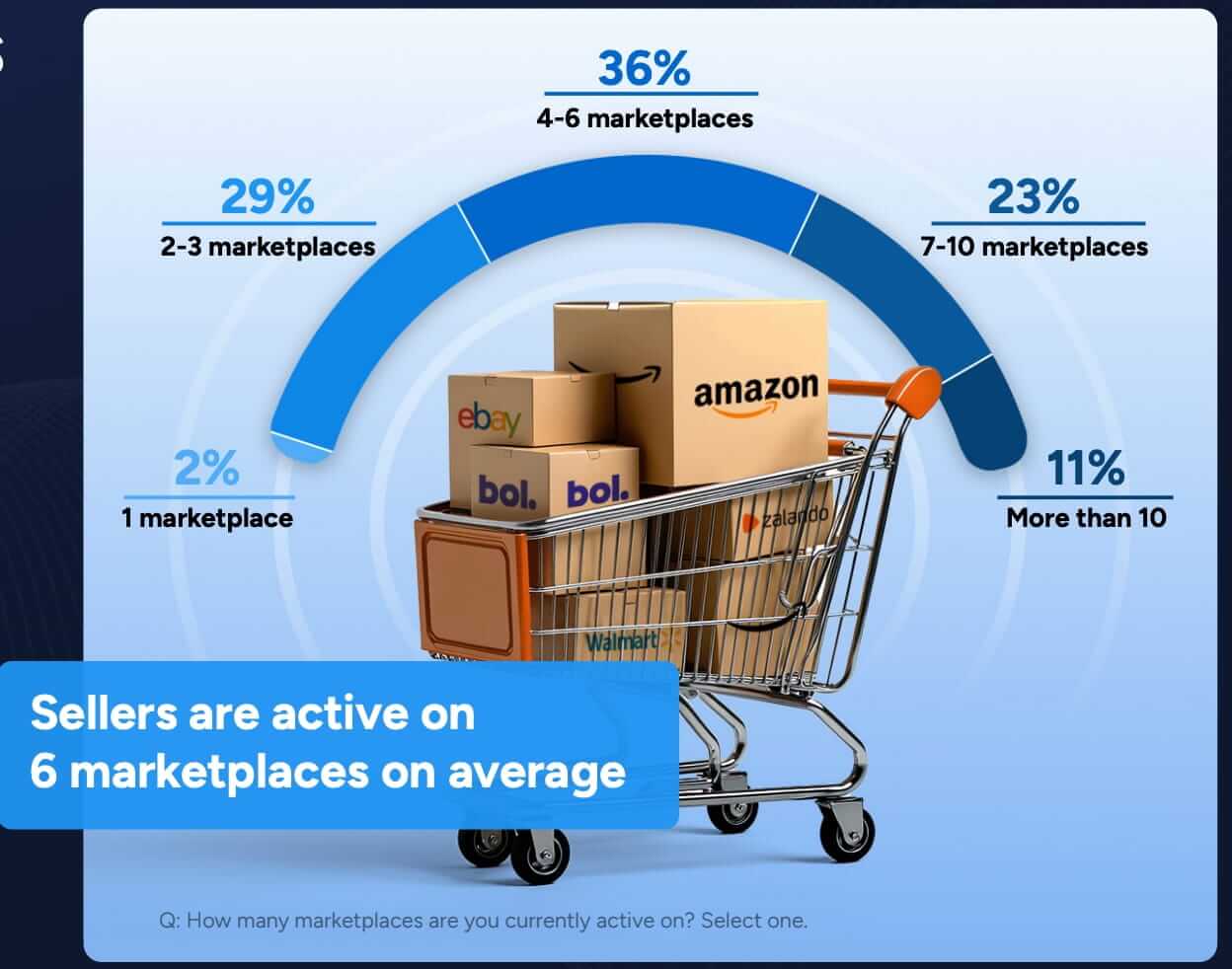
Expansion itself is not the problem. Expansion without margin governance is.
This creates a common pattern:
- Teams chase visibility and order volume
- Manual work scales faster than revenue
- Leadership reviews GMV while margins quietly erode
By the time profitability becomes a priority, operational debt already sets in.
Why this matters specifically in Germany
German marketplaces tend to combine:
- Strong price transparency
- High customer expectations around delivery
- Tight competition from both local and global sellers
In that environment, selling more units rarely fixes margin pressure. Faster execution, cleaner data, and tighter control do.
The report reinforces this shift. Retailers that sell third-party products already track profit margin per marketplace more closely than GMV, signaling a move away from volume-based success metrics.
Brands that continue to optimize for growth alone risk scaling inefficiency instead of value.
Automation reframes what “growth” actually means
This is where automation changes the conversation.
With automated repricing, centralized order management, and near real-time inventory sync, growth no longer relies on human effort scaling linearly with volume. Sellers can expand without adding operational drag.
Instead of asking “How many more orders can we handle?”, teams start asking:
- Which channels deliver margin, not just volume?
- Where do fees and shipping costs hurt least?
- Which marketplaces justify continued investment?
That shift aligns growth with profitability: the exact balance German sellers now need.
Sustainable growth now starts with automation
The report makes one message clear: sellers do not lack ambition. They lack leverage.
Over 90% of respondents describe automation as very important or business-critical for their marketplace strategy. At the same time, more than half still rely on spreadsheets or internal tools to manage product and pricing updates:

That gap explains why GMV drops while order volume climbs. Growth happens on the surface, while operations lag underneath. Automation no longer acts as a nice-to-have upgrade. It forms the foundation for sustainable growth in German marketplaces.
How ChannelEngine helps protect margins in DACH eCommerce
ChannelEngine focuses on the operational layer where margin pressure builds.
- With automated repricing, sellers react faster to competition without constant manual intervention. Prices stay competitive without racing to the bottom or missing profitable windows.
- Near real-time inventory sync reduces stockouts and overselling across German and international marketplaces. Fewer errors mean fewer penalties, refunds, and emergency fixes.
- Centralized order management pulls fragmented marketplace operations into one system. Teams gain visibility without jumping between portals, files, and dashboards.
Together, these capabilities reduce operational drag. Less time spent fixing problems leaves more room to protect margins, even when fees and shipping costs rise.
Growth that holds up under pressure
The report shows a clear shift. Sellers no longer chase expansion alone. Profitability and efficiency move to the center of marketplace strategy.
In a market where GMV falls despite rising demand, sustainable growth depends on operational discipline. Automation supports that discipline at scale, without burning teams out or inflating costs.
German marketplace sellers face shrinking margins. The ones who adapt their operations now gain room to grow later.
Discover how automation through ChannelEngine can help German sellers stay profitable in a shrinking-margin market.