Behind the Click Podcast with Felix Hoffmann: Europe is sleepwalking into “autonomous shopping”
Written by
Editorial TeamPublished on
Europe is falling behind in AI-driven commerce. In Behind the Click, Felix Hoffmann explains autonomous shopping, decision automation, and what retailers must do now.
From European perspective, the AI hype cycle in commerce often feels distant. Headlines about “instant checkout” and AI shopping assistants dominate the news, yet everyday shopping habits across Europe still look largely the same.
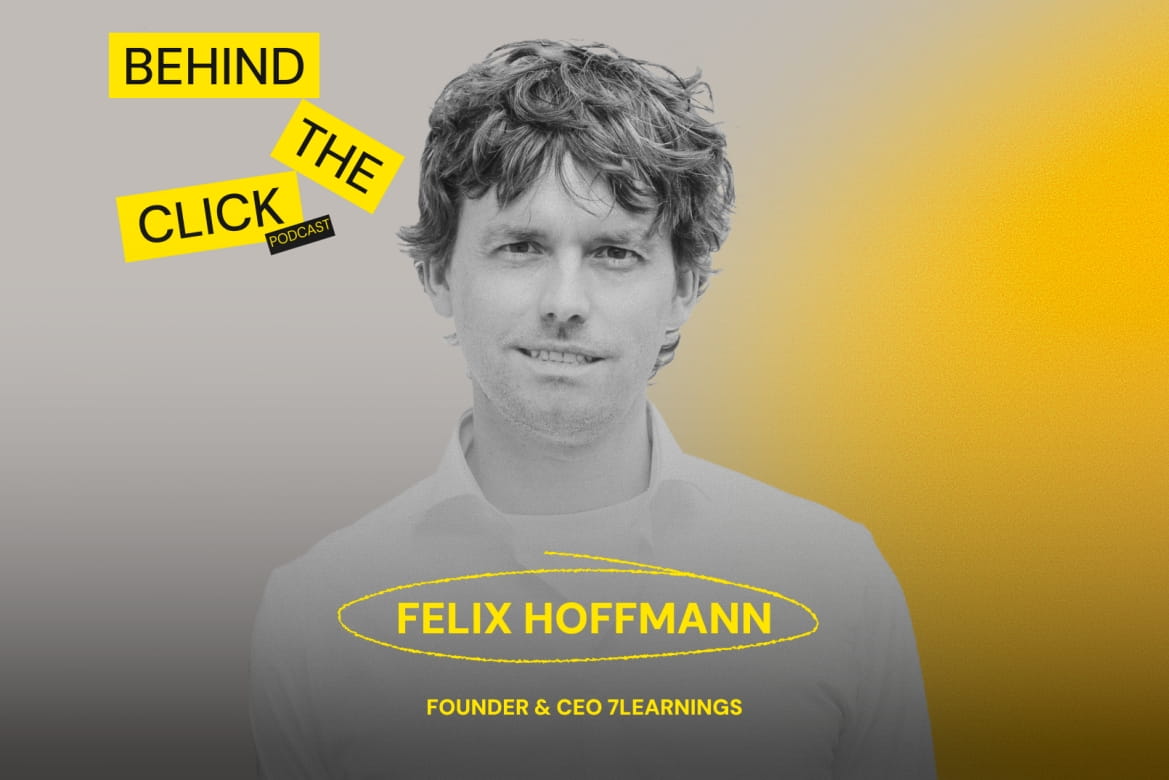
That tension was at the heart of a recent episode of Behind the Click, where our host Janine Vanessa Heinrich spoke with Felix Hoffmann, Founder & CEO of 7Learnings.
During the conversation, Hoffmann explained why Europe has not yet felt the full force of AI-driven commerce and why that should not be mistaken for stability. According to him, the next phase of retail disruption is not about better chat interfaces, but about who controls consumer decision-making.
“Autonomous driving” explains where AI shopping stands today
To describe the current state of AI-powered commerce, our guest used an analogy that runs through the episode: autonomous driving.
What consumers see today — especially around Black Friday — resembles early driver assistance rather than full autonomy. Chatbots provide information, surface options, and sometimes point users to places where they can buy. But the core decisions still sit with the consumer.
As our interviewee put it, “we are really in the very very beginning like level one or two like this cruise control.”
True autonomous shopping, where an agent independently searches, compares, decides, and completes purchases, has not arrived yet. But the infrastructure and incentives to build it are clearly in motion.
Checkout isn’t the breakthrough: decision-making is
One of Felix’s central arguments is that instant checkout is not the real challenge. Completing a purchase is trivial compared to optimizing the decision that comes before it.
Choosing the “right” product depends heavily on category, context, and personal preference. A race bike, a coffee machine, and a kitchen all require completely different evaluation criteria. Teaching systems to navigate that complexity, at scale and per individual, is where real value is created.
This is what Hoffmann refers to as decision optimization, and it is still in its early stages.
Why Europe is behind and US is accelerating
Throughout the episode, Hoffmann repeatedly points to the gap between Europe and the US.
American platforms are already testing deeper integrations between AI agents and commerce, while European players largely remain observers. At the same time, massive investment is flowing into this space in the US, accelerating development.
In that context, Hoffmann makes one of the episode’s most provocative statements: “this is the only way that OpenAI can survive basically.”
His point is not speculative. Becoming a dominant decision and shopping platform provides a clear path to monetization, while subscriptions alone do not.
What this means for retailers right now
Felix is sure that AI agents will not rely on endlessly crawling retailer websites. It is inefficient and expensive. Instead, they will depend on structured, up-to-date access to product data: prices, availability, stock levels, and descriptions.
Retailers who cannot provide this risk disappearing from AI-driven discovery altogether.
Internally, many retailers are still unprepared. Product-level data on shipping, returns, and marketing costs is often fragmented or missing, making predictive and optimization-based systems difficult to deploy.
Rule-based pricing is already a liability
Hoffmann also challenges the dominant pricing approach still used by many retailers: competitor crawling combined with rigid rules.
Lowering prices to match competitors ignores inventory position, seasonality, and long-term effects. It often leads to margin erosion and poor assortments later in the season.
Predictive pricing, by contrast, evaluates multiple price options, forecasts outcomes, and aligns decisions with strategic goals such as profitability or growth.
Three things retailers should start doing now
During the episode, Felix Hoffmann outlines clear priorities for retailers preparing for AI-driven commerce:
- Build structured APIs for AI agents so products and prices can be accessed efficiently.
- Prioritize AI use cases based on where the most money is spent and the biggest decisions are made.
- Be intentional about in-house vs. external solutions, especially when customer data is involved.
The message is pragmatic: focus beats experimentation without direction.
To hear interview with Felix in full, in his own voice and with all the nuance that can’t fit on a page, watch the complete episode of Behind the Click:
You can also listen to the episode on the Spotify or Apple Podcasts.