Cross-border e-commerce: who’s leading the way?
What’s next in cross-border e-commerce? And who’s leading the way right now? Find out inside!

Global e-commerce is getting more connected and more competitive. Nowadays, it’s centered around both staying local and reaching new markets with fewer roadblocks.
From platform expansions to new tech stacks, the biggest names in commerce are chasing the same goal: make international growth easier for both sellers and buyers.
No matter if it’s Amazon launching new marketplaces or Stripe making payouts feel instant, the pressure is on.
So, who’s getting it right? Let’s take a look at the players shaping cross-border e-commerce right now.
Major global players expanding abroad
The biggest names in global commerce aren’t sitting still. SAP, Microsoft, Adobe, and Amazon are expanding their international reach with bold moves: from new payment networks and cloud partnerships to full marketplace rollouts.
Their playbooks may differ, but the goal is the same: make cross-border selling smarter and more scalable.
How SAP is powering cross-border B2B commerce
SAP bets big on cross-border B2B commerce with Visa and Alibaba deals.
As cross-border e-commerce heats up, the German software giant is going all-in on international B2B expansion. Two major partnerships, one with Visa, another with Alibaba, show SAP’s strategy clearly: make international business smoother and smarter.
Payments first: Visa and digital currency moves
Let’s start with the money. Nowadays B2B payments still come with headaches, especially across borders. Different systems, currencies, delays. SAP’s answer? A deeper focus on digital payments.
The company recently teamed up with Visa to speed up cross-border and domestic B2B transactions. This is part of its new Digital Currency Hub, first rolling out in Asia-Pacific. The goal? Cut the clutter from global payments and shorten processing times. No middlemen. No wire delays. Just faster payment rails for businesses buying and selling across borders.
If you’re a growing business in Asia looking to move cash quickly across countries, this could be your new normal. And SAP has made it clear: this rollout is just the beginning. A global expansion is already on the map.
Cloud + AI = global infrastructure
Now to China and beyond.
SAP’s second power move is its recent partnership with Alibaba Group. At the heart of it: cloud and AI.
The two giants joined forces to bring SAP’s cloud ERP and planning tools to Alibaba Cloud. The deal starts in China but has much wider plans. Next stops? Southeast Asia, the Middle East, and Africa – regions that are seeing a major spike in B2B cross-border demand.
This partnership means local businesses can run SAP software on Alibaba’s infrastructure. But it’s not only about tech compatibility. The two firms also launched a joint go-to-market plan. They’re targeting industries that need tailored B2B solutions with cloud-first, AI-powered tools.
A peek behind Alibaba’s own curtain
Interestingly, Alibaba is also becoming a SAP client. They’re planning to use a suite of SAP tools: from SAP Ariba and Concur to SAP Emarsys. All to improve how they run internally. That’s not just for show. It sends a strong message: if Alibaba trusts SAP with its operations, maybe others should take a look, too.

And there’s more. SAP is testing Alibaba’s own large language model, Qwen, for future use in its generative AI hub in China. This could open the door to more localized AI in enterprise tools, a growing need for Chinese businesses expanding abroad.
What does this mean for global e-commerce?
In 2025, a year filled with global tension, logistics chaos, and currency shifts, SAP was leaning into partnerships to solve old problems in new markets. It’s a smart chess move. With Visa on payments and Alibaba on infrastructure, SAP is reshaping how B2B commerce works across borders.
Why Microsoft is unlocking omnichannel growth worldwide
Microsoft wants to make cross-border selling less of a headache in the future, and they’re betting on their Dynamics 365 Commerce update to do it.
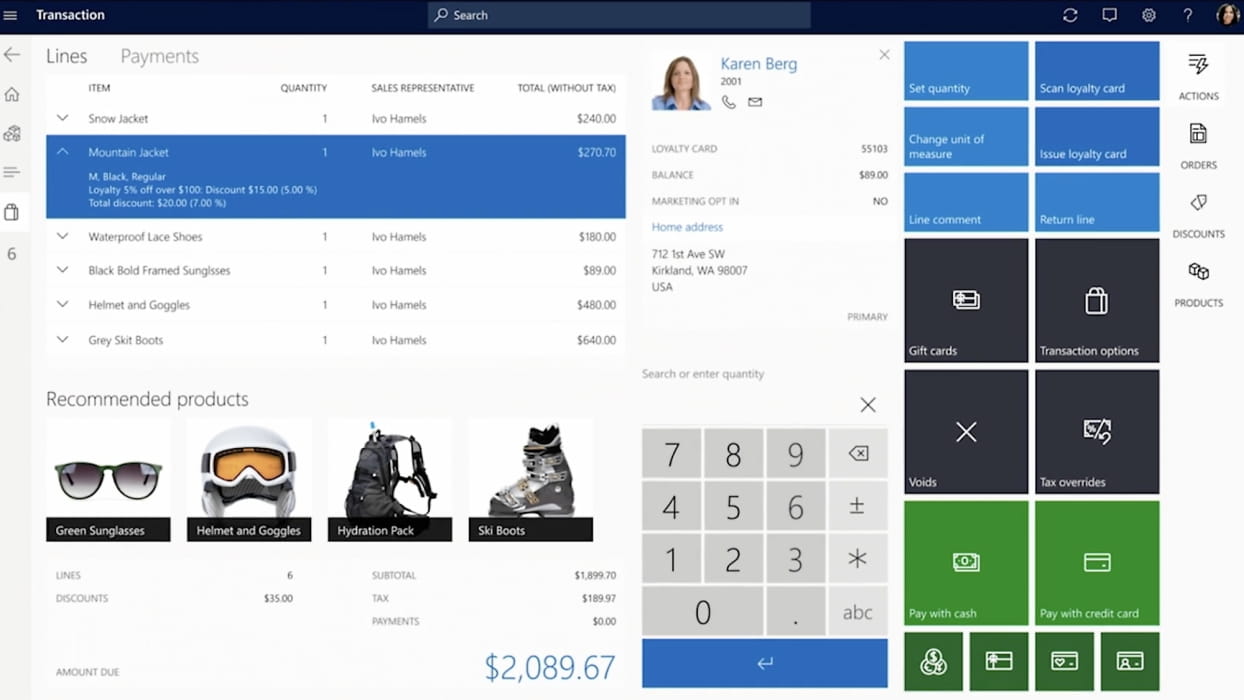
With retailers rushing to expand beyond home markets, Microsoft’s latest release includes tools built to handle global complexity: new payment options, smarter pricing models, and AI that speeds up checkout. All of it sits on top of a scalable, headless engine built for omnichannel retail.
Let’s unpack what’s new and why it matters for global e-commerce players.
International payments? Check.
Global sales can break down fast when payment systems get messy. Microsoft knows this. That’s why the 2025 update now supports Adyen out of the box. Think of it as a passport to smoother international checkout.
Retailers can now use QR code payment links – no hardware terminal needed. That means pop-up shops and mobile sales teams can sell across borders without dragging bulky gear. The update also plays nicely with buy-now-pay-later options like Klarna, Affirm, and Afterpay, which are growing fast in Europe and Asia.
And for teams dealing with disputes and failed captures, Dynamics now sends real-time payment notifications, so you don’t find out two days later that something went wrong.
AI gets a job at checkout
What’s the easiest way to win over cross-border customers? Speed and accuracy at the register.
Microsoft’s Copilot AI is built right into the point-of-sale flow. It pulls up quick summaries of product details and past customer activity without digging through screens. For global teams working in multilingual environments or managing dozens of product categories, this means faster training and more personalized sales.
You don’t need to guess anymore. The system tells your staff what the shopper might be looking for and what to push right on the spot.
Global pricing? Make it make sense.
Selling in two countries is tough. Selling in twenty? That’s a whole different beast. With this update, Microsoft makes pricing models more flexible.
You can set different prices based on product type, customer group, region, or even purchase history. Long-term trade deals, quick promo discounts, auto charges, and rebates – it’s all in the same place now. This matters when you want to adjust for currency swings or local market habits without rebuilding everything from scratch.
Omnichannel (but really)
Microsoft’s platform covers physical stores, pop-ups, digital shops, and even call centers. What’s key here is that each channel talks to the other. A product added to a cart online can be picked up in-store. A discount applied during a phone order also works at the register.
That’s the kind of cross-border consistency shoppers expect, and it’s where many retailers still stumble.
In today’s world e-commerce doesn’t stop at the border. Neither does Microsoft. With Dynamics 365 Commerce, the tech giant is positioning itself as a serious player in global retail infrastructure, especially for midsize and enterprise sellers trying to keep up with fast-moving markets.
Payments, pricing, AI, and checkout – all handled inside one system.
The only question left is: can your current setup do all that? If not, Microsoft just gave you something to think about.
Adobe commerce takes global selling to the next level
With its new Commerce as a Cloud Service, Adobe is going straight after global e-commerce. And it’s not just for big brands.
This new setup is SaaS-based, versionless, and headless-ready. And the message is clear: if you’re a business with global ambition, Adobe wants to be the engine behind your international sales.
One backend, many storefronts
Let’s start with what makes this different. Adobe’s new cloud commerce model is built to run multiple websites in multiple languages and currencies, all from the same platform.
So if you’re a European fashion brand trying to launch in Southeast Asia or a U.S. skincare company opening digital stores across the Middle East, you won’t need to spin up ten separate systems. Adobe lets you manage them all in one place.
That’s big. Especially for smaller companies trying to scale fast without building a tech stack from scratch every time they enter a new market.
Migration made modular
Now, moving to Adobe’s SaaS model isn’t a flip-the-switch moment. And Adobe knows that.
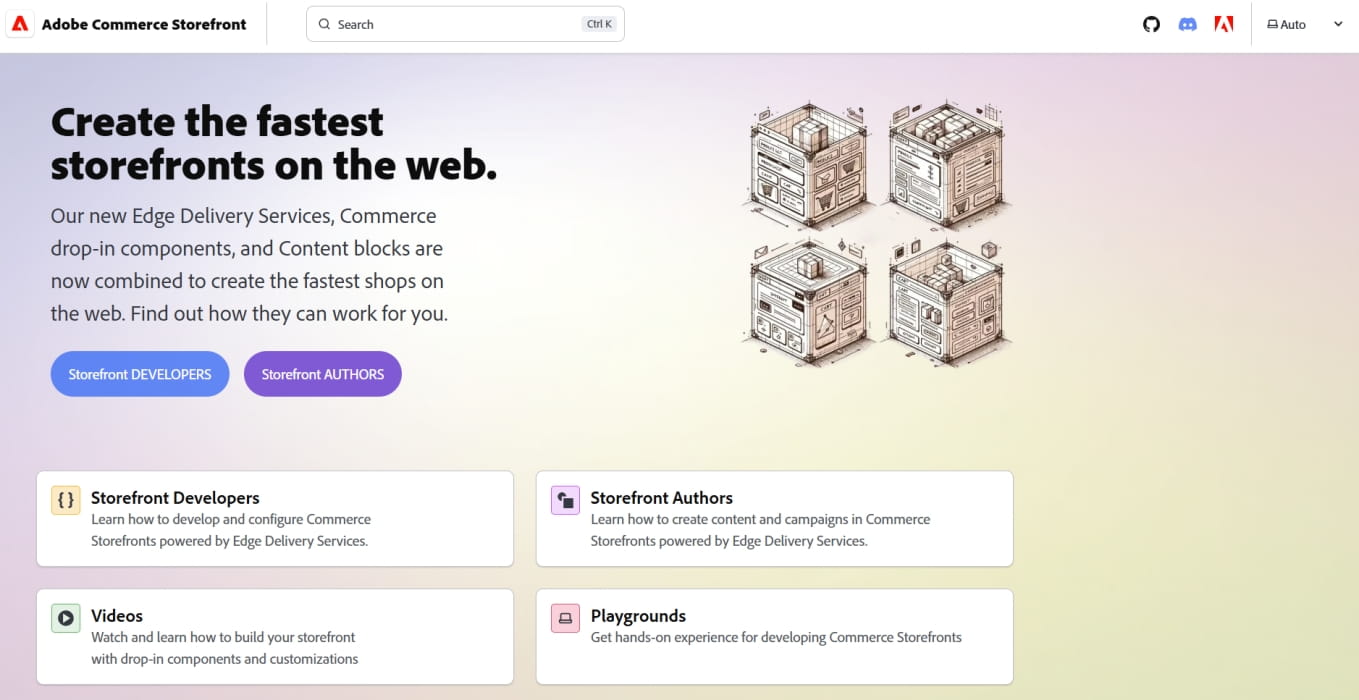
You can go all in with a full migration or take your time with an incremental move. Some businesses are choosing to shift custom logic out of the core system first, using App Builder and API Mesh to handle checkout flows, pricing, inventory, and loyalty points.
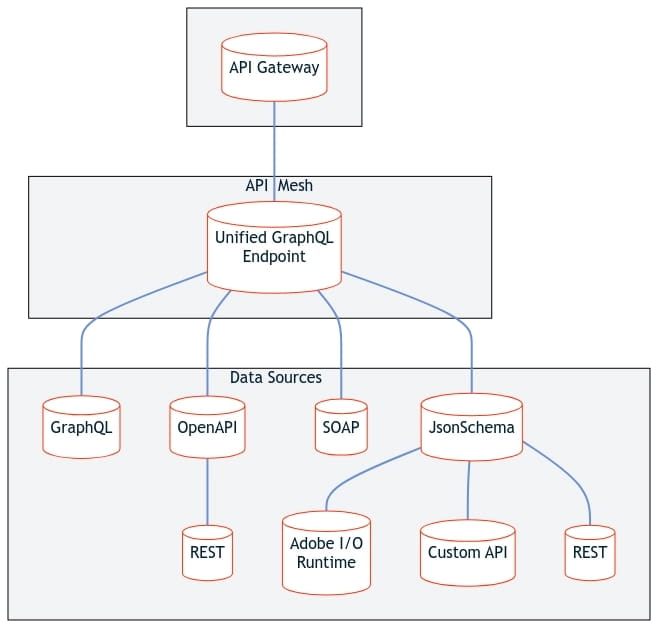
Others are focusing on building a new storefront using Edge Delivery Services, while keeping older systems live until they’re ready to fully cut over. Think of it like swapping parts on a moving train with fewer derailments.
No more version numbers
Here’s a change that may sound small but matters a lot: Adobe Commerce is now versionless.
That means businesses no longer have to plan for big platform upgrades. Updates happen in small, ongoing bursts, so there’s no need for huge IT budgets or long maintenance windows. Your storefront keeps moving, and so do your customers.
Headless by choice
If you want full control of your store’s look and feel, Adobe is all in on headless commerce.
That means brands can use their own front-end tools, like React or Vue, while the Adobe system handles the backend. It also makes it easier to connect everything, from PIMs and ERPs to CRMs and analytics dashboards, into one global setup.
Built-in localization
Selling globally means selling like a local. With Adobe’s new setup, you can roll out a storefront in the local language, show prices in local currency, and adjust taxes, shipping, and payment options per country.
And you don’t have to start from zero every time. The new SaaS stack supports shared assets, layouts, and product catalogs, while still letting you tailor each store by market.
Adobe is turning its commerce platform into a serious player in cross-border e-commerce. The upgrade puts global growth within reach, even for companies that aren’t tech giants.
If you’ve been waiting for the right moment to go international, Adobe is betting that moment is now. All you need to do is bring the ambition.
“Adobe Commerce differentiates itself through a flexible, API‑driven, enterprise‑grade platform that supports complex B2B and B2C use cases across global markets, brands, and catalogs. Its architecture enables deep customization, rapid innovation, and scalable operations while supporting SaaS, PaaS, and hybrid deployment models to fit enterprise requirements”, says John Volker, Senior Product Sales Specialist, Adobe Commerce. “With the introduction of Agentic Commerce, Adobe Commerce embeds AI‑driven, goal‑oriented intelligence directly into core commerce workflows – automating merchandising, pricing, promotions, and demand optimization in real time. This shifts commerce from manual configuration to autonomous execution, allowing brands to increase conversion, speed, and operational efficiency while continuously optimizing performance”.
Amazon’s playbook for dominating international markets
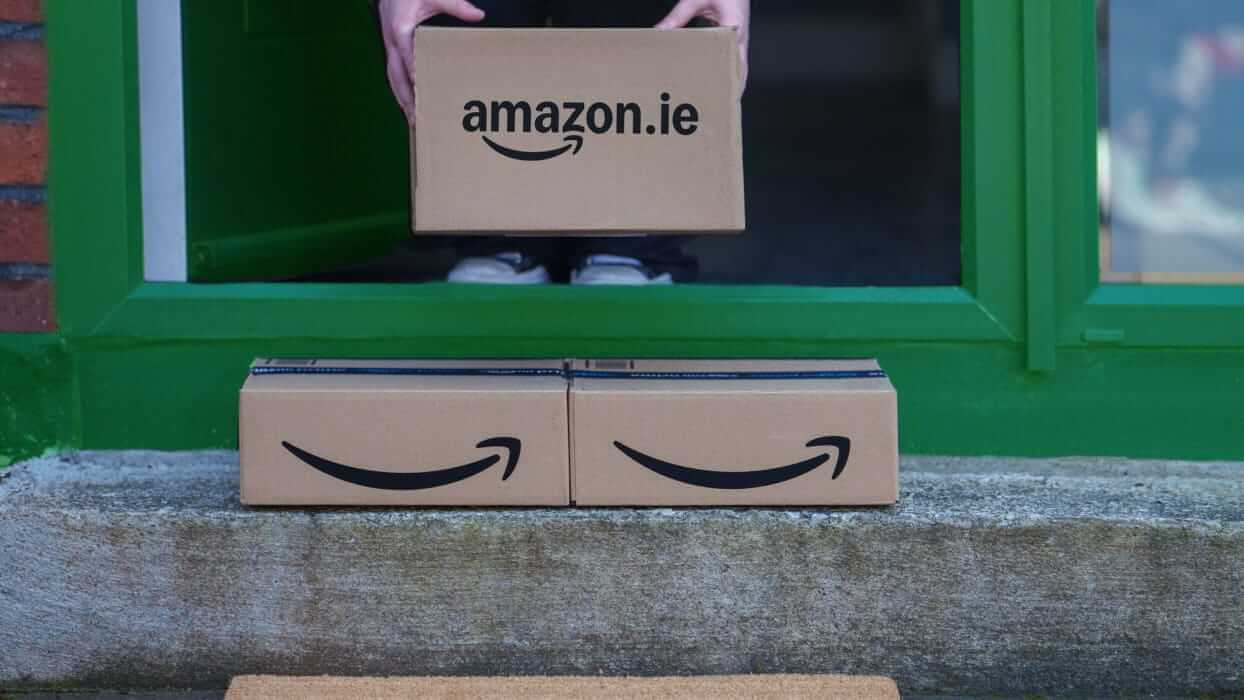
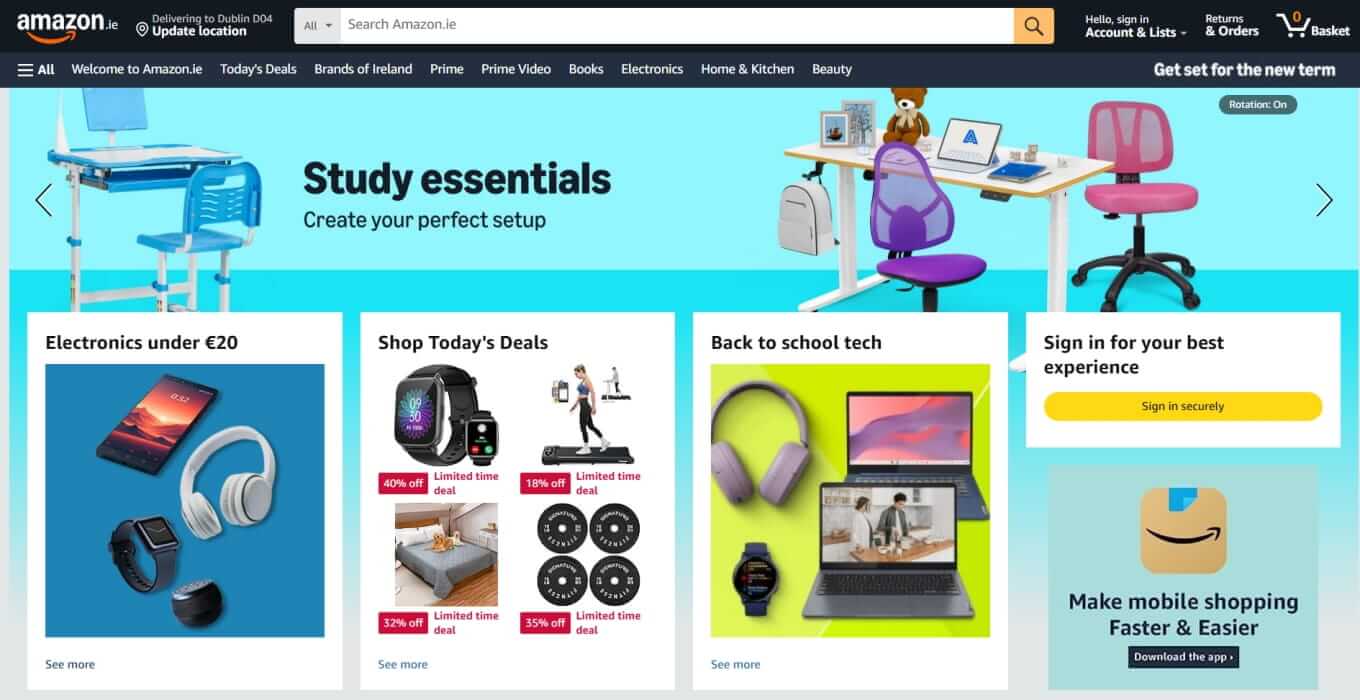
Amazon has flipped the switch on its latest expansion in Europe. Amazon.ie is live. That makes Ireland the 22nd country to get its own dedicated Amazon marketplace. For shoppers, it means over 200 million products, fast local deliveries, and a Prime membership priced in euros. For sellers? It’s a brand-new channel to reach Irish buyers – and through them, a wider international crowd.
So, who’s leading cross-border e-commerce right now? Amazon’s still in the front row and this launch shows it’s not slowing down.
New site, familiar experience
Amazon.ie brings One-Day Delivery to millions of products. No more customs surprises, no more switching currencies. Prices are now listed in euro, and deliveries come straight from Amazon’s fulfillment center in Dublin, which opened back in 2022.
Prime members in Ireland also get a new home base. For €6.99/month, they now have local access to Amazon’s full entertainment bundle: TV shows, movies, games, free delivery, and even extras like Deliveroo Plus and cinema discounts. UK Prime users can switch over without losing a day (or a cent).

A step forward for Irish sellers
This isn’t just a win for shoppers. Irish brands, from Barry’s Tea to small fitness labels like Swifter, are now front and center on a Brands of Ireland page. It’s a project launched in partnership with Enterprise Ireland to give local sellers more visibility and reach.
“The launch of Amazon.ie is great news for Irish businesses and consumers. For Swifter, it means we are able to reach more local customers and grow in our home market.” – James Madden, co-founder of Swifter.
And it works both ways. Irish sellers gain better tools to sell globally using Amazon Seller and Vendor Central, Fulfillment by Amazon (FBA), and Amazon’s growing ads network. With over €170 million in exports from Irish small businesses last year, and more than half going outside the EU, this new marketplace only adds fuel.
Why Ireland and why now?
Amazon has been laying the groundwork for years. Since 2004, it’s invested over €22 billion in Ireland, with operations in Cork, Dublin, and Drogheda. Its staff now tops 6,500 in the country.
Launching a local marketplace feels like a natural next move but it also says something bigger: Amazon is still betting on Europe, even as e-commerce matures.
And let’s not forget sustainability. Orders from Amazon.ie ship in plastic-free, fully recyclable packaging, and the company’s electric delivery fleet is growing. That’s more than a nod to green shoppers – it’s a push to future-proof logistics.
What does this mean for global e-commerce?
In 2025, cross-border e-commerce started to get more local. Amazon’s Ireland launch is proof. Instead of making customers and sellers work harder across borders, Amazon is shrinking the distance.
For the rest of the industry, the message is clear: act global, ship local, and do it fast.
Amazon.ie is up and running.
European & regional marketplaces expanding abroad
It’s not just the global giants driving cross-border growth.
European-born platforms and SaaS players are scaling fast: from Kaufland’s multi-country marketplace rollout to Bloomreach’s AI-powered personalization push in Southern Europe.
These businesses are showing that local expertise and regional focus can go a long way in building cross-border commerce with a European accent.
How Kaufland is building a Pan-European marketplace
Seven markets. 140 million online shoppers. Kaufland is quietly becoming a European heavyweight.
While global giants like Amazon grab the headlines, Kaufland is making strong moves in the background. And now, it’s stepping into two of Europe’s biggest e-commerce arenas: France and Italy.
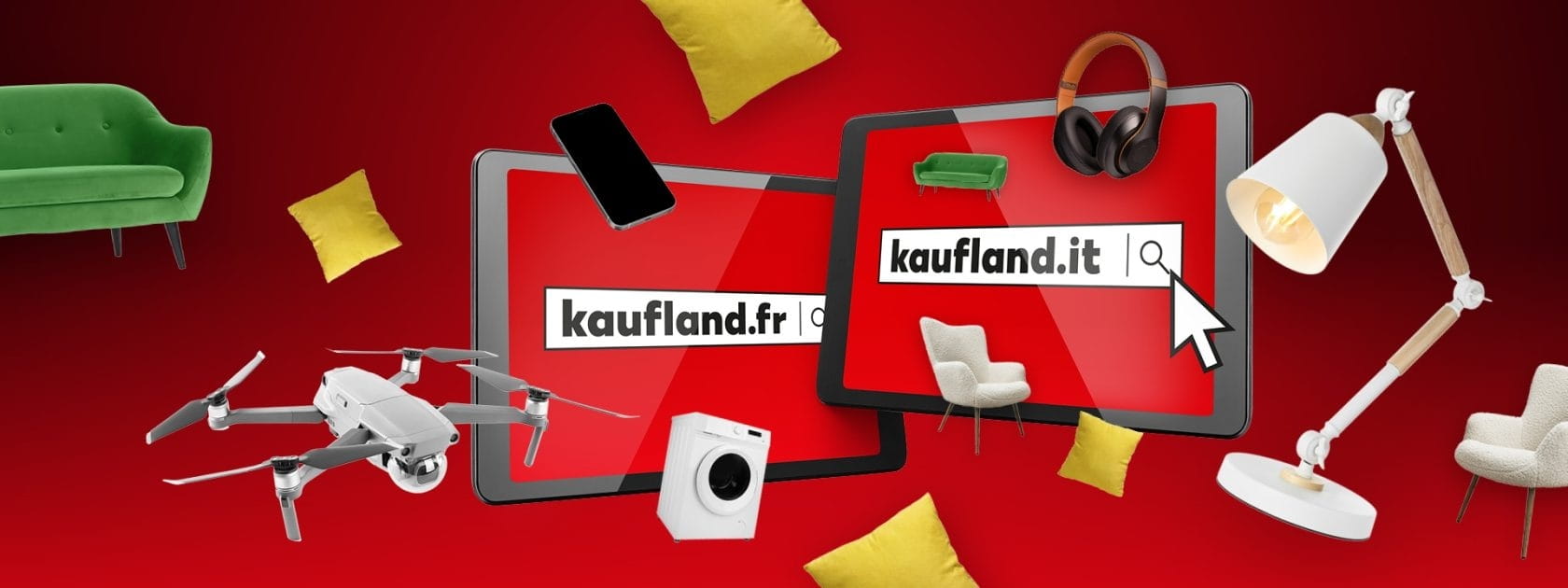
The new launches push Kaufland’s marketplace footprint to seven European countries with a total reach of nearly 140 million online shoppers. Not bad for a platform that doesn’t even rely on physical stores in most markets.
A European marketplace, built for Europe
This isn’t just expansion for expansion’s sake. Kaufland is pitching itself as a clear alternative to U.S.-based platforms. Its goal? A marketplace “from Europe, for Europe.” That means clear local rules, fair practices, and a strong focus on merchant relationships.
The platform runs on a single infrastructure called Kaufland Global Marketplace, an all-in-one system where sellers can manage listings, product data, and orders across countries from one dashboard. One login. Seven countries. Multiple currencies and languages handled behind the scenes.
That’s good news for sellers wanting to grow without setting up shop from scratch in every country.
France and Italy: the next big step
Why France and Italy? Easy. They’re the third- and fourth-largest e-commerce markets in Europe. Combined, they bring 59 million new shoppers into Kaufland’s ecosystem. Add that to Germany, Austria, Poland, the Czech Republic, and Slovakia, and the potential is massive.
In fact, Kaufland’s platform already reaches 81 million users. With France and Italy, that number jumps to almost 140 million.
And here’s the kicker: Kaufland has proven that its online-only model works. In Austria, where it doesn’t have physical stores, Kaufland.at gets up to 1 million visitors per month.
Merchants are seeing results
In Poland and Austria, sellers who joined the Kaufland Marketplace saw an average sales lift of 32%. Not just electronics and home goods (though those lead the charts) but also niche products across thousands of categories. Last year, electronics and DIY were the hottest sellers, with smartphones and robot vacuums topping the list.
That momentum is expected to carry into the French and Italian launches. With category coverage growing and more brands joining, Kaufland is gearing up for another big year.
Tools that reduce friction
What makes Kaufland’s system click? For one, sellers get access to built-in tools that reduce market entry hurdles. These include:
- Automated translation of product listings
- Local currency payment handling
- Customer service in each country’s language
Plus, merchants can test out international sales without changing their entire setup. Kaufland’s system handles the cross-border part, so sellers can focus on moving product.
What’s next?
With double-digit growth in gross merchandise volume (GMV) across its markets last year, and 106% growth from international expansion alone, Kaufland isn’t done yet. France and Italy are big milestones, but more countries are likely on the roadmap.
So while the spotlight often stays on Amazon, Alibaba, and Shopify, don’t overlook this rising German player. Kaufland is building a different kind of marketplace empire: quieter, local-first, but growing fast.
How Bloomreach is fueling Southern Europe’s e-commerce surge
Personalization gets local as Bloomreach expands deeper into Southern Europe.
Nowadays, cross-border e-commerce is focused on how well you know your customers. And Bloomreach wants to help brands know them better. The California-based company is now betting big on Spain and Italy, bringing AI-driven personalization tools to some of the fastest-growing digital markets in Europe.

A Southern strategy for global growth
Bloomreach already works with well-known names like Desigual, PUIG, Cooltra, TUI, and Miscusi across Southern Europe. Now, with new sales and partnership teams on the ground, the company is turning that early traction into a bigger push.
Why Spain and Italy? Both markets are seeing major e-commerce growth, especially in retail, hospitality, and travel. Local brands are looking for ways to stand out. Bloomreach is stepping in with its Loomi AI, built to personalize customer experiences at scale: from emails to site search to product recommendations.
The tools behind the tech
Bloomreach’s suite isn’t small. It includes:
- Engagement, a marketing automation platform
- Discovery, for e-commerce search and merchandising
- Content, a headless CMS
- Clarity, a new AI-powered conversational shopping tool
Together, these tools help brands tailor every customer interaction. Want to show a repeat customer a special deal when they return to your site? Done. Want to re-rank your product list based on real-time behavior? That’s in the mix too.
More than tools: partnerships matter
Bloomreach isn’t going solo. A big part of its playbook is working with local partners who understand the culture, the habits, and the tech stacks already in use. That makes a difference in markets like Italy and Spain, where digital transformation is accelerating but still varies widely by region and sector.
By working side by side with regional experts, Bloomreach makes it easier for brands to bring AI into their day-to-day operations.
Cross-border with a personal touch
As more European brands go global, the risk is becoming generic. Bloomreach wants to flip that script. Its platform helps businesses speak the right language – not just with words, but with timing, tone, and relevance.
In the race to lead cross-border e-commerce, Bloomreach isn’t opening warehouses or launching marketplaces. It’s reshaping how brands connect with people, no matter where they are.
And that might be the smarter play today.
Tech and SaaS e-commerce solutions fueling cross-border trade
Behind the scenes, it’s the tech stack that makes cross-border commerce click.
From Stripe’s global payout engine to Adobe’s headless commerce platform, SaaS solutions are giving businesses the tools to sell, localize, and grow across borders.
All without starting from scratch every time.
How Stripe is making global sales and payouts a piece of cake
Sending money across borders? For Stripe, it’s as easy as sending an email.
If you’ve ever tried to send money internationally, you know the pain: collecting bank details, handling FX fees, and waiting days for the transfer to go through. Now multiply that by hundreds, or thousands, of vendors, customers, or contractors. That’s where Stripe Global Payouts steps in.
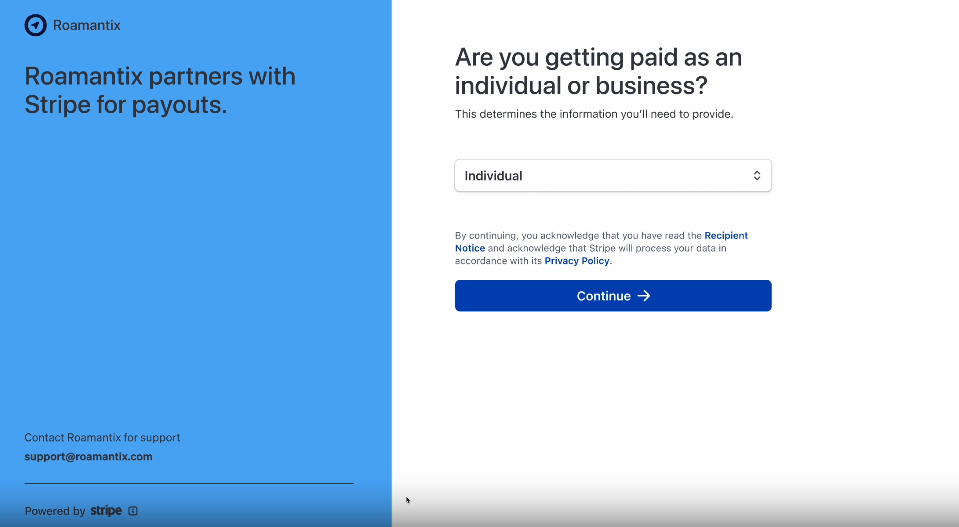
Stripe’s newest tool is built to cut the mess out of global money management. And right now, with businesses selling across more borders than ever, it’s arriving at just the right time.
One balance, many currencies
Stripe now lets businesses hold, send, and spend money in multiple currencies. You can fund your balance straight from your bank account (even if you don’t use Stripe for payments), hold money in 10+ currencies, and then send payouts to over 50 countries. FX fees? Only apply when you actually convert funds.
For marketplaces, global retailers, and fast-scaling platforms, this means less banking chaos and fewer delays.
Use code… or don’t
Need to go live quickly? Stripe built no-code options that make it possible to send money with just an email. Want something more tailored? You can plug in via API and build a full custom payout experience.
Either way, you get tools to track transfers and download reports, all from the Stripe Dashboard. Some businesses, like UrbanSitter, got started in just a few hours.
“Global Payouts [has] been transformative for UrbanSitter by providing an easy-to-integrate, less expensive solution that has saved our engineering team hundreds of hours. Stripe always gives us white-glove service and custom-tailored solutions—and we now have a seamless recipient experience for the fastest-growing portion of our business.” – David Smith, UrbanSitter
And they’re not alone. From startups to global brands, Stripe is quietly becoming the go-to for cross-border payout flows.
More secure, less messy
One of the trickiest parts of sending money is collecting correct bank information. Typos, fraud, mismatched account names – it all adds up.
Stripe’s new solution connects directly with banks using Financial Connections, letting recipients confirm account details through their own bank login. No typing, fewer failed payouts. In fact, businesses using this method saw 88% fewer errors.
What’s next? 100+ countries and stablecoins
Stripe isn’t stopping at 50 countries. In the next phase, businesses will be able to send funds to 100+ markets, using local currencies or even stablecoins. Support for European businesses is also expanding.

For companies building global products, this shift is big. Stripe isn’t just a payment processor anymore. It’s turning into a full money movement platform, taking care of what happens after the payment – no matter if that’s paying out a seller or rewarding a loyal customer abroad.
Cross-border trade may be getting more complex, but Stripe is betting the money part doesn’t have to be.
How Payoneer is opening new markets for SMBs
Big win for SMBs as Payoneer pushes deeper into Asia’s e-commerce scene.
Payoneer just became one of the very few foreign companies to do what many couldn’t: get licensed to run online payments in China.
The global fintech firm sealed the deal by acquiring Easylink Payment, a licensed China-based payment provider. That makes Payoneer the third international company to secure this kind of approval. And in today’s cross-border e-commerce race, it’s a bold move that gives smaller businesses a real shot at competing across Asia.
Why this matters now
Getting money in and out of China has always been complicated, especially for small businesses and freelancers. Local banking rules, regulatory red tape, limited access to global payout tools. For years, only a few giants had the reach or the licenses to operate smoothly inside the country.
Now, Payoneer is joining that shortlist. With a local license in hand, it can serve Chinese merchants more directly and connect them to global buyers faster. It also opens the door for global SMBs looking to work with China-based partners and marketplaces.
A bigger Asia footprint
This isn’t just a China play. Payoneer has been doubling down on its pan-Asia presence, supporting small businesses in countries like India, Vietnam, Indonesia, and the Philippines. With China added to the mix, the company’s network is now stronger across the entire region.
And the focus remains clear: make cross-border payouts and payroll easier for businesses of any size, not just the giants. No matter if you’re a freelancer getting paid from abroad or an online seller collecting marketplace earnings, Payoneer’s goal is to shorten the path from payment to bank account.
How PayPal is powering cross-border trade in emerging regions
From the desert to digital: PayPal’s new hub is a launchpad for global e-commerce in the Middle East and Africa.
PayPal isn’t sitting still. The digital payments giant recently opened its first Middle East and Africa headquarters, right in Dubai Internet City, one of the region’s top tech zones. The new hub will serve 80 countries, giving PayPal a central base for expanding cross-border payments across a fast-moving region.

So, who’s fueling cross-border e-commerce this year? PayPal’s clearly in the race and looking to make up ground.
Why now, and why Dubai?
Middle East and Africa are two of the fastest-growing e-commerce regions in the world. But global payments here have always come with extra hurdles, such as limited payment networks and currency friction.
With the Dubai hub, PayPal says it’s ready to make international commerce smoother for local businesses and global sellers entering the region. The focus is on both sides: helping sellers from MENA connect with international buyers, and letting global merchants sell confidently into local markets.
And yes, it’s more than just logistics. PayPal is also bringing in tools for fraud protection, new payment experiences, and partnerships with banks, telecoms, and fintechs in the region.
What does this mean for SMBs?
Big players like airlines and online retailers already work with PayPal across MENA. But now, small and midsize businesses, and even solo sellers, will have better access to PayPal’s global infrastructure.
That includes payout systems, payment gateways, and upcoming tools built on AI, like smart wallets and shopping assistants. In other words, features usually reserved for enterprise clients are getting closer to street-level sellers.
It’s also a win for freelancers and remote teams who rely on PayPal to receive funds from abroad. With better access and localized support, getting paid across borders just got easier.
What’s next?
PayPal’s regional lead, Otto Williams, said the goal is to help businesses “attract, convert and retain customers globally.” That’s a way of saying: make it easier to get international customers and keep them coming back.
And with over 430 million users worldwide, PayPal has the reach to make it happen.
From smart wallets to cross-border payout tools, the company is stepping deeper into the global commerce game. Starting in Dubai, but aiming far beyond.
In a year where e-commerce is more international than ever, this move feels less like a branch office and more like a launch pad.
What’s next for cross-border e-commerce?
The future of cross-border e-commerce won’t be defined by size but by speed, reach, and infrastructure.
Today sellers expect platforms to be multi-currency, multi-language, and ready to plug into global payment systems on day one.
As regions like Southeast Asia, Southern Europe, and the Middle East open up further, the race is on to serve them with the right mix of tools and trust. No matter if you’re a marketplace or a growing brand, the next frontier isn’t just international.
It’s seamless, local, and fast.