Gen Z in marketing funnel: What should you know
Understand Gen Z’s unique behaviors in the marketing funnel. Gain valuable knowledge to enhance your strategies and drive engagement with this generation.

The classic marketing funnel assumes something that no longer exists. It assumes attention flows in one direction. Awareness, interest, desire, action. Neat. Predictable. Calm.
Gen Z doesn’t move like that.
They jump between discovery, doubt, validation, emotion, and delay. Sometimes they buy fast. Sometimes they sit on a decision for weeks. Trust is not given upfront. It’s earned slowly, often sideways.
Shopping became too smooth. One tap, one swipe, one click. The friction disappeared, and with it, a lot of meaning. That’s why Gen Z feels disconnected from brands that only optimise for speed.
Vogue Business shows Gen Z has massive spending power ahead, but many are pulling back, especially in categories like fashion and beauty. Why? Because of feeling. When everything feels the same, nothing feels special.
This is the core problem gen Z marketing is facing. The funnel didn’t just crack. It stopped matching reality. And today, with Vogue, we will look into this topic.
Shopping feels easy, but empty
Social commerce did what it promised. It made shopping fast. Seamless. Always there.
66% of Gen Z discover brands through social media, and nearly half have purchased directly inside a social app. Convenience just works.
But something else happened.
When everything is always available, shopping stops feeling like an event. It becomes background noise. Gen Z even describes it as passive. Always-on. Like everyone else.
This is where many gen Z marketing strategies fall apart. Brands chase frictionless checkout, faster conversion, fewer steps. And yes, that helps metrics. But it doesn’t build attachment.
Ease without emotion leads to indifference.
And indifference is dangerous.
Mindless scrolling and the rise of doomshopping
What starts as scrolling often ends as spending. Not because someone needs something. Because they feel restless, bored, or anxious.
Gen Z is very aware of this pattern. 27% say shopping has become more mindless because of social media. Many describe a dissociative state. Scrolling, buying, not fully present.
The numbers are uncomfortable. 87% think people buy more than they need. Many feel guilt immediately after a purchase. A huge percentage have used buy-now-pay-later tools, even when money is tight.
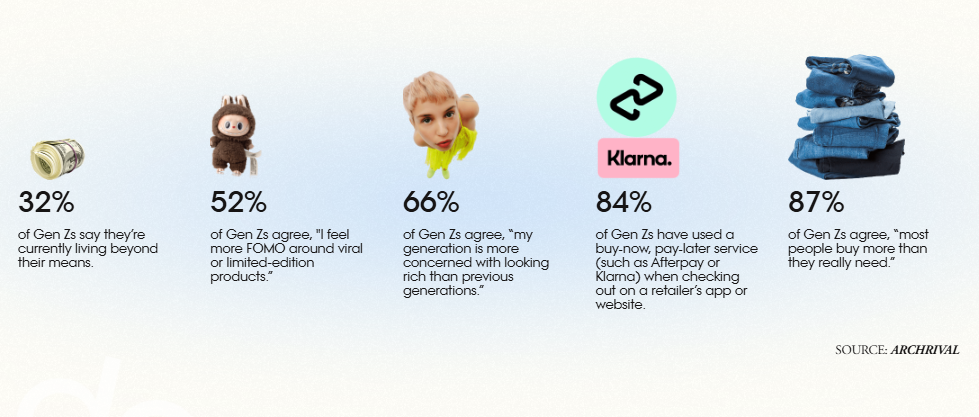
This is doomshopping. Buying to cope, then feeling worse.
For gen Z marketing, this is a red flag. Pushing urgency, limited-time pressure, and constant discounts might drive short-term sales. But it creates long-term negative brand memory.
If someone feels bad after buying from you, they won’t forget that feeling.
Value anxiety and the rejection of “status for status’ sake”
Gen Z doesn’t reject status. They reject empty status.
Luxury, for example, feels conflicted. Aspirational, but also out of touch. A large share of Gen Z (73%) says luxury brands are unattainable, and 65% find it distasteful to spend on high-end items when basic needs feel unstable.
Only about 54% say luxury is truly desirable anymore. And less than a third are willing to pay more for it.
This matters far beyond luxury.
Gen Z questions margins. Ethics. Purpose. They don’t ask, “Is this expensive?” first. They ask, “Is this worth it?”
In gen Z marketing, value is no longer about price-to-quality ratio. It’s about emotional payoff. Does this purchase make sense for who I am, right now?
Logos don’t answer that question. Meaning does.
The emotional economy: buying as self-reward, not flex
Here’s the shift many brands miss.
Gen Z still buys emotionally. But the emotion changed.
When Gen Z does spend, it’s often framed as self-reward. Satisfaction. Confidence. Excitement. Not showing off. Not chasing FOMO.
Interestingly, fear-based drivers like guilt or urgency rank very low as motivators (7%). That’s a big signal.
Gen Z marketing works better when it speaks to internal feelings, not external validation.
- “This is for you.”
- “This fits your life.”
- “This marks a moment.”
That changes how launches work. How storytelling works. How offers are framed. It’s less about hype. More about resonance.
The return of friction — and why it matters
For years, marketers were taught to remove friction at all costs.
Gen Z is quietly asking for some of it back.
Not bad friction. Not broken checkout flows. But meaningful effort. Discovery. Choice.
When shopping requires a bit of searching, comparing, or learning, it feels earned. That effort creates attachment.
This is why gen Z marketing needs to stop treating friction as the enemy. The right kind of friction adds depth. It turns buying into an experience, not a reflex.
Convenience still matters. But meaning matters more.
The thrill of the chase is back
Gen Z loves the hunt. Resale, vintage, and secondhand aren’t just about price. They’re about discovery. Finding something others don’t have. Feeling clever, not marketed to.
Thrift hauls have exploded online, with 800,000 videos celebrating the find, not the brand. The joy is in the search.
For gen Z marketing, this changes how drops, collections, and access should work. Less “available everywhere.” More “worth finding.”
Limited access works when it feels earned, not forced.
IRL experiences feel more special than feeds
Despite being digital natives, Gen Z craves physical experiences.
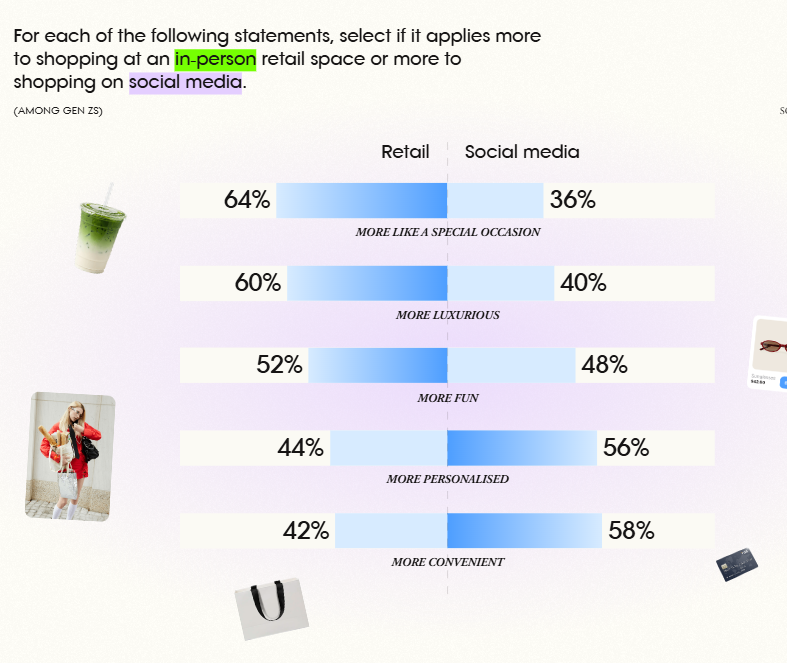
Shopping in-person feels more luxurious, more fun, more like an occasion than scrolling. 70% are interested in attending in-person brand events. And those who do are far more likely to feel positive about the brand afterward.
The physical world has friction. People. Waiting. Sound. Smell. Memory. That sensory layer makes moments stick.
Gen Z marketing that ignores IRL touchpoints misses a huge emotional lever.
Queue culture and earned access
Waiting used to be a pain point. Now it’s part of the appeal.
Queues for drops, pop-ups, and sample sales have become social events. People bond. Talk. Share the moment. Being there becomes proof of commitment.
This is earned access.
Scarcity works when it’s social, transparent, and participatory. Not when it’s manipulative.
Gen Z responds to experiences that feel shared and human. Standing in line with others can feel more meaningful than clicking “buy now” alone.
For gen Z marketing, loyalty isn’t created by pushing harder. It’s built by letting people choose to show up.
Why quieter platforms feel more trustworthy
Loud feeds, constant ads, forced trends, and aggressive selling have made many social platforms feel transactional instead of social. Nearly a third of Gen Z say that shopping directly inside social apps takes away from the social aspect of those platforms. That’s a big signal.
So Gen Z is drifting toward quieter spaces. Slower platforms. Places where discovery feels calmer and less engineered. Private communities, smaller channels, and formats that don’t shout.
This matters for gen Z marketing because many brand conversations no longer happen in public feeds. They happen in comments, DMs, private groups, and niche spaces where trust feels more real.
If your brand feels loud everywhere, Gen Z will tune it out.
Comment sections as the new research layer
For Gen Z, the comment section is not background noise. It’s the research layer.
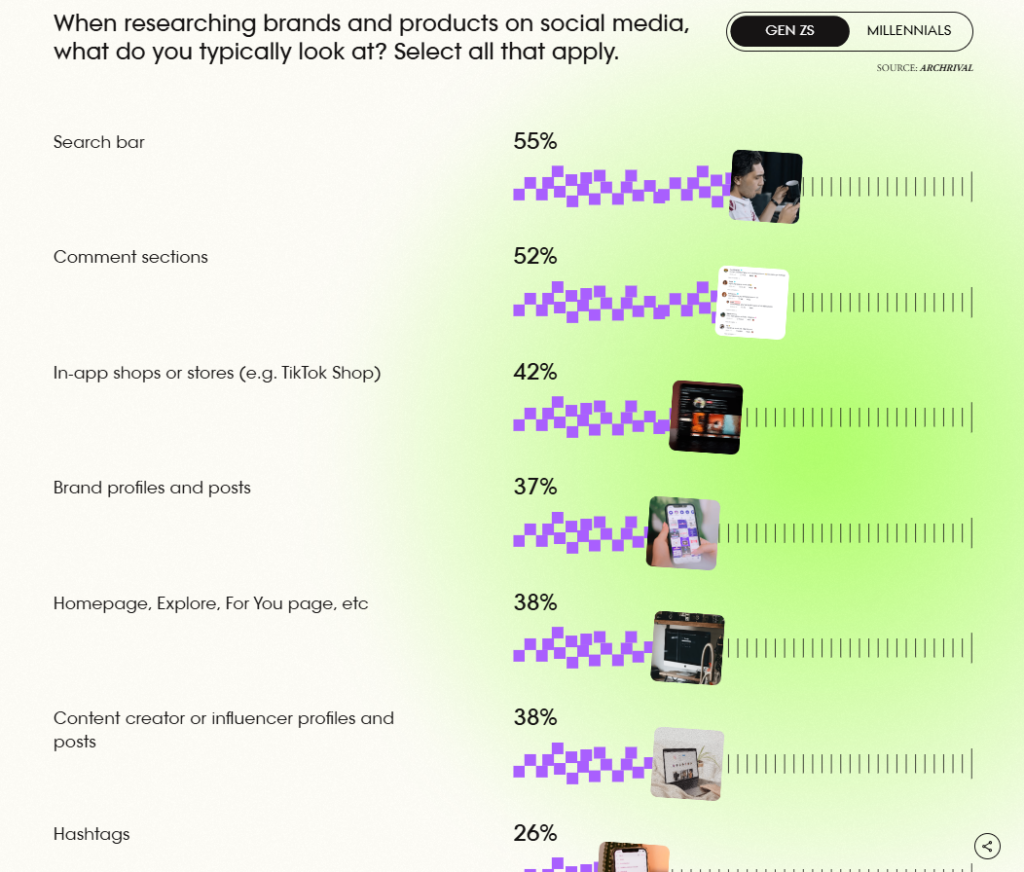
52% of Gen Z check comments when researching products, while far fewer go straight to brand profiles (37%). Comments feel unfiltered. Less polished. Less paid.
This is where real questions get asked. Fit. Quality. Regret. Alternatives. People speak more honestly when they don’t feel like they’re being marketed to.
This flips the role of brands. You’re not there to dominate the conversation. You’re there to listen, clarify, and show up when it makes sense.
Silence is sometimes better than forcing a reply. Presence matters more than control.
Co-creation beats polished persuasion
Gen Z responds to brands that adapt in public.
They notice when brands reply thoughtfully. When they adjust products based on feedback. When decisions are explained, not hidden.
Research shows that Gen Z is more likely to comment on themselves when they love a product, especially under creator posts or brand content (41%). That’s an invitation.
Co-creation builds trust because it shows vulnerability. It shows that the brand doesn’t pretend to have all the answers.
In gen Z marketing, perfection feels distant. The process feels relatable.
“Dark retail” and private buying moments
Some of the most meaningful Gen Z purchases happen away from feeds.
Shopping via DMs, small groups, invite-only access, or guided conversations is growing. These moments feel personal.
This is often called “dark retail.” Not because it’s secretive, but because it happens outside visible storefronts.
The driver here is guidance. Someone helping you find the right thing. Someone responding like a human.
For gen Z marketing, intimacy is becoming a conversion driver. Not scale. Not automation. Real conversation.
Community over influencers
Gen Z is bored with sameness. A large share believe influencers now look and sound the same. Algorithms favour a narrow aesthetic. 68% say influencers are more boring than they used to be.
This doesn’t mean Gen Z hates creators. It means they’re selective.
They trust niche voices. Community-led creators. People who feel embedded, not broadcasted.
Gen Z marketing works better when it’s rooted in communities instead of chasing reach. Fewer faces. Deeper connections.
Gen Z supports creators they trust
Trust changes how money flows.
52% of Gen Z say they like financially supporting creators directly. Subscriptions, memberships, paid newsletters, private access.
That willingness says a lot. Exposure alone doesn’t convert. Trust does.
For gen Z marketing, this reframes partnerships. It’s less about “who has the biggest audience” and more about “who holds real influence inside a community.”
Authenticity isn’t a style. It’s a relationship.
Search is changing, but curiosity stays
Gen Z doesn’t search like previous generations.
They use TikTok to explore. Reddit to validate. AI tools to think things through. Around 75% have used generative AI tools, many weekly.
But they’re not looking for shortcuts. They’re looking for perspective.
AI is treated like an advisor. A sounding board. A way to test ideas privately before acting.
In gen Z marketing, this means your brand is often researched quietly. Compared. Questioned. Interpreted through multiple lenses.
Being discoverable matters. Being explainable matters more.
What this means for the future of gen Z marketing
The old funnel assumed control. Brands pushed. Consumers followed.
That relationship is gone.
Gen Z expects agency. Choice. Space to think. Space to opt out. Space to return later.
The brands that succeed design for emotion, not pressure. For meaning, not noise. For participation, not persuasion.
The funnel still exists, but it bends. Loops. Pauses. Repeats.
Gen Z marketing isn’t about forcing action. It’s about earning momentum.
The new loop: attention → meaning → trust → action
Gen Z doesn’t move in straight lines. They notice something. Sit with it. Validate it. Feel something. Then act, sometimes much later.
Brands that slow down win more often.
When you design moments that feel human, let curiosity breathe, and respect emotional timing, Gen Z responds. Not with blind loyalty. With considered choice.
The future belongs to brands that stop chasing the funnel and start building loops grounded in trust, meaning, and shared experience.
That’s what Gen Z is asking for in 2026.