Ruhezeit: What retailers should know about the ‘Quiet Hours’ in Germany
What retailers need to know about Germany’s ‘Quiet Hours?’ This guide offers crucial information to help businesses operate smoothly and maintain community relations.

If you run a retail business in Germany — whether it’s a shop, cafe, restaurant, or you’re scheduling deliveries and events — there’s a local concept you absolutely need on your radar: Ruhezeit, or quiet hours. This isn’t just polite etiquette or a friendly suggestion; it’s a set of legally backed timeframes during which excessive noise is restricted. Ignoring these can lead to complaints from neighbours, fines, or a strained relationship with your community. Even if noise rules might sound like something that only renters need to worry about, the truth is they can directly affect how your business operates, how you plan logistics, and how you’re perceived by locals.
What Ruhezeit Actually Is
At its core, Ruhezeit translates to “quiet time.” In Germany, it’s more than just a cultural norm — it’s part of noise control regulations rooted in various state laws (known collectively as the Landesimmissionsschutzgesetz or State Emissions Protection Law). These rules exist to protect residential peace and quiet and are seriously upheld by locals and authorities alike.
Quiet hours regulate noise that could disturb neighbours, from loud music and power tools to construction work and parties. While some aspects can differ slightly between cities and states, the general idea remains consistent: there are times of day (and entire days) when noise should be kept to a minimum, and disturbing the peace during these periods isn’t just rude but often unlawful.
For retailers, that means being aware of these periods when planning activities that might generate sound beyond the normal background chatter of your shop or restaurant. Awareness and compliance helps you avoid unnecessary complaints, fines, and damage to your reputation in the community.
When Quiet Hours Apply
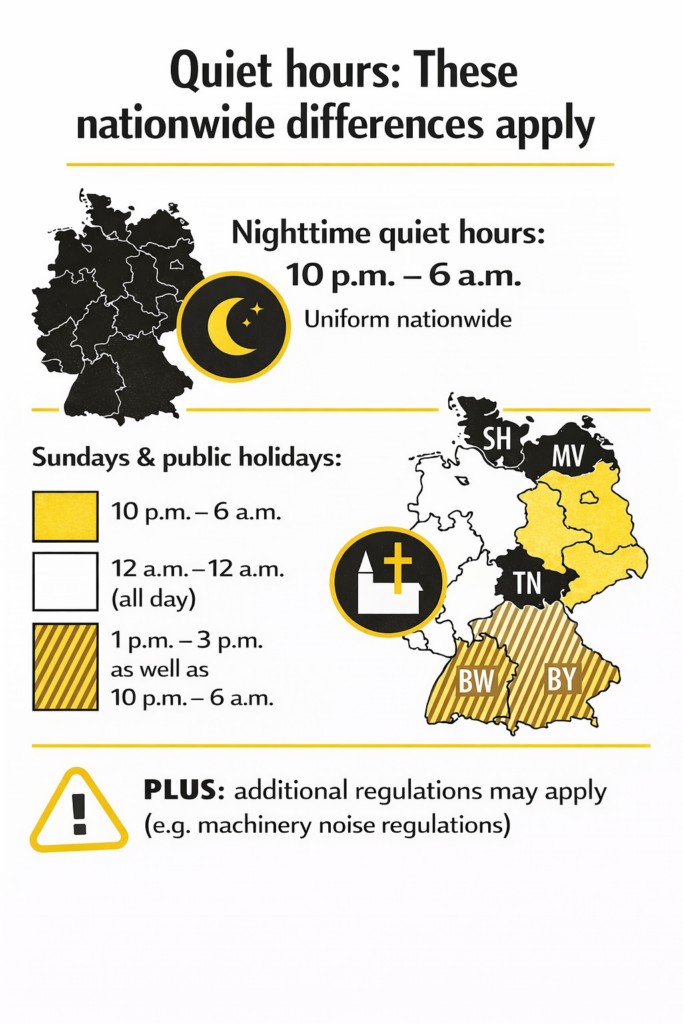
There are three main kinds of quiet periods businesses should keep in mind:
- Night-time Quiet (Nachtruhe): The most well-known type. Across Germany, night quiet hours usually run from 10 pm until 6 am or 7 am on weekdays and Saturdays. During this window, noise that could disturb others (like late-night deliveries or outdoor announcements) is generally restricted.
- Sundays and Public Holidays (Sonn- und Feiertagsruhe): These are treated as full quiet days. Throughout Sunday and official holidays, noise that would disturb the peace is discouraged or prohibited, and many retail stores are closed by law or local custom on Sundays.
- Midday Quiet (Mittagsruhe): In some towns or apartment buildings, there’s a midday quiet period — often between 12 pm and 3 pm — although this isn’t a universal legal requirement. Local ordinances or building rules (Hausordnung) might enforce it, especially in dense residential areas.
It’s worth noting that specific hours can vary slightly by region and local ordinance. For example, in Bavaria certain beer garden areas might shift quiet hours to accommodate local traditions. But the generally accepted standard is quiet nights and quiet Sundays across the country.
What Quiet Hours Actually Mean
Quiet hours in Germany aren’t about forcing total silence (people naturally talk, eat, or go about their day) but they are about restricting noise that is loud, repetitive, or easily heard outside of a property. The legal and cultural expectation is that noise above normal “room volume” is kept in check during these times
Noise that many take for granted, like:
- loud music,
- power tools,
- vacuuming,
- construction work,
- or noisy deliveries,
can become problematic if neighbours can hear it and feel disturbed. Even everyday machinery like lawn mowers or leaf blowers are typically restricted outside daytime hours, and certainly on Sundays or public holidays.
For retailers, “noise” isn’t limited to music from speakers or loud events. It includes service announcements, supply drop-offs that rumble through residential courtyards, amplified outdoor seating areas, or even delivery vans idling with engines running late at night. It’s worth thinking of quiet hours less as a strict list of banned actions and more as a guideline for considerate business planning.
Why Germany Takes Quiet Hours Seriously
Germany’s strict approach to noise isn’t random. It’s a combination of legal tradition, cultural values, and practical necessity. Quiet hours have roots in historic community norms and are reinforced by modern law to protect people’s right to rest, whether that’s after a long workday or on a traditional day of rest.
Several factors contribute to this emphasis:
- High population density: Many Germans live in multi-unit housing, and noise can travel easily.
- Strong legal framework: Quiet hours are backed by laws at the state and municipal level.
- Cultural respect for rest: Sundays and nights are widely respected as times for quiet, family life, and rest.
For retailers, understanding this context helps you plan operations in a way that fits local expectations rather than clashes with them. A respected community presence is often as important as legal compliance.
How Ruhezeit Affects Retailers
Quiet hours can intersect with retail operations in several practical ways:
Operating Hours & Events
If your store or venue wants to host evening events with music or announcements, quiet hours should shape your schedule. Loud entertainment late at night can lead to complaints, even if your venue is technically allowed to operate after 10 pm.
Deliveries and Logistics
Deliveries, waste pick-ups, and stocking operations can generate noise. Try to schedule these between 7 am and early evening — outside peak quiet periods — to avoid disturbing neighbours.
Outdoor Seating and Noise Spill
Outdoor seating areas, sidewalk cafes, and open doors can let sound drift into residential zones. Consider noise barriers, volume limits, or closing outdoor seating earlier on certain days.
Neighbour Relations
Customers and staff aren’t always aware of local quiet hours. Posting simple signs reminding them to keep noise down at closing time, or coordinating with nearby residents during busy seasons, can make a big difference.
What Happens If Rules Are Broken
Quiet hour rules in Germany aren’t enforced by a single nationwide authority, but local bodies and neighbours take them seriously. If someone is disturbed by noise during regulated times, the most common steps are:
- Polite neighbour complaints → often the first step, especially in residential buildings.
- Landlord or property manager involvement → if complaints persist.
- Local police or municipal order enforcement → fines or warnings can be issued.
While the severity of enforcement varies by city and circumstance, a repeated disturbance (especially late at night or on quiet days) can attract official attention. Retailers with frequent late-night operations should plan proactively rather than react to complaints.
Practical Tips for Retailers

Navigating Ruhezeit doesn’t have to feel like a guessing game. With the right planning and awareness, you can stay compliant, operate smoothly, and build a positive reputation in your community. Below are practical, tactical strategies that help you respect quiet hours while keeping your business running effectively.
Check Local Rules Thoroughly
Quiet hour regulations (Ruhezeit) are rooted in local and state rules — and those can vary from one city to another. While the basic nighttime quiet between around 10 pm and 6 am is common, some municipalities also include midday quiet or specific restrictions on Sundays and holidays. Before rolling out a plan for deliveries, events, or outdoor activities, take time to review the relevant city or municipal codes.
This level of detail should be part of your compliance checklist, similar to how you’d assess regulatory requirements in different parts of the German market when planning online expansion — it’s all about aligning your operations with local expectations. For more on navigating compliance complexities in the German retail space, see our guide on top regulatory and compliance issues impacting German e-commerce.
Plan Deliveries and Logistics Smartly
Convenient logistics are already a key pillar of retail success — both online and offline. Schedule deliveries and stock arrivals so they avoid early morning and late-night hours that fall within quiet periods. In mixed-use buildings or neighbourhoods where residential units sit beside commercial spaces, late-night rumbling trucks can quickly trigger complaints. Planning delivery windows thoughtfully is similar in spirit to how retailers prepare for operational challenges in cross-border settings, where timing and local expectations are critical to smooth fulfilment.
Manage Customer Flow and In-Store Noise
If you host evening events, have outdoor seating, or operate in late hours, keeping store noise under control becomes part of your customer experience strategy. Signposting closing times clearly and reminding guests (especially those in outdoor areas) about quieter behaviour later in the evening can reduce sound spill. Think of it like refining user flow and onsite experience in e-commerce: small changes lead to a smoother overall journey, whether it’s a physical or digital storefront.
Use Sound Mitigation and Infrastructure
Physical adjustments can do a lot of heavy lifting for you. Consider acoustic insulation, soft flooring, and strategic furniture placement to absorb or soften noise inside your retail space. Position any mechanical equipment (from outdoor heaters to refrigeration units) away from shared walls with residential units.
Build Goodwill With Your Neighbours
Sometimes a bit of human connection goes further than compliance checklists. If you’re planning a special event or anticipate higher evening noise than usual, sending a friendly note or chatting with nearby residents can go a long way. Let them know what’s happening, when noise will likely peak, and how you plan to keep it respectful.
Framing this outreach as part of your community engagement sets a positive tone and prevents misunderstandings before they escalate. For more guidance on meeting customer and community expectations in Germany, our piece on entering German e-commerce marketplaces: tips offers insight into how compliance and clarity benefit your brand reputation.
Respecting Ruhezeit Helps You Thrive
In Germany’s retail landscape, respecting Ruhezeit isn’t just about avoiding fines. It’s about signalling that you understand local norms, value resident comfort, and operate with integrity. Approaching operational planning through this lens will help you run a business that’s not only compliant but also respected. Retailers who align with both legal expectations and community standards are better positioned for long-term success, much like e-commerce players who embrace regulatory clarity and local market norms to strengthen their competitive edge.
Quick Reference: What & When
Here’s a simple gist of the main quiet periods to remember:
| Quiet Time Period | Typical Hours/Days | What to Avoid |
| Nighttime | 10 pm – 6/7 am (Mon–Sat) | Loud music, deliveries, events |
| Sundays & Public Holidays | All day | Most noise, many shops closed |
| Optional Midday | Often 12 pm – 3 pm (varies) | Loud machinery or house noise* |
Midday quiet is not legally enforced everywhere but may appear in local rules.
Quiet Hours Are Business Hours Too
Understanding Ruhezeit shouldn’t feel like a restriction — think of it as part of the rhythm of operating in Germany. Quiet hours reflect local expectations and legal standards that help communities live comfortably together. For retailers, compatibility with these norms means smoother operations, fewer complaints, and stronger relationships with neighbours and customers alike. By planning with Ruhezeit in mind, you can keep your business lively and successful without disturbing everyone else along the way.