Social media marketing in 2026: What DACH brands should expect?
Social media 2026 brings new pressure and new priorities. Explore how social media marketing in DACH is evolving around AI, video, influencers, UGC, and team capacity.

People running social media marketing often feel like they can’t catch up on all these new trends. And they face many problems. New platforms, more formats, more expectations. Budgets rarely stretch. And yet results are expected to be clearer, faster, and tied directly to revenue.
That tension defines social media 2026. Especially for brands operating across social media in DACH, where audiences value relevance, authenticity, and consistency over noise. This article, based on the Emplifi report, examines what marketers are actually dealing with right now, what’s working, and where pressure is continuing.
Let’s check that!
Social media 2026: pressure is rising, resources are not
Social media marketing drives awareness, community, conversions, and customer experience all at once. Expectations rise every year. Headcount does not.
Most teams enter 2026 knowing they need to do more with the same people. More content. More platforms. More reporting. More accountability. And this is especially visible in social media in DACH, where brands often manage multiple markets, languages, and audience nuances at once.
The real issue is scale. Not scale as in “go viral,” but scale as in “keep showing up consistently without breaking the team.”
That’s why many strategies now focus less on bold experiments and more on sustainability. Systems matter, processes matter. And the way teams prioritize matters even more.
AI in social media marketing: productivity gains, not miracles
AI has moved from curiosity to default in social media 2026. Most social teams already use it in daily workflows for:
- Writing captions
- Summarizing comments
- Speeding up planning.
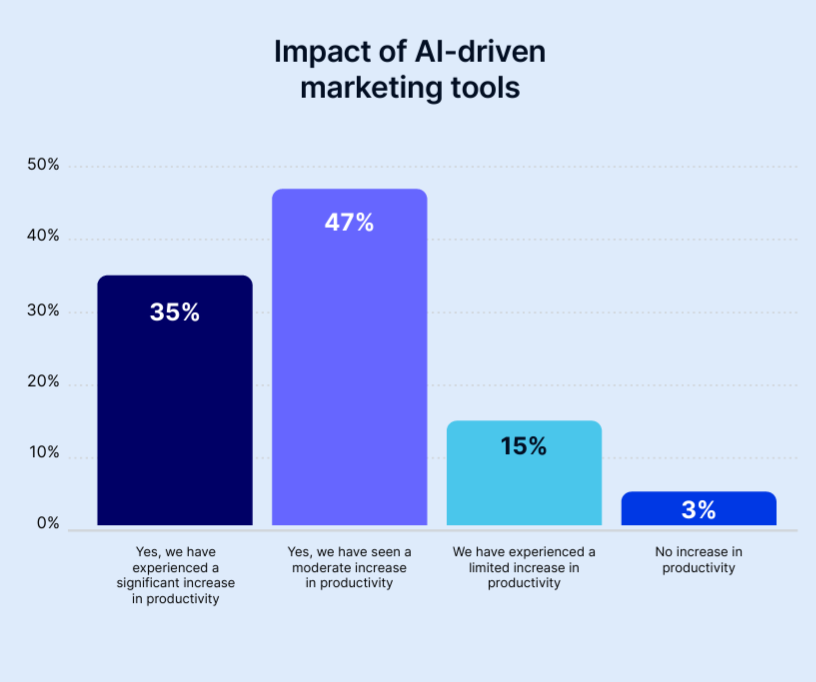
And for many, the payoff is real. Around 82% of marketers say AI tools have improved productivity, even if that improvement often feels gradual rather than dramatic.
That distinction matters. Only about 35% describe the productivity lift as significant, while nearly half say it’s moderate. This tells a clear story: AI is embedded in social media marketing, but it hasn’t reshaped everything yet.
And that’s fine. Its biggest contribution right now is time. Less friction. Fewer repetitive tasks. More room to focus on decisions that actually need human judgment.
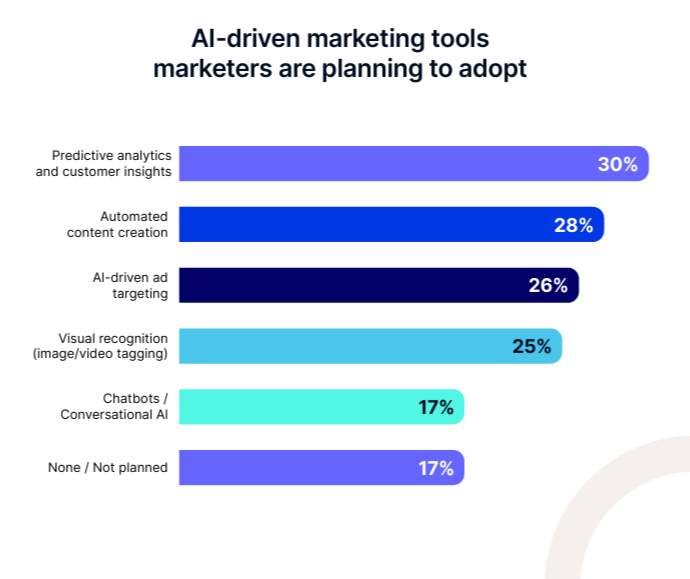
What changes in 2026 is where teams point AI next. Adoption is shifting toward deeper insight and smarter execution. Predictive analytics and customer understanding sit high on the priority list, followed closely by automated content creation and AI-driven ad targeting. Visual recognition and conversational AI also attract attention, especially as brands look for better ways to manage volume without losing context.
Limits are still very real. Data privacy remains a concern, particularly across social media in DACH, where regulatory expectations are high. Integration across tools continues to slow progress. Internal skills lag behind ambition. The friction isn’t about what AI can do. It’s about how ready organizations are to use it responsibly and at scale.
Influencer marketing grows up in 2026
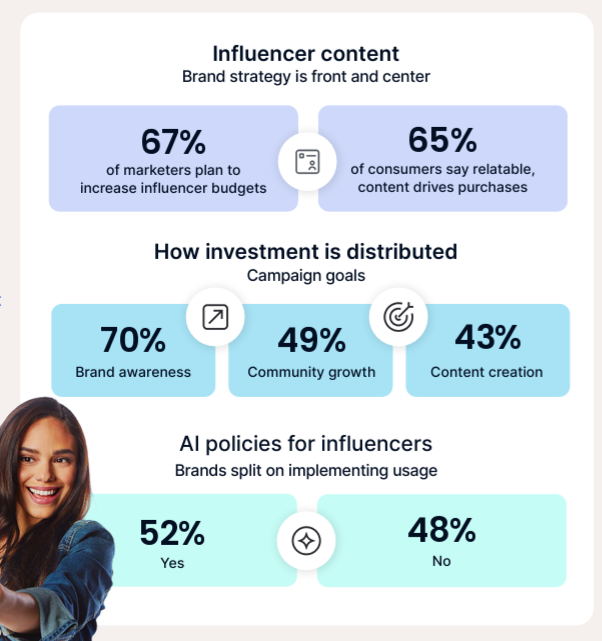
In social media 2026, influencer marketing sits right at the center of many brand strategies, with around two-thirds of marketers planning to increase influencer budgets this year. The shift is clear, and it’s intentional.
Budgets continue to grow, but the motivation has changed. This isn’t about chasing reach anymore. It’s about credibility, relevance, and content that feels human. Roughly 65% of consumers say relatable, creator-style content influences their purchases, while only a small minority respond to celebrity endorsements. That gap explains why this approach resonates so strongly across social media in DACH, where audiences tend to question overt advertising.
The structure of influencer programs reflects this shift. Brands lean heavily on micro and macro creators, with nearly half prioritizing each group. Micro creators bring trust, engagement, and niche depth. Macro creators bring awareness and cultural presence. Together, they create a layered approach that works across the funnel without forcing a single voice to do all the work.
The goals behind influencer campaigns also show how mature the channel has become. Brand awareness remains the leading objective, but community growth and content creation now follow closely behind. Sales and launches still matter, yet influencer marketing increasingly supports long-term brand building rather than one-off conversions.
One emerging angle in social media marketing for 2026 is experimentation with virtual influencers. More than half of marketers plan to increase collaborations in this area, testing new formats that offer consistency and control. For some brands, this opens creative possibilities. For others, it raises questions about authenticity. Either way, the willingness to experiment signals how open the channel has become.
User-generated content: trusted, but underused
User-generated content sits in a strange place in social media 2026. Almost everyone agrees it matters. In fact, 82% of marketers rate UGC as important to their content strategy. And yet, far fewer teams actually use it at scale.
UGC performs because it feels real. It shows products in real contexts. It reflects real opinions. And for social media marketing teams under pressure, it can lower production costs while increasing relevance. Still, execution lags behind belief. Only about a third of teams actively encourage and incorporate UGC, while nearly half rely on it only occasionally.
Most UGC today comes from familiar sources. Mentions and tags remain the most common, followed closely by customer reviews and testimonials, and photos or videos shared by customers. These formats are easy to access, but they’re often handled passively. Brands wait for content instead of shaping it with intent.
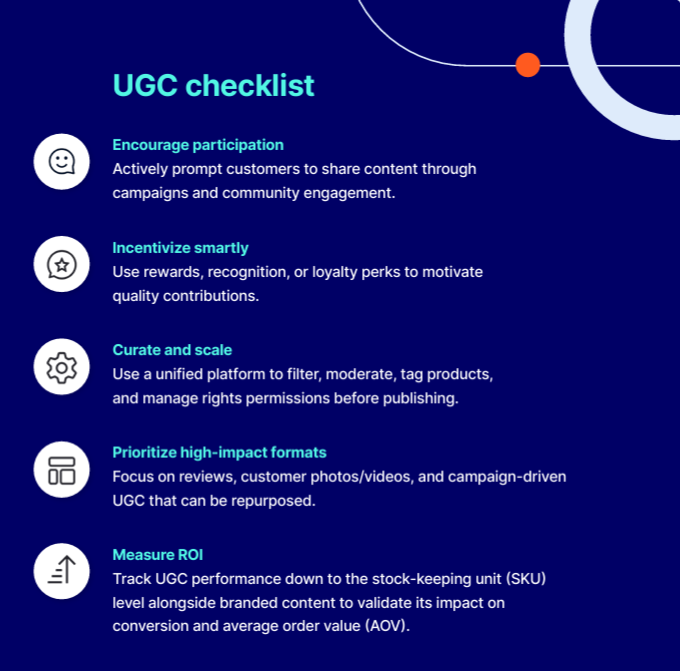
What changes in 2026 is direction. Teams plan to move toward more structured UGC formats. Campaign-driven contests, influencer content repurposed as UGC, and customer photos or videos are all gaining attention. These formats still feel organic, but they’re easier to manage, reuse, and align with broader campaigns across channels.
The barriers are practical, not philosophical. Collecting enough quality content is the biggest challenge, followed by measuring ROI, then moderation and rights management. Without systems, UGC becomes noisy fast. Valuable content gets lost. Legal risk slows teams down. Momentum fades.
That’s why UGC works best when treated as an operational stream, not a bonus. Clear guidelines. Simple participation mechanics. Centralized moderation. When those basics are in place, UGC becomes one of the most efficient engines in social media marketing.
Video takes the lead in social media 2026
Video has officially moved from “important” to “default.” In social media 2026, short-form video dominates content planning across industries.
The reason is practical. Short clips are fast to consume, easy to share, and favored by algorithms. They also fit the reality of modern teams. One video can be repurposed, trimmed, subtitled, and distributed across multiple platforms with minimal extra effort.
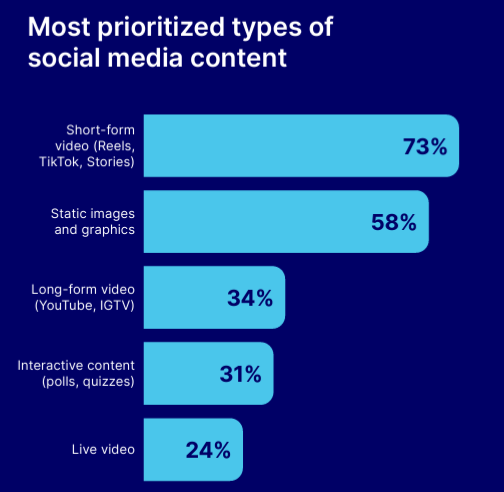
For social media marketing teams under pressure, video offers efficiency without sacrificing impact. It allows brands to show personality, explain value, and respond to trends quickly. This is especially relevant in social media in DACH, where authenticity often matters more than polish.
What’s changed is how video gets produced. Not every clip comes from a studio. UGC feeds into video. Influencer content becomes reusable assets. AI supports editing, captioning, and repurposing. The result is more output without linear growth in workload.
Longer formats still matter, but they serve different goals. They support depth, education, and trust-building rather than reach alone. Interactive formats like polls and live sessions also hold their place, especially for community engagement.
In 2026, video isn’t a trend to chase. It’s a foundation to build on.
Leadership support shapes social media success
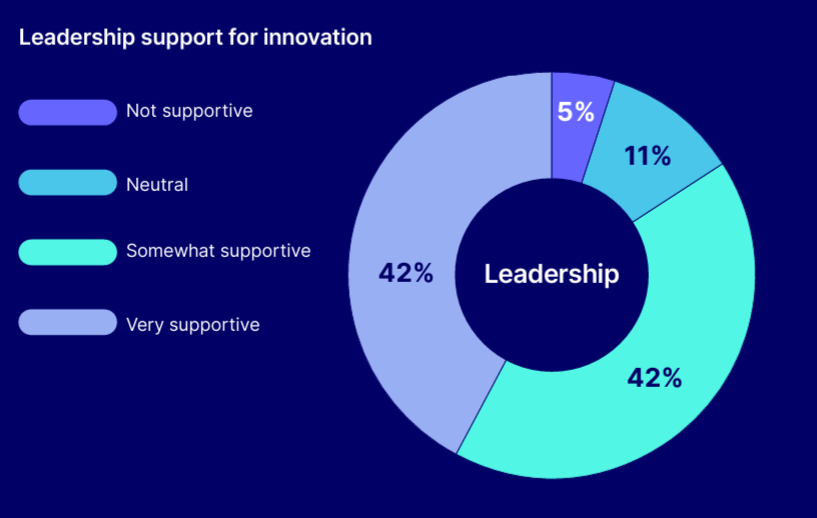
Social media marketing doesn’t operate in isolation anymore. In social media 2026, leadership support and cross-team collaboration play a decisive role in whether strategies scale or stall.
Many marketers feel encouraged to experiment with new tools and formats. That’s the good news. The challenge is that encouragement doesn’t always come with consistent resources. Budgets may be approved in principle, but tools, training, or time don’t always follow.
This gap shows up quickly in execution. Teams try to innovate while still juggling daily publishing, reporting, and community management. Without alignment, even strong ideas lose momentum.
Collaboration across marketing, commerce, and customer care is improving, but it’s uneven. Some teams work closely, sharing insights and coordinating messaging. Others operate side by side, connected in theory but not in practice.
What social media in DACH needs more of in 2026 is shared context. When teams see the same customer signals, campaigns feel coherent. When they don’t, messages fragment.
Leaders who close this gap focus less on structure charts and more on shared workflows. Unified dashboards. Regular joint planning. Clear ownership. These details turn collaboration from a goal into a habit.
Team capacity and burnout: the quiet limiter
Behind every social feed is a small team doing a lot of work. In social media 2026, capacity is the constraint most teams feel first.
Many social media marketing teams remain small. They handle content creation, analytics, community management, paid coordination, and crisis response all at once. On paper, workloads often look manageable. In reality, the “always-on” nature of social wears people down.
Burnout doesn’t always announce itself loudly. It shows up as slower responses, reduced creativity, or reluctance to experiment. Over time, performance suffers, even if output stays high.
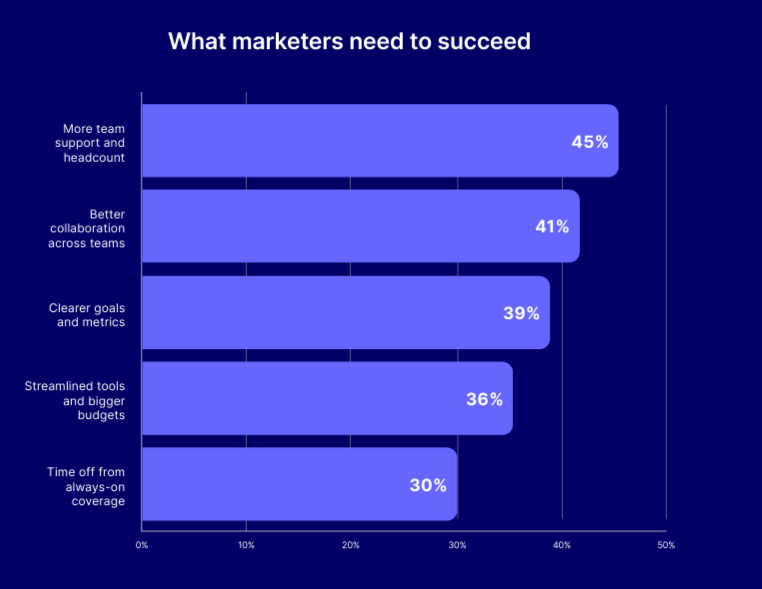
What marketers say they need is consistent. More support. Better collaboration. Clearer goals. Smarter tools. Time to step back without fear of missing something important.
In social media in DACH, where precision and trust matter, burned-out teams struggle to maintain quality. The risk isn’t just employee turnover. It’s brand inconsistency.
The fix isn’t pushing harder. It’s designing workflows that reduce friction. Automation where it helps. Clear escalation paths. Defined coverage windows. When teams feel protected, creativity returns.
Social media strategy in 2026: fewer bets, clearer roles
Social media strategy in 2026 looks calmer on the surface, but it’s far more deliberate underneath. Teams are no longer trying to be everywhere in the same way. Instead, they’re deciding why each platform exists in their mix.
Instagram remains a priority because it balances storytelling and engagement well. LinkedIn plays a strong role for thought leadership and B2B influence. TikTok fuels discovery and cultural relevance. Facebook continues to support community and reach, even if it’s less shiny than before.
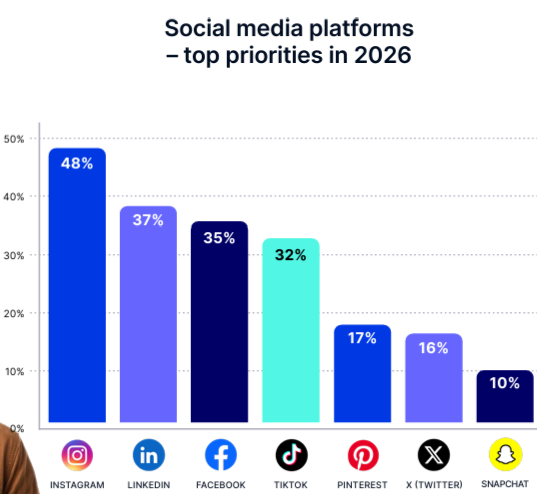
What stands out in social media 2026 is diversification without chaos. Brands spread across platforms, but they don’t copy-paste content anymore. Each channel gets a role. Each role gets content designed for that audience. Efficiency comes from clarity, not volume.
Another quiet shift is early interest in community-driven spaces. Platforms like Reddit attract attention not for scale, but for depth. For some brands, these spaces offer honest feedback and long-form discussion that traditional feeds struggle to support.
The strategy lesson for 2026 is simple: fewer assumptions, clearer intent. Social media marketing works best when every platform earns its place.
What social media in DACH needs to focus on next
Most brands are already present on the right platforms. The challenge now is how those platforms are used, connected, and maintained over time.
One clear focus is integration.
Social media marketing in DACH works best when publishing, analytics, influencer activity, customer care, and commerce signals live closer together. Fragmented tools slow teams down and blur accountability. Brands that simplify their setup gain speed without adding pressure.
Another priority is governance.
As AI becomes a daily part of workflows, teams need clear rules around usage, approvals, and brand safety. Not heavy policy documents, but practical guardrails that protect trust while keeping momentum. In social media 2026, confidence comes from clarity.
Content planning also shifts forward.
Instead of chasing volume, teams benefit from building modular content systems. Assets that can be reused, localized, and adapted across markets reduce effort and improve consistency. This matters especially for social media in DACH, where regional nuance is expected.
Community deserves more attention too.
Audiences want interaction, not broadcasting. That means better listening, faster response loops, and closer ties between social and customer-facing teams. When feedback flows naturally, social media marketing becomes a source of insight, not just output.
Finally, sustainability moves to the center.
Teams need realistic scopes, protected downtime, and workflows that support long-term performance. Burnout limits creativity more than any algorithm change.
What comes next is deliberate. Brands that invest in structure, alignment, and people will find that social media 2026 feels less overwhelming and far more effective.