What Shein’s expansion into Europe means for e-commerce pricing
Shein’s expansion into Europe is reshaping e-commerce pricing. Learn how low-cost imports, margin pressure, and predictive pricing are changing retail strategies. (Ad)

European e-commerce has become accustomed to intense competition, with price transparency, fast switching costs, and promotion-heavy calendars being the norm for years. However, recent data suggests that competitive pressure is entering a new phase, driven by a sharp increase in low-cost supply entering the European market from China.
An analysis conducted jointly by Kearney and 7Learnings indicates that imports of typical promotional products into Europe increased by around 11% ahead of the 2025 Black Friday period. This influx is particularly pronounced in categories such as bedding, toys, small electronics, and apparel, all of which are core e-commerce categories with high price sensitivity and low switching barriers.
While the discussion around Chinese platforms such as Shein often focuses on geopolitics or regulation, the more immediate implications for e-commerce teams are operational: pricing pressure, margin volatility, and changing customer expectations.
Why e-commerce feels the pressure first
E-commerce is structurally more exposed to supply-driven price shocks than brick-and-mortar retail.
Online channels combine:
● Near-perfect price transparency,
● Easy substitution between sellers,
● Algorithmic competitor monitoring,
● Strong reliance on promotional demand.
When supply expands faster than demand, these dynamics amplify price competition almost immediately. In the weeks leading up to and during Black Friday 2025, this effect materialised clearly across multiple categories.
Retailers faced earlier and steeper discounting cycles in response to declining relative price positions. Promotions started sooner, ran longer, and delivered lower incremental uplift than in previous years.
Chinese platforms are competing differently, not just more aggressively
One common misconception is that platforms like Shein and other Chinese players are simply engaging in extreme price dumping. In reality, their approach reflects a different commercial logic.
Chinese digital retailers increasingly treat price as a customer-acquisition and retention tool rather than purely a margin lever. Instead of allocating the majority of growth budgets to paid advertising, parts of that spend are redirected into:
- Subsidised entry prices,
- First-purchase incentives,
- Engagement-based discounts,
- Rapid price adjustments tied to demand signals.
In effect, price becomes a substitute for marketing spend, especially in highly competitive online categories where customer acquisition costs via traditional ad platforms continue to rise.
For European e-commerce retailers, this changes the nature of competition. The challenge becomes about competing against business models that integrate pricing, marketing, and demand generation far more tightly.
What this means for pricing and promotion strategies
The data does not suggest that European retailers can, or should, replicate Chinese pricing models wholesale. Cost structures, supply chains, and regulatory frameworks are fundamentally different.
However, it does indicate that traditional, calendar-based discounting approaches are becoming increasingly risky in an environment of oversupply and algorithmic competition. Several implications stand out for e-commerce pricing teams:
1. Blanket discounting becomes more expensive
Across-the-board promotions may protect short-term volume, but they also accelerate margin erosion when supply pressure is high.
2. Timing matters more than depth
Earlier discounting is often used as a defensive reaction to excess inventory. Without demand forecasting and elasticity modelling, this can lead to unnecessary margin sacrifice.
3. Price investments need to be targeted
Rather than treating discounts as a uniform lever, leading retailers increasingly differentiate by customer segment, product role, and inventory risk.
From reactive pricing to predictive decision-making
One clear takeaway from recent market dynamics is the need for more predictive pricing capabilities in e-commerce.
Instead of reacting to competitor moves after the fact, pricing decisions increasingly need to be informed by:
● Demand forecasts,
● Price elasticity estimates,
● Inventory exposure,
● Expected competitor reactions.
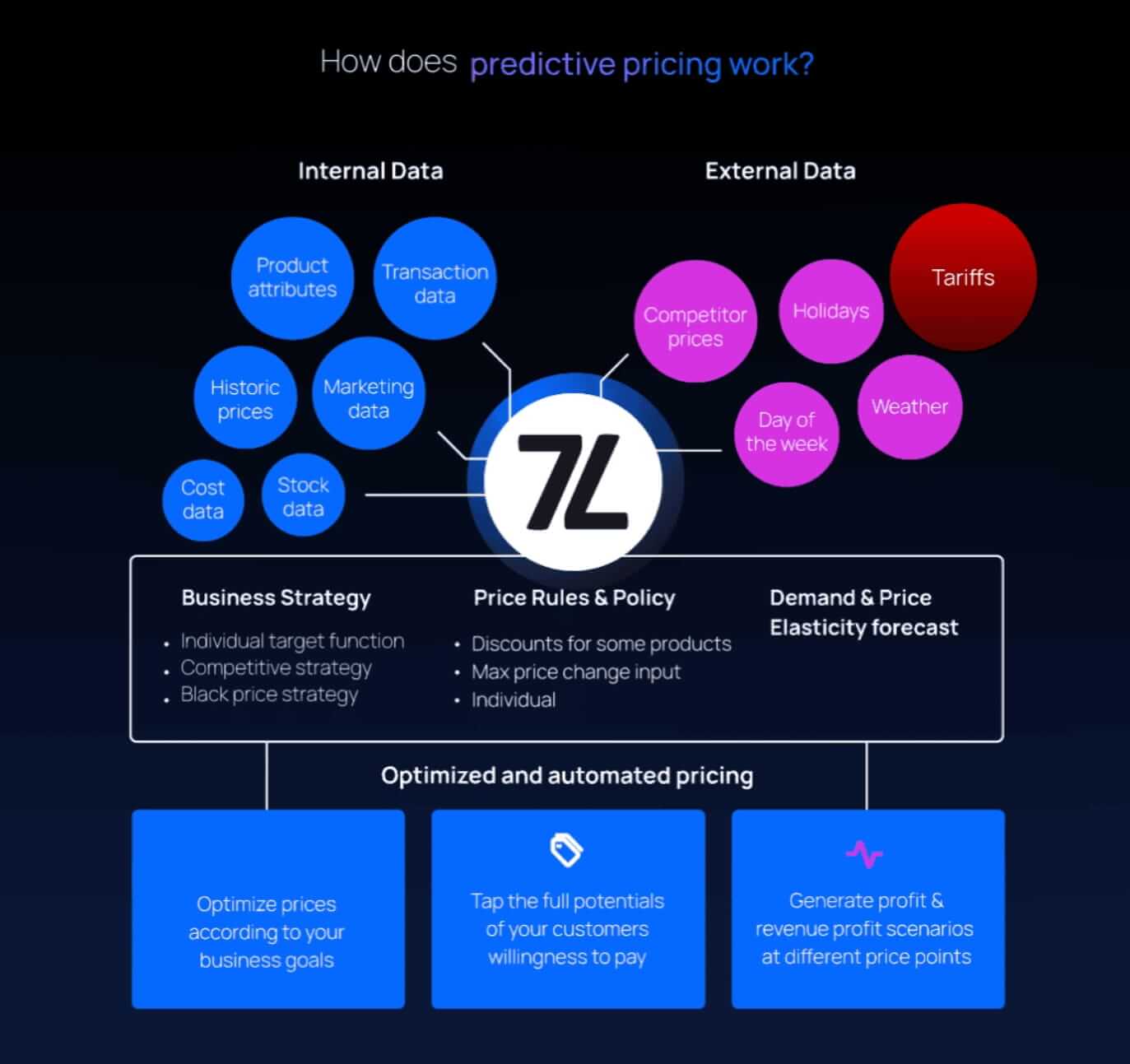
This allows retailers to distinguish between situations where price reductions are necessary to unlock demand and those where discounting mainly destroys margin without incremental volume gains. In oversupplied markets, this distinction becomes critical.
Competing beyond price
While price pressure is real, it is not the only competitive dimension available to European e-commerce players.
Areas where European retailers retain structural advantages include:
● Trusted delivery and returns,
● Regulatory compliance and product safety,
● Quality assurance,
● Sustainability and transparency,
● Established brand relationships with customers.
The challenge lies in protecting these advantages while using pricing strategically, rather than defensively.
Looking ahead
Regulatory measures aimed at cross-border imports may alter the competitive landscape over time, but they are unlikely to change near-term dynamics for e-commerce teams planning upcoming promotional cycles.
In the short to medium term, the data suggests that pricing discipline, inventory agility, and predictive decision-making will play an increasingly important role in determining profitability.
For European e-commerce retailers, the key question is whether pricing and promotion strategies are currently equipped to handle it.
About 7Learnings
7Learnings provides an AI-powered pricing platform for retailers and brands and is pioneering the comprehensive optimization of pricing and performance marketing. With 7Learnings’ machine learning algorithm, retailers and brands can predict the impact of pricing decisions, determine the optimal price for all products and reduce manual work by up to 80 per cent. The solution has been rigorously tested in numerous A/B experiments and consistently delivers measurable performance improvements and profit increases of more than ten percent.
7Learnings was founded in Berlin in 2019 by Felix Hoffmann, Eiko van Hettinga, and Martin Nowak. Its customers include international companies such as Westwing, Bonprix, Tom Tailor, Tamaris, and DK Company.