Why euro containers are key to streamlining fulfilment centres across Germany
Learn how euro containers improve warehouse efficiency in Germany, including insights into storage, picking and transport optimisation. (Ad)

Fulfilment centres across Germany are under increasing pressure to process orders faster, manage returns more efficiently and keep warehouse operations scalable. As e-commerce volumes fluctuate throughout the year, even small inefficiencies in storage, picking or internal transport can quickly become costly bottlenecks.
This is where stackable euro containers play an important role. They give fulfilment teams a standardised, reusable handling unit that can move smoothly through goods receipt, storage, picking, packing and dispatch. Instead of adapting processes to different box sizes or improvised packaging, warehouses can build repeatable workflows around containers that are designed for logistics environments.
For German fulfilment centres, euro containers are not just storage boxes. They are part of the operational infrastructure that helps teams save space, reduce manual handling and keep goods moving with fewer interruptions.
The Role of Standardisation in Modern Fulfilment Operations
Standardisation is one of the simplest ways to make fulfilment more predictable. When containers follow consistent dimensions, warehouse teams can plan shelf space, pallet loads, picking routes and transport flows more accurately.
This matters especially in e-commerce, where fulfilment centres often handle thousands of different SKUs, seasonal peaks and high return volumes. A standard container format reduces exceptions in daily operations. It also makes it easier to train staff, organise inventory and integrate manual processes with automated systems.
In short, standardisation helps turn complex fulfilment activity into a more controlled and measurable process.
What Are Euro Containers and Why Are They Industry Standard?
Euro containers are reusable plastic containers designed around common European logistics dimensions. Typical formats include 600 × 400 mm and 400 × 300 mm, which fit efficiently with the 800 × 1200 mm Euro pallet system.
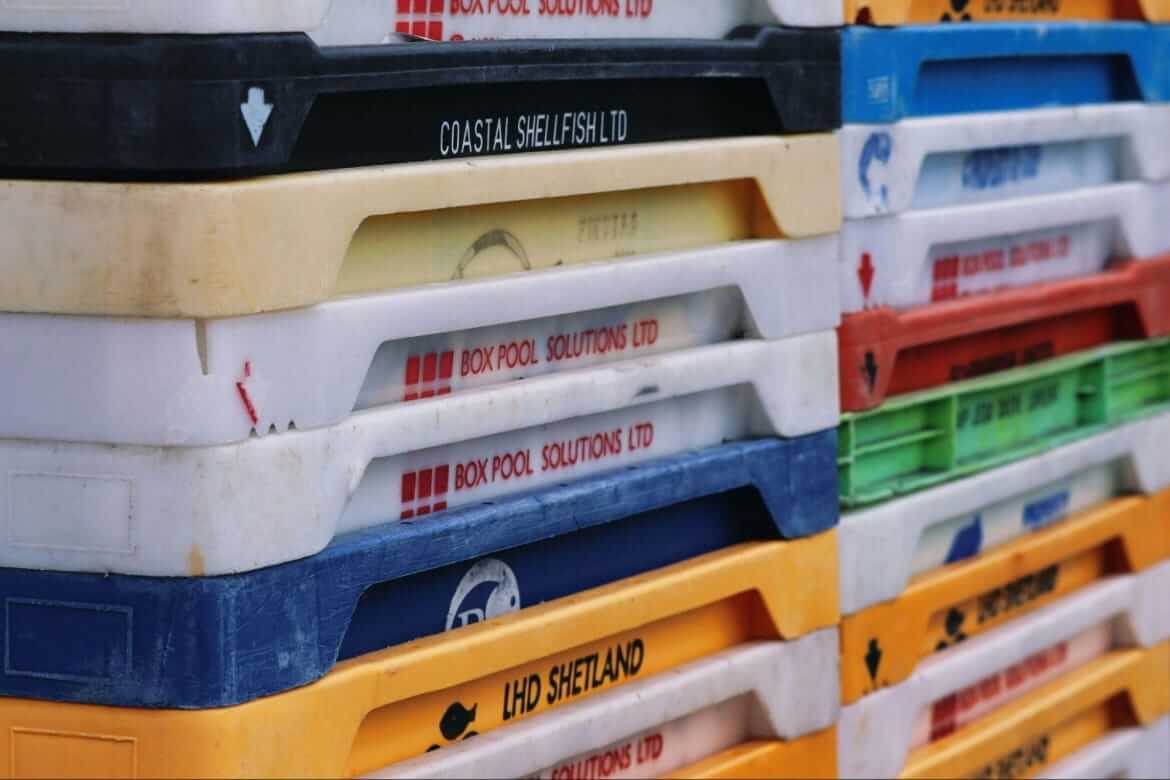
Their popularity comes from this modular logic. In fulfilment centres, stackable euro containers can be securely placed on top of one another, moved on trolleys or conveyors and used across different warehouse zones without changing the basic handling process. Depending on the application, they are available with closed or perforated sides, lids, reinforced bases and different heights.
That flexibility makes them useful for many fulfilment tasks, from storing small parts to transporting picked orders or sorting returns. Because they are durable and reusable, they also support a more efficient alternative to single-use packaging in internal logistics.
How Euro Containers Improve Warehouse Efficiency
Warehouse efficiency depends on how smoothly goods move from one process step to the next. Euro containers support this by creating a consistent handling unit for storage, picking, sorting and internal transport. Instead of relying on mixed cartons or non-standard boxes, fulfilment teams can work with containers that are easier to stack, label, scan and move.
1. Reduced Handling Time and Faster Picking Processes
In high-volume fulfilment centres, every unnecessary touchpoint slows the operation down. Euro containers help reduce handling time because products can remain in the same container across several stages of the workflow.
For example, items can be received, sorted into containers, moved to picking zones and transferred to packing stations without repeated repacking. This supports faster replenishment and more structured batch picking, especially when different product groups or order priorities need to be separated clearly.
Consistent container sizes also make it easier for staff to recognise, lift and position units correctly. That may sound simple, but in daily warehouse operations, predictable handling often translates directly into fewer delays and fewer errors.
2. Optimised Space Utilisation in Storage and Transport
Space is one of the most expensive resources in a fulfilment centre. Euro containers help make better use of it because their modular dimensions fit efficiently on shelves, carts, pallets and staging areas.
Their stackability also allows warehouses to use vertical space more effectively. Empty or full containers can be arranged in stable stacks, reducing clutter in aisles and improving the organisation of temporary storage zones.
In transport, the same modularity helps avoid wasted pallet space. This is particularly useful for German fulfilment centres that need to move goods between warehouses, carrier hubs, retail partners or returns processing locations.
3. Compatibility with Automated Systems and Robotics
As fulfilment centres invest in conveyor systems, automated storage solutions and mobile robotics, standardised containers become even more valuable. Automation works best when the system can rely on predictable dimensions, stable bases and repeatable movement patterns.
Euro containers can support this transition because they are easier to integrate into conveyor lines, shuttle systems, picking stations and automated storage areas than irregular packaging. They provide a bridge between manual warehouse work and more advanced intralogistics setups.
This does not mean every euro container is suitable for every automated system. However, using a standardised container family gives fulfilment centres a stronger foundation for automation, process optimisation and future scaling.
The Impact on Cost Efficiency and Sustainability
Euro containers can also support cost control and sustainability goals in fulfilment operations. While they require an initial investment, their long service life and repeated use can reduce dependence on disposable packaging within internal warehouse flows.
This argument is supported by a Fraunhofer UMSICHT and Fraunhofer IML study on reusable plastic packaging systems, which found that reusable systems performed better than single-use alternatives in 14 out of 17 assessed categories, including aspects such as material efficiency, product protection and sustainability.
For German e-commerce businesses, this matters because logistics costs are shaped not only by carrier prices, but also by labour, storage density, damage prevention and waste management.
1. Lower Packaging and Transport Costs
In many fulfilment centres, single-use cartons are still used for temporary storage, internal movement or sorting. Euro containers offer a more durable alternative for these recurring processes.
Because they are reusable, they can reduce the need for replacement packaging in goods receipt, picking and returns handling. Their standard dimensions also help teams plan pallet loads and transport routes more efficiently, which can lower wasted space during internal or inter-site transport.
2. Reusability and Circular Logistics Systems
Sustainability in fulfilment is increasingly linked to circular systems: using materials for longer, reducing waste and designing processes around returnable assets. Euro containers fit naturally into this model.
They can move repeatedly between warehouse zones, suppliers, production sites or returns centres. At the end of their service life, many plastic containers can also be recycled, depending on material type and local recycling infrastructure.
This makes them particularly relevant for companies looking to reduce single-use packaging in internal logistics without compromising operational reliability.
3. Reduced Damage Rates in Transit
Product damage is expensive. It creates replacement costs, refund requests, additional customer service work and unnecessary waste.
Euro containers help reduce these risks by offering stable stacking, rigid sidewalls and better protection than improvised packaging during internal transport. Lids, inserts or dedicated container sizes can further protect sensitive goods.
For fulfilment centres handling high SKU volumes, fewer damaged items means smoother operations, lower avoidable costs and a more reliable customer experience.
Integration into Existing Supply Chains
One of the biggest advantages of euro containers is that they do not require fulfilment centres to redesign their entire logistics setup. In most cases, they can be introduced step by step: first in goods receipt, then in picking, returns handling or internal replenishment.
This makes them especially practical for growing e-commerce operations. Teams can standardise high-frequency workflows without replacing every existing storage or transport system at once.
Compatibility with pallets, conveyor systems and IBC containers
Euro containers are designed to work with established European logistics infrastructure. Their modular dimensions make them suitable for Euro pallets, shelving systems, trolleys and many conveyor setups.
They can also complement larger transport and storage units, such as plastic pallets or IBC containers, in supply chains where products move between production, warehousing and distribution. This compatibility helps companies create a more connected material flow, from bulk handling to small-item fulfilment.
Flexibility across industries and product types
Although they are highly relevant for e-commerce, euro containers are not limited to online retail. They are also used in manufacturing, food logistics, automotive supply chains, healthcare, technical components and returns processing.
This cross-industry flexibility is useful for fulfilment providers serving different clients from the same warehouse. A single container system can support very different product groups, from lightweight accessories to spare parts or packaged consumer goods.
For operations with changing demand, this flexibility helps avoid over-specialised infrastructure. Containers can be reassigned, relabelled and reused as order profiles shift.
Why German Fulfilment Centres Are Adopting Euro Containers at Scale
German fulfilment centres are adopting euro containers because they match the direction of the market: faster processing, tighter space management, automation readiness and more sustainable internal logistics.
As Germany’s online retail sector continues to evolve, fulfilment is becoming a strategic differentiator rather than a back-office function. Ecommerce Germany has also highlighted how growth, automation and operational efficiency are shaping the future of Germany’s online retail market.
In that context, euro containers offer a practical solution. They are not complex technology, but they make complex operations easier to control. For warehouses that need to scale without losing accuracy, that is exactly the kind of infrastructure that matters.
Conclusion: A Strategic Shift Towards Efficient and Scalable Fulfilment
Euro containers may be a simple element of warehouse infrastructure, but their impact on fulfilment performance is significant. By standardising how goods are stored, moved, picked and returned, they help fulfilment centres reduce complexity in daily operations.
For e-commerce companies in Germany, this is becoming increasingly important. Faster delivery expectations, high return volumes and pressure on logistics costs require systems that are reliable, reusable and easy to scale.
Euro containers support exactly that. They improve space utilisation, reduce unnecessary handling, fit into existing supply chains and provide a practical basis for automation. As fulfilment centres continue to modernise, they will remain a key tool for building more efficient, flexible and sustainable logistics operations.