German shoppers have the highest delivery standards in Europe – and most online retailers are failing to meet them
German shoppers expect fast delivery, flexible shipping, and easy returns. Discover the delivery gaps costing online retailers customers. (Ad)

For many European online retailers, shipping is still just an afterthought. They offer the same delivery options for every market and hope their strategy pays off. But in Germany, that approach only goes so far. Consumers are willing to make compromises on delivery, but only on their own terms.
For our E-Commerce Delivery Compass 2026, we surveyed 8,000 online shoppers across eight European markets on their expectations around delivery, shipping options, communication, checkout, and returns. The findings for Germany were striking, and every retailer active in this market should pay attention.
In this article, you’ll find out what German online shoppers actually want, and what you can do about it.
Fast delivery matters more than you might think
Most European consumers have realistic delivery speed expectations: 36.90% expect delivery within 2–3 days, and 33.78% are happy to wait up to 4–5 days.
German consumers are not quite so forgiving. Almost half the market (46.11%) expects delivery within 2–3 days, the strictest expectation in our study. A one-size-fits-all European delivery promise of 3–5 days simply doesn’t cut it here.
Align your delivery strategy with German customer expectations: ideally, deliver within 2 days. If that’s not possible, showing a specific delivery date at checkout builds more trust than a vague timeframe like “2–5 business days”. Even committing to “delivery within 2 business days” with a visible order cut-off (e.g. “order before 2pm for next-day dispatch”) gives shoppers the certainty they’re looking for.
Important: only make promises you can actually keep, because the cost of getting it wrong is real. Nearly 1 in 3 European shoppers doesn’t return to a store after a delivery problem like a delay. In Germany, where expectations are already the highest in Europe, a broken delivery promise costs you more than in almost any other market.
The takeaway is straightforward: set a specific delivery promise for the German market, display it clearly at checkout, and build your fulfilment operations around it.
One practical way to do this without overhauling your entire logistics setup is to segment your promise by region or fulfilment centre. If you can reliably hit 2-day delivery for customers in major German cities, make that promise visible for those customers. Even partial coverage of a faster promise is better than a generic range that undersells what you can actually deliver.
Small details like an ‘Order by 2pm for next-day delivery’ countdown on the product page can also push undecided shoppers to convert, and set the right expectation before they even reach checkout.
Multiple checkout options are no longer optional
Next to reliable delivery, German online shoppers also want to choose how their order arrives.
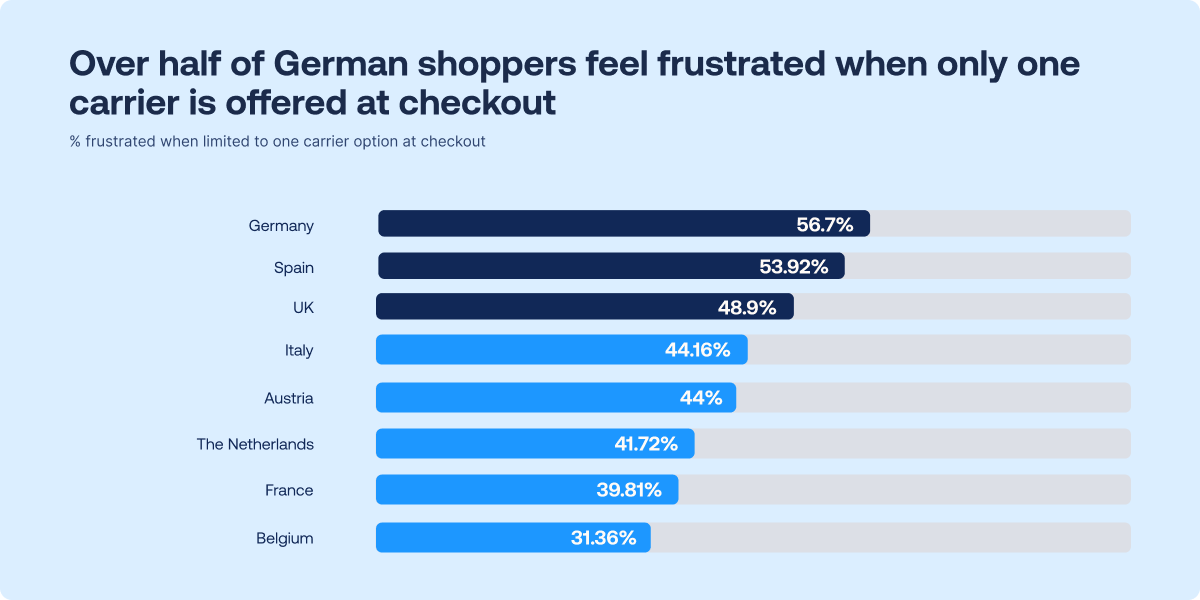
56.7% feel frustrated when only one carrier is offered at checkout. That makes Germany the second-highest market in Europe for delivery flexibility expectations, just behind Spain (53.92%). In other words, offering multiple shipping options at checkout directly affects your conversion rate.
Germany’s cart abandonment rate due to delivery-related issues is comparatively low. But at least 4 in 10 German shoppers have abandoned a purchase in the past three months after a poor delivery experience. That’s a meaningful share of repeat customers walking away quietly.
Three options at checkout can already make a significant difference in the German market:
- Home delivery
- Out-of-home delivery (parcel locker or service point)
- Express shipping
This covers the three main things shoppers want: convenience, flexibility, and the option to pay for speed when they need it. You don’t need to integrate seven carriers. You need to offer genuine choices.
Germany has excellent Packstation infrastructure, which makes parcel lockers a natural and well-used option for local shoppers. Including at least one out-of-home alternative at checkout is low-effort and high-impact. This combination gives customers more control, reduces friction at the point of purchase, and signals to German shoppers that you understand their market.
It also helps with the practical reality that not everyone is home during delivery hours. Parcel lockers and service points remove the uncertainty of a missed delivery, which is one of the most common reasons German shoppers cite for preferring out-of-home options. Offering this choice at checkout, rather than only after a failed delivery attempt, is a small but meaningful improvement to the shopping experience.
The carrier shapes the post-purchase experience
One of the most surprising findings in our study: German online shoppers largely prefer delivery updates to come directly from the carrier. 65.76% favour carrier notifications over messages from the retailer. After the Netherlands (74.4%), Germany has the highest preference for this in Europe.
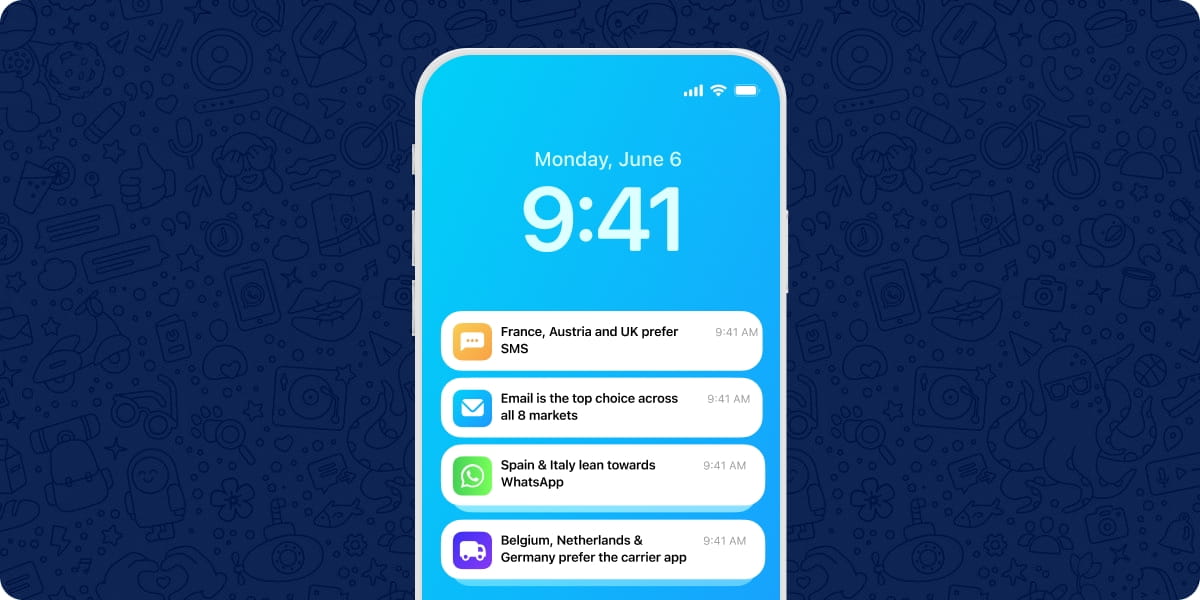
For online retailers, this has a clear implication: after purchase, the carrier becomes the most important touchpoint with the customer. The quality of the delivery and shipping communication often has a bigger impact on the customer experience than anything the retailer sends.
That doesn’t mean retailers can hand over responsibility for the post-purchase experience. Customers do distinguish between the retailer and the carrier, but when the delivery goes wrong, they still hold the shop responsible. Poor or unclear tracking updates, late notifications, or problems at the door all affect how your brand is perceived.
Another finding underlines just how high the stakes are: 22.47% of German consumers have not reordered from a shop because of a damaged parcel, the highest rate in Europe.
It’s a reminder that what happens after checkout is just as important as the purchase experience itself, and that your carrier’s handling of parcels is an extension of your brand promise.
Choosing the right carrier is therefore far more than an operational decision. Before auditing your own post-purchase emails, review your carrier’s customer-facing tracking communications. Are the updates clear? Are they arriving on time? Is the formatting clean and professional? In Germany, a poor carrier notification experience reflects directly on your brand.
Regularly assess the service quality of your shipping partners and treat carrier selection as a customer experience decision. Clear tracking, reliable status updates, and careful handling of parcels all build trust and are decisive for a positive post-purchase experience.
Returns are now mainstream
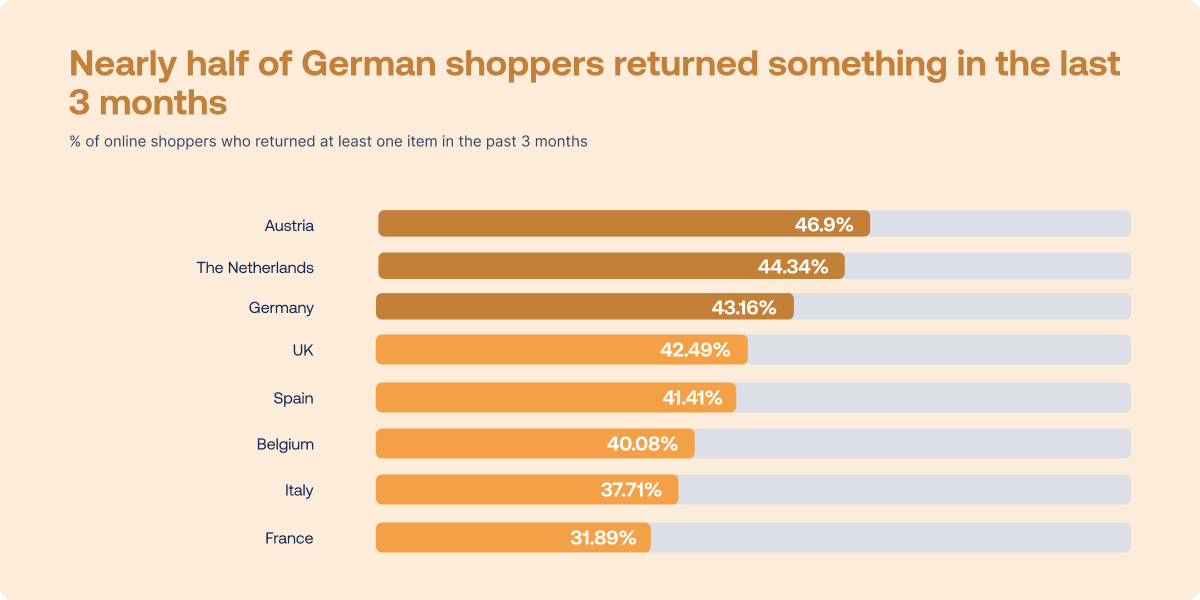
43.16% of German online shoppers returned at least one item in the past three months. Germany has a clear “try first, decide later” shopping mindset, especially in categories like fashion, footwear, and electronics.
Hassle-free, label-free returns (via QR code, for example) are no longer a nice-to-have in this market. German customers expect them, or simply take them for granted.
Where possible, offer simple, label-free returns as your default. Every hurdle in the returns process doesn’t just affect the current order, it determines whether customers come back to you at all. Friction in the return flow costs you the next purchase, not just this one.
A transparent returns policy can also be a real competitive advantage. Showing all the key returns information directly on the product page builds trust and removes uncertainty from the buying process, turning hesitation into a purchase decision. A note buried in the footer rarely does the job. Customers want to know what happens if something doesn’t fit before they commit to buying it, not after.
Think about what information shoppers actually need at the point of purchase: how long they have to return an item, whether the return is free, what the refund timeline looks like, and where they can drop off a parcel. Answering these questions upfront, on the product page or in a visible returns widget, removes a significant barrier for first-time buyers especially.
German consumers are demanding, but loyal
Germany is not a complicated market, once you understand what German consumers actually expect: fast delivery, multiple shipping options, reliable post-purchase communication, and easy returns.
Get these right to build a strong foundation of trust and improve retention, while you also naturally stand out from competitors. Most e-commerce retailers operating across Europe haven’t adapted their delivery strategy market by market. The ones that do have a real and measurable advantage. Treat Germany like any other European market and you’ll lose customers without ever quite knowing why.
The good news is that a few targeted improvements can go a long way. With clear delivery promises, at least three checkout options, reliable carrier communication, and a straightforward returns process, you’ll get ahead in the German market faster than many of your competitors.
Our research helps you align your delivery strategy with customer expectations and optimise the delivery process for different markets whether you sell in Germany, across Europe, or worldwide. It’s designed to help you see where the gaps are between what you’re currently offering and what shoppers in each market actually expect.
Want to know how shopper expectations differ across other European markets? Read the full E-Commerce Delivery Compass 2026 and discover the key insights and online shopping trends from across Europe.
About Sendcloud
Sendcloud is Europe’s leading shipping platform for e-commerce businesses that want to scale their shipping operations and deliver an outstanding customer experience. Backed by SoftBank and trusted by more than 35,000 brands across Europe, we work every day to make shipping as simple as possible, wherever you sell.
Author bio
Kate is part of the Product Marketing team at Sendcloud, focused on helping merchants simplify shipping, scale operations, and turn delivery into a competitive advantage.
***
This article is part of a winner’s prize at the E-commerce Germany Awards 2026. If you’d like to learn more about the awards, visit this website: