OTTO launches AI Assistants for shopping and customer service
Written by
Editorial TeamPublished on
OTTO introduces two AI assistants: one for conversational product discovery and another for automated customer service inside the OTTO platform.
Artificial intelligence is increasingly becoming part of the infrastructure that powers digital commerce. On March 5, 2026, OTTO, Germany’s largest online shop, announced the introduction of two new AI-based systems designed to support customers throughout their shopping journey.
The company has launched two OTTO AI assistants: one focused on helping users find products more easily within the OTTO app, and another designed to automate customer service inquiries. Together, these assistants aim to make the shopping experience more conversational, faster, and easier for customers.
The shopping assistant was developed by OTTO in collaboration with Google and is built using Google’s Gemini AI technology. At the same time, OTTO has developed a separate in-house AI assistant to handle service requests such as delivery questions or invoice issues.
According to OTTO, the introduction of these assistants marks an important step toward a more AI-driven shopping experience on the platform.
A Conversational Approach to Product Discovery
The first of the two OTTO AI assistants focuses on product discovery and personalized recommendations. It allows customers to search for products using natural language rather than navigating through traditional category filters.
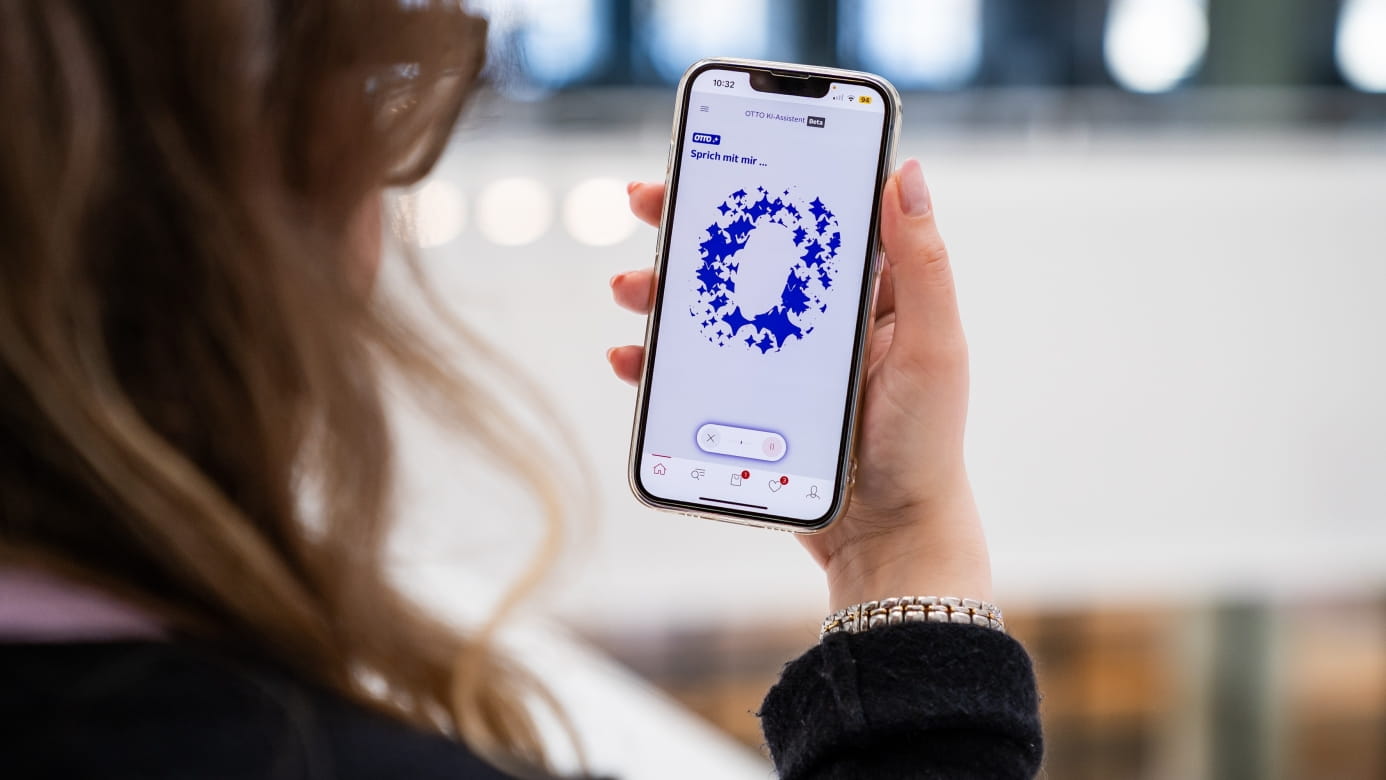
Inside the OTTO app, users will soon be able to describe what they are looking for either through text or voice interaction. The assistant interprets these requests and provides relevant product suggestions.
Customers might express their needs in everyday language, for example by asking for an Italian espresso machine with a portafilter, a vacuum cleaner suitable for a household where someone has a dust allergy, or a washing machine for a single household with a dog.
The assistant analyzes these requests, asks additional follow-up questions to refine the search, and then recommends products that match the user’s needs. This interaction is designed to resemble a consultation with a sales associate in a physical retail store.
By guiding users step by step toward the most relevant products, OTTO aims to improve confidence in purchasing decisions and reduce the likelihood of incorrect purchases. More precise product recommendations may also contribute to fewer product returns.
Built With Google Gemini and OTTO Product Data
The conversational shopping assistant was developed in collaboration with Google and uses Gemini AI technology to process natural language inputs.
OTTO combines this AI capability with its own internal product data. The system analyzes information such as product descriptions and structured attributes to identify suitable product matches for customer requests.
In the future, the system will also incorporate product reviews. These datasets cover more than 18 million items available on the OTTO platform.
The assistant is also designed to recognize dialects and colloquial language, enabling more natural conversations with users.
At the time of the announcement, the system is being introduced as a beta version. OTTO and Google plan to continue refining the assistant and gradually expand its availability to more users in the coming months.
A Second AI Assistant for Customer Service
In addition to the shopping assistant, OTTO has introduced a separate AI system designed specifically for customer service.
This second OTTO AI assistant is an internally developed solution that answers customer questions related to orders, delivery status, returns, and invoices. The system operates continuously and responds to inquiries within seconds.
Standard service requests are handled automatically by the AI assistant. When an inquiry requires additional attention or involves more complex issues, the system transfers the request to a human support agent.
The assistant is connected directly to OTTO’s internal service systems. It also uses multiple modern language models and a structured knowledge base to process customer requests.
An intelligent routing mechanism ensures that each inquiry is directed to the appropriate support channel and, when necessary, to the right team within OTTO’s customer service organization.
Building an AI Ecosystem for Digital Commerce
With the introduction of these two systems, OTTO is beginning to build a broader AI ecosystem across its platform.
The company describes its long-term goal as creating a centralized AI environment that supports customers across the entire shopping journey. This includes product discovery, product comparison, purchasing decisions, and after-sales support.
In the future, AI agents could potentially help identify customer needs, compare different products, or assist in preparing purchasing decisions.
The assistants being introduced now represent early steps toward that vision.
OTTO has been exploring AI-supported product advice for several years. Initial tests for AI-based product recommendations were conducted together with Google as early as 2023.
Leadership Perspective on AI in Shopping
Dr. Boris Ewenstein, CEO of OTTO, describes artificial intelligence as a technology that is fundamentally changing digital shopping.
According to Ewenstein, the conversational shopping assistant creates a natural, dialogue-oriented shopping experience that feels similar to interacting with staff in a brick-and-mortar store.
At the same time, the customer service assistant is designed to quickly resolve routine service questions related to deliveries, invoices, or returns.
By combining these capabilities, OTTO aims to make shopping on its platform more personal, faster, and easier for customers.
What OTTO’s AI Assistants Mean for E-commerce
The introduction of OTTO AI assistants reflects a broader trend in the evolution of online retail.
As product catalogs grow larger and customer expectations continue to rise, retailers are increasingly looking for ways to simplify product discovery and improve service efficiency.
Conversational AI offers one possible solution. By allowing customers to describe their needs in natural language, AI assistants can guide users toward suitable products more quickly than traditional navigation systems.
At the same time, AI-powered customer service systems help retailers respond to routine questions instantly while allowing human agents to focus on more complex support tasks.
OTTO’s approach illustrates how retailers can integrate AI across multiple stages of the customer journey—from the first product search to post-purchase support.
Conclusion
As conversational interfaces and AI-powered assistance become more common in digital commerce, initiatives like the OTTO AI assistants illustrate how retailers are experimenting with new ways to simplify product discovery and customer support. By combining conversational product advice with automated service tools, OTTO is taking another step toward integrating artificial intelligence across the entire shopping journey—from the moment a customer starts searching to the point where their order has already been delivered.