Small Merch, Big Retention: Why German Online Shops Are Putting Physical Branding Back in the Box
Written by
Editorial TeamPublished on
Explore how German online shops are boosting customer retention through physical branding in 2026, from care cards and stickers to branded merch and smart in-house production (Ad).
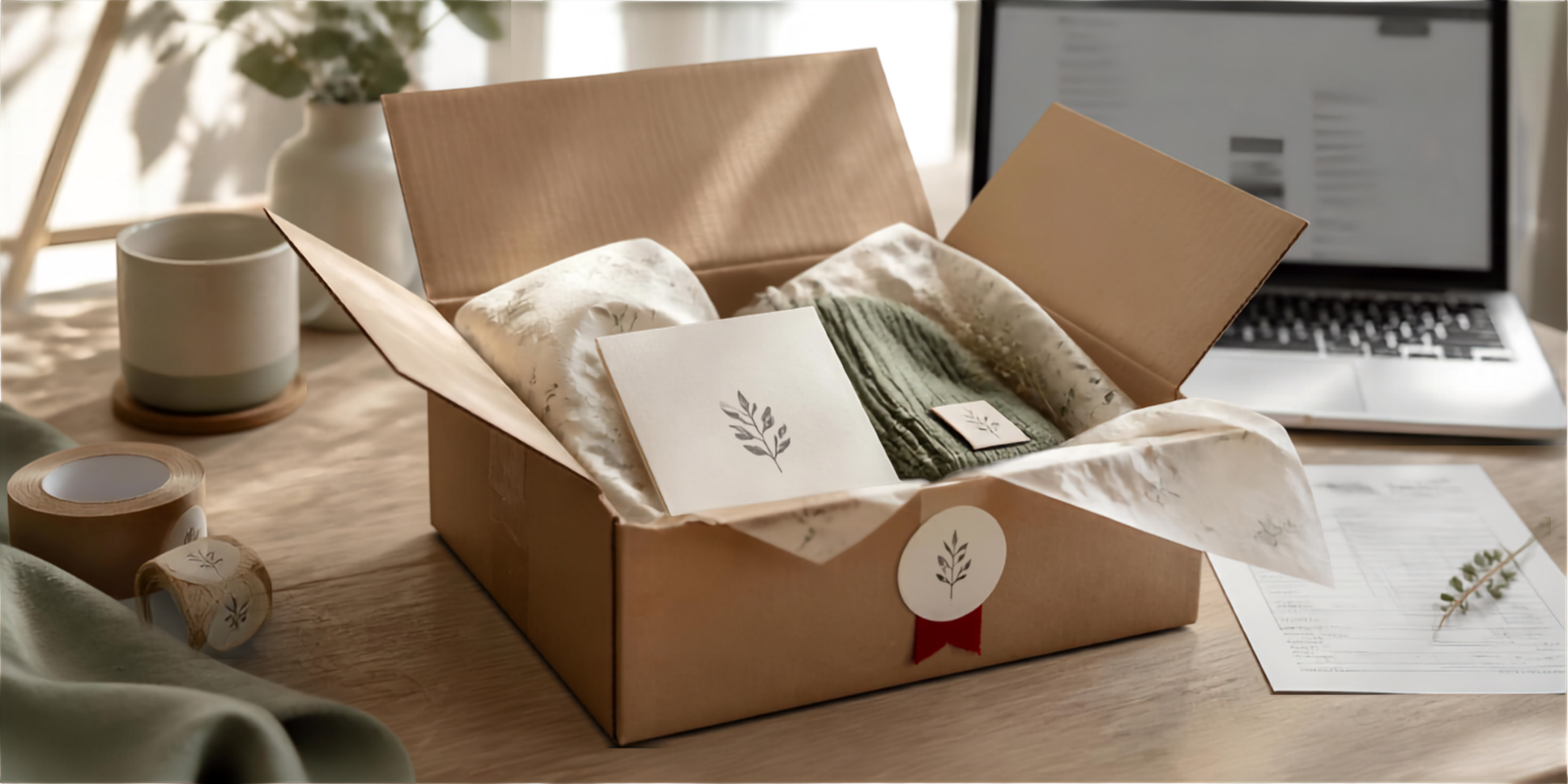
For many ecommerce businesses, the customer journey does not end at checkout. The moment a parcel arrives can be just as important as the purchase itself.
This is especially true in the DACH market, where online shops often compete in crowded categories. Price, delivery speed and product quality still matter. But so does the experience around the order.
A well-designed package can make a brand feel more personal. It can also encourage repeat purchases, reviews and social sharing. This does not require expensive packaging or large merchandise budgets. Small physical touchpoints can already make a difference.
The post-purchase experience is the cheapest retention channel
Winning a new customer is often more expensive than encouraging an existing one to return. That is why retention has become a key priority for many online shops.
The post-purchase phase offers a useful opportunity. At this point, the customer has already placed an order and shown trust in the brand. The parcel is expected, opened and usually given full attention.
This makes the package a valuable communication space. Online shops can use it to:
- thank the customer,
- explain how to use the product,
- introduce related products,
- encourage a review,
- provide a small surprise.
The aim should not be to add more advertising. The best post-purchase touches feel useful, relevant or enjoyable.
A short thank-you card may be enough. In other cases, a sample, sticker or small branded item can create a stronger memory. The right choice depends on the product, target group and brand identity.
Package inserts that customers actually keep
Many ecommerce businesses already use package inserts. However, not all inserts have the same effect.
Traditional flyers are easy to produce and cheap to send. They can communicate offers, product information or discount codes. The problem is that many are thrown away within minutes.
An insert is more likely to be kept when it offers practical, visual or emotional value. Examples include:
- care or recipe cards,
- postcards and stickers,
- bookmarks and small calendars,
- seed paper,
- samples,
- handwritten notes,
- QR cards linking to useful content.
The insert should add value to the order rather than feel like extra advertising. Its format should reflect the product;
- Skincare retailers can provide a simple routine guide,
- Coffee brands can share brewing advice,
- Fashion shops can include care instructions or a small fabric sample.
Relevance is usually more important than cost.
Lasting brand reminders vs. throwaway flyers
Unlike disposable flyers, some branded items continue to create visibility after delivery. Magnets can remain in the home, keychains become part of daily routines, and buttons may appear on bags, jackets or accessories.
These items can therefore create repeated brand exposure after the parcel has been opened.
They are not always the best option, however. A branded object only works when it suits the audience. A minimalist premium brand may prefer a high-quality card or fabric tag. A family-focused shop may get more value from stickers, magnets or activity cards.
Production method also matters. Some businesses order larger quantities from external suppliers. Others use simple equipment to create small batches in-house, like buttons.
The important point is not the product itself. It is the ability to choose the right format for the campaign.
Flyers and coupons still have advantages. They are low-cost, light and easy to update. They are useful for short-term offers or product launches. Physical merchandise tends to work better when the goal is long-term visibility or brand recall.
A mixed approach is often the most practical. For example, a shop might include a care card in every order and add a small branded item only for first-time buyers, loyal customers or seasonal campaigns.
Unboxing moments and user-generated content
The unboxing experience can also support social media visibility.
Customers are more likely to photograph or record a parcel when it includes something unexpected, attractive or personal. This may be a handwritten note, unusual wrapping, a small gift or a well-designed insert.
However, the experience should still feel natural. Overloaded packaging can look wasteful and create frustration.
A good unboxing experience usually has three qualities:
- it is easy to open,
- it reflects the brand,
- it includes one memorable detail.
That detail does not need to be expensive. A small illustration, personalised message or collectible card may be enough.
Online shops can also make sharing easier. A simple hashtag, social handle or QR code can direct customers to the right channel. This should be included discreetly. The aim is to create a reason to share, not to pressure the customer.
Producing branded merch in-house: costs and break-even
In-house production can be attractive for shops that need small quantities or often change their designs.
External suppliers are usually efficient for large orders. Unit costs often fall as volume increases. For small runs, however, setup fees, minimum order quantities and shipping can raise the total price.
In-house production changes the cost structure. The business must first invest in equipment, tools or templates. It must also account for materials and staff time. After that, small batches can be produced as needed.
A simple break-even calculation should include:
- initial equipment cost,
- material and printing cost per item,
- staff time,
- waste and storage,
- the external production price for the same quantity, including shipping.
For example, a shop may compare the full cost of ordering 500 branded items with the cost of producing 50 items ten times during the year. The second option may have a higher production cost per unit. It may still be more efficient if it reduces waste and allows designs to change between campaigns.
Flexibility is often the main benefit. In-house production may be useful for:
- seasonal promotions,
- limited product drops,
- local events,
- influencer mailings,
- customer loyalty campaigns,
- testing new designs.
It is less suitable when demand is very high or production requires specialist skills.
Businesses should also consider consistency. Products need to look professional and match the wider brand identity. A low-quality item can have the opposite of the intended effect.
Key takeaways
Physical branding can support ecommerce retention when it adds value to the post-purchase experience.
The most effective inserts are relevant, simple and easy to understand. They do not need to be expensive. A useful card or small sample may perform better than a generic gift.
Branded merchandise can create longer-lasting visibility, but it should fit the target group. Buttons, stickers, magnets, keychains and similar items are only some of the available options.
Online shops should compare external production with in-house production based on their real needs. Large orders may be cheaper to outsource. Small, changing campaigns may benefit from more flexible production.
Above all, the parcel should feel consistent with the brand. A clear message, thoughtful presentation and one memorable detail can turn a routine delivery into a stronger customer experience.