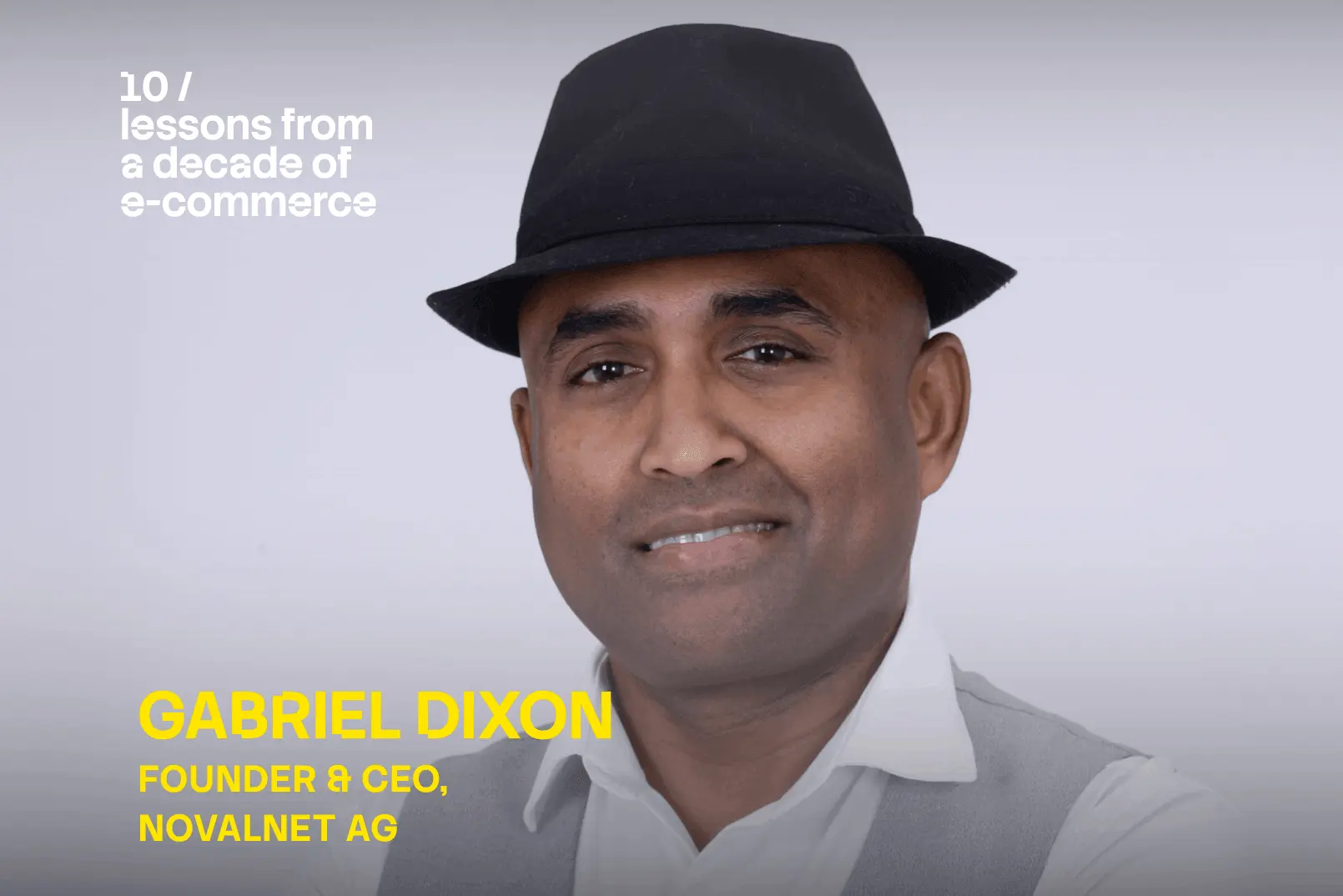
“True leadership isn’t about directing from a height; it’s about creating the soil where the best ideas can grow”: 10 lessons from Gabriel Dixon, Founder & CEO of Novalnet AG
Discover 10 valuable e-commerce lessons from Gabriel Dixon, Founder & CEO of Novalnet AG, as he shares his insights on the future of online retail to mark the 10th anniversary of the E-commerce Berlin Expo. [EXCLUSIVE INTERVIEW SERIES]
The E-commerce Berlin Expo celebrated its 10th anniversary in 2026. To mark this milestone, we interviewed some of the world’s most influential leaders about the future of online retail, asking them to share their 10 valuable lessons in e-commerce. Their insights were featured in our special album, showcasing the most powerful voices in online retail, which we decided to share with you on E-commerce Germany News.
This time, we’re featuring an exclusive interview with Gabriel Dixon, Founder & CEO of Novalnet AG. See what e-commerce lessons he shared with us below!
The nostalgic era of the long-term patience
What first drew you to this industry?
GABRIEL: In 2005, e-commerce was in a phase of rapid growth, and online business was crowded with various platforms and providers. There were many payment service providers with various payment products, each operating independently in its own way. What they all had in common, however, was a single core function: collecting customer funds and paying them out to merchants – essentially moving money from A to B.
Online merchants had to sign up with various providers and have multiple integrations with third parties such as banks, acquirers, PSPs, billing firms, fraud prevention agencies, debt collection agencies, debtor management firms, technical agencies for software development, etc. There was no “one-stop solution” for all payment requirements, including value-added services from checkout to debt collection.
Online merchants were left to navigate the debris of the entire end-to-end process alone – wrestling with various third parties and service providers for payment acceptance, online fraud, extensive reconciliations, and the complexities of dunning & debt recovery. It felt like an incomplete solution for any business seeking sustainable growth.
Thus, the idea came up in 2005 for building a unique full-service payment platform and company with a unified commerce approach for offering online merchants a single global platform, one contract, and all in one service to take care of the entire end-to-end process from checkout to collection.
Which early failure taught you something that still guides you today?
GABRIEL: Early in my journey, while setting up Novalnet, I operated under the belief that if we build a superior customer-centric product fully focused on meeting the needs of customers, then the market will naturally find us. Thus, I thought we could remain a dedicated “hidden champion” for the clients instead of marketing ourselves. I undervalued the role of a clear narrative in brand building and marketing. I then realized that in a crowded industry, silence isn’t always humility; it can become an obstacle, making it harder for the very people who need your solution to find you.
Even the most robust solutions require a voice to explain their value. If you refer to companies such as Amazon, PayPal, or Klarna, they prove that clear brand building with marketing is one of the main keys to visibility, regardless of the products behind it. This taught me that leadership requires communicating the why behind the technology – cost control, data sovereignty, and risk mitigation – as explicitly as we build the how. Today, I don’t confuse silence with focus; I ensure our value is heard as clearly as it is delivered.
When you think of the past decade of e-commerce, what do you miss – and what are you glad we left behind?
GABRIEL: I occasionally miss the long-term patience of the early years – the era when we built durable systems designed for decades, not just the next quarter’s metrics. However, I am immensely glad we have moved past the “Wild West” phase of fragmented, immature setups. We’ve left behind the simplistic notion that merely adding more logos to a checkout page equates to better business. I welcome the current era of mature expectations, where uptime, compliance, and transparent risk management are the standard. The industry has finally learned that e-commerce isn’t just about the speed of the click; it’s about the resilience of the architecture behind it.
What is the single most important business lesson you have learned throughout your career?
GABRIEL: Design and build customer-centric solutions for the customer’s reality, not your own convenience. In online payments, the path of least resistance is to offer a generic “self-service” interface and step away. But merchants don’t struggle because they lack tools; they struggle because they lack solutions and structure for their digitalization. The most successful partnerships I have ever built started with a deep understanding of the client’s specific operational constraints – their ticket sizes, their markets, their risks. When you build from that foundation of empathy, the resulting technology is actually simpler. Sustainability in business comes from being a partner who understands the friction, not just a vendor who provides a tool.
customer in the center
How would you define success in e-commerce today, and how has your view of it changed over time?
GABRIEL: My definition of success has evolved from “expansion at any cost” to “profitable growth through digitalization, control, and sustainability.” A decade ago, the market celebrated volume; today, we celebrate margins and reliability. True success now means your payment ecosystem is an invisible asset rather than a point of friction. It means having a fully digitalised end-to-end process flow with absolute control over your customer data and your costs without hidden dependencies on third-party brands. When a merchant reaches a level where their entire online business is digitalised from checkout till collection with integrated fraud prevention, secure data processing, automated reconciliation, and risk outcomes are entirely predictable at scale, that is the ultimate signal of a successful operation.
Build trust as intentionally as you build your marketing funnel, because trust is a compounding asset that will save you in difficult times.
What do you see as the biggest opportunity in e-commerce today?
GABRIEL: The opportunity lies in transforming payments from a passive cost center into an active intelligence layer. We are moving toward a future where the payment system is predictive and fully integrated into the broader business operations. By unifying various services from payment acceptance, fraud prevention, automated reconciliation, secure data handling, and recovery processes under one roof, a merchant can unlock massive efficiencies that were previously buried in silos. This is particularly vital for cross-border commerce. The opportunity isn’t just “more ways to pay”; it’s the orchestration of those methods with total accountability.
What’s the most counterintuitive thing your company does today that actually works?
GABRIEL: We provide solutions, while others sell products. Our approach is customer-centric: we take the time to fully understand each customer’s real requirements and digitally transform their entire end-to-end process across all sales channels – from onboarding and transaction processing through reconciliation and accounting. By focusing on their actual operational needs, we often help customers identify gaps and issues they were not even aware existed. While much of the industry is racing toward purely automated, do-it-yourself processes, Novalnet remains firmly focused on guided, hands-on collaboration. We insist on a deep-dive discovery process and sustained handholding to ensure that each customer’s complete payment and operations flow is digitalised according to their specific requirements. This customer-based, sustainable approach eliminates manual inefficiencies and supports long-term scalability as merchants sell and grow their products and services. Many are surprised when we want to discuss their full payment lifecycle – from the initial checkout to dunning and debt collection – under a single contract. It requires more discipline and effort upfront, which is counterintuitive in a “click-and-go” culture. However, this rigor produces far more predictable outcomes at scale. Our enterprise clients value us because we reduce the number of moving parts they have to manage, offering a partner who stays close to their actual operating model.
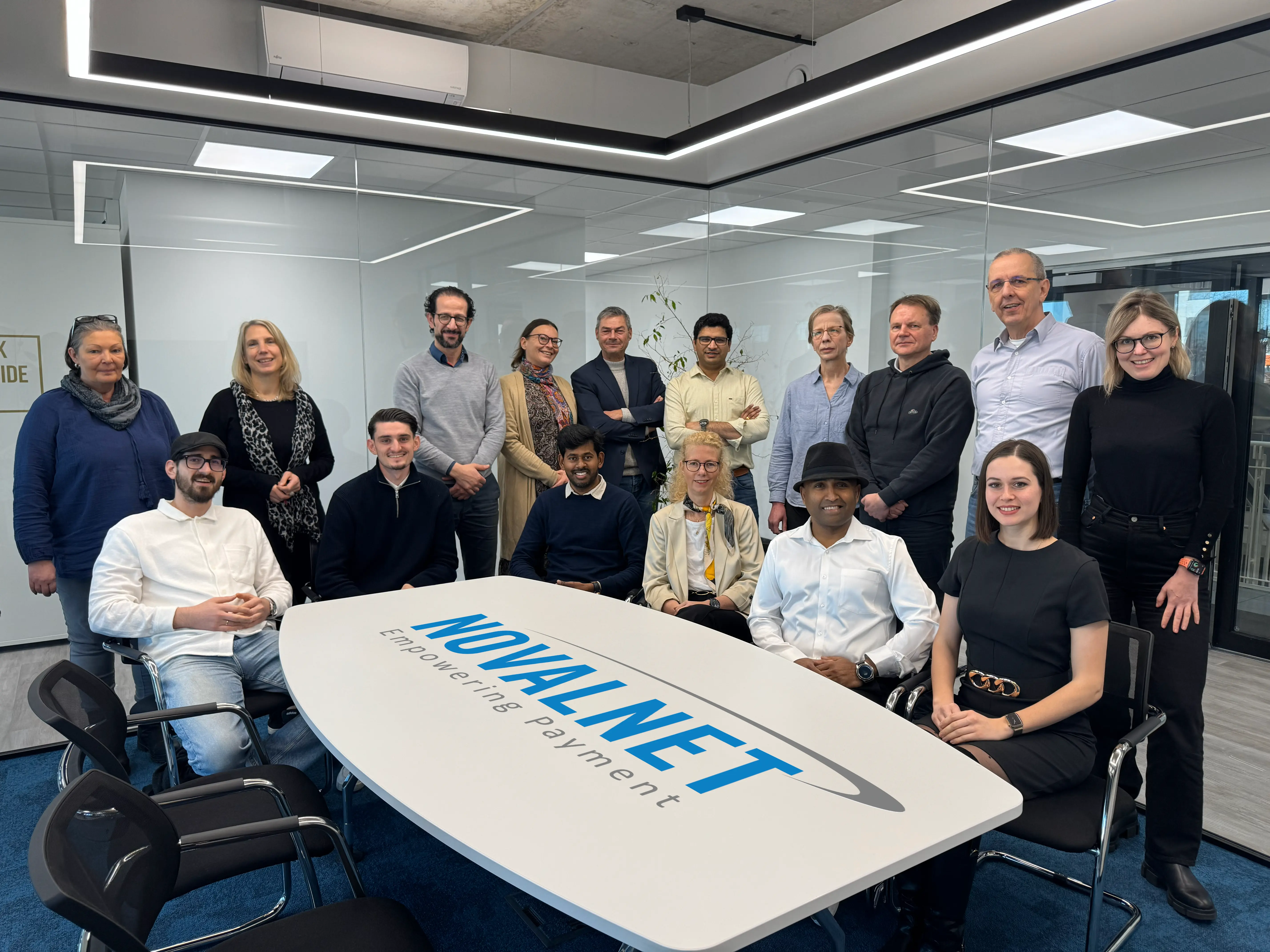
Novalnet became the world’s first Payment Service Provider to deliver a cutting-edge one-stop solution covering the entire spectrum of online business requirements – from checkout and payment processing to reconciliation and debt collection. This unified platform brings together all payment requirements and value-added services under one roof, enabling merchants to manage their full digital commerce lifecycle seamlessly. Our innovative unified solution offers a wide range of fully automated services under one roof, eliminating the need to sign multiple contracts with different maturities & charges with diverse companies (banks, acquirers, PSP, billing firms, fraud prevention agencies, debt collection agencies, debtor management firms, technical agencies for software development etc,.). Merchants, as our contractual partner, avail all these services with one single contract, resulting in lower costs and an increase in turnover, thus making us indispensable for your sustainable business growth and success.
The era of the intuitive transaction
What guiding principle do you personally refuse to compromise on, no matter the trend?
GABRIEL: I refuse to compromise on user experience, acceptance, security, and responsibility. Payments sit at the very heart of a merchant’s livelihood and a consumer’s trust. If you treat that responsibility casually to chase a trend, you damage the foundation of the industry. I also firmly believe that merchants should retain ownership of their data and their customer relationships. I will not compromise on building systems that empower the merchant rather than creating a dependency on us. Internally, this translates to a culture of absolute transparency and accountability. Innovation is only valuable if it is grounded in reliability.
Looking ahead, what will define the next decade, and how does it make you feel?
GABRIEL: The next decade will be the era of the “intuitive transaction” – where AI and real-time decisioning make payments entirely seamless and predictive. I feel a strong sense of optimism because the market is finally rewarding substance over hype. We are moving toward a world where global complexity is managed by adaptive, unified platforms. While the regulatory landscape will become more challenging, that excites me. It forces us to build better, smarter, and more resilient systems. The future belongs to those who can simplify the complex without stripping away control.
If you could leave a message for future e-commerce leaders, what would it be?
GABRIEL: Do not confuse growth with progress. Progress is measured by how much more resilient your business becomes as it gets larger. Build trust as intentionally as you build your marketing funnel, because trust is a compounding asset that will save you in difficult times. Own your data, understand your risks, and choose solution-oriented partners who are willing to stand behind you, supporting your vision, rather than standing in front of it. Finally, remember that true leadership isn’t about directing from a height; it’s about creating the soil where the best ideas can grow.
GABRIEL’S BIO
Gabriel Dixon is the Founder and CEO of Novalnet AG, a Munich-based Payment Institution that has become a global leader in unified digital payment solutions. An engineer by trade, he has spent nearly two decades simplifying the complexities of the financial landscape for over 15,000 enterprise clients. Gabriel was recently recognized as the “Digital Payment Solutions CEO of the Year 2024,” a testament to his vision of substance and reliability in a rapidly evolving industry.