When Gemini & Co. become analysts
Can AI tools like Gemini and ChatGPT truly become business analysts? Discover why clean data, semantic models, and AI guardrails are essential for reliable AI-driven analytics in e-commerce. (Ad)

How companies are truly making their data AI-ready
By Andreas Fischer, CEO of minubo
Recently, we did a masterclass at the E-Commerce Berlin Expo about “when Gemini and Co. become analysts” which was a big success. No wonder, because the promise is big: tools like Gemini or ChatGPT promise to make data analysis as easy as having a conversation. Ask a question – and get well-founded insights instantly. To many companies, this sounds like the democratization of business intelligence.
The reality? It’s significantly more complex.
Between Hype and Risk
Anyone who has ever tried to answer a simple analytical question with a Large Language Model (LLM) – such as about return rates or revenue trends – knows the problem: You always get an answer. One that sounds plausible. But not always the right one.
And this is precisely where the danger lies.
LLMs often deliver results with great conviction – regardless of whether they are correct or not. Anyone who accepts these results without verification risks making the wrong decisions. In e-commerce, that can quickly become expensive.
The reason for this is actually simple: “Garbage in, garbage out.”

Why AI Fails Without Clean Data
AI is only as good as the data it works with. If you feed a model unfiltered, unstructured data, you shouldn’t be surprised by unreliable results.
For AI to truly function as an analyst, three key prerequisites are needed:
1. Data integration: No more silos
The first step is consolidating all relevant data:
- Marketplaces such as Amazon, Otto or Kaufland
- Shop systems
- Merchandise management
- Marketing platforms
- Product Data (PIM)
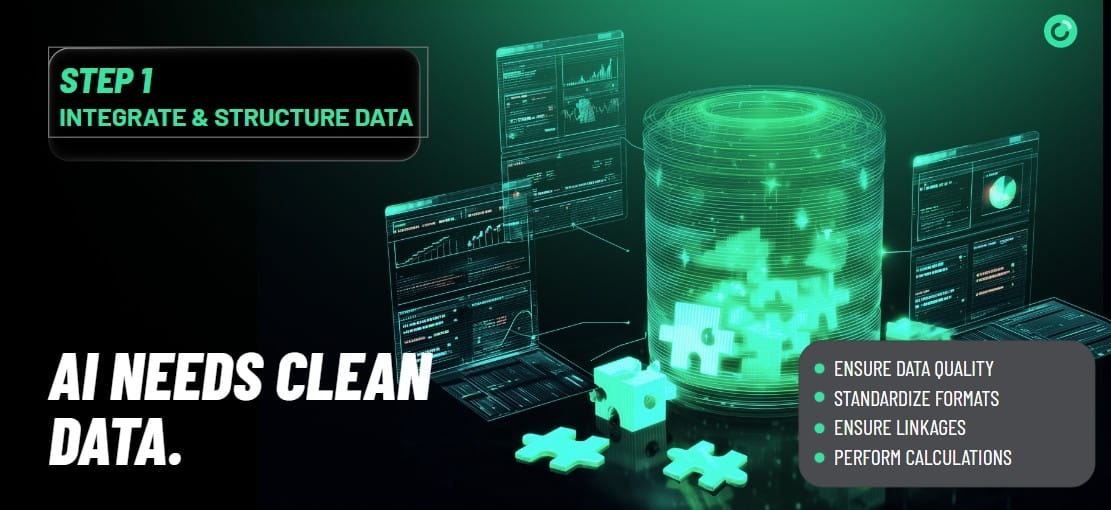
This data must be consolidated in one place – typically in a data warehouse. This is the only way to create a consistent foundation for analysis.
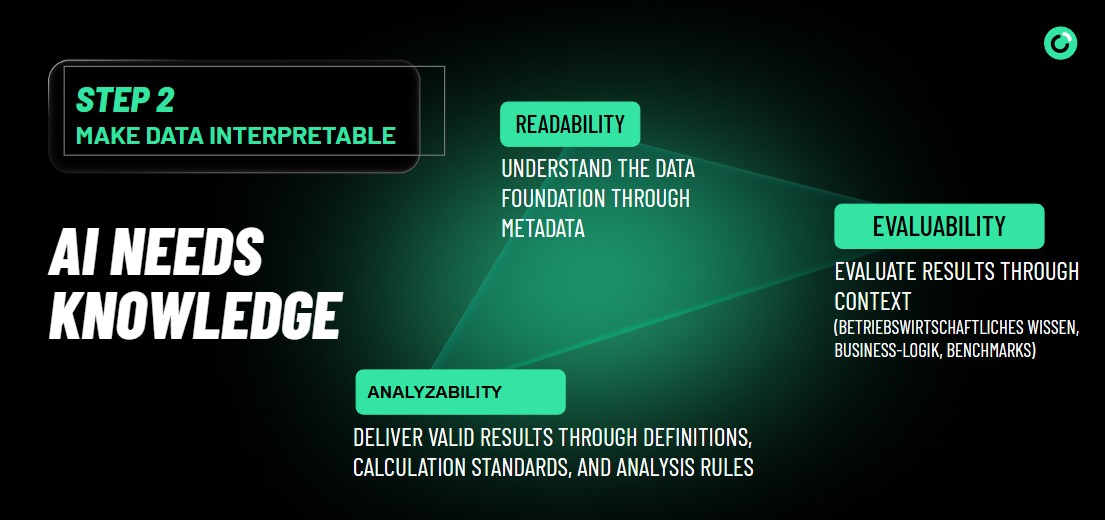
2. Semantics: Creating a Common Language
Data alone is not enough. AI must also understand what the data means.
An example: What is “revenue”?
- Gross or net?
- Before or after returns?
- With or without marketing costs?
If humans and machines have different definitions here, incorrect results are inevitable.
That’s why a semantic model is needed – a clear definition of all metrics and logic.
3. Guardrails: Steering AI in the Right Direction
LLMs are not deterministic systems. This means:
The same question can yield different answers.
This is a problem for analytical purposes.
That’s why clear rules must be defined, for example:
- Always perform calculations, never estimate
- Use only predefined data sources
- Adhere to fixed output formats
- Strictly follow business logic
These guardrails ensure that creative AI becomes a reliable analytical tool.
How modern AI analytics really work
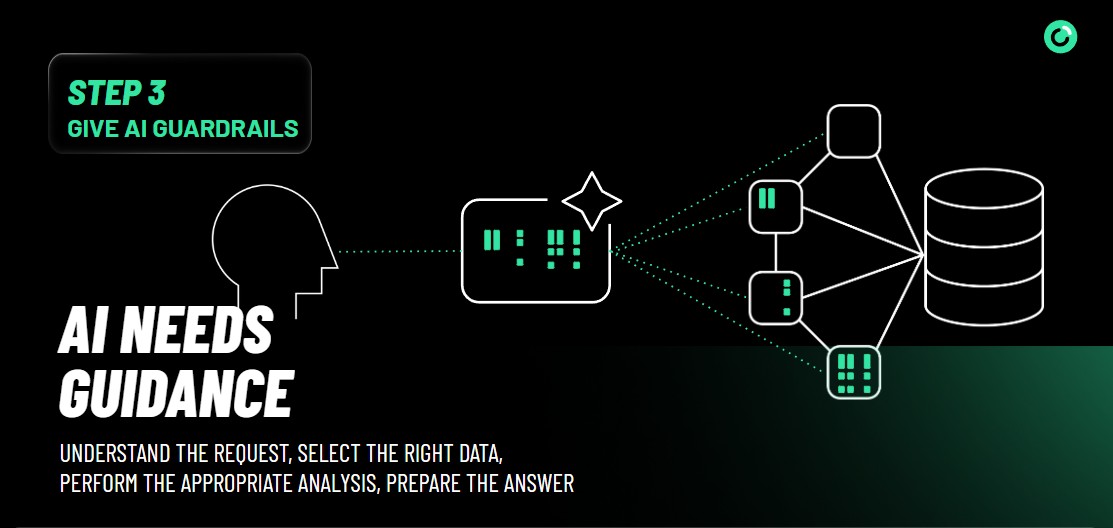
From a technical perspective, it involves the interaction of several components:
- The LLM (e.g., Gemini)
- A standardized interface, such as the Model Context Protocol
- A structured data warehouse
- A semantic data model
The LLM translates a question (“What are my biggest loss drivers on Amazon?”) into specific analytical steps, accesses the right data, and calculates the results – ideally in a way that is transparent and reproducible.
From a gimmick to real business impact
When implemented correctly, it fundamentally changes the way companies work with data:
- Analyses become interactive and dialogue-based
- Insights emerge in seconds instead of hours
- Departments can ask questions independently
A real-world example:
Instead of just looking at aggregated metrics, a company can directly find out:
- Which products are causing losses
- On which channel problems arise
- Which specific measures make sense
The result: less gut feeling, more data-driven decisions.
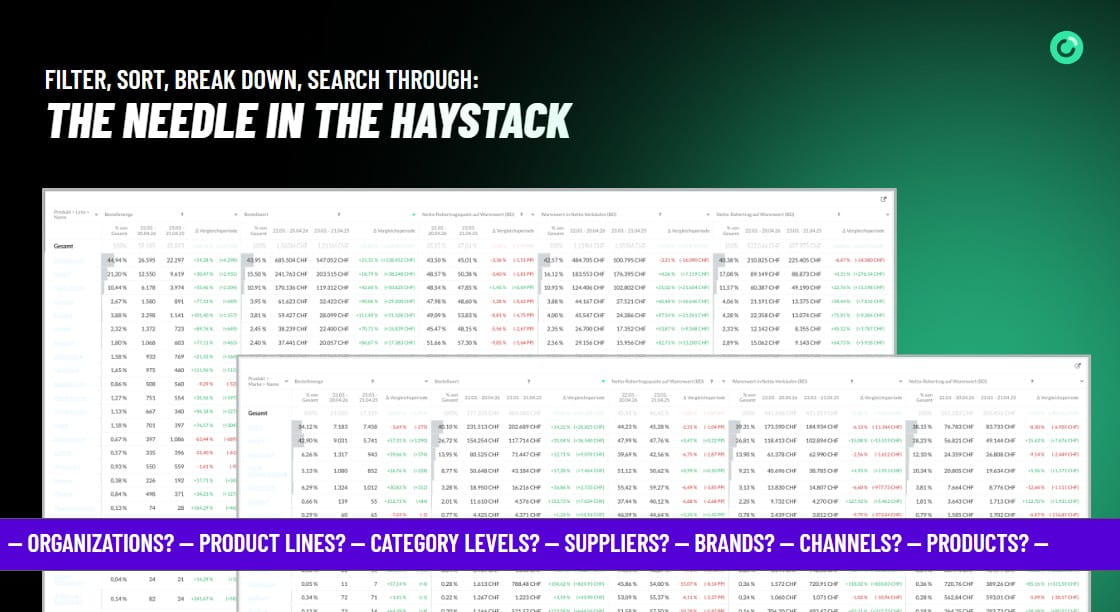
If you’re interested in how this all works in practice and what’s possible, we’d be happy to show you in a live demo how you can easily answer ad-hoc questions or dive deeper – for example, into profit analysis – and simply pull up lists to take immediate action. → Book a demo.
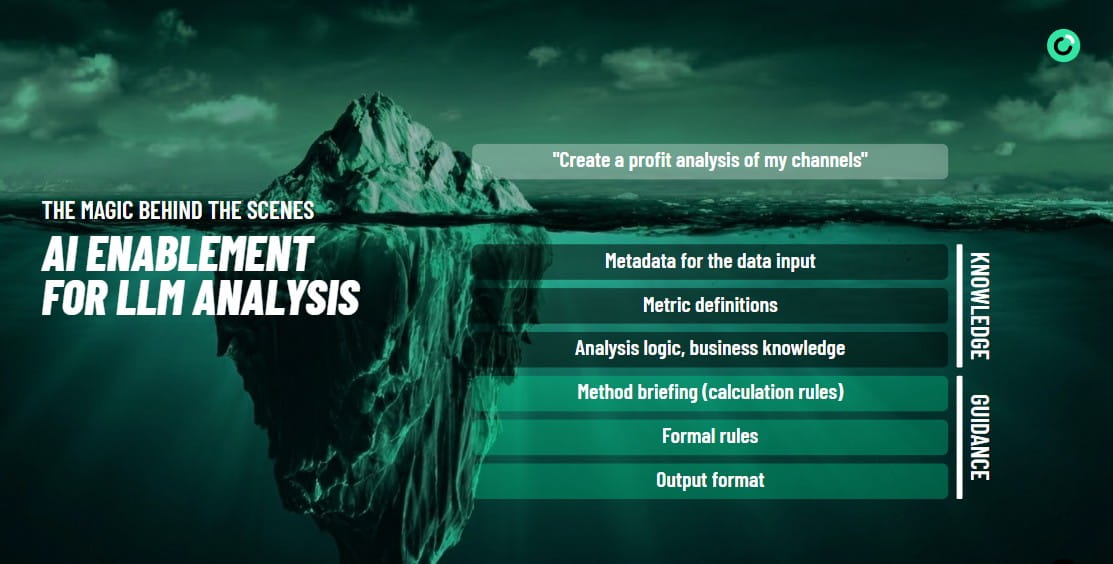
The iceberg beneath the surface
What is often underestimated here:
The real work happens beneath the surface.
The user interface looks simple – almost playful.
But behind it lies:
- Integration work
- Data modeling
- Definition of business logic
- Building robust AI guardrails
Without this foundation, AI analytics remains a gamble.
Conclusion: AI is not a sure thing
Tools like Gemini and ChatGPT have the potential to radically simplify data analysis, enabling absolutely anyone to perform in-depth analyses on their data.
But: They do not replace proper data preparation – they make it absolutely essential. Only when data quality is right will the analysis results be good and, above all, meaningful.
Companies that invest today in:
- structured data
- clear semantics
- and intelligent AI control
are laying the foundation for a new generation of business intelligence.
All others risk making decisions based on chance.
The key takeaway:
AI does not automatically become an analyst.
But with the right data foundation, it can become one.
About Andreas Fischer, CEO of minubo
Andreas Fischer is a co-founder of the curated shopping platform Modomoto, a former chief strategist at Outfittery, and currently the CEO of the SaaS business intelligence company minubo. Andreas is a proven retail expert who understands the needs and challenges of the retail industry from personal experience and recognizes the value of data and AI.
***
This article is part of a winner’s prize at the E-commerce Germany Awards 2026. If you’d like to learn more about the awards, visit this website: