Best 24 online marketplaces in Germany 2026, reviewed
The e-commerce market in Germany is one of the largest in the world. Find out about 24 best online marketplaces in Germany.
Last updated: May 2026
The German e-commerce market keeps growing. More sellers are going online every year and the key to reaching German buyers is being where they already shop. Do you sell clothes in your online store? Great. But why not list them on Zalando too?
The e-commerce market in Germany is the second-largest in Europe and 6th in the world. That is why you should get to know the biggest e-commerce marketplaces in this country. You don’t have to join them immediately. Just start by observing the activities of the largest in the industry. You can learn a lot in this way.
Price comparison platforms are also part of this picture. When a customer finds the best deal on a comparison site and can buy instantly, that is a sale you either capture or miss.
Want to know more? Let’s get into it.
TL;DR
- Germany is Europe’s second-largest e-commerce market, with online retail projected to exceed €100 billion in 2026.
- The top German marketplace is Amazon.de, followed by Otto, Zalando, Kaufland and eBay.
- A German marketplace now accounts for more than 55% of all online sales in the country, meaning most German shoppers go to a platform first.
- Three platforms to watch in 2026: Temu (now the fourth-largest marketplace by GMV), Vinted (36% revenue growth in 2024) and MediaMarktSaturn (65m monthly visits across its two sites).
Definition: An online marketplace is a platform where multiple third-party sellers list and sell products to consumers, with the platform handling discovery, payment infrastructure and — in many cases — logistics.
Why to implement a German marketplace?
Here are the most important reasons.
Expanding customer reach
Online marketplaces in Germany give retailers access to a large, ready-made customer base that is already searching for products. That kind of reach would take years and significant budget to build independently.
Diversifying product offerings
Retailers participating in online marketplaces can list multiple products simultaneously. This increases brand visibility and gives buyers more reasons to engage — which tends to mean more revenue.
Enhanced customer convenience
Multiple marketplaces like Amazon, Otto, Bonprix or even Decathlon offer features like notifications and saved searches. Instead of checking back manually, customers get alerted when products become available. That friction removal matters to German shoppers who value efficiency.
Leveraging promotional opportunities
Marketplaces regularly send newsletters and push personalized product recommendations to their customer base. Sellers whose products appear in those placements benefit from promotional reach they did not have to pay for directly. Knowing how to get more newsletter subscribers and having products included there, retailers can benefit from additional promotional opportunities and further increase their brand visibility.
Overview of the German online marketplace landscape
Germany’s online retail market is projected to exceed €100 billion in 2026, continuing the upward trajectory from €92.4 billion in 2025. Online marketplace operations generate roughly €44 billion of that figure and account for 55% of all e-commerce sales in the country.
More than half of all online purchases in Germany now go through a e-commerce platforms — not a brand’s own webshop. We are talking Amazon, Otto, eBay, Kaufland, Zalando and more.
But what makes these marketplaces so dominant?
They are easy. They are trusted. And they handle the heavy lifting — logistics, payments, visibility. For small businesses especially, joining a major marketplace often means getting seen by millions of buyers without building a marketing machine from scratch.
That is why so many sellers in Germany choose to plug into existing ecommerce platforms.
What’s changing in 2026 in the German market?
Second-hand is no longer a niche. Recommerce sales in Germany are estimated at €120 billion across the economy. Platforms supporting resale — eBay, Vinted, Zalando Pre-owned — are capturing a growing share of that demand.
Cross-border shopping is also growing, especially from China. German consumers remain loyal to local brands but are increasingly comfortable buying from international platforms. The rise of fast fashion platforms from China is one of the clearest examples.
Examples of top marketplaces in Germany
There is no single winner in German ecommerce market. It depends entirely on what you are selling or buying.
Some platforms are massive and general, others are local and specialized. But fortunately, many of them offer free shipping, detailed product data, free returns, different payment methods, advertising tools and strong visibility. Moreover, they are adjusted to German-speaking market, has intuitive or customizable dashboards and are tax compliant (like include VAT).
Let’s not prolong and check out our list of the best marketplaces.
Kaufland
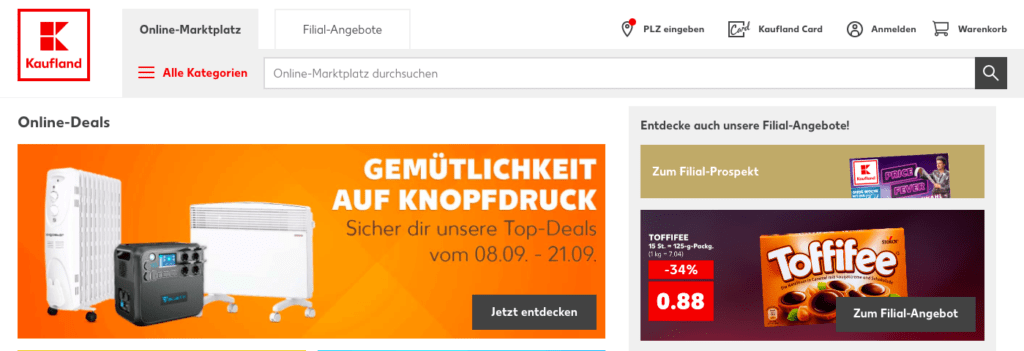
Kaufland.de is a major online marketplace in Germany that sells everything from electronics to garden tools and pet food.
Thinking of going all-in on multichannel selling? Kaufland might be your next stop. With over 13,000 sellers and more than 40 million products spanning 6,400 categories, Kaufland.de has become a go-to platform for shoppers seeking variety and value. The marketplace attracts approximately 32 million visitors monthly.
You can sell fashion, toys, groceries, you name it. They even let you expand into other countries through Kaufland Global Marketplace. Small sellers can launch quickly without building a whole webshop. There’s also great visibility if you want to scale fast. German shoppers love it for the price variety and quick delivery. It’s busy, efficient and very seller-friendly.
Amazon
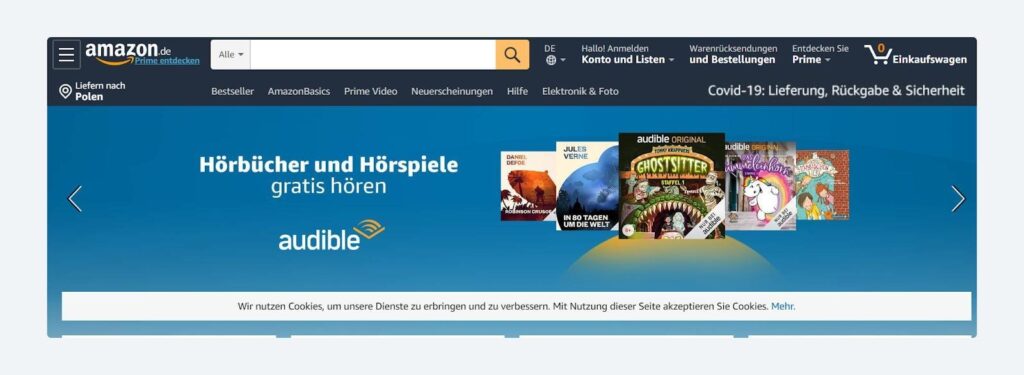
Amazon.de is Germany’s largest e-commerce marketplace. It offers everything from books and electronics to food and furniture.
You probably guessed it’s big, but did you know it’s Amazon’s second-largest market after the US, with 55 million customers? The platform brings in millions of shoppers every day. For sellers, it’s a goldmine if you’re looking for reach.
You can choose between Fulfilled by Amazon (FBA) or do your own shipping. Either way, the trust factor is massive. Ecommerce customers stick with this top marketplace in Germany for ease, delivery speed, easy return policies and product range. It’s not the cheapest marketplace, but it’s arguably the most powerful. Want volume? Start here.
OTTO
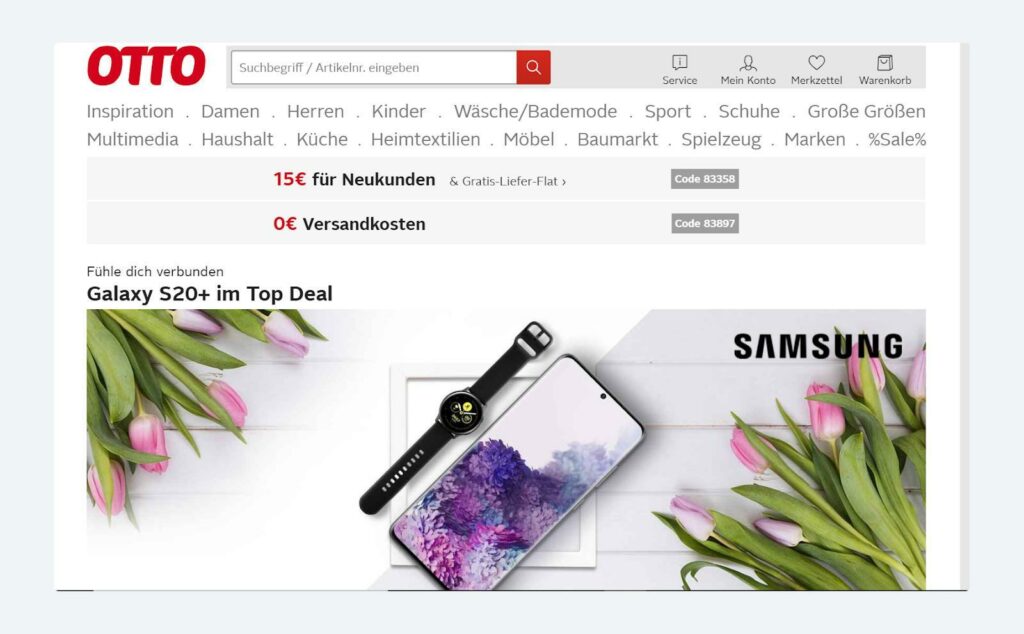
Otto.de is one of Germany’s most established online retailers, known for fashion, home goods, electronics and a broad loyal audience.
Otto is curated and selective — but still can boost your brand awareness. You will not find millions of random listings. In its 2026 financial year, Otto reported a total sales volume of €7 billion, supported by over 12.2 million active customers. Its audience is slightly older and values reliability over bargain hunting. Sellers go through a formal onboarding process and the entry bar is higher than Amazon or Kaufland.
For the right product, that selectivity is an advantage: less noise, better brand positioning. In fact, it’s one of the top 3 most visited e-commerce sites in Germany.
Etsy
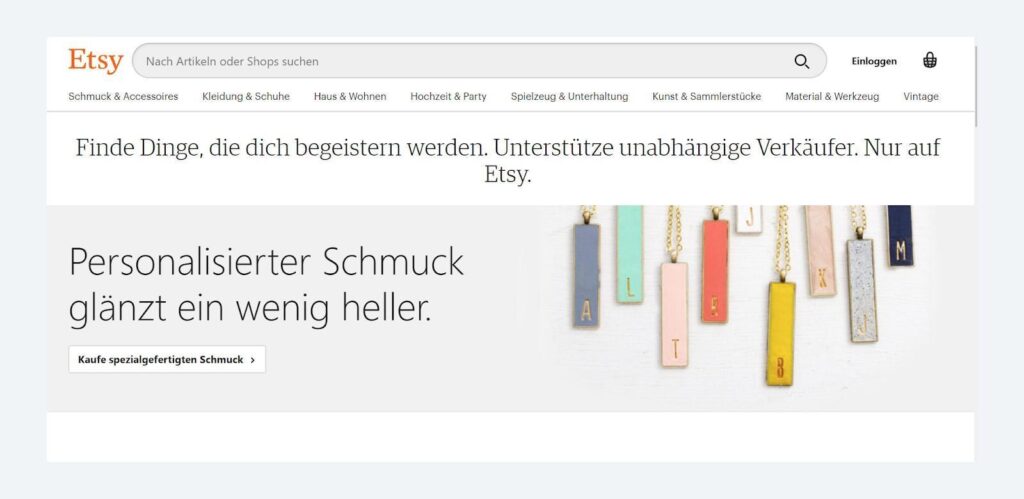
Etsy.de is a creative marketplace for handmade, vintage and personalized items, with a strong presence in Germany.
Want to sell something unique? Etsy is the place for it. Think art, jewelry, custom gifts or vintage collectibles. Etsy offers a platform for independent creators and small businesses to showcase their products to a global audience. With 95 million active buyers worldwide, including a growing customer base in Germany, Etsy provides opportunities for sellers to reach niche markets.
German shoppers appreciate the craft, not just the product. Etsy lets small brands shine without needing a marketing team. It’s more of a community than a corporation. If you’re a maker or designer, it’s where your work will be seen and valued.
Zalando
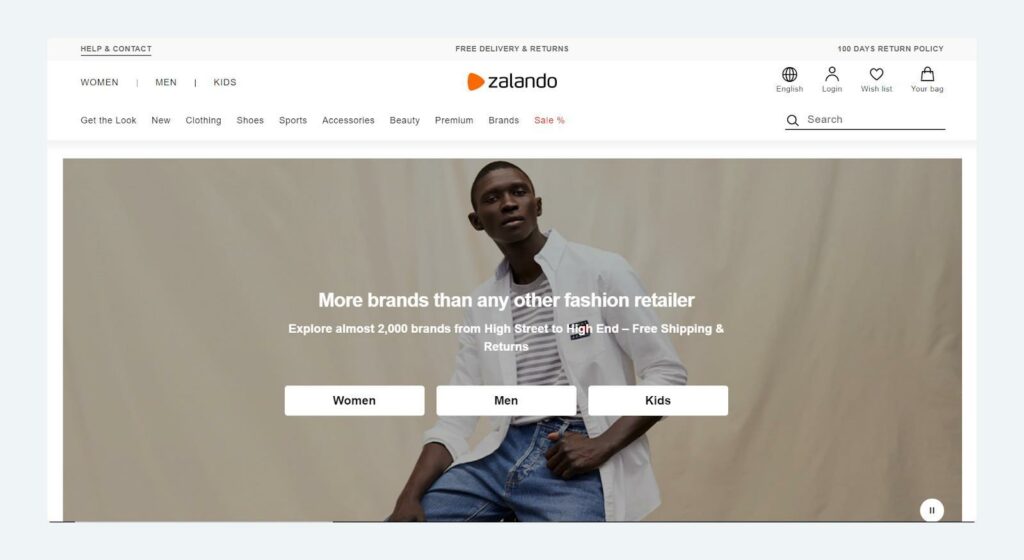
Zalando.de is Germany’s biggest fashion and lifestyle marketplace, featuring thousands of clothing and accessory brands.
In 2026, Zalando reported approximately 52.4 million active customers across Europe, with Q1 revenue growth of 7.9% year-on-year. The platform acquired About You in 2026, consolidating its position as the dominant fashion destination in Germany.
It’s about experience. Returns are super easy, which Germans love. For sellers, it’s a smart route into fashion retail without opening a store. Zalando Partner Program lets brands keep control over pricing and stock. There’s also a strong focus on sustainability.
eBay
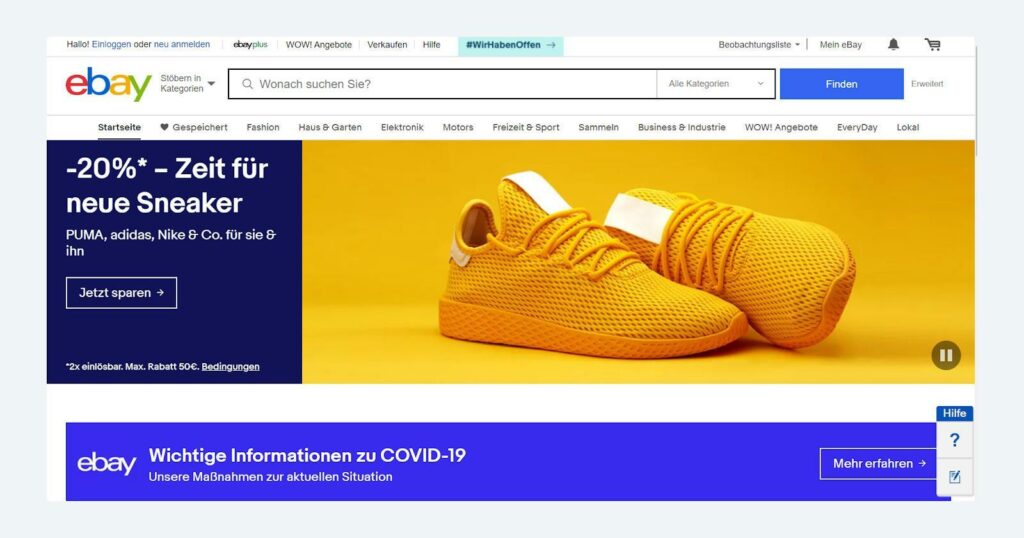
eBay.de is a versatile marketplace in Germany for both new and used products, from collectibles to tech.
Looking to flip a phone or sell a sofa? Or maybe start a business? eBay’s got you. It still sees huge traffic and supports auction-style and fixed-price listings. You can reach bargain hunters, collectors and casual shoppers all at once.
eBay also invests in seller tools and protection. It’s flexible, which works well for small shops. While some people think of it as old-school, the numbers prove otherwise. It’s alive, active and still a key player in Germany.
Kleinanzeigen
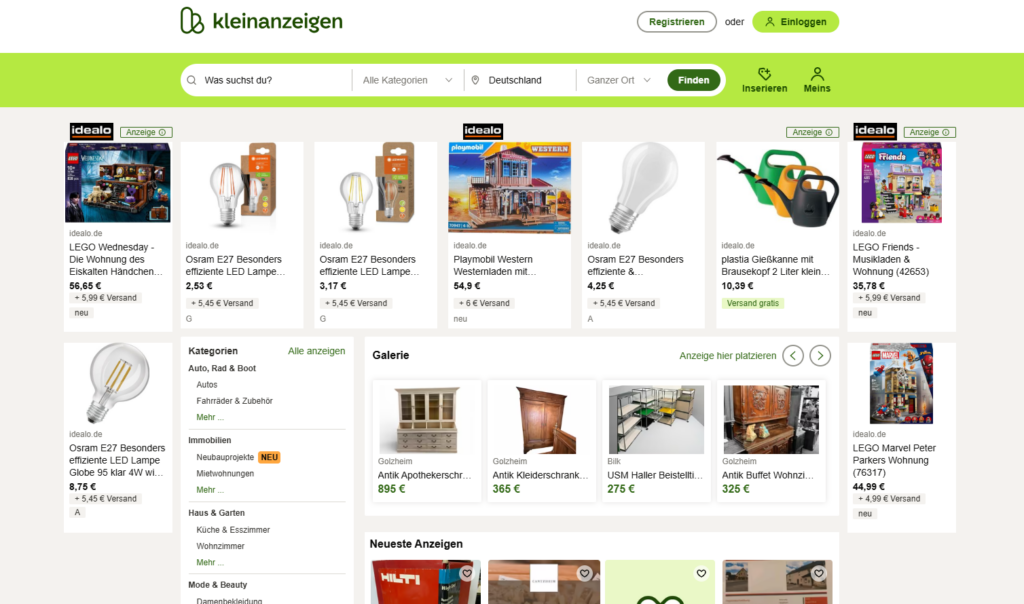
Kleinanzeigen is Germany’s top classifieds site, connecting local buyers and sellers for everyday goods and services.
Rebranded from eBay Kleinanzeigen in 2023 after its acquisition by Adevinta, Kleinanzeigen remains the dominant platform for local C2C transactions in Germany. It is free to use, fast to post and built for local deals. Businesses can list too, especially service providers and local shops.
With tens of millions of monthly users and over 50 million listings, it is a major channel for furniture, vehicles, electronics and services.
SHEIN
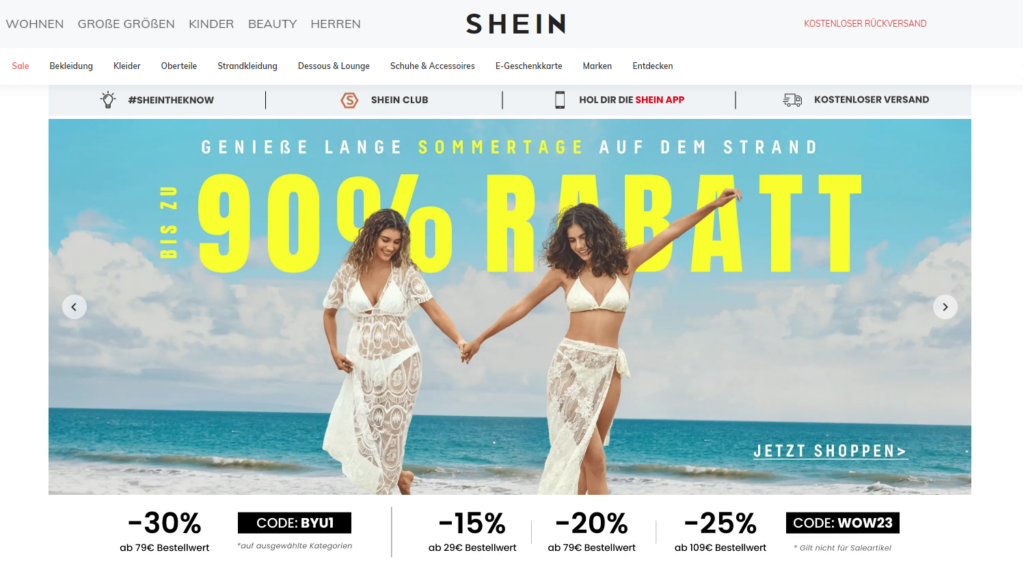
Shein.com is a global fast-fashion platform offering trendy clothing and accessories at affordable prices.
Shein is one of the most significant fashion retail stories in Germany. The platform has a monthly active user base of 24 million in Germany and generated €7.68 billion across Europe in 2026. Its speed — from trend identification to product listing in days — combined with very low prices has made it particularly dominant among younger shoppers.
The EU’s starting to pay closer attention to platforms like Shein. There’s talk of tightening customs checks to cut down on unsafe or fake products slipping through. That could mean slower shipping or more rules for sellers down the line. Still, Shein isn’t slowing down. It keeps growing across Europe, finding new buyers and adding more local warehouses. The prices, the volume, the constant flow of trends – it’s hard for shoppers to ignore.
MediaMarkt
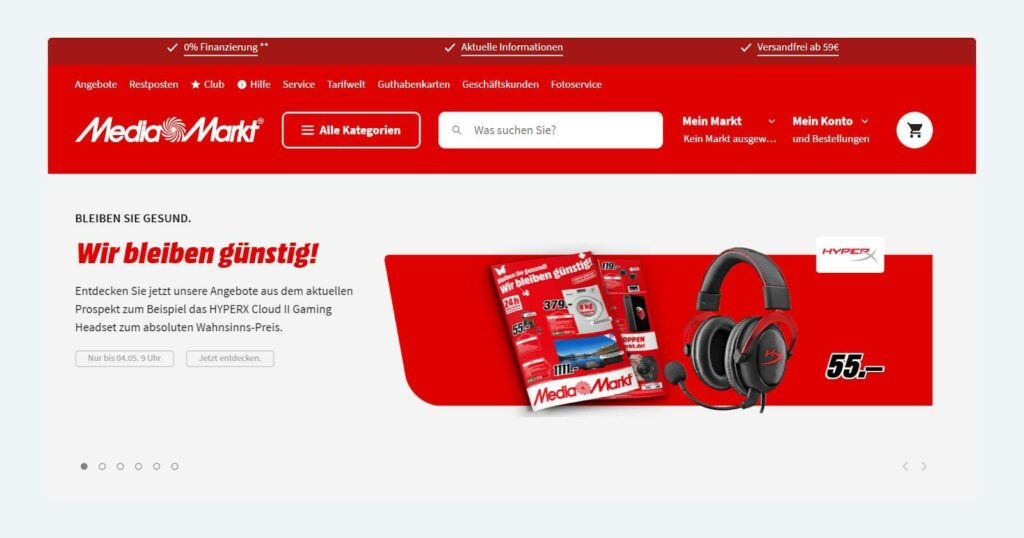
MediaMarkt.de is Germany’s leading electronics retailer, offering a wide range of consumer electronics and appliances.
MediaMarkt is the go-to destination for consumer electronics in Germany. Together with its sister brand Saturn, it reaches 65 million unique visitors per month across both sites — making the MediaMarktSaturn group one of the most-visited retail destinations in the country. The platform is ranked #1 in the Consumer Electronics category in Germany.
The group operates a growing marketplace for third-party sellers in electronics, gaming, smart home and accessories. For authorized resellers and brand manufacturers in these categories, it offers access to a highly relevant, purchase-intent audience.
Yatego
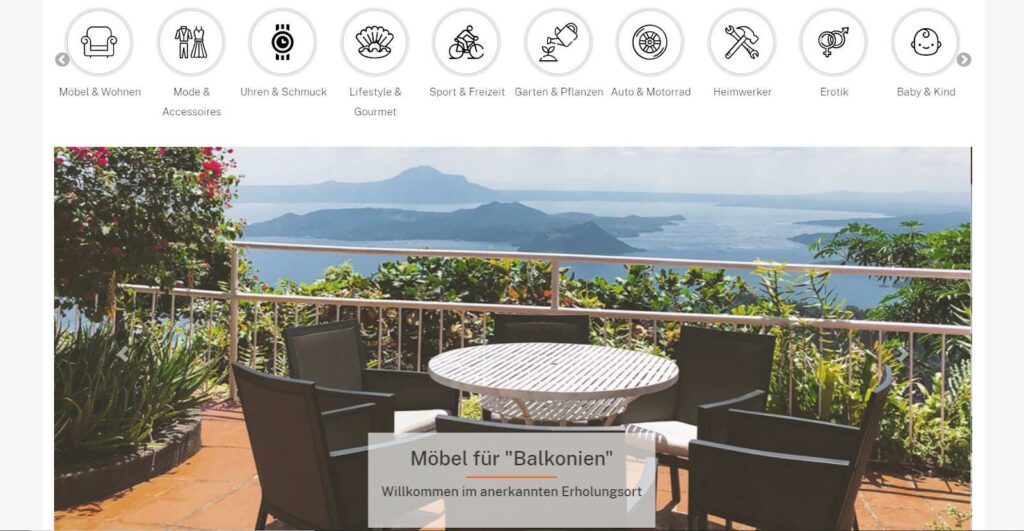
Yatego.com is a German online marketplace hosting a variety of independent retailers across multiple product categories.
Yatego offers a platform for small and medium-sized businesses to reach customers online. The marketplace focuses on providing a diverse range of products, from home goods to fashion. Yatego’s user-friendly interface and support for retailers make it an attractive option for businesses looking to expand their online presence.
Yatego puts a lot of focus on keeping things clear and fair between buyers and sellers. That trust really matters, especially for smaller shops. They’ve also been tuning into what shoppers want lately: new categories, better tools, smoother search. It’s all about staying useful and keeping people coming back.
Avocadostore
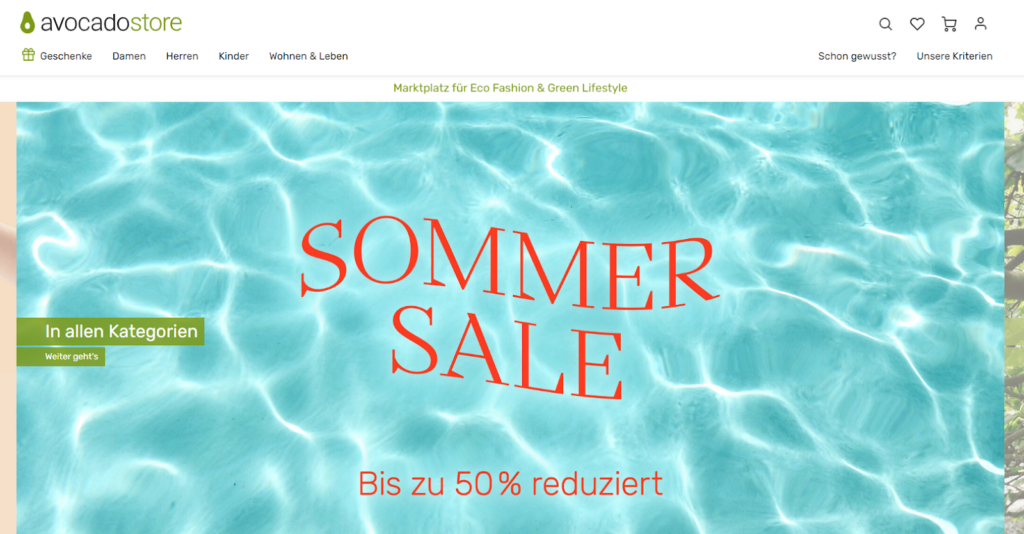
Avocadostore.de is Germany’s largest online marketplace for sustainable and eco-friendly products.
Avocadostore specializes in products meeting strict sustainability criteria — fair trade organic certifications, verified supply chains. Everything listed on the platform, from clothes to home goods, goes through a sustainability screening.
The platform is a strong fit for brands that can credibly position around environmental values and the German market’s appetite for certified sustainable products continues to grow.
Idealo
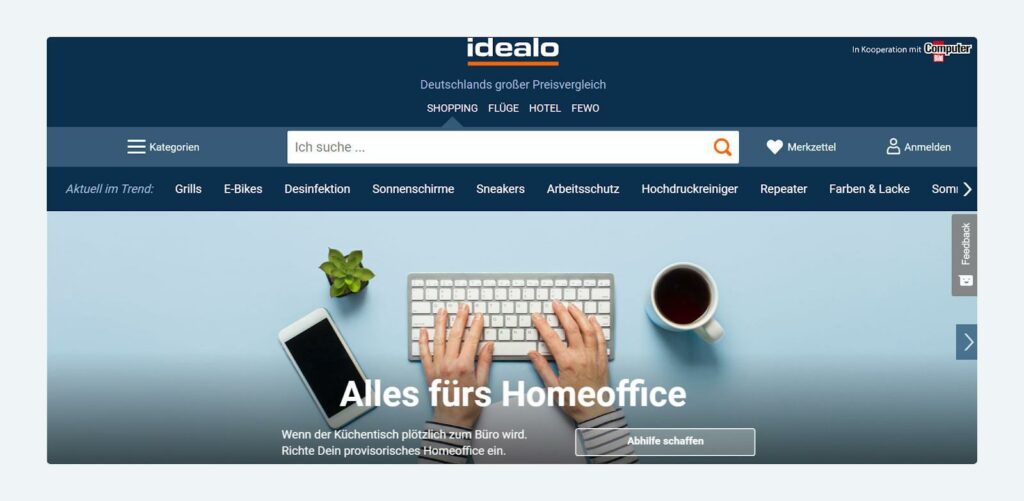
Idealo.de is Germany’s leading price comparison website, helping consumers find the best deals across various online retailers.
Idealo.de is ranked #1 in the Price Comparison category in Germany. The platform aggregates offers from numerous online shops, allowing users to compare prices and make informed purchasing decisions. Idealo’s comprehensive database and user-friendly interface make it a valuable tool for budget-conscious shoppers.
Idealo makes it easier to shop smart. You get price comparisons, sure, but also real reviews and ratings to help you decide. That mix of info keeps people coming back. If you’re after a good deal without the guesswork, this is where a lot of German shoppers start.
OnBuy
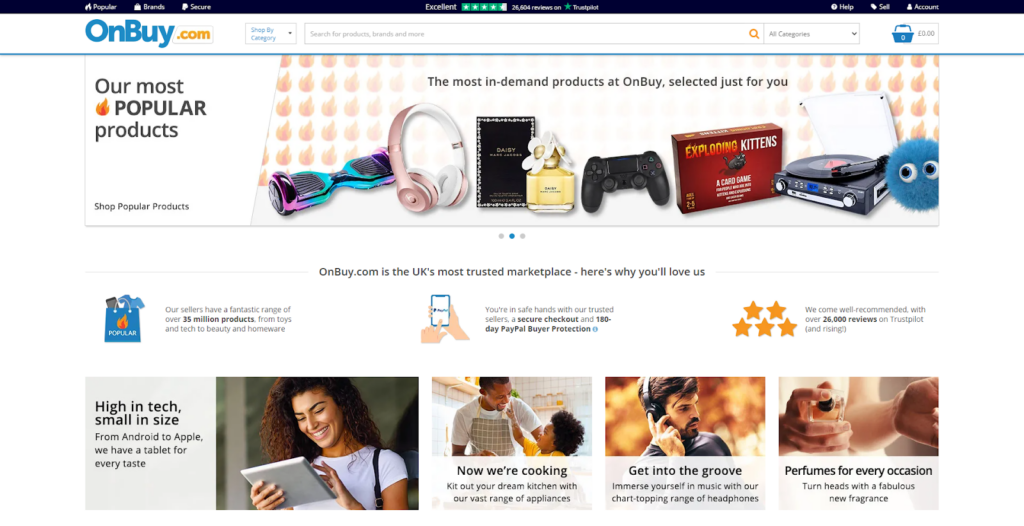
OnBuy.com is a UK-based online marketplace expanding into the German market, offering a wide range of products from various sellers.
The platform’s European expansion strategy includes targeting the German market and giving consumers more choices through its broad categories and exceptional products. OnBuy’s commitment to fair pricing and seller support differentiates it from other marketplaces.
OnBuy’s growing fast and that says a lot about how much shoppers want more choice. Its move into Germany adds fresh energy to e-commerce. For sellers, it’s a new space to get noticed. And for buyers, it means more options without the same old platforms.
Vinted
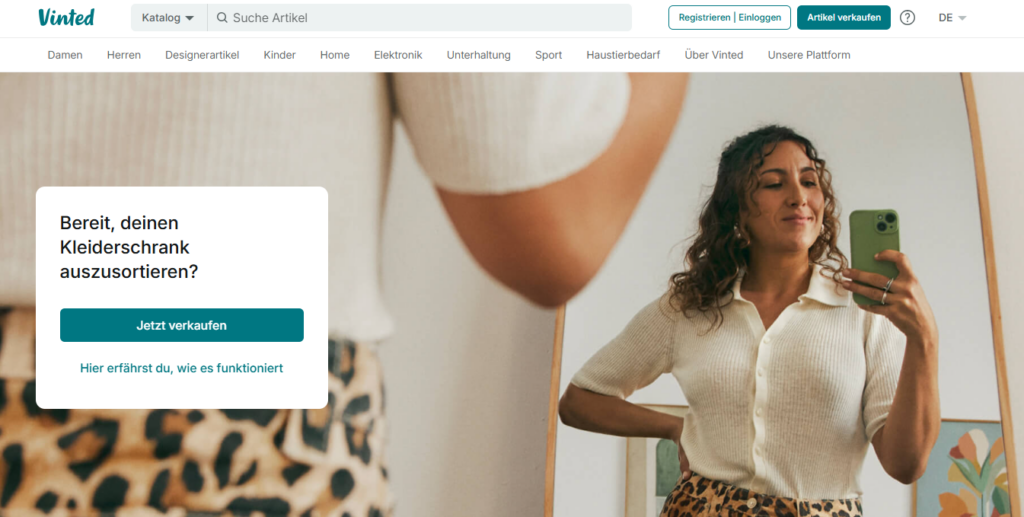
Vinted.de is Germany’s top platform for second-hand fashion and accessories, where anyone can buy or sell used clothes.
Vinted has become a significant player in the second-hand market. Year after year it reports increases in revenue. The platform allows users to sell items without fees and attracts casual sellers. Vinted’s community-focused approach and easy listing process make it popular among younger users. While not a direct sales channel for brands, it offers valuable market insights into trending products and resale value.
Vinted’s app is clean and fast and its community-focused approach has made it the default platform for second-hand fashion in Germany. Buying pre-owned is mainstream here now, not a budget fallback.
Shpock
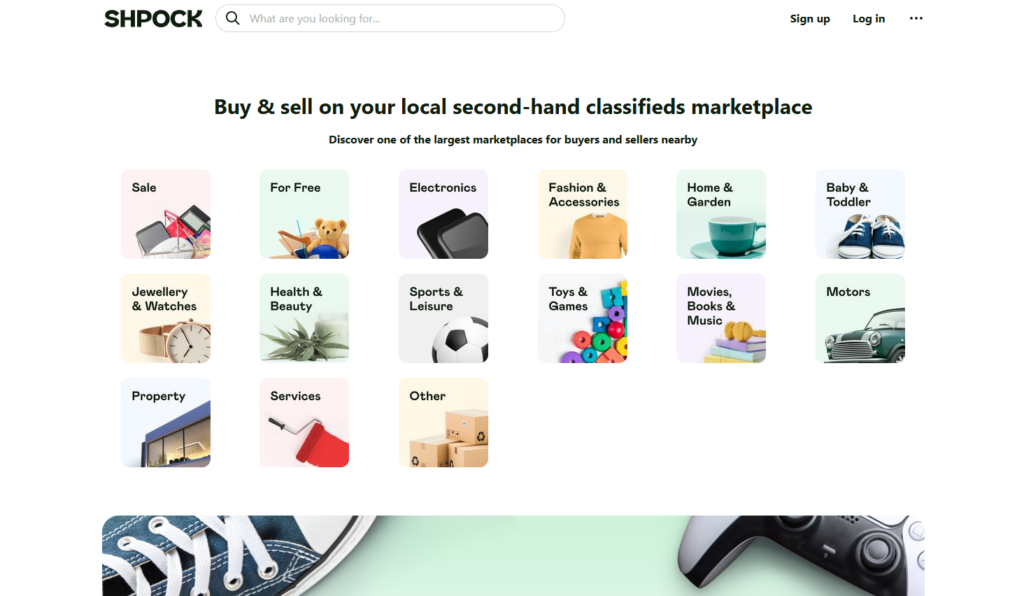
Shpock.com is a mobile-first marketplace for local buying and selling, popular in Germany, Austria and the UK.
Shpock (short for “shop in your pocket”) is built for local deals. You list with a photo and short description and buyers nearby can respond. It works well for furniture, bulky items and general second-hand goods where local pickup is preferable to shipping.
Germany accounts for around a third of the platform’s traffic. Active users and revenue are smaller than Vinted or Kleinanzeigen, but for local-first categories it remains a relevant option.
Fruugo
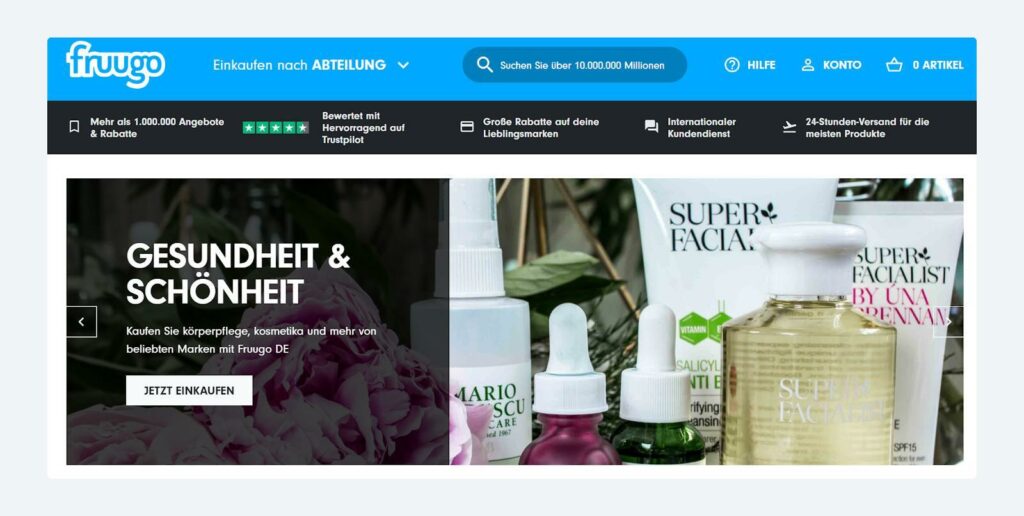
Fruugo.com is a global marketplace enabling cross-border shopping across 46 countries.
Fruugo is built specifically for cross-border retail. Sellers register once and their listings are translated into multiple languages and currencies automatically.
What stands out with Fruugo is how global it feels without being overwhelming. You’re browsing offers from all over, but it doesn’t feel messy. It’s organized, clean and easy to follow. As their network of sellers grows, so does the range – new brands, more categories, better deals. That reach is what keeps Fruugo on the radar for cross-border shopping.
ASOS
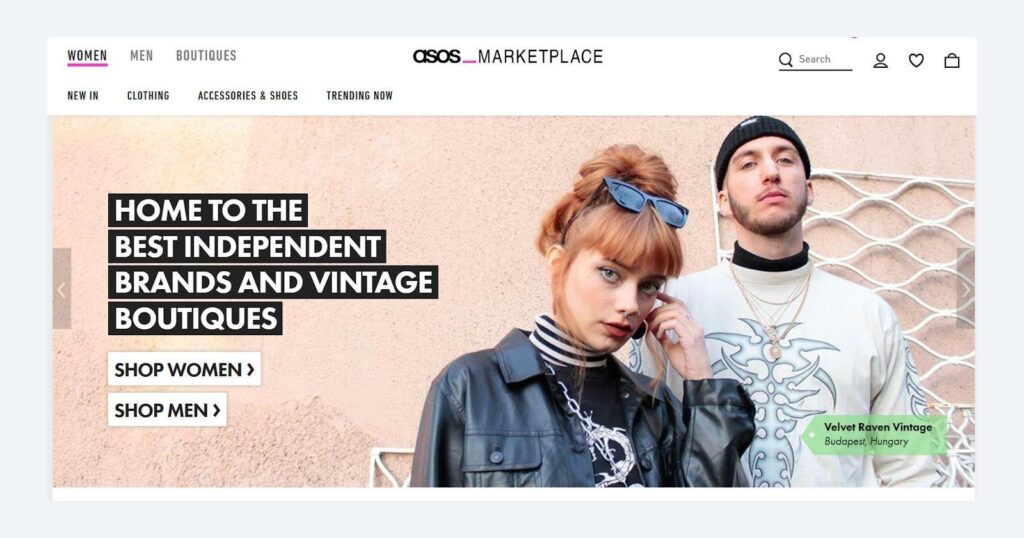
ASOS.com is a UK-based online fashion retailer with a wide range of clothing, accessories and beauty products.
ASOS maintains a strong presence in Germany as a fashion destination for younger shoppers. It operates as both a retailer and a marketplace where brands can list products.
In Germany, shoppers lean on ASOS for fresh drops, easy returns and a solid mix of streetwear. For smaller fashion labels, the ASOS Marketplace gives space to stand out and stay in control. It’s a good match for niche brands with a clear identity. And with a clean design and sharp curation, ASOS keeps its edge without trying too hard.
Rakuten.de
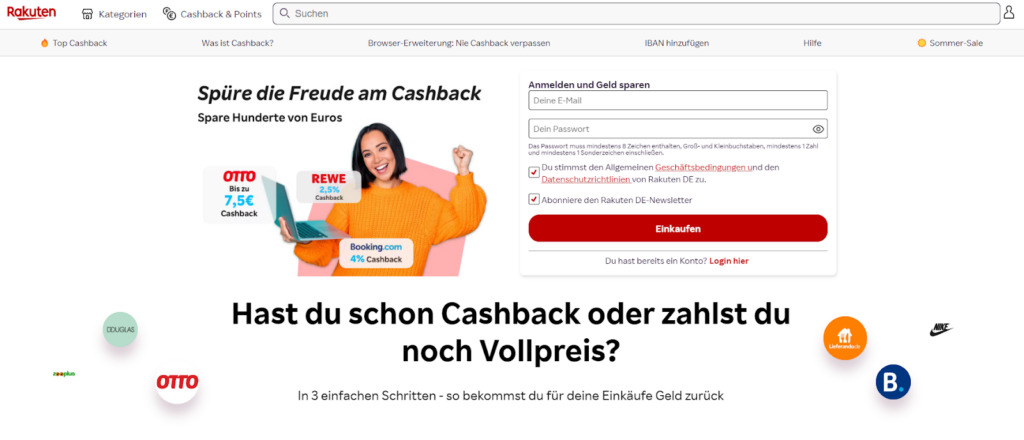
Rakuten.de is a Japanese marketplace with a growing selection of electronics, home goods and everyday products for German consumers.
It’s not huge in Germany, but it’s one of the biggest platforms globally. Rakuten get million of visits worldwide. The German site is part of a broader ecosystem with rewards, mobile payments and e-books. It’s not Amazon-level traffic here, but shoppers who care about loyalty points love Rakuten.
Sellers also get a lot of flexibility, plus access to tools for tracking, analytics and customer retention. You won’t see as many random listings. It’s more structured. Rakuten appeals to buyers who want quality plus perks.
ManoMano
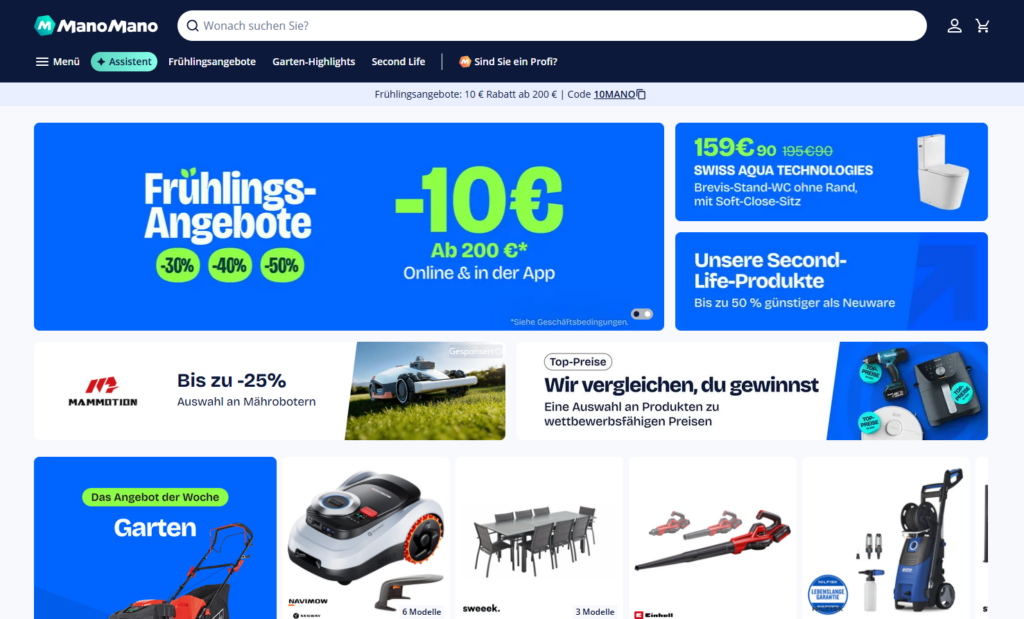
ManoMano is a European marketplace focused on DIY, home improvement and gardening.
ManoMano is active in Germany, France, Italy, Spain, Belgium and the UK. It recorded around 322,000 monthly visitors in Germany in early 2026. Its focus on a single, well-defined category — home improvement and gardening — makes it a strong fit for sellers in those verticals who want access to a highly targeted buyer base.
Hood.de
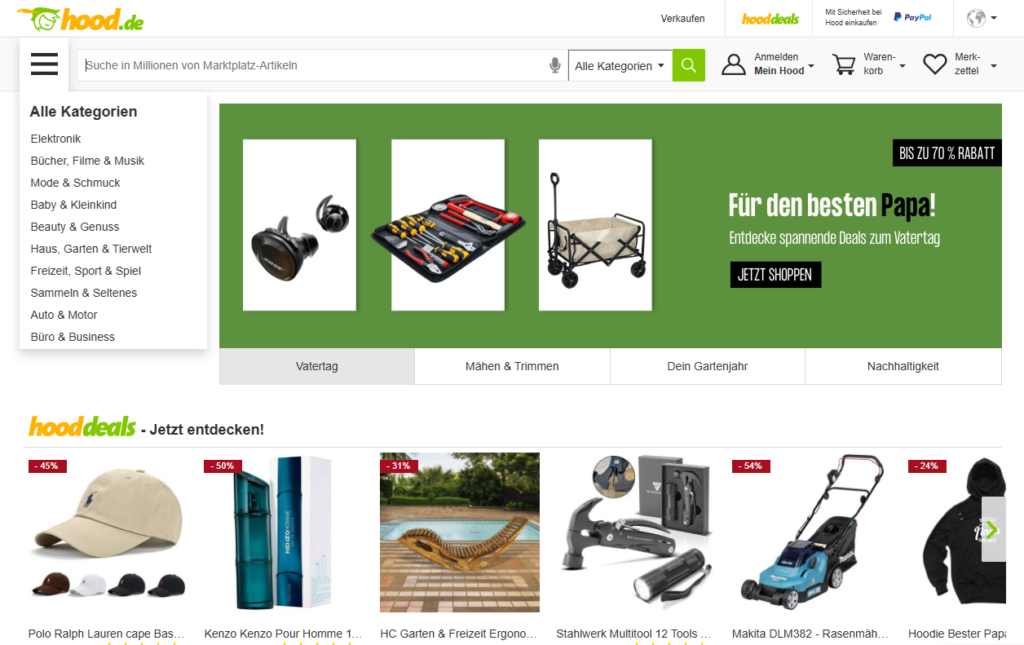
Hood.de is a German-origin marketplace covering a wide range of product categories.
Hood.de is a smaller, domestic alternative to Amazon and eBay, used primarily by German sellers who want to avoid the fees and competition of larger platforms. It covers electronics, fashion, home goods and more. Seller fees are generally lower than the major platforms and the audience is predominantly German-speaking. Less relevant for sellers focused on volume, but viable for niche domestic sellers.
Bonprix
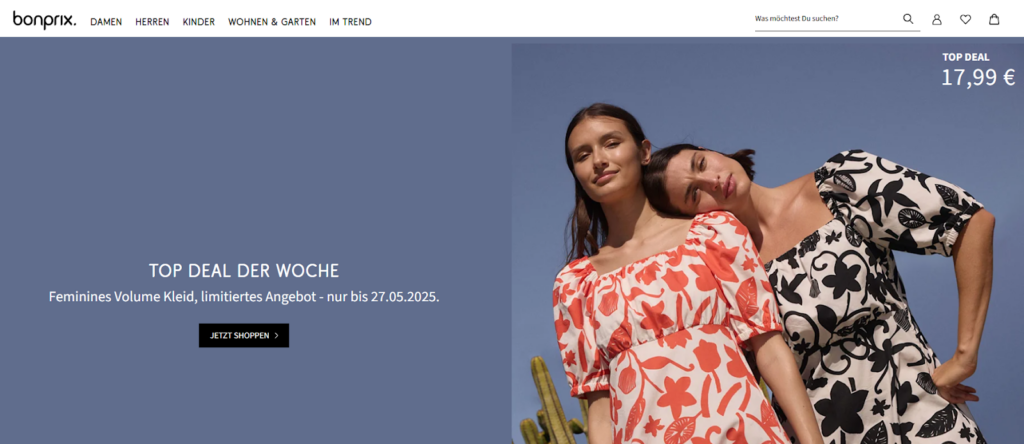
Bonprix.de is a German fashion brand offering affordable clothing for women, men and kids.
Bonprix, part of the Otto Group, focuses on functional, trend-aware fashion with decent quality. The platform is especially popular among shoppers seeking basics and smart-casual pieces. Bonprix also offers a wide range of plus-size and family fashion options.
The site’s easy to browse and the filters actually help you find what you want. Bonprix also runs regular seasonal campaigns, so sellers can catch those shopping waves. And lately, they’ve been leaning into inclusive sizing and more sustainable fabrics. It’s their way of staying current without losing what works.
New entities to watch in 2026
Temu
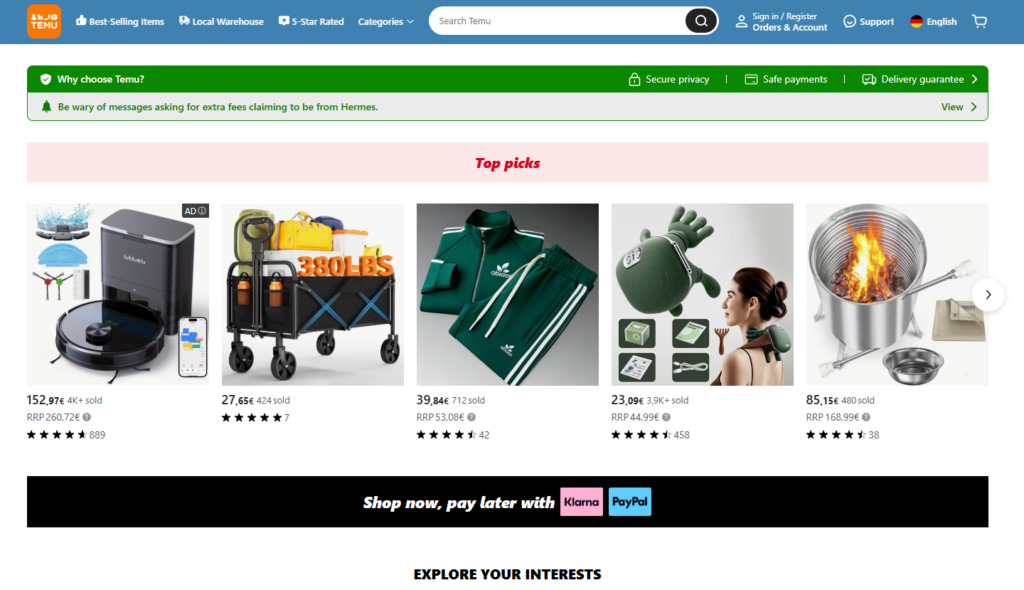
Temu entered Europe in 2023 and reached $2.6 billion GMV in Germany by 2026, making it the fourth-largest marketplace in the country.
Its gamified, ultra-low-price model has drawn in cost-conscious shoppers fast. Fashion and home goods are major categories. The platform is still maturing in Germany as a channel for third-party sellers and EU regulatory scrutiny — including potential customs rule changes — could affect its trajectory. For now it is growing fast and impossible to ignore.
AboutYou (Zalando Group)
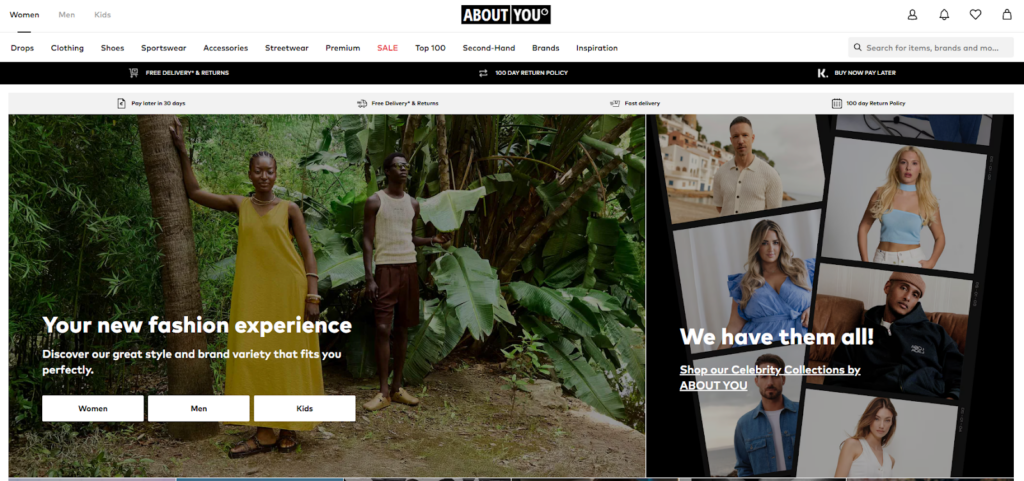
About You was acquired by Zalando in 2026 and now operates as part of the Zalando Group.
It targets younger, mobile-first shoppers with a content-led, personalized experience. In its final independent financial year it reported group revenue of €2,001.7 million. For fashion brands, About You is now effectively a route into Zalando’s ecosystem with a distinct, younger audience — access and strategy are increasingly tied together.
TikTok Shop
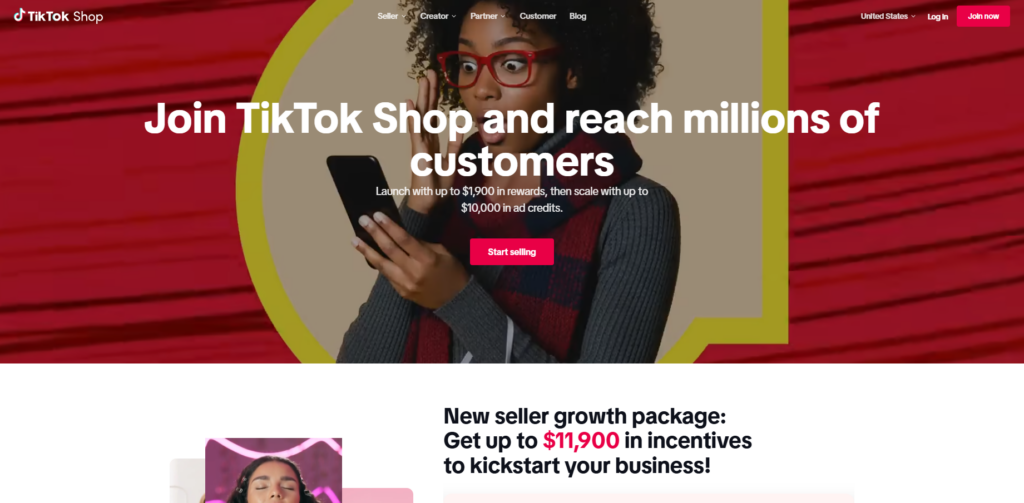
TikTok Shop launched in Germany in 2025 and is gaining early traction, particularly in fashion, beauty and lifestyle.
Its model — where products are discovered through video content and purchased without leaving the app — is different from any other platform on this list. For brands with strong visual content and an audience under 35, it is worth testing. Volume is still limited compared to established players, but the growth rate is notable.
Comparison table of German marketplaces
| # | Marketplace | Category focus | Best for sellers |
| 1 | Kaufland.de | General | Broad catalogue |
| 2 | Amazon.de | General | Volume, any category |
| 3 | Otto | Fashion, home, electronics | Mid-premium brands |
| 4 | Etsy | Handmade, vintage | Artisan, custom goods |
| 5 | Zalando | Fashion, lifestyle | Fashion brands |
| 6 | eBay.de | General, second-hand | Refurbished, collectibles |
| 7 | Kleinanzeigen | C2C, local | Local/service businesses |
| 8 | Shein | Fast fashion | B2C only |
| 9 | MediaMarktSaturn | Electronics | Electronics brands |
| 10 | Yatego | General, home, fashion | SME retailers |
| 11 | Avocadostore | Sustainable products | Eco-certified brands |
| 12 | Idealo | Price comparison + checkout | Price-competitive products |
| 13 | OnBuy | General | Sellers seeking new reach |
| 14 | Vinted | Pre-owned fashion | Second-hand clothing |
| 15 | Shpock | Local C2C | Bulky second-hand items |
| 16 | Fruugo | Cross-border general | International expansion |
| 17 | ASOS | Fashion | Young fashion brands |
| 18 | Rakuten.de | General, electronics | Loyalty-focused sellers |
| 19 | ManoMano | DIY, home improvement | Home/garden sellers |
| 20 | Hood.de | General | Domestic niche sellers |
| 21 | Bonprix | Fashion (women, men, kids) | Value/family fashion brands |
| 22 | Temu | General, fashion, home | Budget-price products |
| 23 | About You (Zalando) | Fashion, Gen Z | Young fashion brands |
| 24 | TikTok Shop | Fashion, beauty, lifestyle | Content-led brands |
What makes German marketplaces different from others in Europe?
Germany is a market of high expectations. Returns are non-negotiable — German consumers return products at among the highest rates in Europe and any platform or seller that makes returns difficult loses trust fast. Payment preferences lean toward PayPal, SEPA bank transfer and invoice-based payment (Kauf auf Rechnung) and platforms that do not support these see lower conversion. Data accuracy matters: product descriptions, dimensions and condition details need to be precise. Listings that feel vague or incomplete do not convert.
The German market also rewards reliability over novelty. A fast-loading, honest listing on a trusted platform will consistently outperform a flashy but unverifiable offer — especially in higher-ticket categories.
FAQ
What is the biggest marketplace in Germany?
Amazon.de is the largest online marketplace in Germany by traffic and revenue. It grew 8.7% in Germany in 2026 and is Amazon’s second-largest market globally. For most product categories it reaches more German shoppers than any other single platform, making it the default starting point for most sellers entering the German market.
What are the top 5 online marketplaces in Germany?
By reach and GMV in 2026, the top five are Amazon.de, Otto, Zalando, Temu and Kaufland. Temu reached $2.6 billion GMV in Germany — making it the fourth-largest marketplace in the country ahead of Kaufland. The ranking shifts by category: for fashion Zalando leads, for electronics MediaMarkt is the specialist, for second-hand Vinted is the clear winner.
What do Germans use instead of eBay?
Kleinanzeigen (formerly eBay Kleinanzeigen) is the main alternative for local and C2C transactions. For pre-owned fashion, Vinted has overtaken eBay among younger shoppers. For new products at low prices, Temu and Amazon have absorbed traffic that previously went to eBay. eBay itself remains active in Germany with around 18 million buyers per month, particularly strong in refurbished tech and collectibles.
What is the best online store in Germany?
It depends on what you are buying. For general purchases, Amazon.de leads on range and delivery speed. For fashion, Zalando is the market leader. For second-hand clothing, Vinted. For electronics, MediaMarkt. For home goods and furniture with a trusted German brand, Otto is preferred by shoppers who value reliability. For sustainable products, Avocadostore is the most specialized option.
Best online marketplaces in Germany – give them a try!
Now you know why you should implement an online marketplace and have several examples. For sure, the best online marketplaces in Germany provide many opportunities for businesses in most industries.
Here you have a simple guidebook – we have shown you which marketplace you should pay attention to. And on which you should appear if you want to squeeze the best out of e-commerce.
Start selling in the heart of Europe!