European ecommerce overview: Slovakia
Uncover Slovakia’s e-commerce potential! Our overview provides essential knowledge on market, consumers, payments & more.
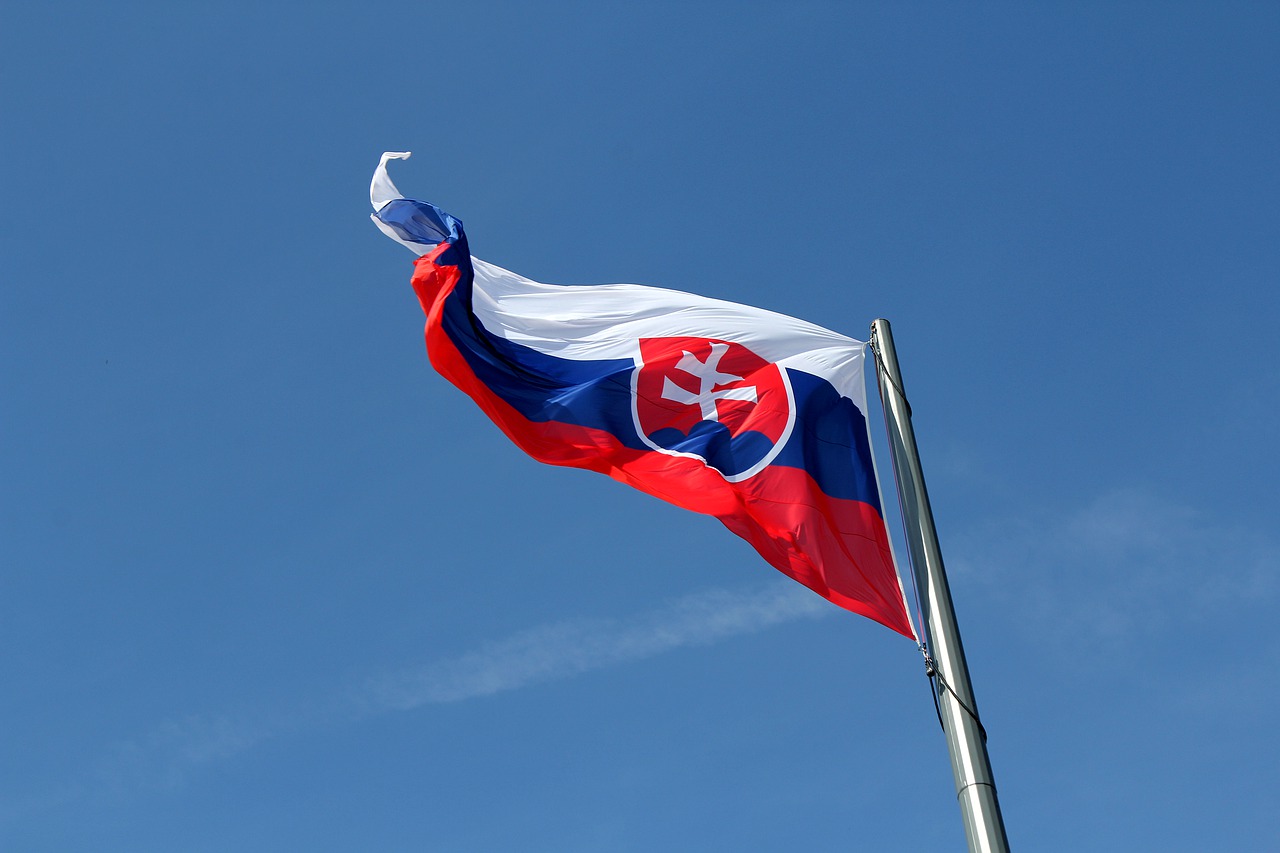
Slovakia is not the biggest ecommerce market in Europe, but it is one of the more practical ones to watch in 2026.
It sits between Poland, Czechia, Austria, Hungary, and Ukraine. It uses the euro. It belongs to the EU. It has strong cross-border routes, solid internet use, and shoppers who already feel comfortable with online retail. For ecommerce brands, that mix makes Slovakia more than a small side market.
It can work as a test market for Central Europe, a cross-border extension for brands already selling in Czechia or Poland, or a focused expansion market for retailers that can compete on delivery, payments, trust, and category fit.
The market is not huge, though. That matters. Slovakia is not the place to copy a Germany-sized strategy and expect the same volume. It is a market where operational details count: local language, payment options, delivery promises, parcel lockers, returns, and customer support.
In short: Slovakia can be attractive, but only for sellers who treat it like a real local market.
Slovak ecommerce overview in 2026
Slovak ecommerce has moved from early growth into a more mature stage. Online shopping is already part of normal consumer behavior, and the next wave of growth will come less from first-time buyers and more from better logistics, mobile checkout, flexible payments, category expansion, and stronger trust.
Trade.gov reports that Slovak ecommerce turnover reached €1.84 billion, the second-highest result in the country’s ecommerce history after the 2021 peak of €2.08 billion. ECDB places Slovak ecommerce revenue at US$1.877 billion in 2025 and expects another 5–10% market change for 2025/2026.
Forecasts differ depending on methodology, but the direction is clear. Mordor Intelligence estimates Slovakia’s ecommerce market at US$2.84 billion in 2026 and forecasts growth to US$4.74 billion by 2031, with a 10.81% CAGR over 2026–2031.
That does not mean every category will grow equally. Electronics remains one of the strongest categories. Trade.gov points to electronics as the largest ecommerce category in Slovakia, with around 21% of turnover. ECDB lists Hobby & Leisure as the largest category by ecommerce revenue share, at 28% in 2025. Different data providers classify categories in different ways, but both sources point to one useful conclusion: Slovak online shoppers are not only buying fashion and small everyday products. They are comfortable ordering higher-consideration goods too.
The competitive landscape reflects that. Alza.sk remains one of the most visible ecommerce players in Slovakia, especially in electronics and general retail. Other important names include Mall.sk, Nay.sk, Tesco’s online grocery operation, Dr.Max, Notino, Kaufland.sk, Sportisimo, IKEA, H&M, and international marketplaces.
For a broader regional view, this article connects well with our updated European ecommerce overview: guide through ecommerce in Europe in 2026, especially the section on Central and Eastern Europe.
Why Slovakia is interesting for ecommerce expansion
Slovakia’s main advantage is not size. It is location.
The country sits in the middle of Central Europe, with direct links to larger and highly relevant ecommerce markets. For brands already selling in Czechia, Slovakia is often the natural next step because of language proximity, shared business ties, and similar retail habits. For sellers active in Poland or Hungary, Slovakia can also work as a regional extension, though localization still matters.
The euro also makes Slovakia easier to work with than some nearby markets. Pricing, accounting, and payment processing can be simpler for eurozone-based sellers. That can matter for smaller brands that want regional expansion without too much currency complexity.
Slovakia also has a practical consumer profile. Shoppers are price-aware, but not only discount-driven. They compare offers, read reviews, care about delivery, and expect clear product information. They may buy across borders when the offer is stronger, but local trust still matters.
That creates space for sellers that can offer a sharper value proposition than local competitors. It also creates pressure. If your product page is weak, your delivery terms are vague, or your checkout does not support familiar payment methods, Slovak shoppers have plenty of alternatives.
Consumer behavior in Slovakia
Slovak consumers are digitally active and increasingly used to shopping online, but they still behave like careful buyers. They compare prices, check delivery costs, look for reviews, and often rely on known retailers or marketplaces when buying from a new seller.
Across the EU, 78% of internet users bought or ordered goods or services online in 2025. Slovakia sits inside that wider European shift, where online shopping is no longer a novelty but a standard buying path.
Mobile matters a lot. Mordor Intelligence estimates that smartphones accounted for 55.3% of Slovakia’s ecommerce market size in 2025. That means mobile UX is not a secondary detail. It is the shopping experience for many customers.
For retailers, this has clear consequences. Product pages need to load fast. Buttons need to be easy to use. Payment fields need to work well on mobile. Delivery and return information should appear before the buyer reaches checkout. If the user has to zoom, scroll too much, or guess what happens after payment, conversion will suffer.
Cross-border shopping also plays a role. Slovak consumers often compare local stores with offers from Czechia, Poland, Germany, Austria, and international marketplaces. That is good news for foreign brands, but only if they can remove the usual doubts: Will delivery be fast? Will returns be easy? Is the total price clear? Can customer service help in Slovak or Czech?
Traditional habits still exist too. Some buyers prefer in-store shopping for certain categories, especially where fit, size, warranty, or product quality matter. That makes click-and-collect, pickup points, and parcel lockers useful in the Slovak market. They bridge the gap between digital convenience and physical reassurance.
What Slovaks buy online
Slovakia’s ecommerce demand is spread across several categories.
Electronics remains one of the strongest areas. This makes sense because Slovak shoppers often research products before they buy, compare prices, and look for reliable delivery and warranty terms. Large retailers such as Alza.sk, Nay.sk, Mall.sk, and Datart.sk benefit from that behavior.
Hobby, leisure, DIY, garden, workshop, and home-related categories also perform well. Trade.gov highlights workshop, construction, and garden as an important category group, with a 13.8% share of Slovak ecommerce turnover. This gives the market a different profile from countries where fashion dominates the entire ecommerce conversation.
Fashion still matters, of course. International brands, sports retailers, marketplaces, and local online stores all compete for Slovak shoppers. But fashion sellers need to pay close attention to returns, size guidance, delivery speed, and free-shipping thresholds. In smaller markets, return friction can damage repeat purchases quickly.
Automotive is another relevant ecommerce area. Trade.gov points to automotive as a category with a 9% turnover share. For ecommerce sellers, this can include accessories, parts, maintenance products, and vehicle-related retail. The category suits Slovakia’s practical buying culture because customers often compare price, compatibility, and trust before purchase.
Online grocery and pharmacy are also worth watching. Tesco, Dr.Max, and other players have helped normalize online buying in everyday and health-related categories. Growth here depends heavily on logistics, stock availability, delivery windows, and consumer trust.
Payment methods in Slovakia
Slovakia is moving toward a more cashless retail environment, but payment behavior is still mixed.
Cards remain important. Mordor Intelligence estimates that credit and debit cards held a 40.3% share of Slovakia’s ecommerce market size in 2025. For online retailers, card payments should work smoothly across desktop and mobile, with strong security and minimal friction.
Digital wallets and fast mobile payments are also gaining ground. Slovak shoppers increasingly expect convenience at checkout, especially on smartphones. That means Google Pay, Apple Pay, PayPal, card-on-file options, and bank-linked payment methods can all improve the buying experience depending on the target audience.
BLIK is one of the more interesting payment developments. It launched in Slovakia in 2024, and in 2026 BLIK announced that Polish bank users would gain access to thousands of Slovak ecommerce stores. The next phase, planned for the end of 2026, should allow users of Slovak banks to shop in Polish ecommerce with BLIK. For cross-border ecommerce between Poland and Slovakia, this is worth watching closely.
Cash has not disappeared. Some buyers still like the reassurance of cash on delivery, especially when ordering from a new store. But the direction of travel is clear. From May 1, 2026, sellers registered in Slovakia’s eKasa system must offer at least one cashless payment option for transactions above €1, while cash remains available. That rule reflects how strongly payments are moving toward digital convenience.
For ecommerce brands, the payment checklist is simple:
- Offer cards as a baseline.
- Support mobile-friendly payment options.
- Consider local and regional methods.
- Keep cash-on-delivery only if it fits the category and margin.
- Make payment security visible, but not noisy.
- Test checkout on mobile before launch.
Slovak social media and ecommerce discovery
Social media plays a clear role in ecommerce discovery in Slovakia. It is not only a place for brand awareness. It supports product research, reviews, creator-led discovery, retargeting, and local trust-building.
DataReportal’s Digital 2026 report says Slovakia had 3.90 million active social media user identities in October 2025, equal to 71.4% of the total population. Among adults aged 18 and above, 3.51 million social media user identities represented 79.1% of the adult population.
YouTube had 3.90 million users in Slovakia in late 2025, based on advertising reach data. That makes it a strong platform for product education, reviews, explainers, and longer-form brand content.
Facebook remains relevant, especially for older audiences, local communities, groups, events, and retargeting. Instagram suits visual products, lifestyle brands, fashion, beauty, food, travel, and home categories. TikTok can help with discovery, but it should not be treated as a magic shortcut. Short-form content needs local context, native pacing, and products that can stand out quickly.
For ecommerce teams, the smart move is to connect social media with the buying journey. A Slovak shopper may see the product on social, check reviews, compare prices on a marketplace, visit the brand website, and then choose a pickup point or locker. The brand that supports that whole path has a better chance than the one that only runs ads.
Logistics in Slovakia
Logistics is one of Slovakia’s biggest ecommerce advantages.
The country’s central location gives retailers access to nearby EU markets and useful cross-border routes. Slovakia connects naturally with Czechia, Poland, Austria, Hungary, and Ukraine, which makes it valuable for regional ecommerce operations.
The delivery landscape is also becoming more flexible. Parcel lockers, pickup points, and carrier partnerships are now part of normal ecommerce infrastructure. DPD SK reported in May 2026 that it had almost 3,700 Pickup Points in Slovakia. Its network includes partnerships with AlzaBox lockers, Slovak Post parcel lockers, Packeta Z-BOXes, and DPD’s own Pickup Station lockers.

That matters because Slovak shoppers often want delivery control. Home delivery is still important, but lockers and pickup points help with convenience, cost, and failed-delivery risk. For sellers, they can also reduce pressure on customer service and improve repeat purchase rates.
Packeta is another important name in the region. It operates a large pickup and locker network across multiple countries and is especially relevant for cross-border ecommerce in Central Europe. For brands entering Slovakia from Poland, Czechia, Hungary, or other nearby markets, carrier choice can affect conversion just as much as advertising.
Returns need just as much attention as delivery. Slovak customers may hesitate if returns feel complicated, expensive, or unclear. A simple returns page in Slovak or Czech, local return options, and clear refund timing can help reduce purchase anxiety.
How Slovakia compares with nearby ecommerce markets
Slovakia is best understood next to its neighbors. It is smaller than Poland and Czechia, more compact than Hungary, and easier to manage than larger Western European markets. But smaller does not mean less demanding.
| Market | What makes it attractive | What to watch |
| Slovakia | Eurozone market, central location, strong delivery networks, growing mobile commerce | Smaller scale, price comparison, need for localized trust |
| Czech Republic | Mature ecommerce habits, strong online retail culture, natural link with Slovakia | High competition, strong local players |
| Hungary | Growing consumer demand, useful regional position | Payment preferences, pricing pressure, localization needs |
| Ukraine | Resilient digital behavior and long-term potential | War-related risk, operational complexity |
| Lithuania | Digitally active market, Baltic ecommerce potential | Smaller audience, cross-border logistics planning |
This comparison shows why Slovakia can be useful as part of a wider Central European strategy. It may not bring the biggest standalone volume, but it can add reach, help brands test regional demand, and strengthen cross-border ecommerce operations.
What ecommerce brands should localize for Slovakia
Localization in Slovakia should go beyond translation.
Language matters, but so do trust signals, delivery logic, payment choices, product information, and customer support. Many Slovaks understand Czech, and some brands use Czech content as a starting point. But a Slovak version often feels more local and more reliable, especially in checkout, shipping, returns, warranty, and customer care.
Product pages should be specific. Slovak shoppers compare options, so vague descriptions do not help. Add technical details, size information, materials, compatibility notes, delivery timing, warranty terms, and real customer reviews where possible.
Pricing should be clean. Slovakia uses the euro, so international sellers should avoid confusing currency handling. Show VAT clearly, explain shipping costs early, and avoid checkout surprises.
Delivery should feel local. Offering only one international shipping option can make the store feel distant. Parcel lockers, pickup points, reliable courier options, and local return addresses can make a big difference.
Support should be easy to reach. Even a simple Slovak or Czech help page can improve trust. For higher-consideration products, local-language customer support can become a real advantage.
Opportunities for ecommerce in Slovakia in 2026
Slovakia offers several strong opportunities for ecommerce brands.
The first is cross-border retail. Brands already active in Czechia, Poland, Austria, or Hungary can often extend into Slovakia more efficiently than into a completely unrelated market. Logistics, payment partnerships, and category data can support expansion.
The second is mobile commerce. With smartphones representing more than half of the market size in 2025, mobile-first design is now a core requirement. Brands that improve mobile speed, checkout, payment flow, and product discovery can gain an edge.
The third is parcel-locker-friendly retail. Slovakia’s pickup and locker infrastructure supports categories where delivery convenience can influence conversion. This includes electronics, beauty, fashion, hobby products, DIY, small home goods, books, accessories, and pharmacy items.
The fourth is specialist retail. Slovakia is not only about mass marketplaces. Niche brands can work when they offer clear value, good content, reliable delivery, and strong customer support. This applies to hobby products, health-related goods, home improvement, sports, pets, automotive, and premium lifestyle categories.
The fifth is regional marketplace strategy. Sellers do not need to rely only on their own websites. Marketplaces and large retailers can help with visibility, but they also reduce control. The best setup often combines marketplace reach with a strong owned store, retargeting, email, and repeat-purchase strategy.
Challenges in Slovak ecommerce
The Slovak ecommerce market also has clear challenges.
- The first is scale. Slovakia’s population is around 5.5 million, so the addressable audience is smaller than in Germany, Poland, France, or Spain. Brands need realistic revenue expectations and careful cost control.
- The second is competition from neighboring markets. Slovak shoppers can easily compare offers from Czech, Polish, German, Austrian, and international sellers. If your price, delivery, or trust level is weaker, the buyer has options.
- The third is margin pressure. Delivery, returns, ads, marketplace fees, and local support can reduce profitability. Smaller markets can become expensive if brands enter without a clear plan.
- The fourth is trust. New stores need to prove they are safe, reliable, and easy to deal with. Reviews, local contact details, clear returns, secure payments, and recognizable carriers all help.
- The fifth is regulation. EU consumer protection, data privacy, product safety, digital accessibility, VAT rules, and platform obligations all shape ecommerce operations. Slovakia is not an exception. It is part of the wider EU compliance environment.
Slovak ecommerce has a lot to offer
Slovakia may be small, but it has a serious ecommerce foundation.
The market has strong online shopping habits, a useful central location, eurozone simplicity, growing digital payments, and a delivery network that keeps improving. It also sits next to several important ecommerce markets, which makes it valuable for cross-border strategy.
The best opportunity is not to treat Slovakia as an afterthought. The brands that do well will localize properly, support mobile shopping, offer familiar payments, provide clear delivery options, and build trust before asking for the sale.
For sellers already active in Central Europe, Slovakia can be a smart next step. For brands looking at the region for the first time, it can be a manageable market to study before wider expansion.
If you want to compare Slovakia with other European markets, start with our broader European ecommerce overview for 2026, then explore nearby country guides such as Czechia, Hungary, Lithuania, and Croatia.