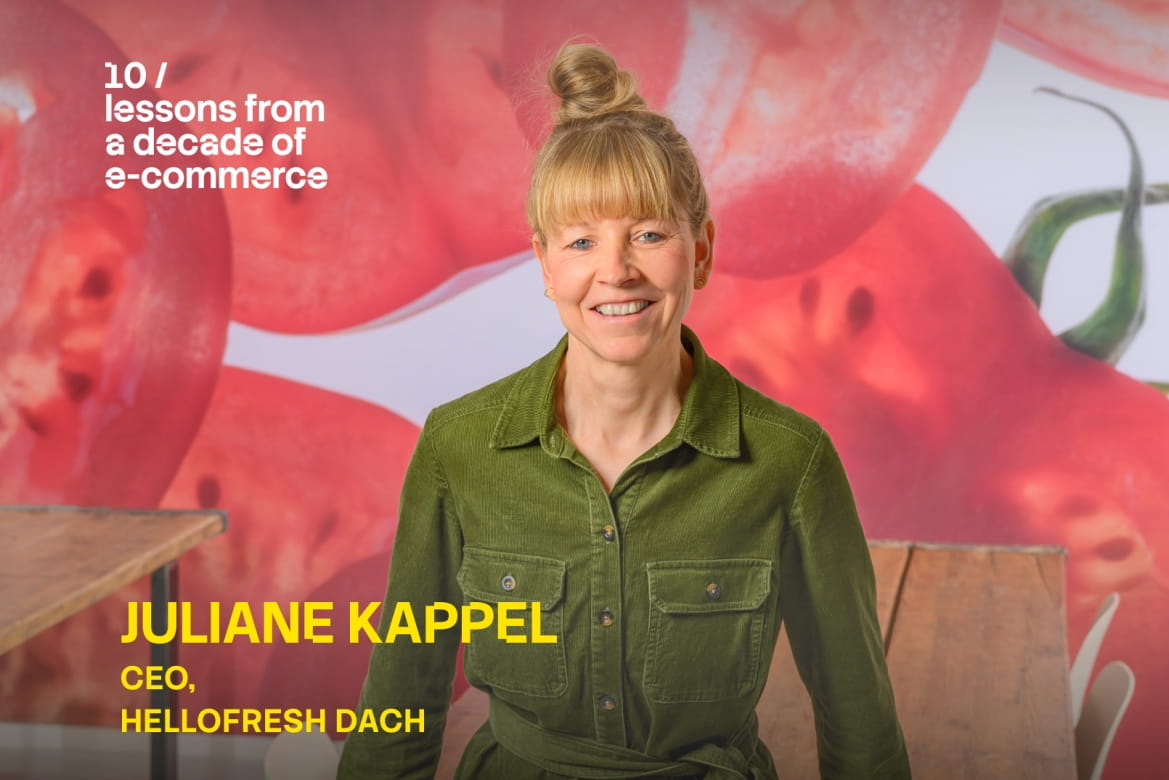
“Staying focused on the long term doesn’t mean standing still”: 10 lessons from Juliane Kappel, CEO HelloFresh Deutschland, Österreich, Schweiz
Discover 10 valuable e-commerce lessons from Juliane Kappel, CEO HelloFresh Deutschland, Österreich, Schweiz, as she shares her insights on the future of online retail to mark the 10th anniversary of the E-commerce Berlin Expo. [EXCLUSIVE INTERVIEW SERIES]
The E-commerce Berlin Expo celebrated its 10th anniversary in 2026. To mark this milestone, we interviewed some of the world’s most influential leaders about the future of online retail, asking them to share their 10 valuable lessons in e-commerce. Their insights were featured in our special album, showcasing the most powerful voices in online retail, which we decided to share with you on E-commerce Germany News.
This time, we’re featuring an exclusive interview with Juliane Kappel, CEO HelloFresh Deutschland, Österreich, Schweiz. See what e-commerce lessons she shared with us below!
Timing matters
What first drew you to this industry?
JULIANE: When I joined HelloFresh in early 2017, the company had already launched its meal-kit business across several European markets, North America, and Australia. What truly drew me in was the vision: to change the way people eat forever. At a time when online food and grocery were still in their early days, the idea of delivering hand-picked ingredients, in the exact right quantities, directly to customers’ doors week after week felt genuinely transformative. It solved real, everyday problems, from meal planning to grocery shopping, while also inspiring people to cook. That clear customer impact and relevance to daily life is what made this industry, and HelloFresh in particular, so compelling to me.
Which early failure taught you something that still guides you today?
JULIANE: Early in my career, I underestimated how important timing and organizational readiness are for innovation. I pushed for solutions, particularly around personalization, before the underlying data, tools, and teams were ready to support a truly strong customer experience. The intent was right, but the execution fell short, resulting in complexity without sufficient customer value.
That experience still guides me today. It taught me that successful innovation is not just about what you build, but when you build it and whether the organization is ready to deliver it well. Progress happens fastest when ambition, capabilities, and customer impact are aligned.
The most important lesson I’ve learned is the discipline of saying no to many good ideas in order to say yes to the few that truly matter in a given moment.
When you think of the past decade of e-commerce, what do you miss – and what are you glad we left behind?
JULIANE: What I sometimes miss from the early days of e-commerce is the pioneering spirit: the willingness to test boldly, learn fast, and build without over-engineering. Decisions were often simpler, teams were closer to the customer, and speed was a real competitive advantage.
At the same time, I’m glad we’ve left behind the mindset of growth at any cost and the lack of operational maturity. In online food, especially, the past decade has brought a much stronger focus on unit economics, sustainability, data-driven decision-making, and customer experience at scale. E-commerce has grown up and that maturity allows us to build businesses today that are not only innovative, but also resilient and responsible.
What is the single most important business lesson you have learned throughout your career?
JULIANE: Less is more. The most important lesson I’ve learned is the discipline of saying no to many good ideas in order to say yes to the few that truly matter in a given moment. Earlier in my career, and sometimes still today, the temptation was to do too many things at once, often at the cost of focus and impact.
Especially in a growing, complex business with interconnected teams and supply chains, success depends on clarity and prioritization. When everyone along the value chain is aligned behind a small number of priorities, execution improves dramatically. Focus is hard, but it is one of the most powerful levers in business.
How would you define success in e-commerce today, and how has your view of it changed over time?
JULIANE: Today, success in e-commerce is defined by relevance: how well you serve individual customer needs and how quickly you adapt as those needs evolve. What once worked as a “one-fits-many” model has shifted toward an ongoing one-to-one relationship with the customer.
Especially in food, customer expectations evolve faster than ever, shaped by travel, globalization, social media, and the mixing of cultures and cuisines. Trends emerge globally and spread instantly, from fusion kitchens to new dietary preferences. Successful e-commerce businesses are those that can translate these signals into high-quality, relevant experiences at speed. Over time, my view of success has shifted from building broadly appealing products to earning sustained customer trust through adaptability and relevance.
Staying focused on the long term doesn’t mean standing still. It provides the clarity to adapt to changing customer needs without chasing every short-term signal. That consistency of direction, combined with openness to evolve, is the leadership principle I won’t trade off.
What do you see as the biggest opportunity in e-commerce today?
JULIANE: The biggest opportunity in e-commerce today lies in combining data, technology, and operational excellence to deliver truly relevant, personalized experiences at scale. Customers no longer compare us only to direct competitors; they compare every interaction to the best experience they’ve had anywhere.
For e-commerce, and especially in food, this means using insights to anticipate needs, shorten the distance between inspiration and purchase, and seamlessly connect digital experiences with complex physical operations. Companies that translate customer feedback into fast and reliable execution in a sustainable, profitable way will define the next phase of e-commerce growth.
The role of trust
What’s the most counterintuitive or unconventional thing your company does today that actually works?
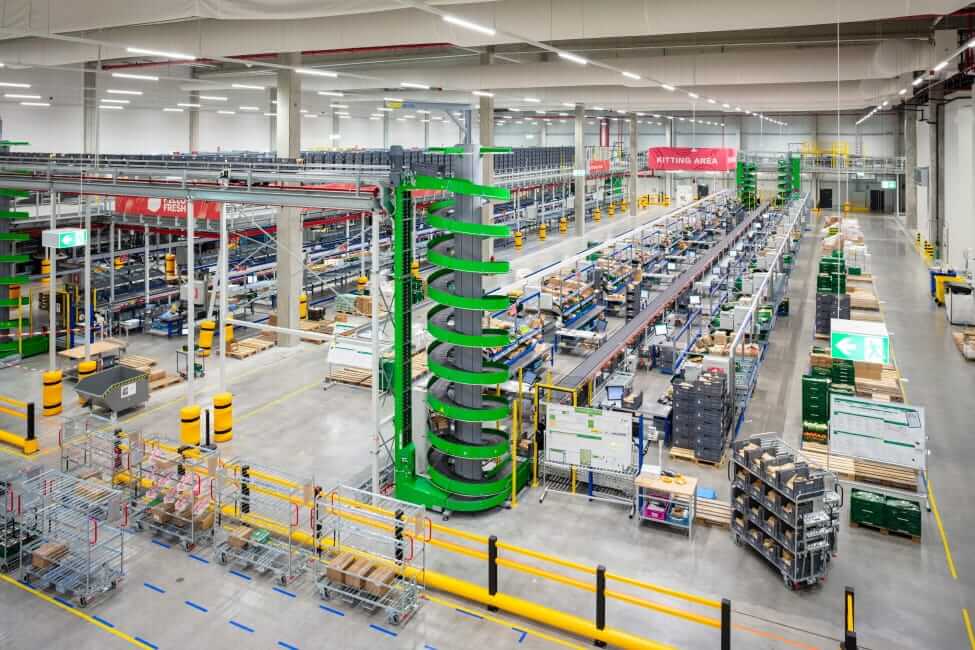
JULIANE: We deliberately don’t standardize one global menu, even though we operate at a global scale. In a classic e-commerce mindset, that sounds inefficient. For us, it’s a competitive advantage.
Our menus are developed by local culinary teams in each market, grounded in regional tastes, habits, and food culture. Even when recipes travel across countries, they are always adapted with a local twist. The result is higher relevance, stronger emotional connection, and better customer retention. In food, growth doesn’t come from uniformity – rather from getting localization right, repeatedly, and at a high level of complexity.
What guiding principle do you personally refuse to compromise on, no matter the trend or pressure?
JULIANE: I refuse to compromise on long-term value creation built on trust – with customers and with teams. Trends, metrics, and short-term pressure change constantly, but trust is earned over time and lost quickly. For me, that means making decisions that strengthen the business and the people behind it beyond the next quarter, even when that comes at the cost of speed or easy wins.
Staying focused on the long term doesn’t mean standing still. It provides the clarity to adapt to changing customer needs without chasing every short-term signal. That consistency of direction, combined with openness to evolve, is the leadership principle I won’t trade off.
Looking ahead, what will define the next decade of e-commerce, and how does thinking about the future make you feel – optimistic, excited, concerned, or something else?
JULIANE: The next decade of e-commerce will be defined by the convergence of technology, customer expectations, and operational excellence. Advances in AI, automation, and data platforms will fundamentally reshape how businesses understand customers, deliver personalized experiences, and run increasingly complex operations with greater efficiency.
Beyond technology, customers will increasingly value authenticity and real connection. Trust, transparency, sustainability, and understanding the brand, the product, and the people behind it will become decisive differentiators. Successful e-commerce players will be those that combine technological sophistication with transparency, resilience, and genuine customer relevance.
Personally, the future feels both exciting and demanding. The tools available to build better experiences have never been more powerful. But the bar for execution, responsibility, and long-term value creation has also never been higher.
If you could leave a message for future e-commerce leaders, what would it be?
JULIANE: Get the fundamentals right, and grow with intention. Strong customer value, sound economics, and operational discipline matter more than any trend or shortcut. At the same time, don’t wait for perfect infrastructure before you act. Progress comes from testing, learning, and adapting as the business evolves.
The real challenge is not growing fast, but growing healthily. Leaders who balance ambition with resilience and experimentation with discipline will build companies that are able to grow, mature, adapt, and last.
Juliane Kappel’s bio
Juliane Kappel is the CEO of HelloFresh DACH, where she leads the business with a strong focus on customer relevance, sustainable growth, and operational excellence. She brings extensive experience in scaling consumer-facing businesses and driving transformation across complex, international organizations. Juliane is particularly passionate about building strong leadership teams and shaping the future of e-commerce through innovation and long-term value creation.