The Demographics and Spending Patterns Behind E-Commerce Growth in Germany
Explore the demographics behind Germany’s e-commerce growth, from urban shoppers and Gen Z consumers to the rise of low-cost marketplaces based on insights from ECDB. (Ad)

By Nadine Koutsou-Wehling, Data Journalist
If you’ve been following ECDB for a while, you already know e-commerce is on the rise. But who exactly is driving that growth?
Our latest consumer survey in Germany digs into the structural forces behind the numbers, uncovering the spending patterns that are accelerating momentum, and the friction points holding it back.
Discover which demographics are leading the charge, what motivates their choices, and where their preferences are headed.
Ready to see the full picture? Our brand-new report in cooperation with Mastercard, The State of E-Commerce in Central Europe, is packed with the freshest statistics and insights you need to stay ahead. Download it now!
Inhabitants of Mid-Sized and Large Cities Drive E-Commerce Growth
Overall, consumer spending remains stable in Germany. Most survey respondents said that they do not plan to make major changes to their shopping habits over the next 12 months. But the edges are where things get interesting.
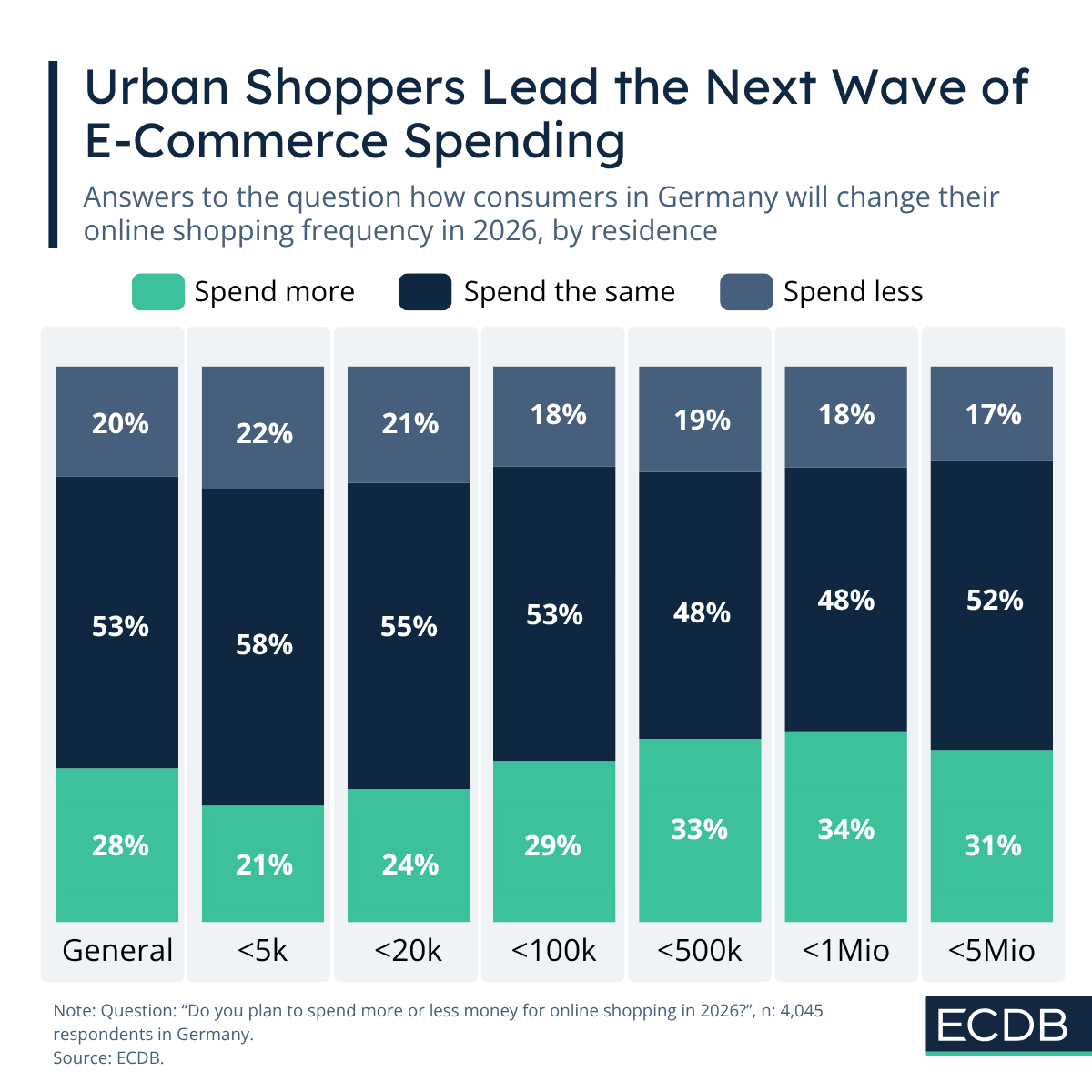
Across all respondents, 28% plan to increase their e-commerce spending. That figure rises among urban consumers. Among shoppers living in cities with fewer than 500,000 inhabitants, 33% expect to spend more online. The share increases to 34% among residents of cities with fewer than one million inhabitants.
The relationship is not entirely linear, however. Among residents of the largest metropolitan areas, willingness to increase spending declines slightly, but it remains well above the general category.
Rural consumers show the opposite tendency. They are more likely to say they plan to reduce their online spending. One possible explanation is infrastructure. Longer delivery times in remote areas may make physical shopping a more attractive option or encourage consumers to direct their spending elsewhere.
If urban residents are driving online shopping growth, what role does age play? Which demographic is most likely to increase online spending this year?
Consumers Above 45 Are Most Likely to Hold Steady or Cut Back
The age data follows a similar pattern. Younger consumers continue to lead e-commerce growth, as their lifestyles naturally align with the convenience, speed, and product variety that online retail offers.
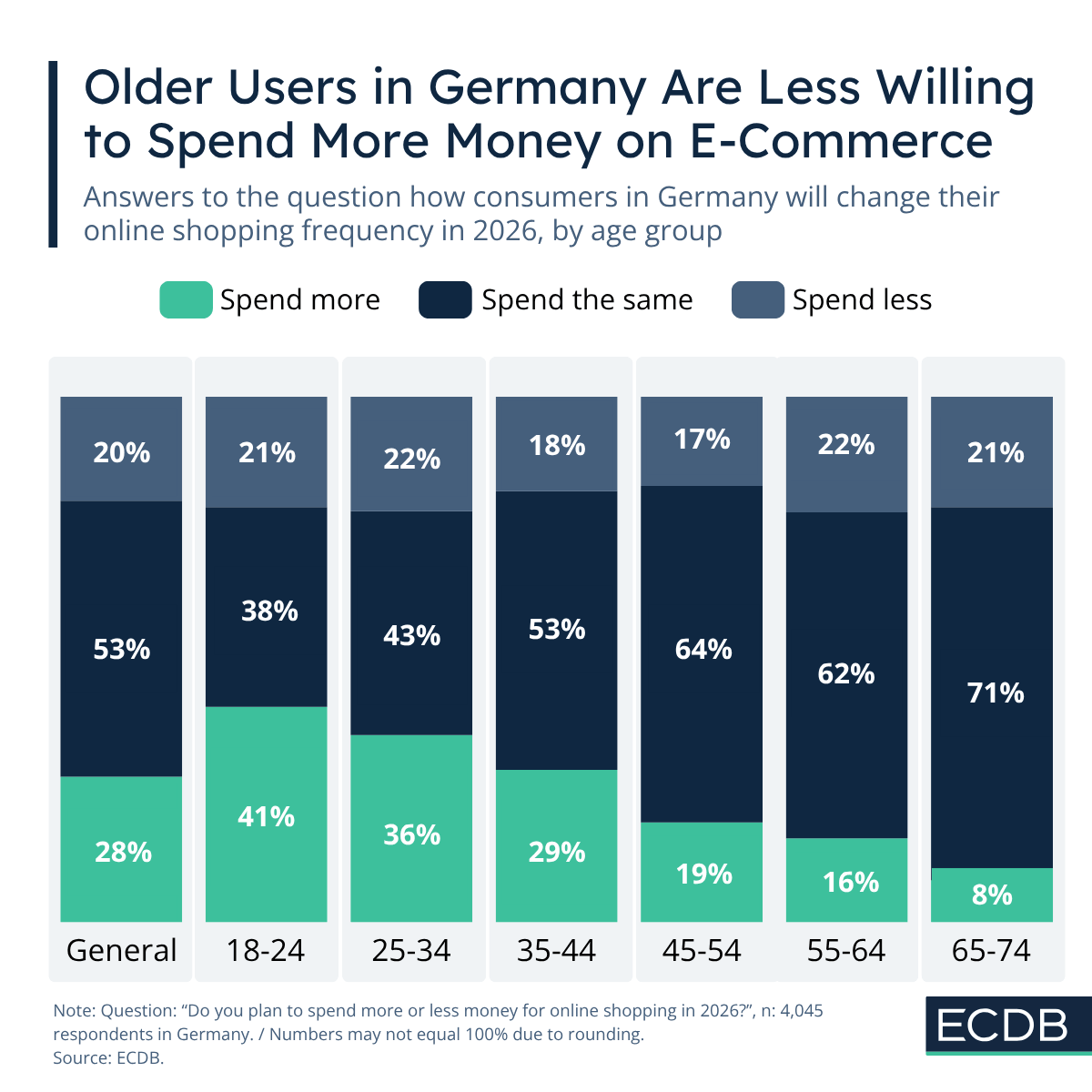
While 28% of respondents overall plan to spend more on e-commerce this year, the figure rises to 41% among 18-to-24-year-olds. Among consumers aged 25 to 34, 36% expect to increase their spending.
Consumers aged 45 to 54 are broadly in line with the overall average, while older age groups become progressively less likely to spend more online.
The share of consumers planning to cut back remains relatively consistent across age groups. The clearer difference appears in how likely people are to keep their spending stable. This behavior is more common among consumers aged 45 and older.
Given the close relationship between age and financial caution, the reasons for spending less are both structural and personal.
Rising Prices Are the Most Frequently Cited Obstacle to Higher Spending
For the respondents who plan to reduce their e-commerce spending this year, rising prices are the most commonly cited reason. Nearly two-thirds (64%) say higher prices are influencing their decisions.
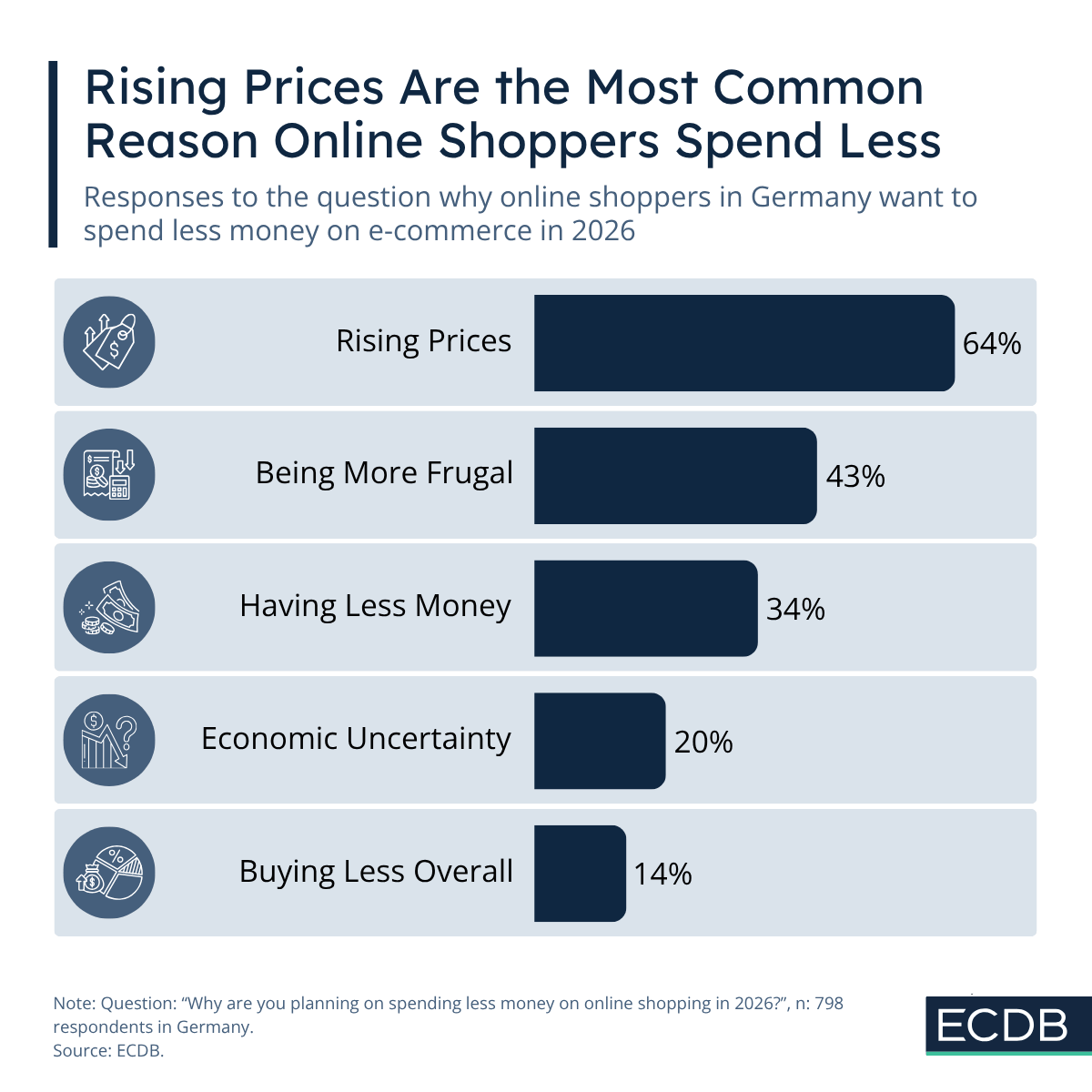
The second most common factor is a desire to be more frugal, which was mentioned by 43% of respondents. Having less disposable income available ranks third at 34%. Economic uncertainty and a general intention to buy less overall each score 20% or lower.
It would be a mistake to assume that younger and urban consumers are immune to these same financial pressures. The difference lies in how spending is prioritized. Younger consumers and city residents tend to place greater value on the benefits e-commerce provides, including efficiency, variety, and immediate access to products. In many cases, online shopping replaces more time-intensive alternatives, making it feel less discretionary and more essential.
What Drives Increased Spend: Low-Cost Platforms AliExpress, Shein, and TikTok Shop
While some consumers are cutting back, others are increasing their spending. One important driver is the growing popularity of value-focused platforms such as AliExpress, Shein, and TikTok Shop.
A similar age pattern emerges when examining intentions to spend more on these platforms.
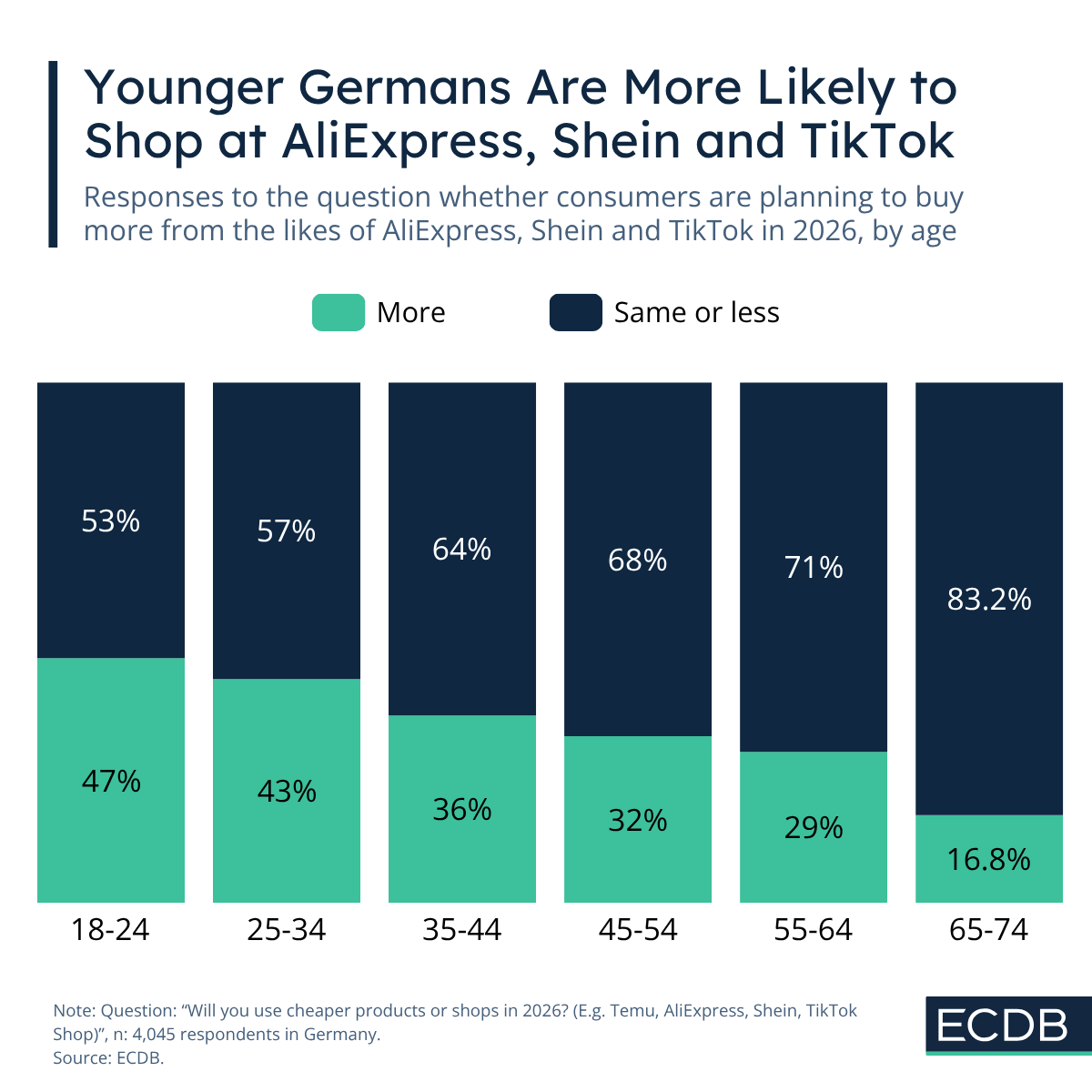
Consumers aged 18 to 24 show the strongest willingness to increase their spending on low-cost marketplaces, with 47% planning to do so. Among 25-to-34-year-olds, the figure stands at 43%.
The trend declines steadily with age. Each successive age group is less likely to increase spending on these platforms. At the other end of the spectrum, only 17% of consumers aged 65 to 74 say they plan to spend more on AliExpress, Shein, and similar marketplaces.
Electronics Is the Category Consumers Are Least Willing to Cut Back On
There are important exceptions to consumers’ growing focus on value. Price sensitivity is not applied equally across all product categories.
Electronics is the category most frequently cited as one where consumers are unwilling to compromise on spending. Concerns around quality, durability, and reliability appear to outweigh the desire to save money.
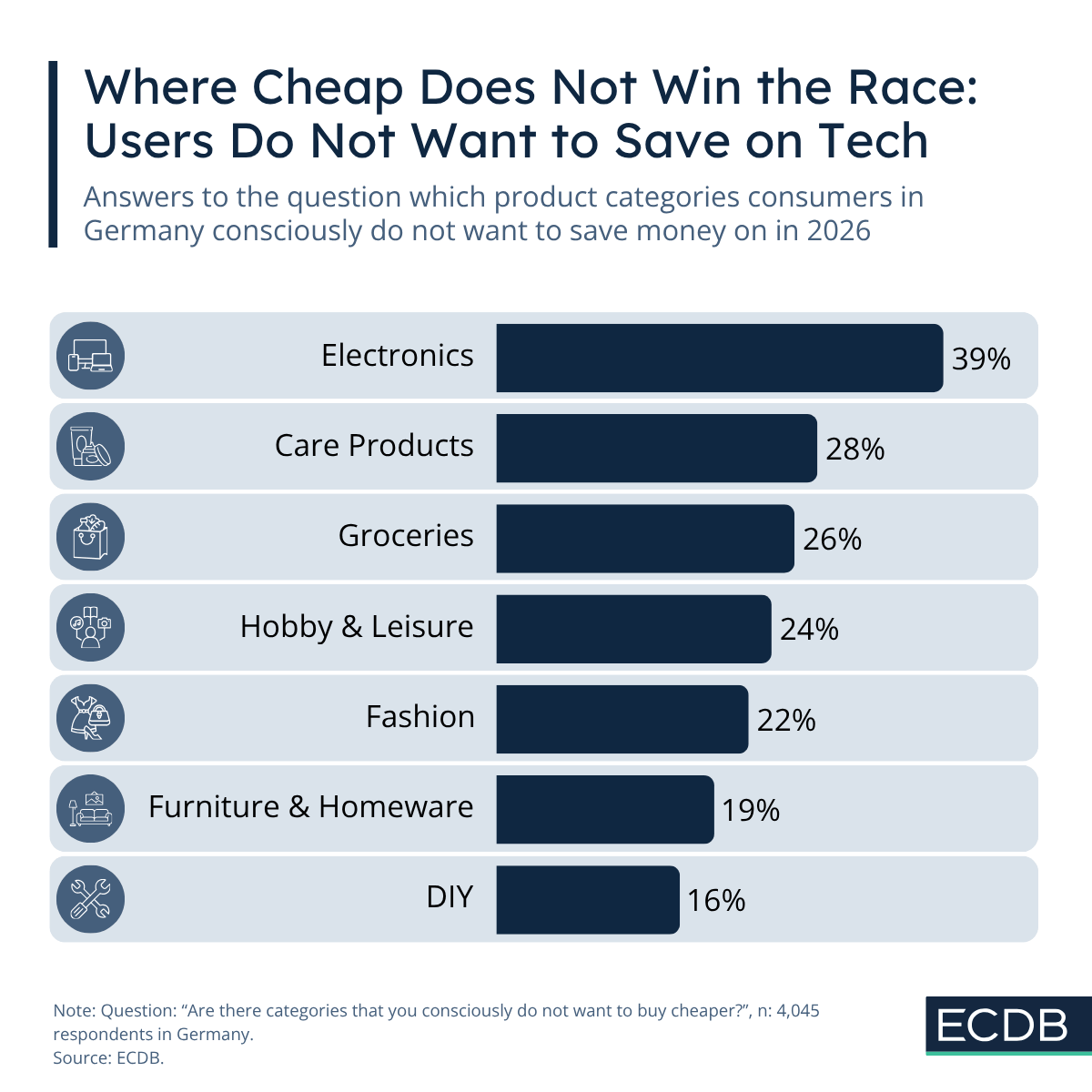
Care Products (28%) and Groceries (26%) follow at a considerable distance. These categories share a common theme: trust, safety, and everyday reliability.
Even so, their shares remain significantly lower than those recorded for Electronics and the broader willingness to increase spending on low-cost e-commerce platforms. It shows the effectiveness of these emerging platforms in generating not only increasing revenues, but also trust.
Conclusion: Younger and Urban Users Driving Higher Spend, Enabled Through Low-Cost Offers
The overall market is largely stable, but at the fringes consumer behavior diverges along demographic and geographic lines. Younger shoppers and urban dwellers on the one side reinforce the upward trajectory of e-commerce. Their drivers are convenience and prioritization of fast delivery and broad product selection over more traditional retail habits.
Younger users do not necessarily spend more on e-commerce because of higher budgets, but because certain ecosystems emerged that make frequent online shopping more appealing and seem cheaper. Platforms like Shein, TikTok Shop, AliExpress and Amazon Haul lower the barrier to purchase and encourage more frequent, smaller transactions that accumulate into higher overall spending.