What are the largest product categories in German e-commerce? Why they win?
Discover the biggest product categories in German e-commerce and learn why they dominate the market. Uncover the secrets to their success today!
Germany’s online shopping scene is crowded. Fashion, electronics, books, furniture and everyday essentials are all fighting for the same clicks.
Yet some categories consistently capture more attention and spending than others.
The reason is not always sheer demand. The strongest categories tend to fit online shopping particularly well. Products are easy to compare, customers know what they are looking for, delivery works and major retailers have learned how to remove friction from the buying process.
Below, we look at some of the largest product categories in German e-commerce, why they perform so well and what other sellers can learn from them.
Why German e-commerce is a market worth watching
Germany is a mature e-commerce market, which means shoppers already have strong expectations about what a good online buying experience should look like.
Delivery is a good example.
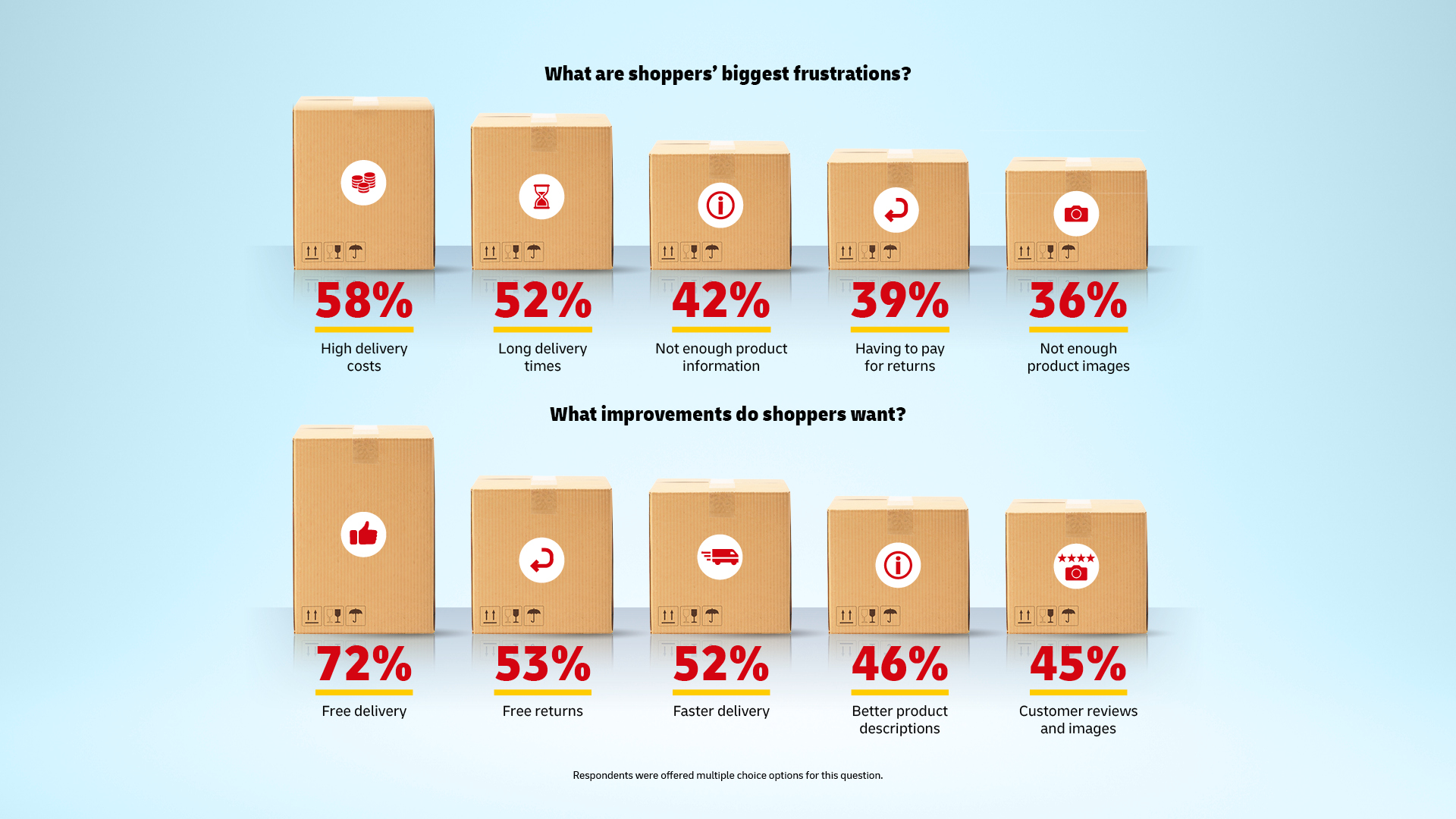
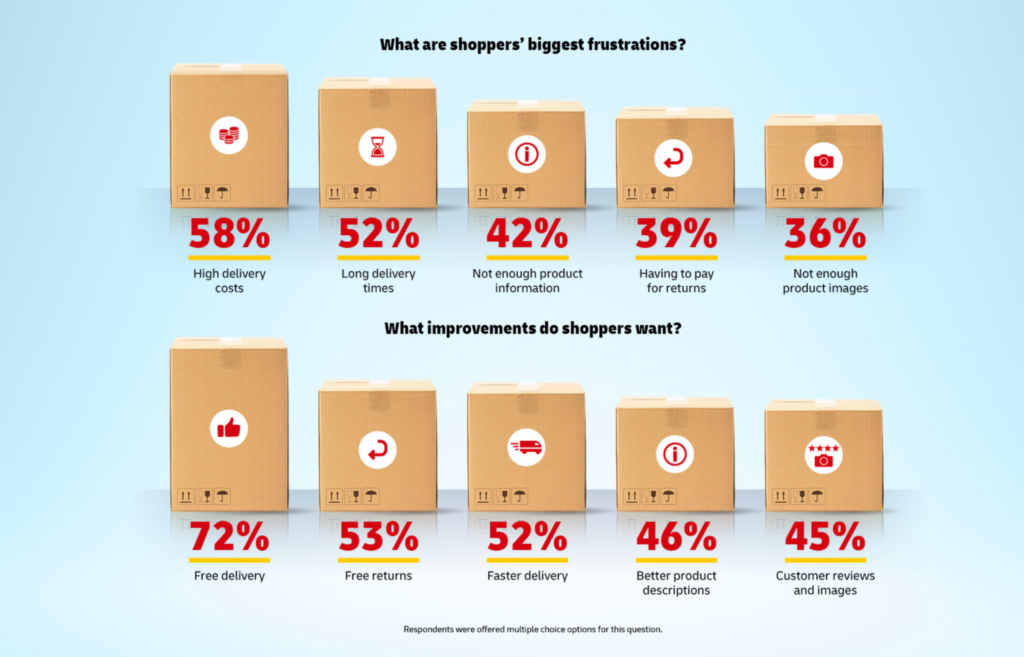
According to DHL’s E-Commerce Trends Report 2025, 85% of German online shoppers say they would abandon a purchase if their preferred delivery option was unavailable. Returns matter almost as much: 79% said an unsatisfactory returns process could make them abandon a purchase.
Digital expectations are changing too. 57% of German shoppers want AI-supported shopping features, such as virtual try-ons, AI shopping assistants or voice search. Another 53% say they have already bought something through social media.
Those expectations affect categories differently.
Virtual try-ons can reduce uncertainty in fashion. Rich comparison tools matter more for electronics and appliances. Delivery flexibility becomes especially important when someone is ordering a sofa rather than a phone case.
That helps explain why certain categories translate into e-commerce more naturally than others.
How the most popular product categories in Germany gain dominance online
Some product categories look as if they were made for e-commerce. Others have had to work harder to move customers away from physical stores.
There are a few recurring reasons why certain categories perform so well.
Consumer demand patterns
Some products sell steadily throughout the year. Others have obvious seasonal peaks.
Fashion benefits from new collections, weather changes and regular wardrobe purchases. Toys peak around Christmas. Outdoor equipment gets a boost as spring and summer arrive.
Strong retailers know these cycles and adjust stock, campaigns and promotions around them.
Pricing competitiveness and brand presence
German shoppers have plenty of options when comparing products online.
That makes pricing particularly visible in categories such as electronics, appliances and sports equipment, where the same product can appear across many competing stores.
Brand strength can make the comparison less price-driven. A trusted electronics or fashion brand may still sell at a premium because customers associate it with quality, design or reliability.
Marketing and platform dominance
Visibility matters.
Major e-commerce platforms can put products in front of shoppers long before they visit an individual retailer’s website.
Amazon, Zalando, Otto and specialist marketplaces play a particularly important role in categories with huge ranges and many competing sellers.
You can find more platform examples in our overview of the best online marketplaces in Germany.
Cross-border shopping behavior
German shoppers do not limit themselves to domestic retailers.
International brands can compete successfully when they offer products, prices or ranges that customers cannot easily find locally.
That is particularly visible in fashion, beauty, electronics and specialist hobby categories.
Localizing the experience still matters. Good shipping information, clear returns, familiar payment methods and German-language customer support can make an international retailer feel much less international.
Put simply, category dominance comes from demand, visibility and removing the barriers that make a customer hesitate before buying online.
The top categories in German e-commerce
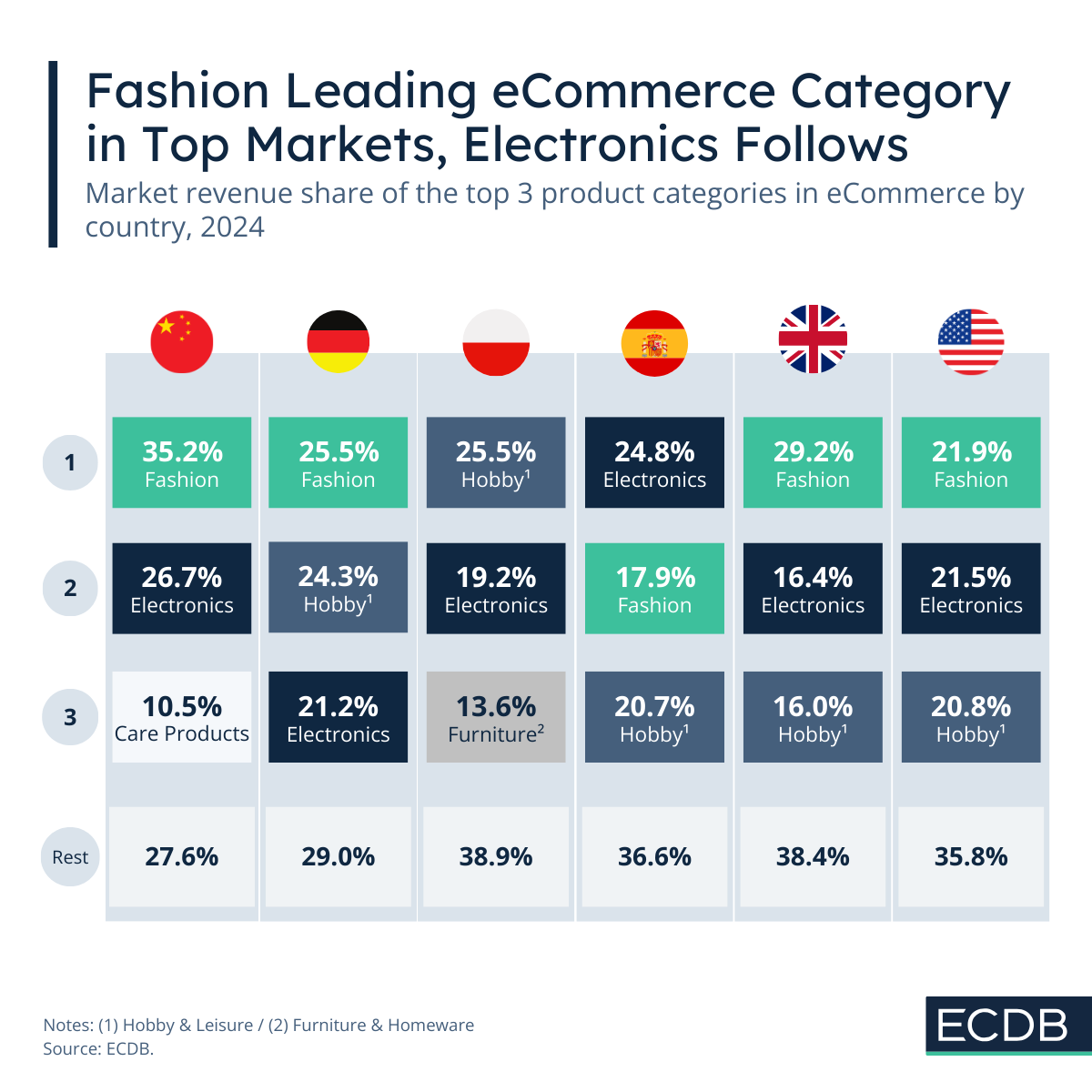
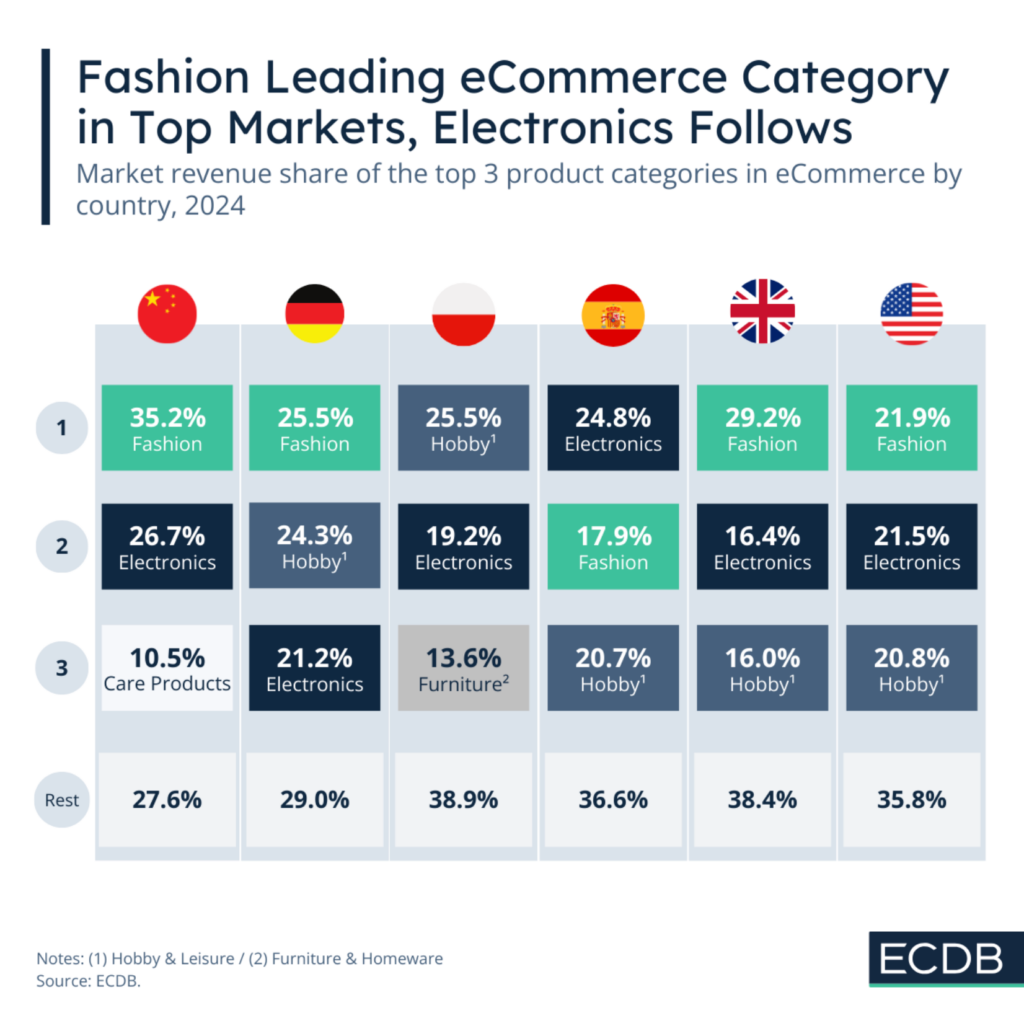
ECDB’s current German market data puts Fashion at the top of the country’s e-commerce market. Its 2025 sample data estimates German fashion e-commerce revenue at US$30.8 billion. Hobby & Leisure follows at around US$29.9 billion, while Electronics reaches approximately US$26.4 billion.
These are broad ECDB category definitions, so individual subcategories such as apparel, media or consumer electronics sit inside larger groups.
Different market-data providers also use different definitions of e-commerce, so figures from separate datasets should not be compared directly.
What matters here is the category mix: fashion, leisure-related products and electronics all have an especially strong position in German online retail.
Apparel – style meets practicality
Apparel remains at the heart of German fashion e-commerce.
In ECDB’s current data, Apparel accounts for the largest share of Germany’s online fashion market. Fashion as a whole generated around US$30.8 billion in German e-commerce revenue in 2025.
The category’s strength comes partly from its year-round relevance.
Winter coats give way to spring collections, summer clothing, back-to-school purchases and another seasonal cycle. There is always another reason to browse.
Clothing also works well visually online. Good photography, recommendations, customer reviews and filters make large product ranges relatively easy to navigate.
Germany’s fashion market stretches from inexpensive basics to luxury e-commerce, and both ends can perform well when the experience matches the product.
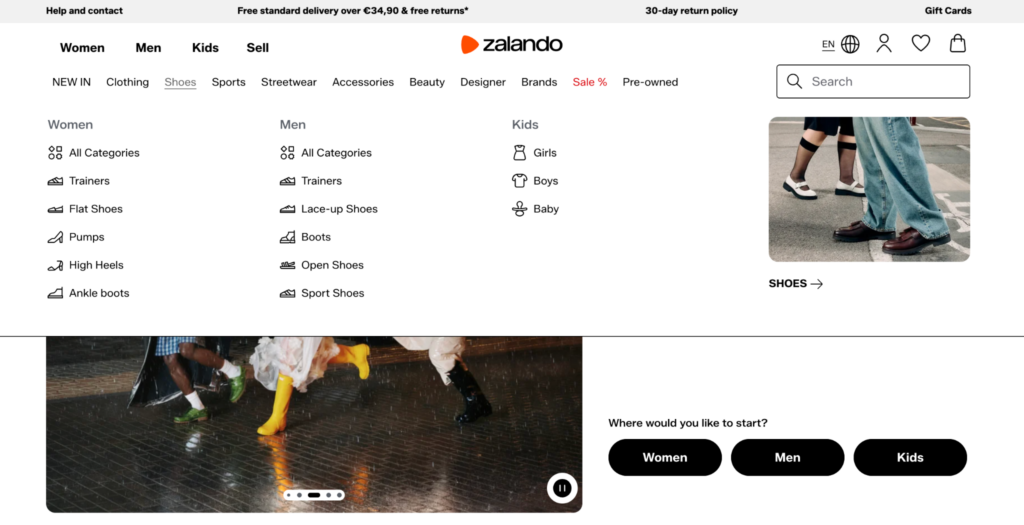
Zalando remains one of the most visible players. Its success also shows why returns are so important in fashion: customers need confidence that ordering several sizes or trying something at home will not become a headache.
About You has built much of its experience around product discovery, campaigns and inspiration.
The strongest sellers combine frequent assortment updates with flexible payment methods, strong product imagery and as much help with fit as possible.
Consumer electronics – the constant upgrade cycle
Electronics remains another natural e-commerce heavyweight.
ECDB estimates the German Electronics e-commerce market at around US$26.4 billion in 2025, with Consumer Electronics responsible for approximately 65% of the category.
The reason electronics translates so well online is straightforward: customers research.
A laptop, smartphone or television can be compared using specifications, prices, expert reviews and customer feedback. Visiting several physical stores adds relatively little information that cannot already be found online.
Release cycles create another advantage.
New phones, consoles, wearables, headphones and gaming products generate regular waves of interest. Between major launches, accessories and replacement devices keep demand moving.
Retailers such as MediaMarkt combine online shopping with physical stores and click-and-collect. Apple can use its brand strength and product ecosystem. Amazon competes through selection, availability and fast fulfillment.
For electronics sellers, detailed product data matters. So do stock visibility, transparent warranties and comparison tools that help a customer understand why one model costs more than another.
Media – leisure in every format
Media remains an important part of Germany’s wider Hobby & Leisure market.
ECDB estimates the German Media e-commerce market at roughly US$9.5 billion in 2025. Books, eBooks and audiobooks represent around half of that category.
This is a category where old and new formats coexist comfortably.
Physical books remain highly relevant, while eBooks and audiobooks add digital convenience. Games combine physical releases, downloads and subscriptions. Collector editions and special releases can make physical products more attractive rather than less.
Thalia has built a particularly strong position around books and related media.
Amazon and eBay add marketplace reach, particularly for wide assortments and harder-to-find products.
The winning formula is often a mix of discovery and convenience. Customers want to find the title or edition they are looking for quickly, but recommendations, bundles and special editions can increase basket value.
Electrical appliances – the home upgrade hub
Electrical appliances are another category where research naturally happens online.
Customers rarely buy a washing machine, coffee maker or vacuum cleaner without checking several factors first.
Dimensions, energy use, functions, warranty terms and customer reviews all influence the choice. Online retail makes those comparisons relatively easy.
Retailers such as Otto and MediaMarkt can also connect online research with delivery, installation and after-sales services.
Those services matter more as the product becomes larger or more expensive.
A cheap kettle can be returned in a parcel. A washing machine may involve delivery slots, carrying it upstairs, installation and removal of an old appliance.
Winning in the category is therefore about more than price.
Clear specifications, useful comparison tools, accurate stock information and transparent delivery conditions can make a major difference.
Furniture – comfort and design in clicks
Furniture has always faced more online friction.
Customers cannot sit on a sofa through a screen. Products are large, delivery can be expensive and the wrong dimensions create a much bigger problem than ordering the wrong T-shirt size.
Still, the category has become increasingly comfortable online.
ECDB puts the German Furniture e-commerce market at around US$9.9 billion in 2025, with online channels accounting for roughly 20–25% of the wider furniture market.
Better visualization has helped.
High-quality room photography, detailed dimensions, customer photos, videos and augmented-reality features can reduce uncertainty before a purchase.
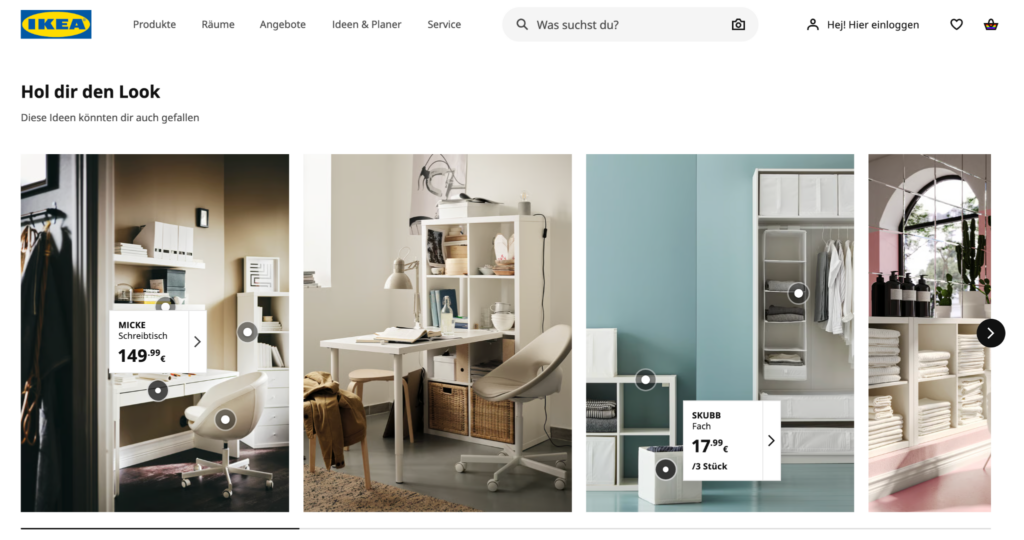
IKEA shows how online and offline can work together. Customers may research a product online, check dimensions at home, visit a store and then order digitally for delivery.
Specialist online retailers can compete through broader ranges, design inspiration and products suited to smaller homes.
Clear delivery information becomes particularly important. Customers want to know when a large product will arrive, how it will be delivered and what happens if it needs to go back.
The common thread across these categories is not simply that Germans like fashion, technology or furniture.
Each category has found ways to make its biggest buying barriers manageable online.
Strong contenders beyond the top categories in German e-commerce
Plenty of categories sit outside the biggest groups while still attracting large and loyal audiences.
Footwear
Shoes benefit from the same discovery and assortment advantages as fashion.
Sneakers create year-round demand, while hiking shoes and winter footwear fit Germany’s strong outdoor market.
Brands such as Adidas and Nike can sell directly to consumers, while Deichmann competes through a large retail network and recognizable pricing.
Fit remains the obvious challenge, making sizing information and easy returns particularly important.
Sports equipment
From home fitness to cycling and camping, sports products cover a wide range of price points.
Seasonality matters here.
Outdoor and cycling demand tends to become more visible in warmer months, while indoor fitness and winter sports have different peaks.
Decathlon and Intersport show how broad product selection can be combined with physical locations, while specialist outdoor retailers compete through expertise and deeper assortments.
Health care
Health care is another category that works well with repeat purchases.
Online pharmacies such as Shop Apotheke and DocMorris have made ordering health products increasingly familiar, while recurring purchases give the category natural retention potential.
Trust is especially important here.
Clear product information, reliable fulfillment and confidence in the retailer carry more weight than flashy merchandising.
Tools and construction supplies
DIY remains closely connected to physical retail, but many parts of the customer journey already happen online.
Customers research tools, compare specifications, check stock and watch tutorials before starting a project.
OBI and Hornbach can connect those digital behaviors with stores through click-and-collect and local stock availability.
For bulky or technical products, detailed specifications and practical content can be particularly valuable.
Personal care
Beauty and personal care combine repeat purchasing with product discovery.
Douglas operates at the more premium end, while dm and Rossmann have huge reach among customers buying everyday products.
Reviews, tutorials, recommendations and loyalty programs all give retailers opportunities to keep shoppers within their ecosystem.
These categories show that a business does not need to sell inside Germany’s single biggest e-commerce category to find significant demand.
A smaller category with repeat purchasing, loyal customers or specialist expertise can be just as attractive.
What these most popular product categories in Germany teach
Germany’s strongest online categories are very different from one another, but they share several lessons.
Remove uncertainty before checkout
Fashion shoppers worry about fit.
Electronics buyers want to know which specifications matter.
Furniture customers need confidence that a product will fit in the room.
The best e-commerce experiences answer those questions before the customer has to search elsewhere.
Detailed descriptions, strong imagery, reviews and useful filters are part of the sales process rather than decoration.
Treat delivery and returns as part of the product
Logistics can change the buying decision.
DHL found that 85% of German online shoppers would abandon a purchase if their preferred delivery option was missing, while 79% said the same about returns.
The exact expectation depends on the category.
Someone ordering headphones may care about speed. A furniture buyer may prefer a reliable two-hour delivery window over next-day shipping.
Retailers that understand that difference can design logistics around the actual purchase rather than applying the same model to every product.
Be visible where research happens
The buying journey does not always begin on a retailer’s website.
Customers compare products through marketplaces, search engines, social platforms and retailer apps.
DHL’s research found that 53% of German online shoppers have already made purchases through social media and 77% say viral trends or social buzz can influence buying decisions.
That does not mean every category needs a TikTok-first strategy.
It means discovery is becoming more fragmented. Retailers need to understand where customers research their specific type of product and show up there.
Give shoppers a reason to come back
Large product ranges alone are easy to copy.
What is harder to replicate is a buying experience customers already trust.
That can come from convenient returns in fashion, expert content in DIY, reliable warranties in electronics or personalized discovery in beauty.
The strongest category leaders tend to solve the same problems repeatedly and consistently.
Over to you
Fashion, hobby and leisure products and electronics continue to sit at the center of German e-commerce.
Media, furniture, appliances, health products, beauty and specialist categories add more depth to the market.
What makes these categories successful is not simply the products themselves.
They work online because retailers have found ways to make comparison easier, reduce uncertainty and deliver products in a way that fits customer expectations.
That distinction matters for any seller looking at the German market.
The question is not only “Is this a popular product category?”
A better question is: “Can we make buying this product online easier than the alternatives?”
The companies that can answer yes have the best chance of competing, even in categories where the biggest players already look firmly established.
***