Ecommerce fraud prevention software: how to choose the right tool
Compare ecommerce fraud prevention software, features, guarantees and pricing. Learn how to reduce chargebacks and false declines in DACH.
Online stores face a difficult trade-off. Block too little and fraudulent orders, refund abuse and account takeovers eat into margin. Block too much and legitimate customers leave after a rejected payment. Ecommerce fraud prevention software uses transaction data, identity signals and automated risk scoring to help merchants make that decision.
The right platform should reduce fraud losses without treating every unusual order as hostile. That balance matters even more in Germany, Austria and Switzerland, where invoice payments, direct debit, PayPal and cards create different risk patterns.
This guide explains how fraud prevention software works, which features matter and how leading vendors compare.
What is ecommerce fraud prevention software?
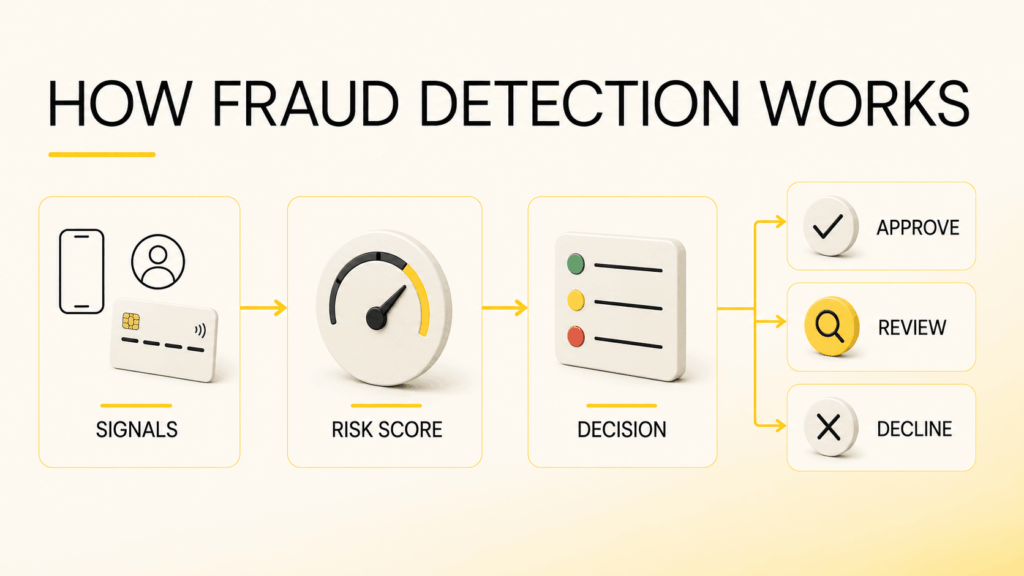
Ecommerce fraud prevention software analyses orders, accounts and customer behaviour to identify suspicious activity. It can approve a transaction, decline it or send it to manual review before a store accepts the risk.
Basic tools rely on fixed rules. A store might block an order when the billing country differs from the delivery country or when five cards appear on one device. More advanced fraud detection platforms combine rules with machine learning, device fingerprinting and identity data.
Modern fraud prevention covers checkout, account login, promotions, returns and post-purchase disputes. Some providers also reimburse eligible chargebacks after approving a fraudulent order.
The main types of ecommerce fraud
Fraud rarely follows one pattern. A useful fraud prevention plan separates the threats because each one needs different signals and controls.
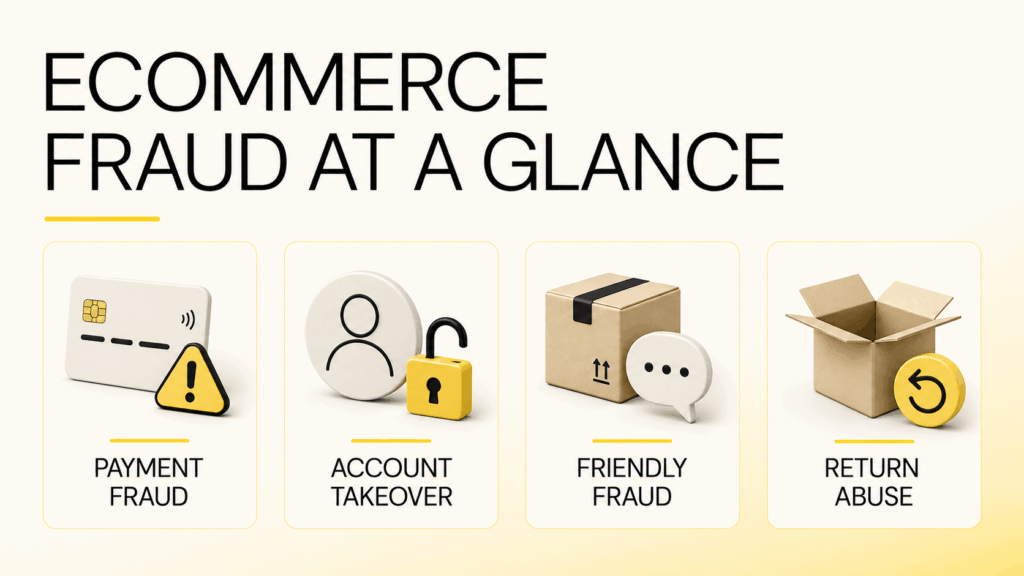
Payment fraud
Payment fraud occurs when someone uses stolen payment credentials to place an order. Fraudsters often target high-value goods that are easy to resell.
Chargeback and friendly fraud
A chargeback reverses a card transaction after the cardholder disputes it. Some disputes reflect theft. Others come from customers who do not recognise the billing descriptor or falsely claim that an item never arrived. That first-party misuse is called friendly fraud.
Account takeover
In an account takeover, an attacker gains access to a real customer profile. They may use stored payment details, spend loyalty points or change a delivery address. A valid login does not prove that the person behind it is genuine.
Return and refund abuse
Return abuse includes sending back a different item, claiming an empty box, wearing a product before returning it or repeatedly reporting parcels as missing. The risk is especially relevant for fashion merchants with high return volumes. Strong controls should still protect a fair customer experience. Our guide to returns management software for DACH ecommerce explains the operational side, while the Zalando return policy update shows how a major regional retailer is changing its rules.
Promotion and coupon abuse
Customers or organised groups may create multiple accounts, manipulate referrals or combine discounts outside their intended rules. Promotion abuse may not trigger a payment chargeback, but it can drain acquisition budgets and distort campaign data.
Warning signs and fraud signals
One unusual detail should not automatically block an order.
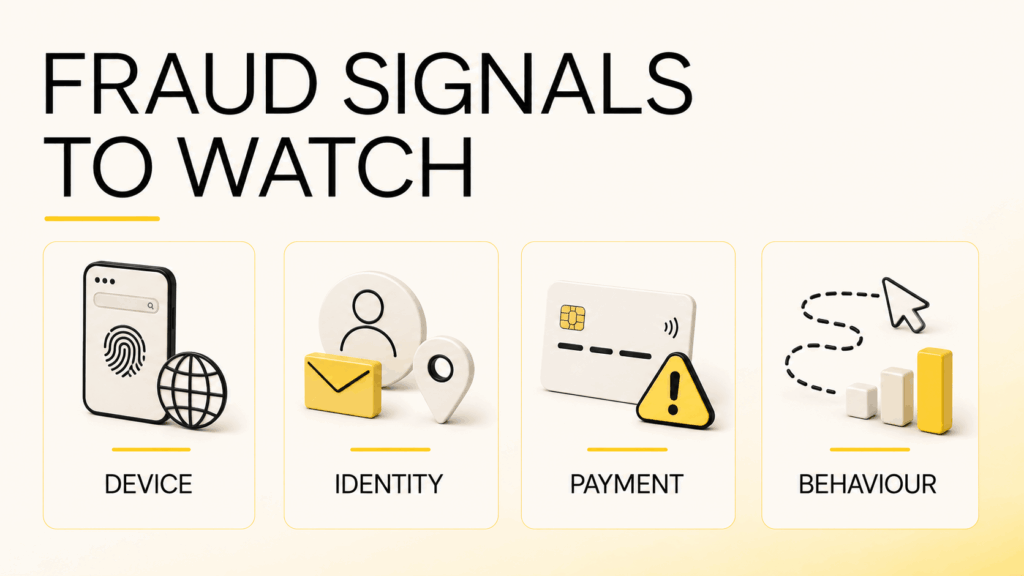
Fraud detection becomes more reliable when a platform evaluates several signals together:
- Device data, such as a new browser, emulator, proxy or repeated device ID
- Identity data, including email age, phone validity and address consistency
- Payment data, such as failed attempts, card velocity or mismatched billing details
- Behavioural analytics, including unusual navigation or checkout speed
- Order and account history, such as basket value, password resets and prior disputes
- Network links connecting a device, identity or address with earlier fraud
Good ecommerce fraud prevention software turns these signals into explainable risk indicators. A reviewer should be able to see why an order was flagged, not only a mysterious score.
How ecommerce fraud prevention software works
Most platforms collect data, calculate risk, apply a decision and learn from the outcome.
Rules engines
Rules give merchants direct control. A retailer can review high-value orders, block a known forwarding address or require verification after repeated payment failures. Too many rigid rules create false declines.
Machine learning and AI
Machine learning models compare a new event with historical patterns. AI can detect relationships that a short rule list would miss. Model quality depends on relevant data, feedback and coverage across the merchant’s markets.
Device fingerprinting
Device fingerprinting builds a profile from browser, hardware and network signals. It can link apparently separate accounts even when an attacker changes emails or cards. European privacy and data-retention requirements still apply.
Real-time decisioning
At checkout, the platform returns an approve, review or decline decision. Some systems request step-up authentication. Uncertain orders can move to manual review.
Ecommerce fraud prevention features checklist
The strongest feature set depends on order volume, payment mix and internal expertise. Look for:
- Real-time transaction scoring with clear response times
- Custom rules and no-code rule editing
- Machine learning models suited to your markets
- Device fingerprinting and network intelligence
- Account takeover protection at login and profile changes
- Behavioural analytics across checkout and account activity
- Payment fraud controls for cards, wallets, direct debit and local methods
- Return, refund, promotion and policy-abuse detection
- Manual review queues with evidence and case notes
- Chargeback alerts, dispute evidence and automated representment
- A guarantee with transparent eligibility rules, if liability transfer matters
- Dashboards for fraud loss, approval rate and false declines
- API, ecommerce platform and payment processor integrations
- GDPR controls, data-location details and configurable retention
Ask each vendor to demonstrate the workflow with your own anonymised order patterns. A polished dashboard matters less than decision accuracy, integration quality and measurable business outcomes.
Chargebacks need a separate plan
Pre-transaction fraud detection can stop a stolen-card order, but it cannot resolve every dispute. A customer may claim non-delivery weeks later.
Merchants need accurate delivery records, customer communication and organised evidence. Some platforms prepare dispute packages. Others offer a chargeback guarantee and reimburse covered losses on approved orders. Read the contract carefully: coverage may exclude certain reason codes, payment methods, territories or late evidence.
A guarantee transfers part of the loss risk, so pricing may depend on approved revenue or transaction value. Compare protected sales, exclusions and reimbursement time.
Ecommerce fraud prevention software comparison
Vendor details and public pricing were checked in August 2026. Enterprise quotes vary with volume, geography, modules and risk profile.
| Vendor | Best for | Chargeback guarantee | Pricing model | Common integrations |
| Signifyd | Mid-market and enterprise retailers seeking automated decisions | Yes, 100% guarantee for covered fraudulent chargebacks | Custom quote | Shopify, Adobe Commerce, BigCommerce, Salesforce Commerce Cloud, API |
| Riskified | Large global merchants focused on approval rates | Yes, subject to contract | Custom performance pricing | Major platforms, payment providers and API |
| Forter | Enterprise identity and fraud management | Optional guarantee products | Custom quote | Commerce, payment and account systems, API |
| Sift | Payment fraud, account and content-abuse controls | No standard public guarantee | Custom quote | API, SDKs and partner integrations |
| SEON | Flexible data enrichment and rules | No standard public guarantee | Custom quote | Shopify, payment tools and API |
| ClearSale | Automated scoring plus human review | Available on eligible plans | Performance based; plans from $250 per month | Shopify, Adobe Commerce, BigCommerce, WooCommerce, PrestaShop |
| Wyllo, formerly NoFraud | Growing brands wanting managed review | Optional protection | Plan and transaction based | Shopify and common commerce/payment systems |
| Stripe Radar | Businesses processing through Stripe | No standard guarantee | From $10 per month or transaction screening, with local rates | Native Stripe integration |
Signifyd, Riskified and Forter suit merchants seeking enterprise automation and possible liability transfer. Sift and SEON offer broad control. ClearSale and Wyllo add managed review options. Stripe Radar offers a simple starting point for a Stripe-based stack.
Confirm all coverage and prices directly. A feature may sit in a separate module and a guarantee may apply only when the merchant follows specific fulfilment rules.
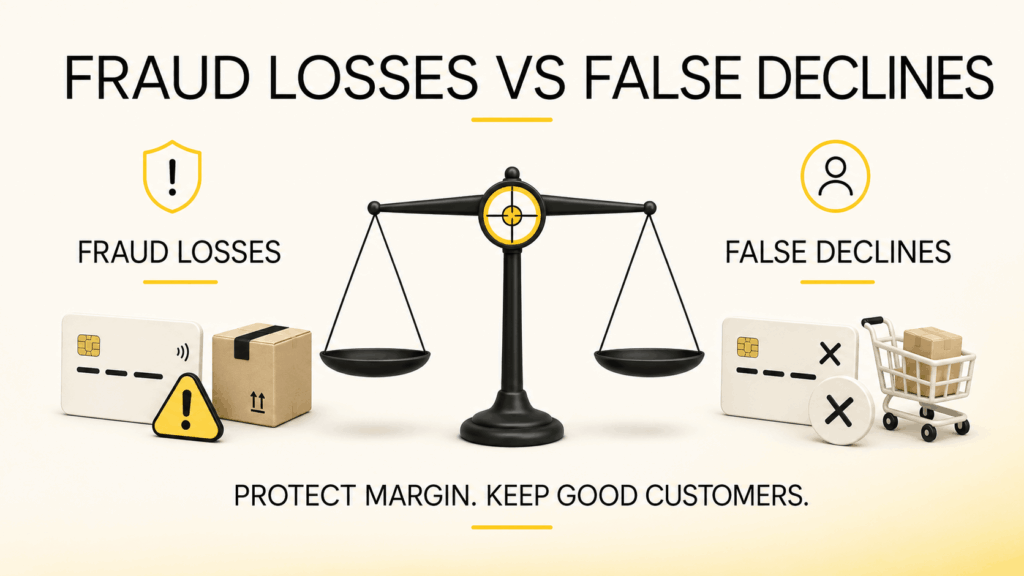
Fraud losses versus false declines
A strict fraud filter can look successful while quietly losing good customers. A false decline occurs when the system rejects a legitimate order. The immediate cost is lost revenue, but the customer may also move to a competitor and never return.
Track fraud loss and approval rate together. Add manual review rate, review time, chargeback rate and customer support contacts. Segment the results by country, payment method, device and customer type. A model that works for domestic card orders may perform poorly for invoice purchases from new customers.
Test rule or vendor changes on comparable traffic and wait for disputes to arrive. AI models need feedback from confirmed fraud, accepted disputes and successful orders.
DACH fraud prevention: payment mix changes the risk
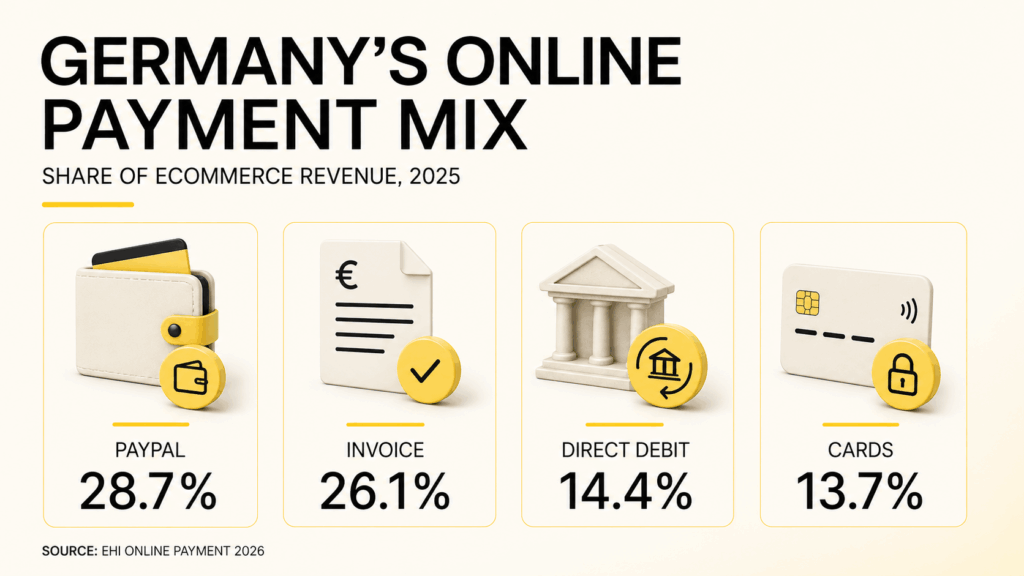
German payment behaviour deserves special treatment. EHI’s 2026 Online Payment study reports that PayPal represented 28.7% of ecommerce revenue in 2025. Purchase on invoice followed at 26.1%, direct debit at 14.4% and credit or international debit cards at 13.7%.
Those methods do not create the same exposure. With Kauf auf Rechnung, a merchant may ship goods before receiving payment, so identity, address and credit-risk checks matter. SEPA direct debit can face returns or later disputes. PayPal and digital wallets in Germany bring their own account and dispute signals. Card payments add issuer authorisation, SCA and chargeback workflows.
Strong Customer Authentication under PSD2 has reduced some credential-based payment fraud, but it does not remove account takeover, return abuse or first-party misuse. The EBA and ECB’s 2025 report found that SCA remains effective while fraudsters continue to adapt.
A DACH-ready system should support local address formats, cross-border fulfilment and German-language review. It must distinguish a legitimate invoice customer from a stolen identity without applying card logic to every payment method.
How to choose the right fraud prevention software
Start with a six-step selection process.
- Map your losses. Separate stolen-payment fraud, account takeover, chargebacks, returns and promotion abuse. Use revenue, margin and operational cost.
- Define success metrics. Set targets for fraud rate, approval rate, false declines, review workload and chargeback recovery.
- Document the payment mix. List cards, PayPal, invoice, SEPA direct debit, wallets and other local methods by market.
- Check integration depth. Confirm which data the software receives before checkout and which decisions it can send back to your store, processor and fulfilment systems.
- Run a historical analysis or pilot. Ask vendors to score past orders, then test live traffic with agreed guardrails.
- Review the commercial terms. Compare implementation work, transaction fees, minimums, guarantee exclusions and manual-review charges.
Small stores may begin with payment-processor tools and a few carefully monitored rules. High-volume merchants often need a dedicated platform when fraud teams manage several channels, countries or abuse types. The case becomes stronger when false declines, manual review or chargeback exposure already affects growth.
Fraud controls also shape customer trust. Clear delivery communication, recognisable billing descriptors and an accessible refund path can prevent avoidable disputes. Our review of TikTok Shop safety shows how platform protections and buyer confidence connect.
FAQ
What is ecommerce fraud prevention software?
Ecommerce fraud prevention software analyses transactions, accounts and behaviour to identify suspicious activity. It uses rules, device data, identity signals and machine learning to approve, review or decline orders. Broader platforms also detect account takeover, promotion abuse, return fraud and chargeback risk.
What are the most common types of ecommerce fraud?
Common types include stolen-payment fraud, account takeover, friendly fraud, return or refund abuse and promotion abuse. The risk profile changes with product category, geography, fulfilment speed and payment method. Merchants should measure each type separately because one control will not stop all of them.
How does fraud detection software reduce chargebacks?
Fraud detection software blocks or reviews risky transactions before fulfilment, reducing disputes linked to stolen credentials. It may also collect evidence, flag policy abuse or automate representment. Some providers offer a contractual guarantee that reimburses eligible chargebacks after an approved transaction turns out to be fraudulent.
Can fraud prevention software cause false declines?
Yes. Rigid rules, poor data or a model trained on the wrong market can reject genuine customers. Track approval rate and fraud loss together, review decisions by payment method and test rule changes. Manual review or step-up authentication can help with uncertain orders that do not justify an immediate decline.
How much does ecommerce fraud prevention software cost?
Pricing may use a monthly platform fee, a charge per screened transaction, a percentage of protected sales or a custom enterprise quote. Guarantee products often cost more because the vendor accepts financial liability. Include setup, manual review and dispute-management fees when comparing total cost.
Do small online stores need a dedicated fraud tool?
Not always. A small merchant can start with controls from its ecommerce platform or payment processor. Dedicated software becomes more valuable when order volume grows, several payment methods need separate logic or manual review takes too much time. Measure the problem before adding another system.
Final thoughts
The best ecommerce fraud prevention software does more than decline suspicious payments. It protects accounts, detects abuse and helps teams make faster decisions with less friction for legitimate buyers.
Choose a platform using your own loss data, payment mix and customer journey. For DACH merchants, local methods such as invoice, direct debit and PayPal must sit at the centre of the evaluation. Test the system against both fraud losses and false declines, then keep feeding confirmed outcomes back into its rules and models.