Best returns management software for e-commerce in DACH
Compare the best returns management software for DACH e-commerce. Learn how to streamline your returns process, automate workflows and improve the customer returns experience.
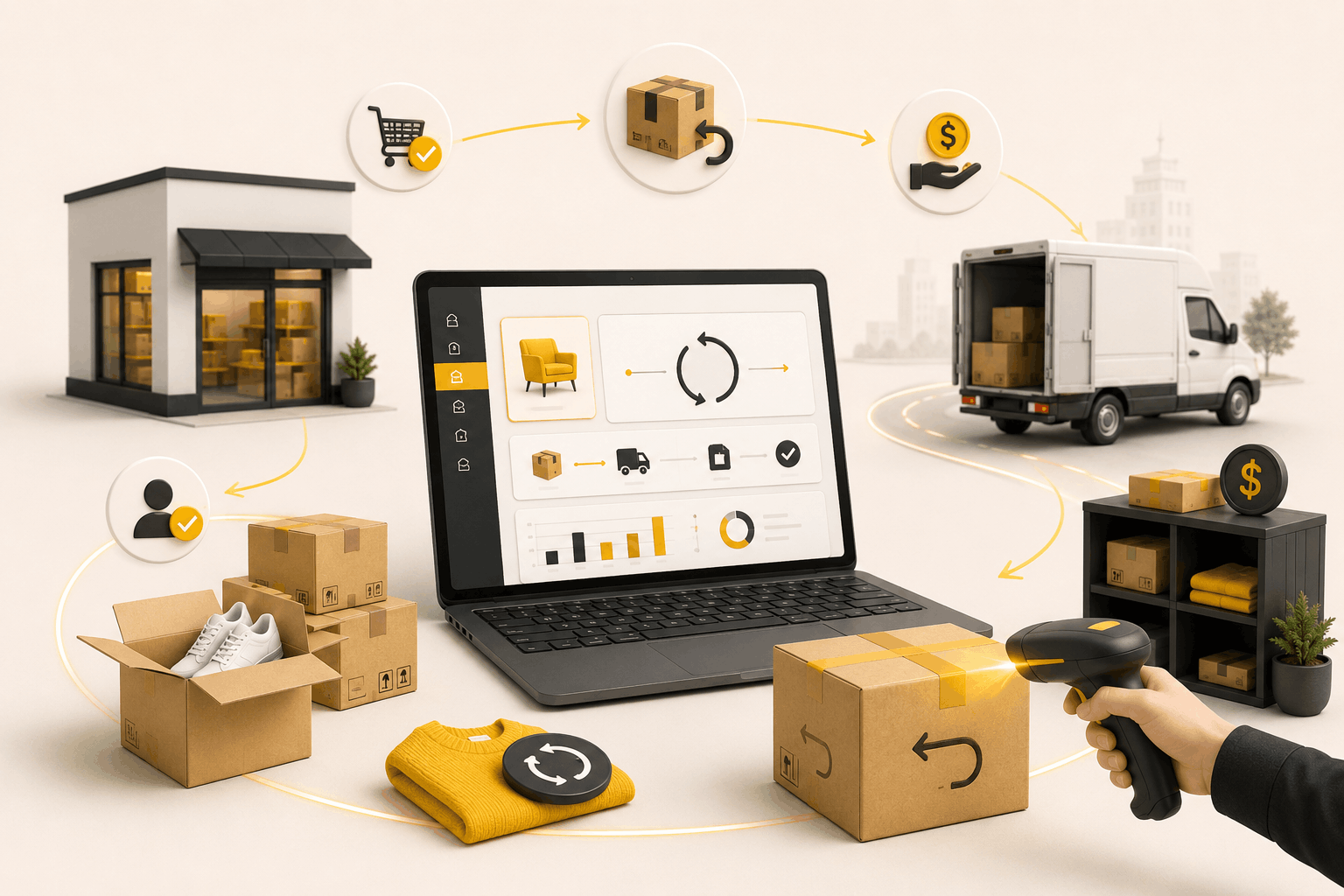
Returns are expensive when they arrive as disconnected emails, paper slips and warehouse surprises. The right return management software helps an ecommerce business automate the return process while giving customers clearer choices around labels, exchanges, refunds and return status.
You’ll learn
- Which returns management software fits different DACH e-commerce models
- How to streamline your returns process without making it harder for customers
- Which features matter for exchanges, return labels and international returns
- How to choose a returns management solution that works with your existing ecommerce stack
Best returns management software for DACH e-commerce
The best returns management software depends on where operations lose time or margin. Some online retailers need a self-service portal that reduces support tickets. Others need stronger reverse logistics, more flexible return policy rules or a way to convert a refund into an exchange or store credit.
The tools below are not interchangeable. Some focus on the customer-facing returns experience. Others are built for warehouse routing, carrier integration or complex international returns.
8returns: best for DACH brands that want to retain revenue from returns
8returns is a Berlin-based returns management platform designed for direct-to-consumer brands that want more control over product returns without turning the return journey into a frustrating obstacle course. Its strongest angle is retention. Instead of pushing every customer toward a refund, the platform can offer exchanges, store credit or replacement options before the original order becomes lost revenue.
The platform can automate return requests, eligibility checks, return reasons, approval logic and warehouse instructions. Customers can initiate returns through a branded return portal, access a return shipping label and follow their return status with fewer support interactions. That creates a more user-friendly experience for shoppers while reducing repetitive manual work for customer service teams.
8returns is particularly relevant for fashion, lifestyle and consumer brands. These categories often deal with sizing issues, color exchanges, duplicate orders and fit-related product returns. A strong return and exchange workflow can help keep customers in the buying journey instead of ending every interaction with money leaving the business.
For DACH sellers, its local positioning is valuable. The platform is built around European commerce and logistics workflows, which can make carrier integration and localized policy setup easier to manage than with a tool built mainly for North American merchants.
Choose 8returns if you want robust returns management, stronger exchange flows and a clearer way to protect customer retention.
parcelLab: best for enterprise post-purchase experience and returns communication
parcelLab is best known as a post-purchase platform, making it a good fit for retailers that see returns as part of the broader customer experience. It connects delivery updates, return communication and post-purchase messaging instead of treating the return process as an isolated support task.
That matters for larger retailers. A customer may need notifications when their return is approved, when a parcel has reached the warehouse and when the refund has been processed. When this communication happens across disconnected systems, the entire returns process can feel unclear even if the warehouse handles the item correctly.
parcelLab can help businesses create a more seamless returns experience by coordinating communication across carriers, ecommerce platforms and internal workflows. It is useful for companies with multiple markets, warehouses or carrier relationships, especially when support teams spend too much time answering questions about delayed refunds or missing parcels.
This is not the lightest returns software for a small Shopify store. Its value grows when return management needs to connect with delivery notifications, branded communication and a broader post-purchase experience.
Choose parcelLab when the returns experience needs to improve alongside shipping communication, delivery tracking and customer satisfaction.
Sendcloud: best for smaller and mid-sized ecommerce teams managing shipping and returns together
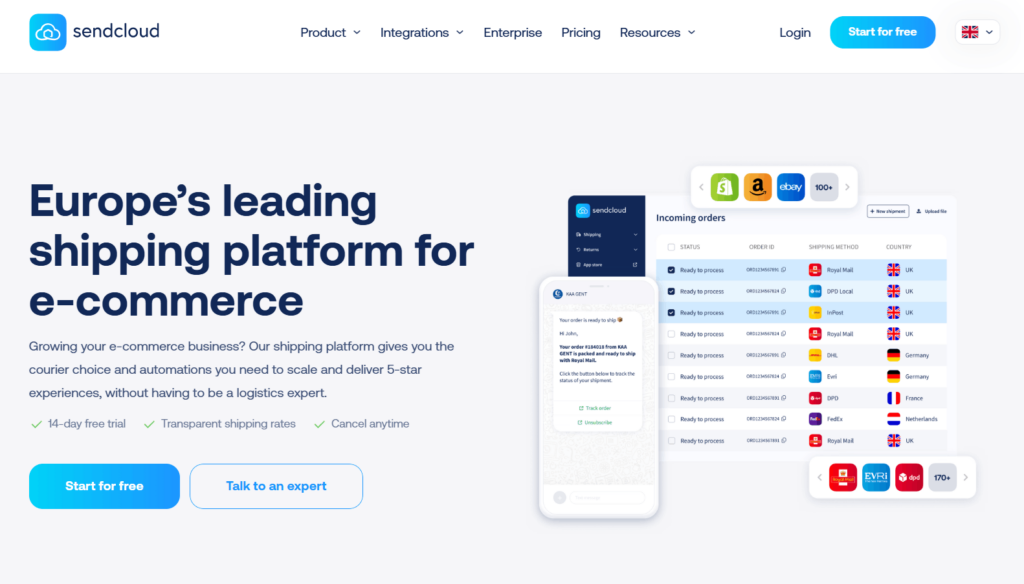
Sendcloud is a practical option for businesses that want shipping and returns to run through one operational workflow. The platform is known for carrier management and shipping labels, but its returns tools can also help teams centralize online returns, create return labels and apply return policy rules.
This can be useful for a growing ecommerce business that already handles several carriers and sales channels. Instead of managing outbound shipping in one platform, returns in email and refund decisions elsewhere, teams can bring more of the operational work together.
Customers can use self-service returns to begin the process, select a return reason and access shipping instructions. Internally, the retailer can process returns through a more organized system, which can reduce errors around labels, carrier choices and return status communication.
The trade-off is specialization. Sendcloud can help streamline routine returns, but brands that need highly advanced exchange logic, deep fraud controls or sophisticated store credit offers may need a more dedicated returns management solution.
Choose Sendcloud when you want a reliable management tool for shipping and returns, especially if operational simplicity matters more than highly customized retention workflows.
nShift Returns: best for reverse logistics, warehouse routing and multi-carrier operations
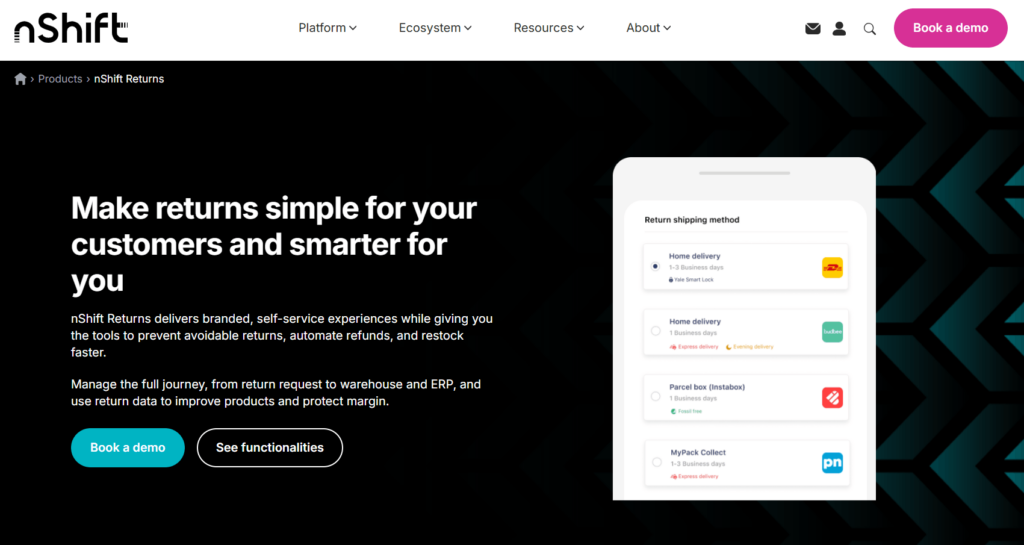
nShift Returns is designed for businesses that need to manage reverse logistics at a deeper operational level. Its value begins once a customer has submitted a return request. The returned item may need to be routed to a warehouse, retail store, repair center, refurbishment partner or resale channel.
That makes nShift relevant for retailers that need more than a simple returns portal. A returned item may require inspection before a refund. Another may be eligible for immediate restocking. Some products may need to be routed to a different destination based on condition, product type or return reason.
The platform can support carrier integration, RMA handling, return labels and workflow automation. It can also connect returns management to inventory management, which is important when returned items need to move back into available stock quickly.
nShift is likely to be more operationally complex than a smaller online store needs. It suits businesses with multiple warehouses, carrier relationships or national markets. For companies selling in Germany, Austria, Switzerland and beyond, that level of routing control can help reduce costs and improve operational efficiency.
Choose nShift when warehouse routing, carrier coordination and reverse logistics are the biggest problems in your return process.
Loop Returns: best for Shopify brands focused on exchanges and customer loyalty
Loop Returns is one of the best-known returns management tools for Shopify brands. It focuses heavily on exchanges, store credit and keeping customers engaged after a return request. Instead of treating every return as a completed sale reversal, Loop helps brands offer alternative products, sizes or variations inside the workflow.
That can be particularly useful for apparel, beauty and lifestyle brands. A customer returning a dress because the size is wrong may still want the same product in another size. A shopper unhappy with a shade may prefer another variant. A return process that offers these choices can help optimize returns while supporting customer loyalty.
Loop Returns also offers a polished self-service portal, return reason tracking, automated workflows and controls around return fraud. The tool can help brands identify patterns, such as products that repeatedly trigger fit complaints or customers who show unusual return behavior.
Its strongest ecosystem fit remains Shopify. It can work for European brands, but DACH retailers should confirm carrier options, language support and local return shipping requirements before committing.
Choose Loop Returns when Shopify is central to your stack and the business wants to prioritize exchanges over automatic refunds.
ReturnGO: best for customizable policies and self-service returns
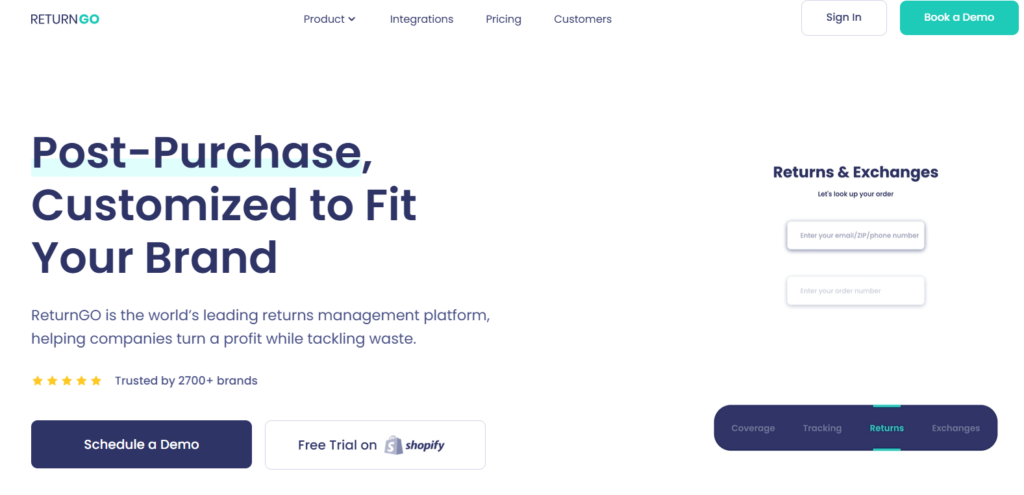
ReturnGO is a customizable returns platform for companies that need more control over return policy rules. Customers can initiate returns, request an exchange, choose a return method and follow the progress of a refund or replacement through a branded self-service portal.
Its strength is flexibility. A retailer may want to offer a free return for one product category but charge for another. It may accept exchanges for eligible items but limit certain products to store credit. It may also need different rules for different countries, customer groups or order values.
ReturnGO can support RMA workflows, return shipping label generation, return status updates and automated policy decisions. This makes it useful for brands that have specific business needs and cannot rely on one universal returns rule for every order.
It is less DACH-specific than some local alternatives, but it can still work well for businesses that need a customizable returns management platform connected to Shopify, Magento, Salesforce Commerce Cloud or another ecommerce environment.
Choose ReturnGO when standard return workflows are too rigid and your team needs stronger control over policy logic.
ZigZag Global: best for international returns and cross-border ecommerce
ZigZag Global is most relevant for retailers that manage international returns. Domestic product returns are already operationally demanding. Cross-border returns add carrier choice, return address routing, customs handling, country-specific labels and different refund expectations.
The platform focuses on international returns and global reverse logistics. It can support businesses selling from DACH into wider European markets or international retailers serving customers in Germany, Austria and Switzerland.
This is a useful distinction. A local returns platform may handle domestic return shipping well, but cross-border commerce requires stronger coordination around carrier networks and returned items. A parcel might be routed back to a central warehouse, a local consolidation point or a resale partner depending on its market and condition.
ZigZag Global may be excessive for a domestic-only retailer. It becomes more relevant when international returns create cost, complexity or poor customer satisfaction.
Choose ZigZag Global when cross-border logistics, international returns and global routing are harder to manage than the customer-facing return request itself.
Returns management software comparison table
| Tool | Best for | DACH relevance | Main strength | Main limitation |
| 8returns | DTC brands that want exchanges and store credit | Very strong | Exchange-first workflows and local relevance | Less suited to highly complex enterprise logistics |
| parcelLab | Enterprise post-purchase operations | Strong | Customer communication and post-purchase experience | May be too broad for smaller stores |
| Sendcloud | SMB and mid-market shipping operations | Strong | Shipping and returns in one workflow | Less depth for advanced retention strategies |
| nShift Returns | Multi-carrier reverse logistics | Strong | Warehouse routing and carrier operations | More complex implementation |
| Loop Returns | Shopify brands | Moderate | Exchanges, retention and return fraud controls | DACH workflows need validation |
| ReturnGO | Customizable return policies | Moderate | Flexible portal and policy rules | Less DACH-specific |
| ZigZag Global | Cross-border ecommerce | Strong | International returns and carrier coverage | Excessive for domestic-only stores |
Why return management matters in DACH ecommerce
Returns are not a minor support task in DACH. They are part of the commercial model.
Germany was expected to handle around 550 million return parcels in 2025, with nearly one in four online orders returned fully or partially. Fashion remains the most return-heavy category, but electronics, home goods and beauty products also create costly exceptions when product details, fulfillment or customer expectations do not line up.
German online shoppers return around 11% of their purchases on average, while only about one-quarter say they never return an online order. You can see how consumer behavior has evolved in our breakdown of what online returns look like in Germany and our guide to why Germans return every ninth item bought online.
The DACH market also puts pressure on convenience. Shoppers expect transparent delivery information, simple handovers and a clear way to handle returns. Our analysis of German delivery and returns expectations shows why a weak return experience can affect trust before the customer even places an order.
There is a regulatory reason to review your setup too. From June 19, 2026, online B2C sellers in Germany must provide an electronic withdrawal function for qualifying distance contracts. This legal withdrawal route is not identical to a returns portal, but the two workflows need to work together cleanly.
The operational cost is also difficult to ignore. Earlier DACH research found that returns often cost retailers between €5 and €10 each, with some businesses reporting higher amounts. That is why retailers in DACH should embrace returns instead of avoiding them: the goal is not to make every return impossible. It is to manage returns effectively enough that they stop creating avoidable losses.
How return management software creates a seamless returns experience
A strong returns management solution does more than generate a return shipping label. It connects the customer’s request with the systems that need to respond next: ecommerce, warehouse, inventory, finance, customer service and carriers.
Return requests, return reasons and policy checks
A customer should be able to initiate returns through a self-service returns portal. The system should check whether the order qualifies, gather a return reason and direct the request into the right workflow.
For routine cases, this eliminates manual approvals. For exceptions, the retailer can route return requests to a team member, flag the order or apply a different policy. That gives businesses more control while keeping the front-end experience straightforward.
A good portal also helps customers understand what happens next. Clear instructions, eligibility information and return status updates make the process feel less uncertain. This matters in a market where delivery and returns can affect the whole customer experience in DACH.
Return labels, carrier choices and return shipping
Return shipping should be easy to understand. Customers may need a printable return shipping label, a QR code, a parcel shop option or a local carrier instruction. The right returns management tools can integrate with DHL, DPD, Hermes, GLS and other carriers, depending on the seller’s markets.
Carrier choice should not become an invisible operational detail. It affects convenience, cost and the likelihood that customers will complete the return correctly. For more context, see our guide to shipping parcels efficiently in Germany and our overview of German shoppers’ delivery standards.
Exchanges, store credit and refund decisions
A refund is not always the best outcome for the customer or retailer. A customer may want a different size, color or model. A return management platform can offer an exchange, replacement or store credit before the customer exits the buying journey.
This is one of the clearest ways to optimize returns. Brands can protect revenue while still offering a fair, frictionless returns experience. It also creates a better chance of customer retention, especially when the original issue is related to fit, variant choice or a damaged item rather than dissatisfaction with the brand itself.
Warehouse handling, RMA and inventory management
The return process does not end when a customer drops off a parcel. Warehouse teams need to know what is arriving, where it should go and what should happen after inspection.
An RMA can connect the customer-facing return with backend operations. Returned items may be restocked, repaired, refurbished, resold, quarantined or disposed of. The correct decision depends on item condition, product category, return reason and the company’s inventory management rules.
For retailers that handle high volumes, this becomes a warehouse issue as much as a customer service issue. Our guide to scaling warehouse logistics for D2C brands and the overview of inventory management companies for German e-commerce explain why disconnected returns can distort stock visibility.
From return process to reverse logistics: what to automate
Automation should reduce repetitive work, not remove all human judgment. A return system needs enough flexibility to handle normal return requests quickly while escalating unusual, high-value or suspicious cases.
Automate routine return requests
Routine returns can usually follow automated workflows. The platform checks the order date, product type, policy eligibility and selected return reason. If the request meets the rules, it can issue a label, send instructions and update the return status.
This removes repetitive admin work and helps teams process returns faster. It also reduces the risk that one support agent gives a customer different instructions from another.
Route returned items based on business rules
Returned items should not always go back to the same place. A damaged appliance may need to be routed to inspection. Apparel in good condition may go straight to restocking. A product from an international market may need to go to a local consolidation hub.
This is where reverse logistics becomes important. A mature returns platform can route items based on warehouse capacity, return reason, condition, product category or resale potential.
Businesses that already work with outsourced logistics partners may find our list of fulfillment centers and logistics operators in Germany useful when mapping the physical side of return operations.
Integrate refund and inventory updates
Return management should integrate with the systems that handle orders, payments and stock. When a refund is approved, the ecommerce platform needs the right order status. When an item is restocked, available inventory needs to update. When an item fails inspection, it should not accidentally return to saleable stock.
A fragmented setup creates delays and errors. A connected workflow gives finance, warehouse and customer service teams a more reliable record of what happened.
Use automation to improve operational efficiency
Automation can reduce costs, but its most useful effect is clarity. It creates a predictable process for businesses of all sizes, even when return volume rises during seasonal peaks.
For a broader look at operational scaling, see our guide to scaling e-commerce operations and the analysis of how e-commerce businesses can optimize warehouse operations.
How returns analytics can reduce return rate and return fraud
A good dashboard should not simply show how many items came back. Returns analytics should tell a team why returns happen, which products create problems and where margin is leaking.
Find the return reasons worth fixing
A return reason can reveal more than a customer complaint. Repeated fit issues may point to incorrect sizing information. Damage reports may show a fulfillment or packaging problem. “Not as described” may signal weak product pages, incomplete images or misleading claims.
That is why managing product returns should connect with merchandising and content teams, not only operations. Our guide to making returns profitable explains how return data can inform product content and prevention strategies.
Track suspicious patterns without punishing honest customers
Return fraud needs careful handling. A business may see repeated high-value returns, empty-box claims, wardrobing or patterns that fall outside normal customer behavior. A returns platform can flag unusual cases and route them for review.
The goal is not to make every customer prove their innocence. It is to apply controls only where signals justify it. This is why customizable policy rules are useful. A retailer may want automatic approval for low-risk orders but manual review for high-value products, repeat returners or specific categories.
Use analytics to improve product pages
Many returns start before checkout. Poor product descriptions, missing measurements, vague images and unclear delivery details can all increase customer uncertainty.
Retailers selling through marketplaces should also review how content appears outside their own store. Our guide to shipping on online marketplaces and our overview of the best online marketplaces in Germany show why customer expectations need to stay consistent across channels.
When customizable return management software makes sense
A simple policy works for a small store with one country, one carrier and a narrow product range. Larger businesses need more flexibility.
Customizable return rules can be useful when the retailer has:
- different return windows for selected product categories
- free return eligibility only for some orders
- return and exchange options that vary by market
- different workflows for damaged, faulty or unwanted items
- product-specific handling instructions
- multiple warehouses or third-party fulfillment partners
- high-value items that require manual review
- specific business needs around international returns
The right return management software should support complexity when you need it, but not force complexity into every order. A fashion retailer may need different rules from a furniture seller. An electronics business may need inspection workflows that a beauty brand does not.
For brands selling beyond Germany, our guide to international delivery considerations and our breakdown of how German e-commerce brands can reach global customers can help frame the wider logistics decision.
How to choose the best returns management platforms
Choose the right tool around your operational bottleneck.
Choose an exchange-first platform if refunds are the biggest problem
Brands with repeat-purchase potential should look at exchange options, store credit, upsells and customer retention features. 8returns and Loop Returns are strong examples of this approach.
Choose a logistics-led returns platform if warehouse routing creates delays
Retailers with multiple warehouses, carriers or handling destinations should prioritize reverse logistics, RMA workflows and inventory integration. nShift Returns and ZigZag Global are more relevant in this scenario.
Choose a shipping-led tool if your operations are fragmented
A smaller ecommerce business may not need a dedicated enterprise returns platform. It may need one system that helps handle returns alongside delivery labels, carrier choice and customer communication. Sendcloud can be a better fit here.
Choose a post-purchase platform if communication is the weak link
If support teams answer too many refund-status questions or delivery and return messaging feel disconnected, parcelLab may be a better choice than a standard returns portal.
Check integration before you sign
Every platform should integrate with the systems that already run your ecommerce business. Confirm Shopify, Shopware, ERP, WMS, carrier and customer service integration before launch.
The best returns management software for e-commerce should fit into your stack, not create another disconnected layer. It should help streamline your returns, not simply add a new dashboard to monitor.
Key takeaways
- The best returns management software depends on return volume, sales channels, logistics setup and the amount of control your team needs.
- DACH businesses should assess carrier coverage, return policy flexibility, marketplace workflows and cross-border support.
- A self-service returns portal can reduce repetitive support work while giving customers clearer return status updates.
- Exchange-first workflows and store credit can help reduce refund volume and protect customer retention.
- Strong returns analytics can reveal product, sizing and fulfillment issues before they create more returns.
FAQ
What is return management software?
Return management software helps ecommerce businesses manage product returns from the initial request to the refund, exchange, restock or warehouse decision. It can automate labels, policy checks, customer communication and return status tracking.
What is the difference between return management and reverse logistics?
Return management covers the customer-facing and administrative side of returns, such as return requests, refunds and returns portals. Reverse logistics covers the physical movement, inspection and routing of returned items after they leave the customer.
Can returns management software reduce return rate?
It can help identify why products come back and make recurring problems easier to find. Returns analytics may reveal sizing issues, inaccurate product details, quality problems or fulfillment errors. The software does not solve these problems automatically, but it gives teams the data to optimize them.
Does every ecommerce business need returns software?
No. A small business with low return volume may handle returns manually. Returns management tools become more useful when the team handles several sales channels, multiple carriers, recurring return requests or complex policy rules.
What should a returns portal include?
A good returns portal should let customers initiate returns, select a return reason, choose a return method, access return labels and follow return status. It should show only the options that match the order and return policy rules.
Can returns management software help with return fraud?
Yes. Some platforms can flag unusual return patterns, apply rules to high-risk orders and route selected requests for manual review. The best approach balances fraud prevention with a fair customer experience.