Smart parcel lockers: Why they are popular & top brands in DACH
Meet the world of smart parcel lockers. Find out why they’re trending in DACH and which top brands are revolutionizing parcel management.
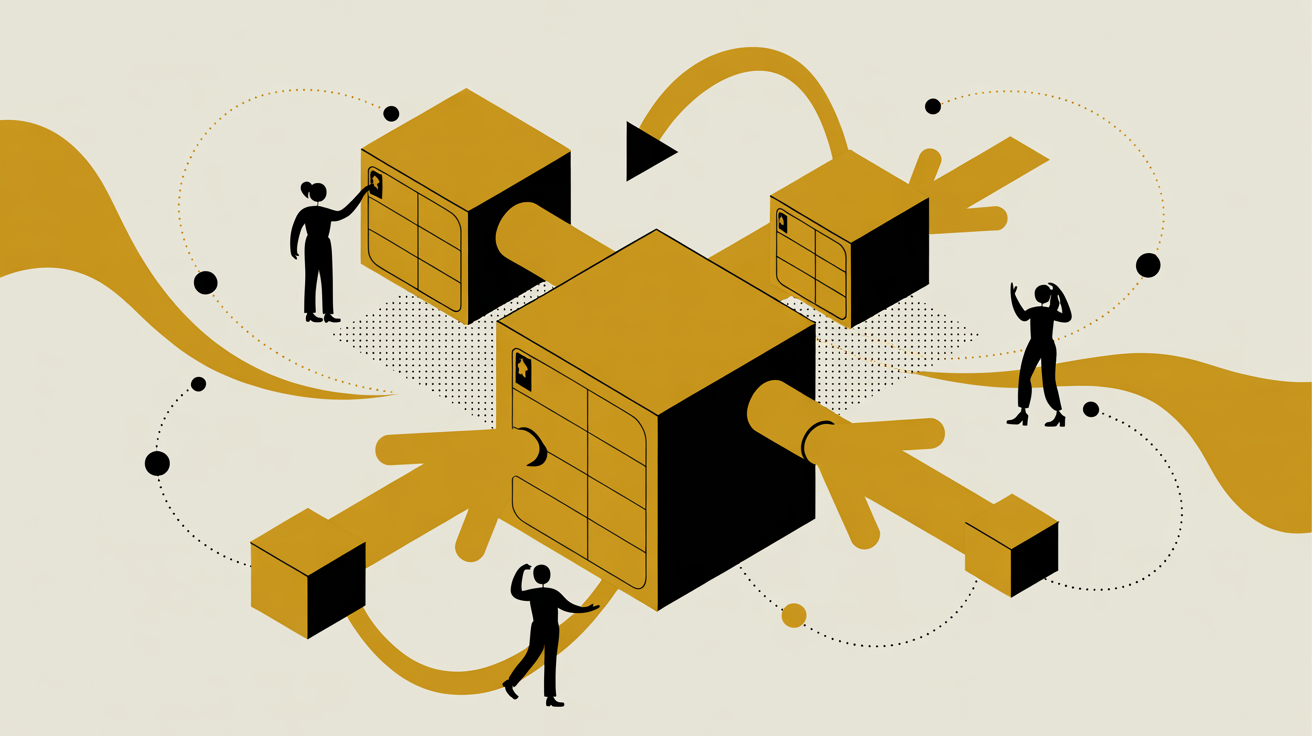
The last-mile problem is the most expensive kilometre in e-commerce. In the DACH region, smart parcel lockers are becoming the answer — and the numbers back it up.
What Is a Smart Parcel Locker?
A smart parcel locker is a self-service, automated storage unit that allows customers to collect or return parcels at their convenience — without the need for a human handover. Unlike a standard mailbox, smart lockers are digitally connected: they authenticate users via QR codes, PIN codes, or smartphone apps, log activity in real time, and notify recipients automatically when their parcel arrives.
Modern smart lockers can handle multiple carriers, multiple parcel sizes, and even temperature-sensitive goods. They sit at the intersection of logistics infrastructure, consumer technology, and urban planning — and nowhere in Europe are they more embedded into everyday life than in the DACH region.
The DACH Market at a Glance
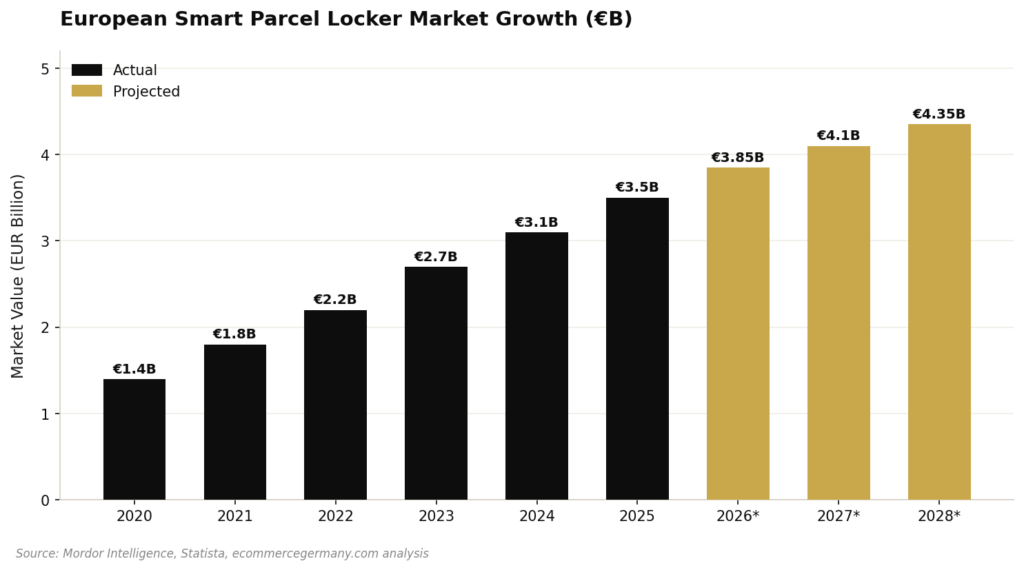
The European smart parcel locker market was valued at approximately €3.1 billion in 2024 and is projected to reach €4.35 billion by 2028, growing at a compound annual rate of around 8–9%. Germany is the single largest national market, driven by DHL’s dominant Packstation network and a mature online retail ecosystem.
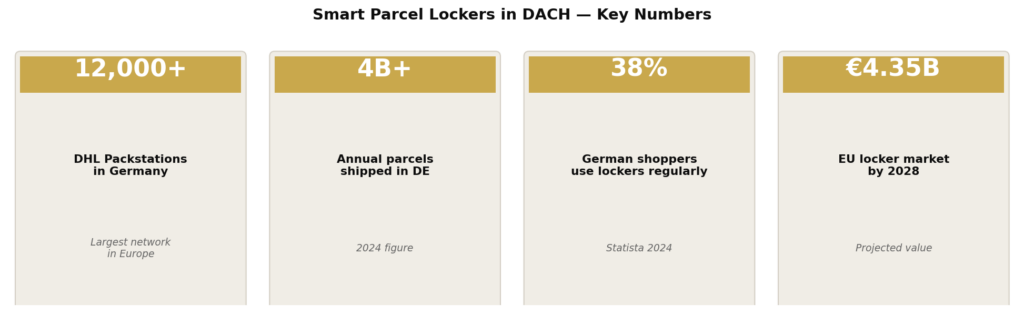
Germany shipped over 4 billion parcels in 2024 — one of the highest volumes per capita in Europe. With that volume comes significant last-mile pressure, and lockers are absorbing more of it every year.
Why Are Parcel Lockers So Popular in DACH?
1. The Last-Mile Problem Is Getting Worse
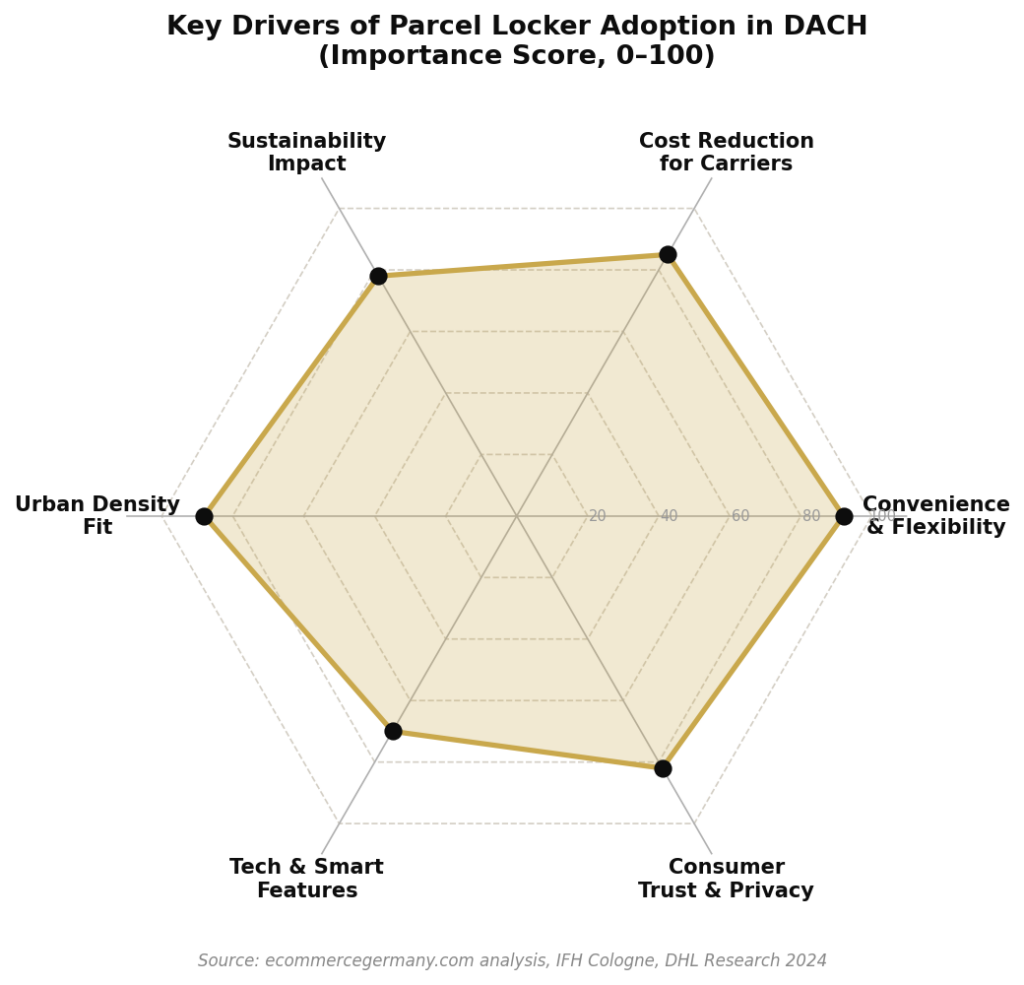
Failed first-attempt deliveries in Germany cost the logistics industry an estimated €800 million per year. With parcel volumes growing and urban residential density increasing, the traditional doorstep delivery model is under pressure. Lockers allow carriers to consolidate deliveries to a single point, reducing re-delivery attempts dramatically and cutting cost-per-parcel.
For online retailers, this matters directly: re-delivery failures translate to customer service contacts, refunds, and damaged trust. Offering a locker delivery option at checkout is increasingly seen as a conversion tool, not just a logistics choice. Read more on how German retailers handle fulfilment pressure in our article on online retail in Germany regaining momentum in 2025.
2. German Consumers Prioritise Flexibility and Privacy
German shoppers are notably privacy-conscious — a trait reinforced by the country’s strong regulatory and compliance framework. The idea of a parcel being left with a neighbour or on a doorstep is culturally uncomfortable for many consumers. Lockers solve this: the parcel is waiting securely, and only the recipient can access it.
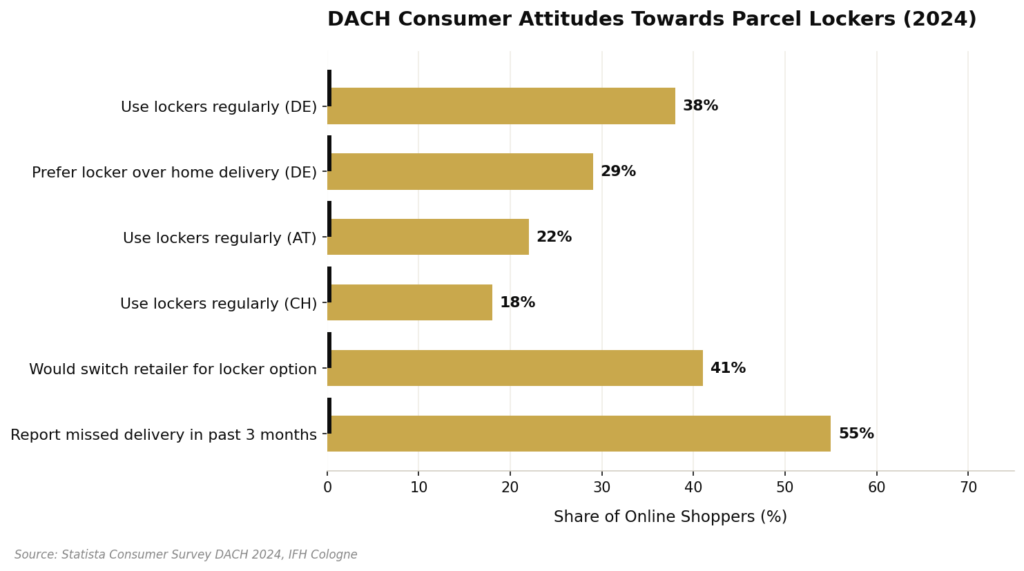
Post-pandemic, contactless pickup also became a strong lasting preference. 38% of German online shoppers now use parcel lockers regularly, and 29% actively prefer them over home delivery when the option is available.
3. Urban Density and Apartment Living
Around 57% of Germany’s population lives in rented apartments, most in multi-storey buildings without dedicated parcel storage. Successful home delivery in these buildings depends on the recipient being present — or on a concierge system that doesn’t exist in most cases. Parcel lockers, installed in supermarket car parks, petrol stations, U-Bahn stations, and building lobbies, solve this by being “on the way” rather than “at home.”
4. Sustainability Is No Longer Optional
Consolidated deliveries to locker hubs dramatically reduce last-mile vehicle kilometres. A single locker stop that serves 30 parcels replaces up to 30 individual delivery attempts — each with its own carbon footprint. For retailers facing growing ESG obligations and sustainability-minded German consumers, this is a meaningful differentiator.
See how DACH e-commerce companies are approaching sustainability in our guide to sustainable logistics in e-commerce.
5. Smart Technology Is Expanding the Use Case
Modern lockers are far beyond secure metal boxes. Today’s units feature:
- Multi-carrier compatibility — one locker accepting parcels from DHL, DPD, GLS, and Hermes
- Refrigerated compartments for groceries, meal kits, and pharma
- App-based QR/PIN access with biometric options emerging
- IoT sensors for predictive maintenance and slot availability
- AI-driven placement optimisation using foot traffic and demand data
- Integrated returns workflows with instant label printing
Top Parcel Locker Brands in DACH
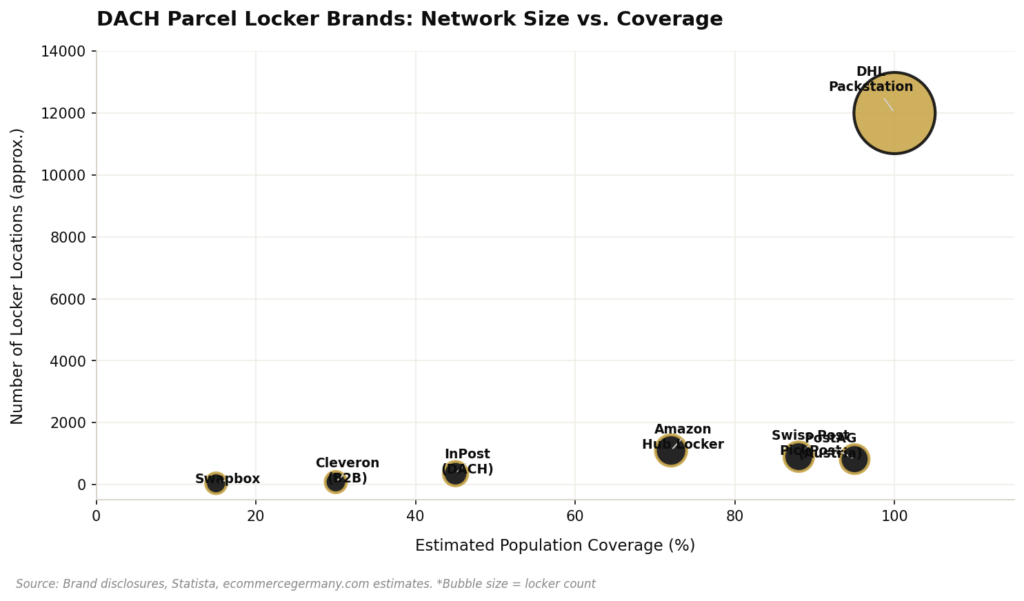
DHL Packstation: The Undisputed Market Leader
With 12,000+ stations and over 21 million registered users, DHL Packstation is the backbone of parcel locker infrastructure in Germany. The network is present at supermarkets, petrol stations, transport hubs, and residential buildings — with DHL’s stated goal of ensuring every German citizen lives within 10 minutes of a Packstation.
For e-commerce retailers, Packstation compatibility is essentially table stakes. DHL’s recent investments include larger XL compartments for oversized items, improved app UX, and expanded 24/7 access. Any logistics provider operating in Germany needs a clear Packstation integration strategy.
Key stats:
- 12,000+ locations across Germany
- 21 million+ registered users
- Available 24/7, 365 days a year
- Part of DHL’s broader GoGreen sustainability programme
Amazon Hub Locker: The Marketplace Giant’s Answer
Amazon operates 1,000+ Hub Locker locations across DACH, predominantly in shopping centres, petrol stations, and convenience stores. The service is exclusive to Amazon orders, making it a retention and loyalty tool as much as a logistics one. Amazon shoppers in urban areas increasingly select a Hub Locker as their default delivery option, citing reliability and the ability to collect in one predictable location.
As Amazon continues to grow its market share in Germany (it remains the dominant marketplace in DACH), Hub Locker’s footprint will likely expand.
InPost: The High-Growth Challenger
InPost, which transformed last-mile delivery in Poland and the UK, has made a strategic push into DACH. Its distinctive flat-locker design offers high compartment density per square metre, and its returns handling capabilities are a strong differentiator in Germany, which has one of Europe’s highest return rates — particularly in fashion and electronics.
InPost’s model is carrier-agnostic and retailer-friendly, making it attractive for mid-market e-commerce brands looking to offer a locker option without being tied to DHL.
Post AG (Austria): The National Network
Austria’s national carrier operates 800+ Paketbox stations across the country, offering 24/7 parcel collection and integration with multiple carrier networks. Post AG has also piloted smart locker units in residential buildings — a model that may see wider rollout given Austria’s urban apartment-heavy housing stock.
Swiss Post PickPost: Precision Swiss Infrastructure
Swiss Post runs 900+ PickPost points combining traditional post office counters with modern smart locker units. Switzerland’s high-density cities and premium consumer expectations make the hybrid model particularly effective. Swiss Post has also partnered with major retailers to deploy in-store collection points as part of a broader omnichannel strategy.
For retailers expanding into Switzerland, see our guide to international expansion in the DACH context.
Cleveron: B2B and In-Store Innovation
Estonian company Cleveron takes a fundamentally different approach: robotics-enabled click-and-collect units inside retail stores and shopping centres. Its Cleveron 401 and 501 models allow shoppers to collect online orders in under 15 seconds using automated retrieval technology. Several large German retailers have trialled Cleveron units as part of their omnichannel click-and-collect strategies.
For brands thinking about omnichannel fulfilment, Cleveron represents the cutting edge of the in-store pickup experience. Learn more about building positive customer experiences through logistics in our article on e-commerce customer experience.
Swapbox: The Circular Economy Disruptor
Berlin-based Swapbox is an early-stage but conceptually important player: its locker system is built around reusable packaging, enabling a circular delivery model where packaging is returned, cleaned, and reused. While still small, Swapbox has attracted attention from sustainability-focused brands and DTC retailers keen to reduce single-use packaging.
This directly connects with the growing consumer interest in circular design metrics and sustainable commerce — a trend accelerating in the German market.
Summary Table: Top Parcel Locker Brands in DACH
| Brand | Market | Network Size | Key Differentiator |
| DHL Packstation | 🇩🇪 Germany | 12,000+ | Largest consumer network; 24/7; app + PIN |
| Amazon Hub Locker | 🌍 DACH | 1,000+ | Amazon-exclusive; shopping centre focus |
| InPost | 🌍 DACH (growing) | 350+ | Strong returns; flat locker design |
| Post AG | 🇦🇹 Austria | 800+ | National carrier; multi-carrier support |
| Swiss Post PickPost | 🇨🇭 Switzerland | 900+ | Hybrid locker + counter model |
| Cleveron | 🌍 B2B / Retail | Retailer-deployed | Robotic in-store click & collect |
| Parcel Pending (Quadient) | 🌍 Residential | MDU-focused | Multi-dwelling unit specialist |
| Swapbox | 🇩🇪 Germany | Early stage | Reusable packaging; circular model |
What This Means for E-Commerce Retailers
The parcel locker shift has direct implications for how online retailers in DACH should structure their logistics and customer experience strategies:
1. Make locker delivery a standard checkout option
DHL Packstation integration should be a baseline requirement for any German e-commerce operation. The uplift in checkout conversion — particularly on mobile — is well documented. Customers who can see a familiar locker option are more likely to complete a purchase.
2. Plan for Germany’s high return rate
Germany’s e-commerce return rate is among the highest in Europe — in fashion it exceeds 40%. Locker-based returns offer a dramatically smoother experience than home collection. InPost and DHL both offer strong returns workflows. Learn more about return-related consumer behaviour in our German consumer sentiment analysis.
3. Consider lockers for B2B and subscription models
If you serve B2B customers or run a subscription-based operation, fixed locker points for recurring deliveries eliminate a significant friction layer. Cleveron-style in-office lockers are increasingly being deployed for exactly this use case.
4. Use locker delivery in your sustainability narrative
Consolidated locker deliveries generate fewer vehicle kilometres per parcel — typically 60–80% fewer compared to individual home delivery. This is a quantifiable metric for ESG reporting and a genuine brand differentiator with German consumers. See our overview of sustainable logistics in e-commerce.
5. Watch the multi-carrier convergence
As locker networks mature, the real opportunity is carrier-agnostic locker infrastructure — a single pickup point that works regardless of which carrier shipped the order. This is already happening in Poland and the UK, and DACH will follow. Retailers who build this flexibility into their checkout will have a meaningful UX advantage.
Outlook: What’s Coming Next?
The next wave of parcel locker development in DACH will be shaped by three forces:
Interoperability and locker sharing
Expect formal cross-carrier locker sharing agreements to emerge in Germany over the next 2–3 years, following the model already operating in parts of Scandinavia. A shared locker used by DHL, DPD, and GLS simultaneously is far more commercially viable for property owners and more convenient for consumers.
Refrigeration and new delivery verticals
Temperature-controlled lockers for groceries, meal kits, and pharmaceuticals are the fastest-growing locker segment in Europe. Germany’s strong FMCG e-commerce market makes it a natural proving ground. Chilled locker deployments are projected to more than double by 2027.
AI-powered network optimisation
Machine learning is increasingly used to predict demand and optimise new locker placements in real time, moving from reactive to proactive network expansion. Carriers are investing heavily in this capability as parcel volumes continue growing.
Residential building integration
Purpose-built locker bays in new residential developments are becoming a planning requirement in some German cities, reflecting the infrastructure status that parcel lockers have earned. As German e-commerce continues to mature, the locker will increasingly be seen as a building amenity, not an afterthought.
💡 Key takeaway for Retailers: Smart parcel lockers are no longer a niche logistics option in DACH — they are a mainstream consumer expectation. Integrating locker delivery into your checkout and returns flow is one of the highest-ROI logistics investments a German e-commerce operation can make in 2025–2026.