The new economics of retention: Shifting from discounts to advocacy in e-commerce
Discover how e-commerce brands are shifting from discounts to advocacy-driven loyalty to boost retention, reduce CAC, and build long-term customer value. (Ad)

E-commerce growth has always required a delicate balancing act between acquiring new customers and keeping the ones you already have. Recently, however, that mathematical balance has become significantly more challenging to maintain. With customer acquisition costs (CAC) steadily climbing, digital ad fatigue deepening, and operating margins tightening across the board, senior marketing leaders are being asked to drive more sustainable revenue from their existing base.
For the better part of a decade, the industry standard for retention has been the familiar “earn and burn” model: spend a euro, earn a point, and eventually trade those points for a discount. It is a structural model that has served many brands well in the past. But as consumer expectations evolve and the digital landscape shifts, this linear, transactional approach is showing its limits. In many cases, it inadvertently trains consumers to delay their purchases until a deal is available, making it harder to build genuine, resilient brand affinity.
The most successful marketing leaders are looking beyond traditional discounting. They are rethinking the fundamental economics of their retention strategies by moving toward holistic advocacy models, rewarding the behaviors that fuel long-term ecosystem value rather than just discounting the next transaction.
The hidden tax of transactional loyalty
When retention is anchored solely to the checkout counter, it captures only a fraction of the customer’s actual relationship with the brand. A purely points-based system trains customers to wait for discounts, creating a race to the bottom that erodes product
margins and commoditizes the brand. Ultimately, you are renting market share rather than compounding sustainable Lifetime Value (LTV).
But the heavier tax is the data blind spot. A purely transactional lens captures the what but ignores the why. By overlooking the behavioral signals between purchases – how customers interact with campaigns, their channel preferences, their engagement velocity – marketers fail to build a unified customer profile. Without that centralized intelligence, true predictive orchestration remains impossible, leaving brands reacting to purchases rather than anticipating needs.
Scott Brinker, Editor at chiefmartec.com, captures this strategic shift perfectly: “We have spent the last decade optimizing acquisition. The next decade belongs to retention, but our current models are outdated. Most ‘loyalty’ programs today are simply disguised discounting mechanisms. They fail to capture the real asset: Customer intent and advocacy.”
When e-commerce leaders pivot away from the discount-first mentality, they open the door to capturing that intent. They can begin to build the emotional connections and data-rich profiles that keep customers returning, even when a competitor offers a temporary sale.
The intent gap: Moving beyond the transaction
To capture the customer intent that Scott Brinker mentions, sophisticated brands are transforming their retention programs from simple reward mechanisms into consensual, first-party data engines. In an era where third-party data is becoming increasingly scarce due to privacy regulations and browser updates, the ability to gather direct insights from your most engaged customers is a significant competitive advantage.
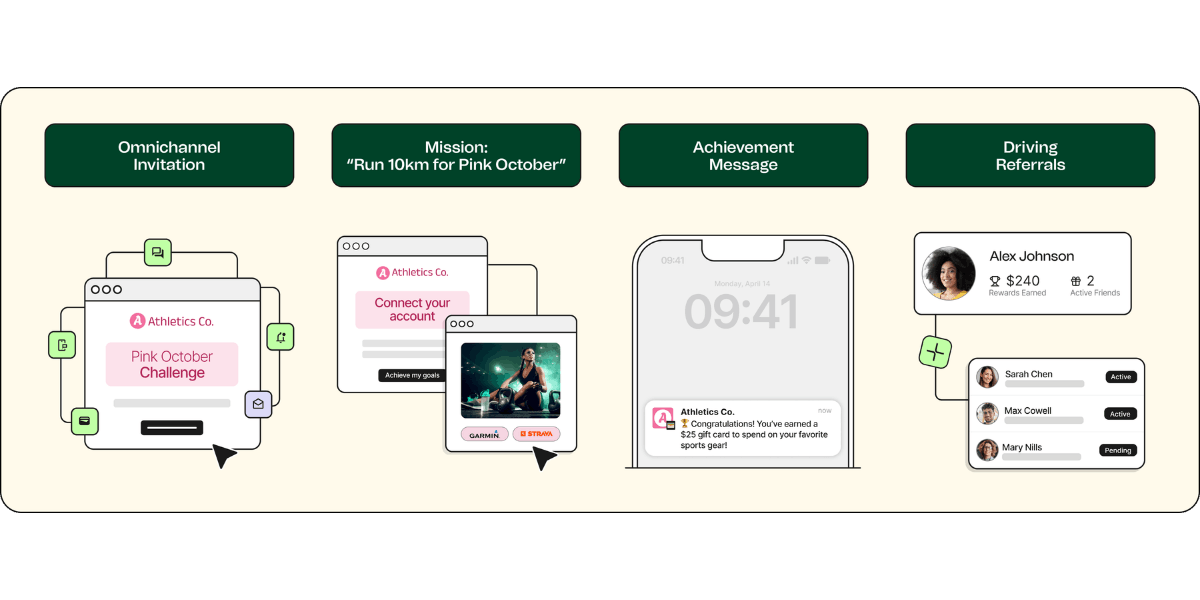
The core challenge with the legacy “earn and burn” model is that it rarely asks the customer for anything other than their credit card. Modern advocacy programs, by contrast, are built on a fair and transparent value exchange. They incentivize non-transactional engagements, asking customers to share their preferences, provide feedback on product fit, or engage with the brand’s community. In return, the customer receives early product access, exclusive experiences, or personalized curation, rather than just a blanket percentage off their next cart.
According to the Smart Loyalty Guide, this shift from transactional to behavioral equity allows brands to bridge the “intent gap.” When a customer willingly shares that they are shopping for a specific life event, or that they prefer a certain style over another, they are handing the brand the blueprint for their next purchase. By rewarding this data-sharing behavior, marketers can fuel their entire digital ecosystem with high-quality data, leading to hyper-personalized communication that feels helpful rather than intrusive.
Particularly in privacy-conscious markets like the DACH region, this transparent value exchange is critical. Consumers are highly protective of their data, but they are willing to share it if the brand clearly demonstrates how that data will be used to improve their personal experience. A modern loyalty program essentially becomes a privacy-compliant, consent-driven data engine.
The four foundations of modern loyalty architecture
Transitioning away from a pure discounting model does not mean abandoning points entirely; rather, it means restructuring how those points interact with the rest of the customer experience.
According to loyalty frameworks, there are four foundational structures that dictate program design:
1. Points-Based (Earn and Redeem): The classic model, which modern brands are expanding to reward non-transactional behaviors like writing high-quality reviews or sharing user-generated content.
2. Tier and Status: Moving customers through levels (e.g., Silver, Gold, Platinum) to unlock exclusive benefits. This creates a psychological reluctance to abandon the achieved status and naturally reduces churn.
3. Paid VIP: The premium model, where customers pay an upfront fee for elevated access. This effectively funds the program’s benefits while separating casual browsers from highly committed brand advocates.
4. Cashback: Providing clear, direct monetary value back on specific purchases, offering unmatched simplicity for the consumer.
The reality of modern, behavior-driven loyalty is that the most profitable brands never rely on a single mechanic – they meticulously blend them. A brand might offer a free points program for all customers, a paid VIP tier for their highest spenders, and status levels that unlock exclusive early access to new collections. By layering these structures, marketing leaders can capture a wider spectrum of the customer base, turning loyalty from a margin-draining cost center into a self-sustaining revenue engine.
The economics of the ‘Loyalty Loop’
Understanding behavioral data and architectural foundations allows e-commerce leaders to fundamentally redesign how they retain customers. Instead of a linear path that ends at the transaction, forward-thinking brands are engineering what is known as the “Loyalty Loop.”
The premise of the Loyalty Loop is simple but economically powerful: reward the specific behaviors that drive systemic, cyclical growth. When a brand successfully rewards advocacy (such as community participation and referrals) they effectively turn their retained customer base into a highly credible, cost-efficient acquisition channel. This creates a compounding effect on marketing ROI.
The financial reality strongly supports this structural shift. Data from the Smart Loyalty Report highlights that retaining an existing customer costs up to 10 times less than acquiring a new one. By shifting marketing dollars away from generic retargeting ads and investing them into rewarding brand advocates, e-commerce teams can protect their bottom line while still driving top-line growth.
Bridging the physical and digital divide
One of the greatest friction points e-commerce brands face is the fragmentation of the omnichannel journey. Consumers do not shop in straight lines. They might browse an item online, purchase it in a physical store, and return it via a mobile app. When these physical and digital environments operate in silos, brands don’t just deliver a disjointed
experience, they fracture their customer data. This lack of identity resolution creates attribution blind spots, making it impossible to recognize high-value buyers across channels or convert casual, in-store shoppers into loyal brand advocates.
The most effective advocacy programs are designed to close the loop between offline behavior and digital engagement. By capturing in-store signals, such as point-of-sale (POS) data or digital wallet scans, brands can trigger highly relevant, post-visit digital communications. While connecting these touchpoints is the goal, the technical reality of merging physical POS data with online profiles is often complex. The brands successfully making this transition don’t necessarily rip and replace their systems; instead, they focus on establishing a unified data layer that allows in-store signals to communicate seamlessly with their digital ecosystems.
A compelling example of this is the lifestyle and coffee brand Café Kitsuné. By digitizing their loyalty experience, they successfully bridged the physical-digital divide, turning anonymous offline foot traffic into a unified source of qualified, first-party customer profiles. When a customer makes an in-store purchase, that data instantly informs their digital profile, allowing the brand to personalize subsequent communications. This level of omnichannel orchestration is exactly why connected customers consistently deliver a 30% higher Lifetime Value (LTV) than their single-channel counterparts.
Removing friction: Bypassing the app barrier
The transition to a modern loyalty architecture requires a systematic elimination of friction. If a retention program requires a clunky app download, a confusing password creation process, or a convoluted points-redemption structure, even the most enthusiastic customers will eventually disengage.
Modern brands succeeding in this space are making participation feel entirely natural. They are meeting the customer where they already are, utilizing native mobile ecosystems and digital wallets (like Apple and Google Wallet) to remove the traditional barriers to entry.
Two distinct examples highlight the business impact of removing friction:
● Salomon: To improve their customer experience, the outdoor sports brand shifted away from traditional apps and physical cards. By leveraging Apple and Google Wallets, they provided instant, frictionless access to their loyalty program. This direct connection enabled personalized lock-screen notifications, which ultimately drove a 54% increase in items per order and tripled their loyalty-driven revenue.
● L’Occitane: While Salomon focused on frequency, L’Occitane used frictionless access to drive massive adoption and higher basket values. By simply digitizing their existing VIP cards into native mobile wallets, they seamlessly integrated loyalty into the daily habits of their UK customer base. Without needing to build a custom app, they “walletized” nearly 18% of their entire customer base in just one year, resulting in a 25% increase in the average shopping basket for those connected customers.
These examples demonstrate that when a brand works on removing the friction from loyalty, customers naturally increase their investment in the ecosystem.
Realigning retention metrics for senior leadership
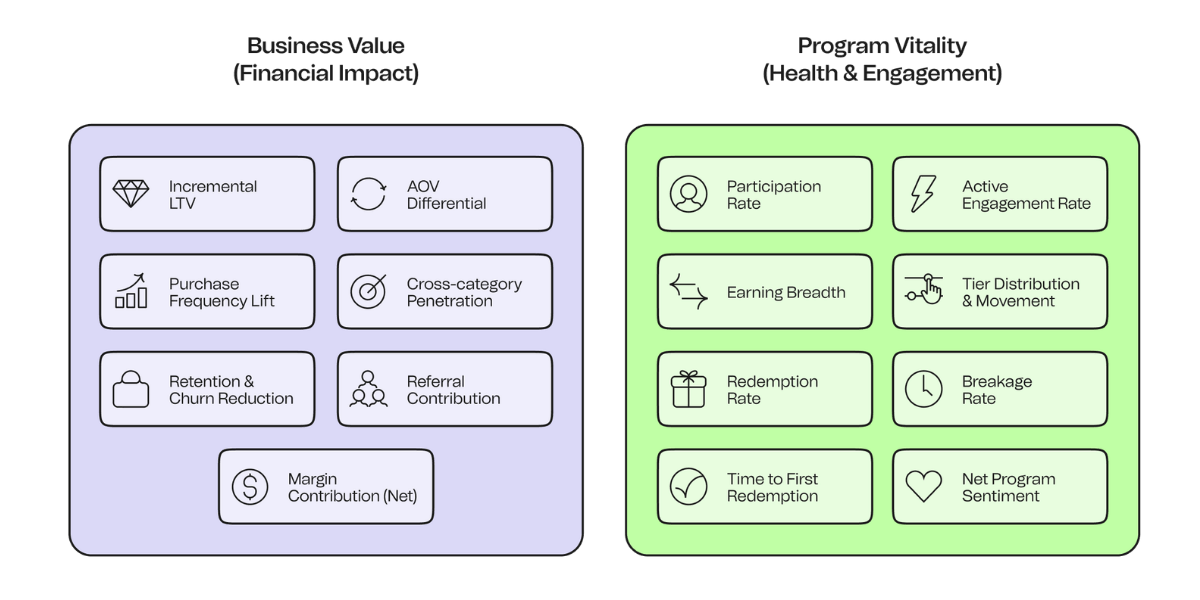
When a marketing team changes its retention strategy from discounting to advocacy, it must also change the KPIs it reports to senior leadership. A common pitfall for brands is launching a modern, behavior-driven loyalty program but continuing to judge its success using legacy metrics.To accurately capture the value of the Loyalty Loop, operational reporting must evolve.
Leading CRM and e-commerce directors are utilizing comprehensive scorecards that balance program vitality with true business value. On the vitality side, they measure engagement frequency, the volume of user-generated content produced, and the percentage of active advocates versus passive members. On the business value side, the focus shifts to Share of Wallet, referral revenue, and long-term LTV growth. By elevating these metrics, marketing leaders can clearly demonstrate to the executive team how retention investments are directly offsetting acquisition costs.
The strategic imperative for 2026 and beyond
The urgency to shift strategies is compounding. With AI-driven search engines moving toward ‘zero-click’ experiences, organic acquisition is becoming harder, and paid acquisition is becoming a pure pay-to-play battleground. In this environment, your existing customer base is your most defensible asset.
Transitioning away from a traditional “earn and burn” setup requires a careful review of your current tech stack, data setup, and user experience. If you are looking for further insights on how to approach this, the Smart Loyalty Guide offers a breakdown of modern loyalty architectures along with practical case studies to download and additional insights from Scott Brinker. Retention will define the next phase of e-commerce, and having the right foundation in place is the first step.
This article is part of a winner’s prize at the E-commerce Germany Awards 2026. If you’d like to learn more about the awards, visit this website:
www.ecommercegermanyawards.com
***