Unified architecture vs. siloed tools: How to choose your WhatsApp marketing solution
Written by
Editorial TeamPublished on
Standalone WhatsApp tool or unified CRM? Discover which setup delivers better segmentation, customer journeys, attribution and e-commerce growth. (Ad)
WhatsApp has quickly evolved into one of the highest-engagement channels available to e-commerce marketers. In the European market, where email inboxes are crowded and SMS can occasionally feel intrusive, WhatsApp offers a direct, real-time connection to consumers, boasting average open rates near 98%.
For many brands, the initial temptation is to launch WhatsApp via a specialized, standalone point solution. It is quick, straightforward, and gets messages out the door.
However, as a brand’s digital maturity grows, managing WhatsApp in an isolated silo often creates operational friction. When your customer data lives in multiple disconnected systems, segmentation becomes shallow, marketing and customer support workflows break context, and tracking true incremental revenue becomes nearly impossible.
To build a sustainable conversational commerce strategy, e-commerce operators must understand the structural differences between a unified CRM ecosystem and a disconnected point solution.
| Want to see how a unified marketing stack fits into your specific business model? Book a live demo here to explore advanced omnichannel architectures. |
The limitations of the “Bolt-On” point solution
When WhatsApp is treated as a separate tool bolted onto your marketing stack, several core operational challenges typically emerge:
- Fragmented Customer Profiles: A standalone tool only understands the data it collects within its own ecosystem (e.g., WhatsApp clicks and replies). It remains blind to whether that same customer just opened a promotional newsletter, browsed a specific collection on your website, or opened a high-priority support ticket.
- Over-Saturating the Customer: Without a central orchestration layer, a customer might receive a shipping update via email, a seasonal discount text via SMS, and a product drop notice via WhatsApp all within the same two-hour window. This disjointed experience frequently triggers opt-outs.
- Blinded Attribution: Point solutions often claim credit for any purchase made after a message is delivered. Without cross-channel deduction, you may end up double-counting revenue across your email, SMS, and WhatsApp reports, distorting your true marketing ROI.
The Benefits of a Unified CRM and Lifecycle Approach
Transitioning WhatsApp from a standalone channel into a core component of your central Customer Data Platform (CDP) changes how your marketing, sales, and service teams interact with subscribers.
1. Real-Time, Behavior-Driven Segmentation
When WhatsApp shares a single data source with your e-commerce storefront, email tool, and loyalty programs, your targeting deepens significantly.
Instead of blasting your entire mobile list, a unified platform allows you to build dynamic, real-time segments, such as:
- High-value VIP customers who have spent over €200 in the last 90 days but haven’t opened an email in the last 3 weeks.
- Shoppers who viewed a specific product variant three times on your store, explicitly opted into WhatsApp updates, and haven’t purchased yet.
2. Frictionless Multi-Channel Flow Orchestration
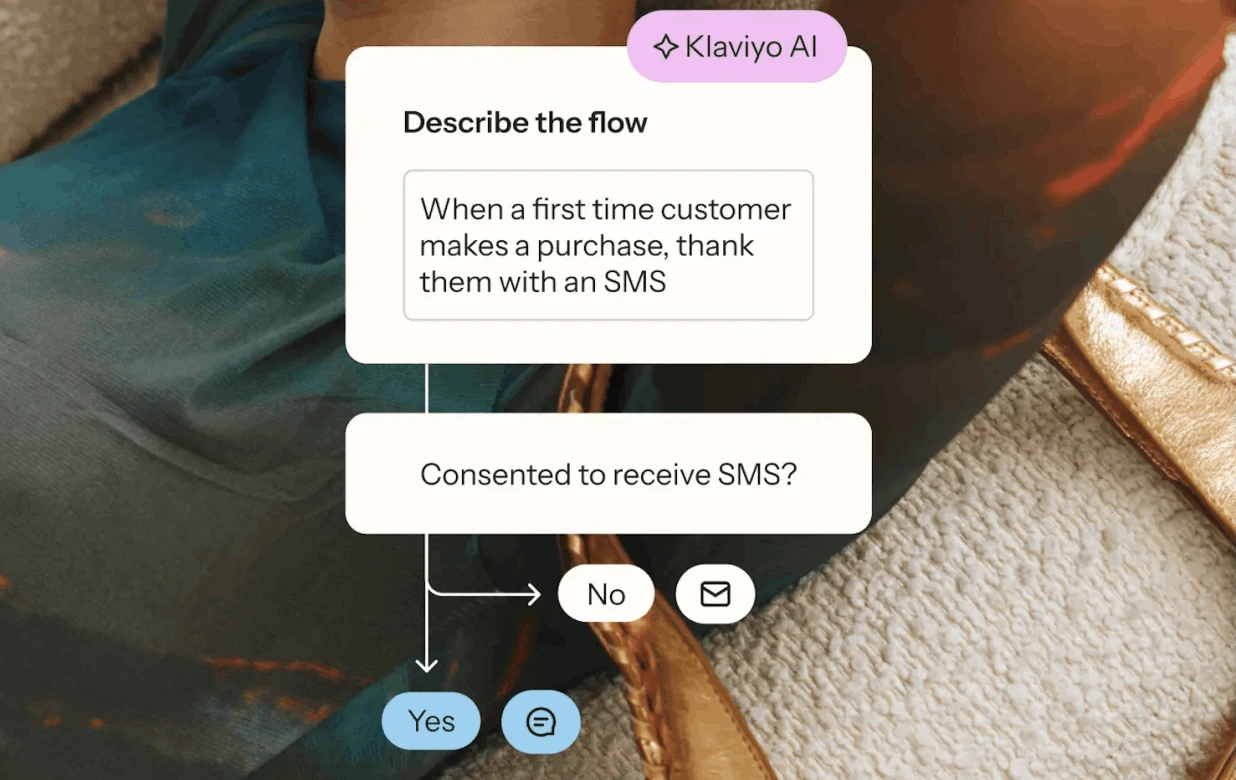
A unified stack allows you to build comprehensive lifecycle flows where email, SMS, and WhatsApp work in tandem rather than in competition.
For example, an abandoned cart sequence can be programmed with cross-channel logic:
- Hour 1: Send a personalized email featuring dynamic product recommendations and customer reviews.
- Hour 24 (If email remains unopened): Trigger a mobile-first WhatsApp nudge containing a rich-media image of the abandoned item and a quick-reply “Complete Checkout” button.
This approach preserves marketing budget by reserving paid WhatsApp messages only for high-intent moments where a cheaper channel fell through.
3. Bridging Marketing and Customer Service
Because WhatsApp is fundamentally a two-way conversational medium, promotional messages frequently turn into customer service inquiries. If a customer replies to a discount offer with a question about sizing or delivery times, a standalone marketing tool will often drop the ball.
Within a unified architecture, marketing campaigns and service workflows live under one roof. If a customer replies to an automated flow, the conversation can be instantly routed to your centralized helpdesk, giving live agents the full customer profile—including past order history and email engagement—needed to resolve the inquiry and secure the sale.
4. Clean Compliance and Meta Integration
Operating internationally means adhering to strict regional privacy regulations, including Europe’s GDPR. A unified platform consolidates consent management, ensuring that when a customer opts out of a specific channel, their profile is instantly updated across the entire ecosystem. Furthermore, integrating directly with Meta’s Business API ensures that promotional message templates are auto-approved swiftly and securely.
A simple decision framework
A point solution may be enough when WhatsApp is used for occasional campaigns, the subscriber base is still small, and the team does not need advanced cross-channel orchestration yet.
A unified architecture becomes more valuable when the brand already runs email, SMS, loyalty, paid campaigns, and customer service workflows at the same time. At that stage, the main challenge is not sending a WhatsApp message. The challenge is knowing who should receive it, when they should receive it, what other messages they have already seen, and how the result should be attributed.
| Store situation | Better fit |
| Occasional WhatsApp campaigns | Point solution may be enough |
| Email, SMS, WhatsApp, and support run together | Unified platform |
| Small list and simple catalogue | Lightweight setup |
| Advanced segmentation and attribution needed | Unified CRM/CDP approach |
Selecting the Right Framework for Your Store
If your online store only sends occasional broadcast messages and has a minimal product catalog, a basic point solution may fulfill your immediate needs.
However, if your goal is to scale personalized customer journeys, reduce cart abandonment through multi-channel logic, and manage marketing and support from a single continuous thread, a unified CRM framework is the more robust approach. Centralizing your data ensures that every message sent is timely, relevant, and accurate.
| Ready to audit your current marketing stack and optimize your messaging strategy? Request a demo to see how unifying your customer data can drive faster growth and stronger customer retention. |