Best PIM software for DACH e-commerce
Compare the best PIM software for DACH e-commerce. Find product information management tools for complex product data, multilingual catalogs, supplier workflows and marketplace sales.
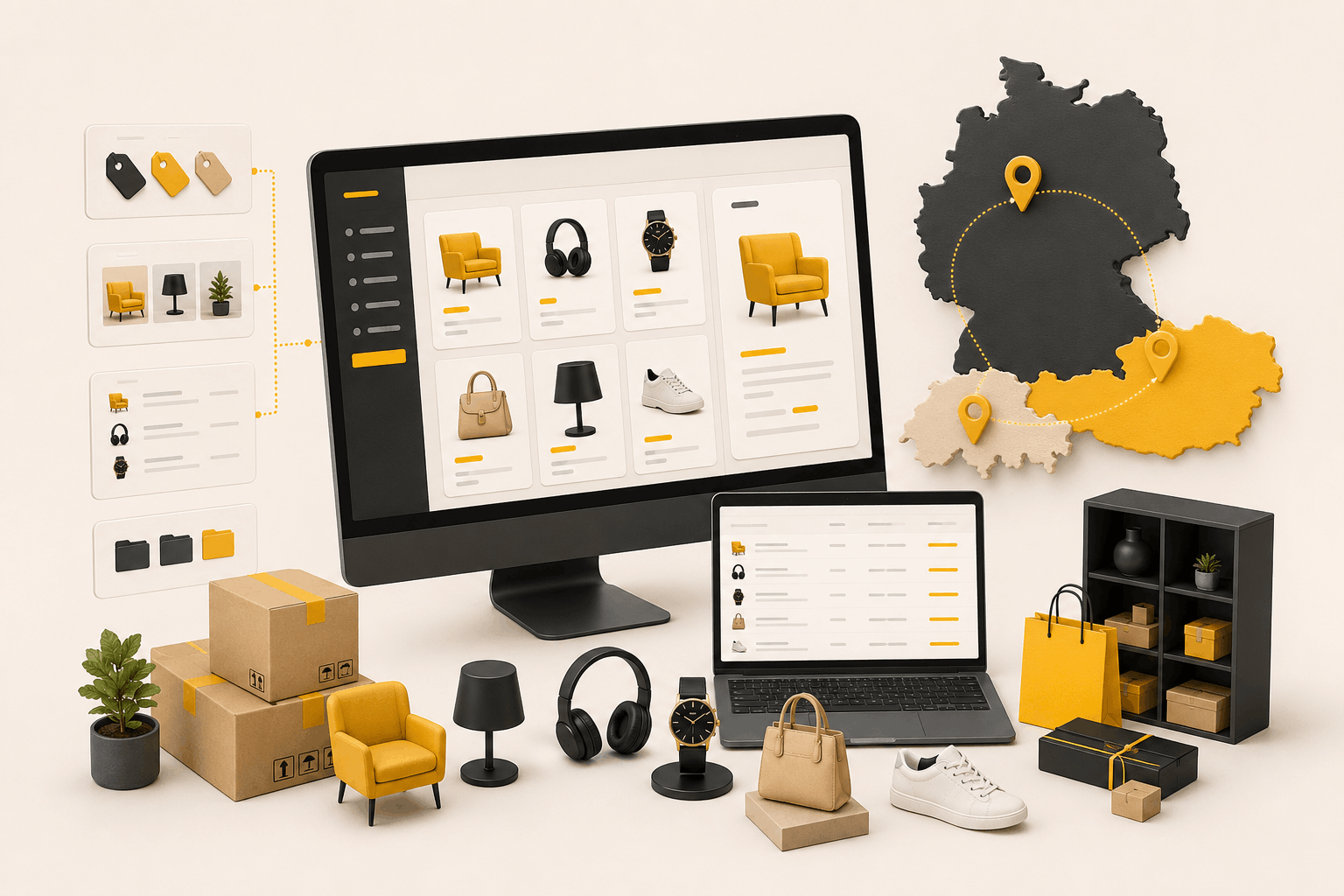
A growing e-commerce business can survive on spreadsheets for longer than it should. Once product data comes from suppliers, ERP exports, shared folders and several sales channels, the real issue is no longer content volume. It is control.
The right PIM software gives teams one place to manage product information, enrich listings and publish consistent product content across channels.
You’ll learn
- Which PIM software fits different DACH e-commerce setups
- What to check before choosing a PIM system
- Why product data management matters in Germany, Austria and Switzerland
- How to implement a PIM without creating another data problem
Best PIM software for DACH e-commerce
The best PIM software depends on more than SKU count. A fashion retailer with thousands of variants has different needs from a B2B distributor with technical specifications, manufacturer files and several reseller portals. Some companies need an open-source PIM platform with custom workflows. Others need a practical way to leave spreadsheet-based product management behind.
The tools below cover different PIM use cases. Some are full product information management systems. Others focus more heavily on product experience, product syndication or marketplace distribution.
Pimcore: best open-source PIM software for complex commerce ecosystems
Pimcore is one of the strongest options for companies that view product information management as part of a broader data architecture. Its platform combines PIM, master data management, DAM and digital experience capabilities. That mix can work well for retailers, manufacturers and distributors with complex product structures or several connected systems.

Pimcore is not the simplest option for a small ecommerce business that wants to upload a spreadsheet, add product descriptions and publish a limited catalog next week. It is better suited to companies with technical capacity, an implementation partner or internal teams that can shape the PIM solution around their own operating model.
The platform works especially well when product data needs to connect with ERP records, supplier portals, B2B commerce environments or custom storefronts. It can also support complex relationships between products, variants, accessories, documentation and digital assets. For example, a manufacturer may need to connect one product with replacement parts, compatibility information, certificates and downloadable PDFs. A basic content management setup is unlikely to handle that cleanly.
Pimcore is often described as an open-source PIM. The more useful distinction is flexibility. Businesses can adapt the product information management system to their own data model instead of forcing a complex product catalog into a rigid template. That creates more work during implementation, but it may be worth it for companies with unusual requirements.
Choose Pimcore when flexibility, integration depth and advanced PIM capabilities matter more than a quick setup.
novomind iPIM: best PIM solution for German retail and supplier-heavy catalogs

novomind iPIM is one of the most relevant options for German retail, wholesale and B2B environments. It is built for digital product experience management and product-related master data management, with a strong focus on large catalog operations.
The tool is particularly relevant for businesses that receive product information from a wide network of suppliers. One manufacturer may send a clean spreadsheet with complete attributes. Another may send PDFs, inconsistent Excel files or incomplete product specifications. A PIM system becomes valuable when teams need to standardize that incoming data before it reaches the ecommerce platform, reseller portal or printed catalog.
novomind iPIM is positioned for large-scale scenarios. Its case studies include catalog environments with more than one million product records and hundreds of suppliers. That makes it a better fit for retailers, industrial distributors, building-material sellers, furniture groups and electronics businesses than for a small DTC brand with a limited assortment.
It can also make sense for companies that want a management system with strong DACH relevance. Local implementation expertise matters when an organization already runs German enterprise systems, complex procurement workflows or several regional sales channels.
Choose novomind iPIM when supplier onboarding, complex product data and enterprise catalog management are the main priorities.
Akeneo: best product information management software for growing commerce teams
Akeneo is a practical choice for e-commerce teams that need to move away from manual enrichment without starting with a large enterprise transformation project. Its core strength is product information management for teams that need more structured product content, stronger data quality and clearer publishing workflows.
The platform fits businesses where marketing, merchandising and ecommerce teams all contribute to the same product catalog. Instead of editing product descriptions, attributes, translations and media references across separate files, teams can use a PIM to work from a central product information layer.
Akeneo is not primarily a replacement for ERP or master data management. It sits between source systems and customer-facing channels. ERP may remain the source for stock, supplier records and pricing logic. Akeneo can help enrich the customer-facing side: product details, category data, descriptions, technical attributes, translations and channel-ready listings.
For DACH e-commerce teams, Akeneo can be a good fit when the immediate problem is inconsistent product information across webshops, marketplaces and country-specific stores. It may also suit businesses that need to improve product content workflows without building a heavily customized PIM platform.
Choose Akeneo when your team needs better enrichment processes, clearer data ownership and a more manageable route away from spreadsheets.
Centric PXM: best PIM platform for omnichannel product experience management
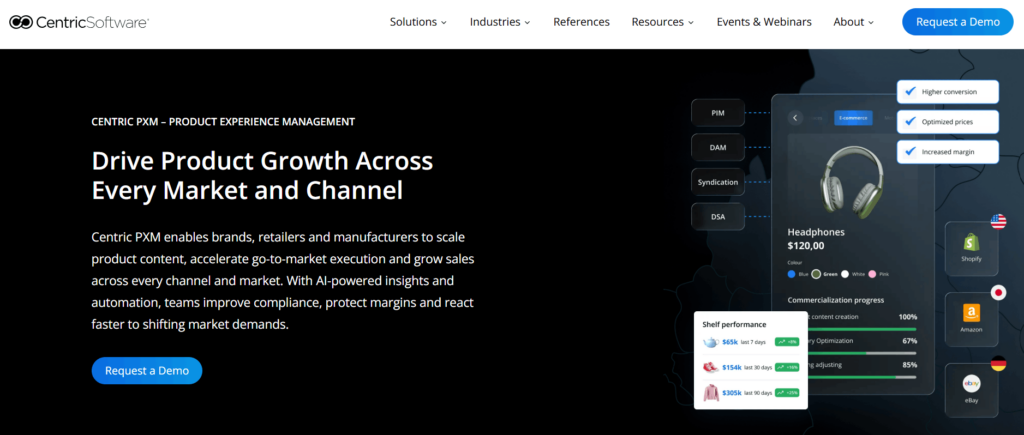
Centric PXM is designed for companies that need more than a central product catalog. The platform combines PIM, DAM, content syndication and digital shelf capabilities. It can fit brands and retailers that sell through owned e-commerce sites, marketplaces, retail partners and distributor networks.
This distinction matters because some businesses already have fairly organized product data. Their bigger issue is how that information appears across channels. A product may have the right core attributes in the ERP, but still need different images, product descriptions, localization, compliance details or retailer-specific fields before publication.
Centric PXM can support those workflows. It is particularly relevant for categories where product content carries real commercial weight, such as fashion, beauty, consumer electronics, food and beverage or home goods. These businesses often need to manage images, certifications, ingredient lists, material details, technical specifications and local content rules at the same time.
The platform is likely to be more than a smaller ecommerce business needs. It is better suited to larger organizations that need product experience management across brands, countries and commercial partners.
Choose Centric PXM when PIM and DAM need to work closely together and when product content has to perform across a complex omnichannel environment.
inriver PIM: best for content-rich product experience workflows
inriver PIM is a good option for companies that see product information as part of a wider customer experience. It can work well for businesses where product storytelling, enrichment workflows and channel-specific content are as important as technical attributes.
This may include brands with products that need comparison-friendly information, compatibility data, material details, certificates or detailed use cases. In those situations, a product catalog is not simply a database. It is a working system for marketing, ecommerce, sales teams and partners.
inriver PIM can support structured product relationships and content workflows across several channels. A manufacturer might use the system to connect product families, variants, accessories and documentation. A retailer may use it to prepare product listings for a webshop, a marketplace, a reseller portal and a sales enablement environment.
It is less likely to be the first PIM solution for a very small store with one sales channel. It is more relevant for growing or enterprise businesses that need product information management software to support a broader content operation.
Choose inriver when product experience, content governance and multi-channel product information are central to the business model.
Productsup: best for product data distribution, feeds and marketplace operations
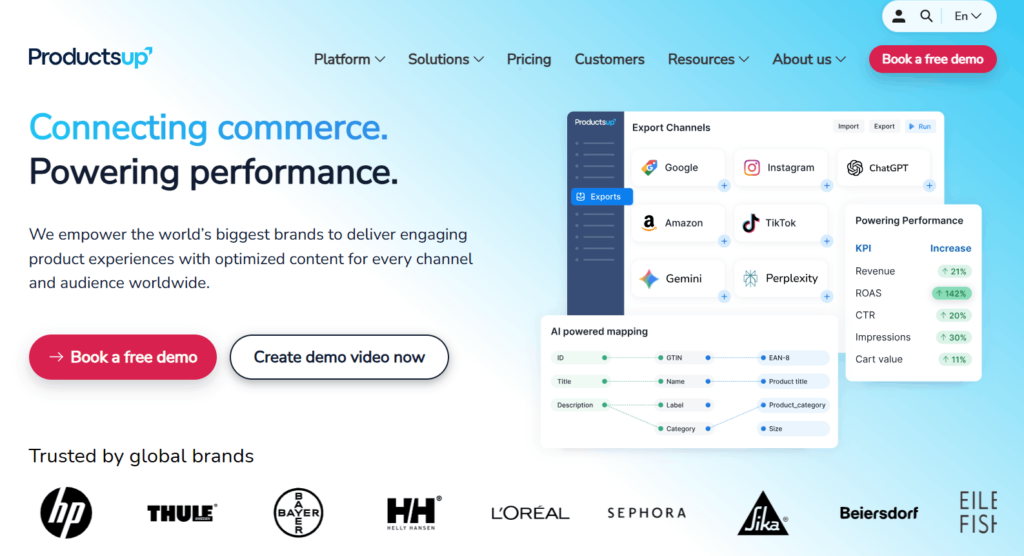
Productsup deserves a place in this comparison, but it comes with an important caveat. It may complement a PIM rather than replace one.
Its core role is product data distribution. Productsup helps companies optimize and syndicate product content across marketplaces, advertising channels, retailer networks and other digital commerce destinations. This can be particularly useful when product data exists internally but does not translate cleanly into external channel requirements.
A retailer may have complete product info in its PIM system but still struggle with feed errors, category mismatches, missing attributes or inconsistent titles on marketplace listings. Productsup can help transform and distribute that information for the channels where products appear.
This makes the platform especially relevant for businesses with marketplace-heavy strategies. A company selling through Amazon, Otto, Kaufland, Zalando, Google Shopping and several specialist marketplaces may need a separate layer for channel activation. That need can exist even when the company already uses a strong PIM platform.
Productsup is best described as a product-to-consumer data distribution platform. It is not a direct replacement for every product information management system. It is a strong option when the biggest challenge is getting product data from internal sources into external channels without endless manual adaptation.
Choose Productsup when marketplace operations, feed management and channel-specific product distribution are more urgent than central catalog management.
Salsify: best for brands selling through retailer networks

Salsify is designed for brands that sell through large retailer and distributor ecosystems. Its strength lies in product content management, retailer collaboration and digital shelf execution.
This is a different use case from a DTC brand that sells mainly through its own ecommerce platform. A consumer goods manufacturer may have to prepare product information for many retail partners, each with different templates, product requirements and publishing rules. In that environment, a standard product catalog is not enough.
Salsify can help teams manage product content for retailer networks, distributor portals and online marketplaces. It is particularly relevant for food brands, household goods suppliers, beauty companies, electronics manufacturers and other businesses that do not control every customer-facing sales channel.
The platform can also help product, marketing and sales teams work from more consistent product information. This matters when the same product appears across different retailer sites with different titles, images or specifications. The commercial impact can be significant, especially in categories where customers compare similar products quickly.
Choose Salsify when the product catalog needs to support retailer collaboration, digital shelf performance and large-scale content syndication.
Plytix: best PIM software for smaller e-commerce teams

Plytix is a lighter PIM option for smaller e-commerce teams that have outgrown spreadsheets but do not need a large enterprise system. It combines product information management with asset handling and collaboration features, which can help marketing and ecommerce teams work from the same product source.
The platform is a sensible choice for DTC brands, smaller wholesalers and growing retailers. These companies may need to manage product data, images, descriptions, variants and channel-ready exports, but they may not need an advanced PIM architecture or a full master data management project.
Plytix is likely to be easier to adopt than a highly customizable enterprise PIM. That can be useful for teams that want to improve catalog management without a long implementation cycle. It can also help companies create more consistent product content across Shopify stores, marketplaces and sales materials.
There are limits. A business with millions of records, deep ERP dependencies or unusual data relationships may outgrow a lighter tool. In that case, a more flexible PIM solution could be the better fit.
Choose Plytix when your ecommerce business needs a practical PIM system for growing catalogs, but does not need heavy customization or enterprise-grade data governance.
BLUESTONE PIM: BEST FOR AGENT-DRIVEN PRODUCT DATA OPERATIONS
Bluestone PIM is a practical choice for companies where product data work has outgrown the number of people available to do it. Its core strength is automation, with AI agents that take on supplier onboarding, enrichment and validation as continuous work.
The platform is aimed at wholesalers, distributors and retailers with supplier-heavy catalogs. Much of the daily work in these businesses involves reading, sorting and cleaning incoming supplier files. Bluestone PIM is positioned to shorten that step from weeks to hours.
Two characteristics may matter for DACH buyers. The platform is model-neutral, so a business can run different AI providers and switch later. That can help where procurement or data residency rules limit the choice. It also collects structured product data for the EU Digital Product Passport under ESPR.
There is no open-source edition, and the German-language partner network is smaller than that of the established DACH vendors. The agent-first approach also assumes a team willing to change how product data work is organized, not only which tool it happens in.
Choose Bluestone PIM when supplier onboarding is the main bottleneck and when EU compliance reporting is becoming a requirement.
PIM software comparison table
| Tool | Best for | DACH relevance | Open-source option | Strongest use case | Implementation effort |
| Pimcore | Complex enterprise ecosystems | Strong | Yes | Flexible PIM, MDM, DAM and custom commerce setups | High |
| novomind iPIM | German retail, wholesale and B2B | Very strong | No | Supplier catalogs, product-related MDM and enterprise retail | High |
| Akeneo | Growing commerce teams | Strong | Community edition available | Product enrichment and channel consistency | Medium |
| Centric PXM | Omnichannel brands and retailers | Strong | No | PIM, DAM, syndication and digital shelf workflows | High |
| inriver PIM | Content-rich product experiences | Strong | No | Product storytelling and complex catalog workflows | Medium-high |
| Productsup | Marketplace and feed operations | Strong | No | Product data distribution and channel activation | Medium |
| Salsify | Brands selling through retailers | Strong | No | Digital shelf and retailer collaboration | Medium-high |
| Plytix | Smaller e-commerce teams | Moderate | No | Product content and asset management for growing catalogs | Low-medium |
Why PIM and e-commerce are closely linked in DACH
DACH e-commerce is not a single-storefront market. Retailers and brands often manage owned webshops, marketplaces, reseller portals, comparison engines and country-specific storefronts at the same time. Every channel has its own requirements for titles, images, category mapping, technical attributes and publishing formats.
The pressure is particularly visible in Germany. Online marketplaces accounted for 54.4% of online retail sales in the third quarter of 2025. This means product listings often need to work across owned stores, Amazon, Otto, Kaufland, Zalando or specialist platforms without losing important product details.
PIM adoption reflects that complexity. In a DACH-focused study of 113 companies, 50.5% already used a PIM system. Another 19.4% were evaluating or implementing one, while 26.6% had not yet adopted PIM. The research focused mainly on companies in Switzerland, with additional respondents from Germany and Austria.
The same study showed why companies invest in product information management. Between 75% and 85% of respondents rated benefits such as better product data efficiency, more standardized product information, higher data quality, easier onboarding and a central product repository as important or very important.
Cloud adoption also matters. More than half of the surveyed companies preferred cloud or SaaS deployment for PIM, while roughly one-third remained open to self-hosted or on-premise setups. This split is useful for DACH businesses deciding between a flexible open-source PIM software model and a faster SaaS implementation.
Germany, Austria and Switzerland add another level of complexity. German-language product content can work across more than one country, but pricing, delivery details, legal copy, product availability and assortment rules may still differ. Switzerland can also require French, Italian and English content depending on the target region.
PIM and e-commerce work best together when the PIM system acts as a controlled product information layer between supplier files, ERP records and customer-facing channels. It does not replace every other tool. It gives teams a clearer way to manage product data without rebuilding the same listing for every destination.
Signs your e-commerce business needs a PIM
You need a product information management system because product data lives everywhere
A spreadsheet is rarely the real problem. The bigger issue starts when product information appears across several spreadsheets, supplier files, ERP exports, shared folders and marketplace dashboards. Teams lose track of the current version, and every small product change turns into a manual update across several systems.
A product information management system creates a clearer structure. It gives teams one place to store, enrich and approve product data before it reaches a webshop or sales channel.
Your ecommerce business cannot maintain a consistent product catalog across channels
A product may have one title in the webshop, another on a marketplace and incomplete specifications in a reseller portal. That creates inconsistent product information, weakens customer trust and makes comparison harder.
A PIM can help teams maintain a more consistent product catalog. Instead of rewriting the same product info for every channel, they can create one validated source and adapt it for specific destinations.
You need to use a PIM when new products take too long to launch
New products often get delayed because teams have to collect product details from several people. Marketing waits for descriptions. Ecommerce waits for images. Legal needs to review claims. Product teams wait for technical specifications.
A PIM solution creates a better workflow for product launches. Teams can set required attributes, assign ownership and track which product records are ready for publication.
Your team is requiring a PIM because supplier files create more work than value
Supplier files often arrive in different formats and at different levels of quality. One may contain all necessary attributes. Another may lack images, product specifications or category information. Someone then has to clean, map and enrich that data manually.
A PIM platform can support validation rules, attribute mapping and structured onboarding. This reduces repetitive work and gives teams a better way to manage product data before it reaches customer-facing channels.
Complex product structures need more than basic content management
Products with variants, bundles, accessories, technical requirements or compatibility rules need stronger data relationships. A basic content management system may work for static website pages, but it is not built to handle complex product structures at scale.
Advanced PIM capabilities can help companies connect parent products, child variants, accessories, documents and related items. This is especially useful for B2B commerce, furniture, electronics, industrial products and configurable goods.
You need a PIM solution for multilingual product information
A business that sells in Germany, Austria, Switzerland or wider European markets may need several versions of the same product content. Translation is only part of the task. Teams may also need country-specific product information, legal text, delivery messaging or assortment rules.
A PIM can help businesses maintain localized product descriptions without duplicating the entire catalog for each market.
Your current management system does not support clear ownership
Product information may involve merchandising, marketing, legal, procurement and ecommerce teams. Without clear ownership, product changes sit in email threads, comments and disconnected tools.
A PIM system gives each team a clearer role. One person can own technical attributes. Another can manage product content. A third can approve compliance information. This avoids situations where nobody knows who should update a product record.
Product information management system vs ERP, DAM and CRM
A product information management system sits between internal source systems and customer-facing channels. It should not replace every other tool in the stack.
| System | Main role | What it should not replace |
| PIM | Product data, product content, enrichment, catalog management and distribution | Financial operations, stock control or customer data |
| ERP | Orders, inventory, suppliers, purchasing and finance | Rich product descriptions, images and channel-specific content |
| DAM | Images, videos, PDFs and creative assets | Structured product attributes and variant logic |
| CMS | Website pages and editorial content | Product data governance |
| CRM | Customer relationship management and sales records | Product catalog ownership |
| MDM | Wider master data management across the business | Day-to-day product content enrichment |
The distinction matters when choosing a PIM. A company may already have strong ERP and customer relationship management tools, but still need dedicated product information management software to create accurate product listings.
PIM and DAM can work closely together, but they serve different roles. DAM focuses on assets such as product images, videos, manuals and campaign files. PIM focuses on structured product information such as dimensions, ingredients, materials, compatibility, product descriptions and publishing rules.
Choosing a PIM for your e-commerce business
Choosing a PIM should start with your product catalog, not a vendor demo. The right PIM platform depends on how product data enters the business, who enriches it, where it needs to go and how much technical ownership the company can support.
Choose open-source PIM software when flexibility matters more than speed
Open-source PIM software can work well for businesses with unusual data structures, custom commerce architecture or strong development resources. It gives teams more control over integrations, data models and workflows.
The trade-off is implementation effort. An open-source PIM often requires more technical planning, stronger governance and clearer internal ownership. It is not always the fastest path for a smaller ecommerce business.
Choose a SaaS PIM platform when faster adoption matters more
A SaaS PIM platform can be a better fit when a company needs to centralize product content quickly and does not want to manage infrastructure or major custom development.
This model can suit growing teams that need product data management, workflow controls and channel exports without a long technical project. The key question is whether the vendor offers enough flexibility for future growth.
Choose a PIM solution with stronger supplier workflows when onboarding is the issue
Businesses with many suppliers should pay close attention to import rules, validation, attribute mapping and data cleanup. The best PIM is not always the one with the longest feature list. It is the one that reduces the most repetitive work around incoming catalog data.
This is where a product information management system can create measurable value. Better supplier onboarding helps teams launch new products faster and prevents incomplete product information from reaching sales channels.
Choose a PIM and ecommerce setup around your sales channels
A company selling through one Shopify store needs different PIM capabilities from a manufacturer publishing to reseller portals, marketplaces and several national sites.
Before choosing a PIM, list every place where product data needs to appear. Include webshops, marketplaces, retail partners, printed catalogs, sales tools, customer portals and product feeds. This gives a more realistic picture of the integrations and publishing rules you need.
Look for advanced PIM capabilities without paying for complexity you will not use
A basic product catalog may be enough today. Later, the business may need supplier portals, digital asset management, product relationship management, marketplace syndication or stronger product experience workflows.
The point is not to buy the most advanced PIM on the market. The point is to choose a system that can grow with the business without forcing a major replatforming too soon.
Implementing your PIM without creating a data mess
Start implementing a PIM system with a product data audit
Before implementing your PIM, map every existing product data source. Include supplier catalogs, ERP fields, spreadsheets, product images, PDFs, marketplace exports and manually maintained lists.
The goal is to find duplication, missing attributes, outdated information and unclear ownership. A PIM implementation is easier when teams understand the current state of their product data before migration begins.
Define ownership before implementing your PIM
A PIM implementation can fail when nobody owns the data. Decide who is responsible for technical specifications, marketing copy, compliance information, media assets, translations and approval workflows.
Product data management is rarely the job of one person. It needs shared rules across teams. Clear ownership helps prevent incomplete records, conflicting edits and products that remain stuck in draft status.
Clean product data before migration
Do not move every spreadsheet problem into a new PIM platform. Standardize naming conventions, units, category structures and attribute definitions first.
For example, a catalog may use “blue”, “navy” and “dark blue” as separate color values without a clear rule. It may use centimeters in one file and millimeters in another. These issues need attention before the migration, not after.
Plan connecting your PIM in stages
Connecting your PIM to every system at once can create unnecessary complexity. Start with the most important ecommerce platform, ERP connection or sales channel. Once the first workflow works, expand to marketplaces, reseller portals and other markets.
A phased approach gives teams time to test product publishing rules, resolve integration issues and improve data quality without risking the whole product catalog.
Measure the benefits of PIM after launch
The benefits of PIM should be visible in day-to-day operations. Track product completeness, publishing speed, marketplace errors, missing attributes, manual edits and time spent preparing new products.
These metrics help teams show that PIM is essential for their operating model rather than another management system with an impressive dashboard.
How to choose the right PIM: common mistakes to avoid
Choosing a PIM is not about finding the platform with the longest feature list. It is about finding a system that can turn scattered product data into a single source of truth, then help teams distribute enriched product information across the channels that matter.
Treating every PIM platform as the same
The PIM market includes lightweight ecommerce PIM software, enterprise product information management solutions and highly flexible tools built for custom data models. A modern PIM for a growing DTC brand may look very different from a powerful PIM used by a manufacturer with thousands of technical products.
Before comparing vendors, decide what your ecommerce business actually needs: faster enrichment, stronger supplier workflows, marketplace syndication or deeper master data management. That makes it easier to choose the right PIM instead of paying for capabilities your team will never use.
Buying a PIM before mapping product data problems
Many teams start with demos before they understand where their product data comes from or where it breaks. They compare features, but do not map supplier files, ERP exports, missing attributes, approval bottlenecks or product information that changes across sales channels.
The value of PIM appears when it solves a specific operational issue. It may help create an enriched product record before launch, standardize technical specifications or keep products across marketplaces and country-specific stores aligned. If the problem is unclear, even strong PIM software for ecommerce will feel like another system to maintain.
Assuming one tool should replace every system
A PIM can become the central product information layer, but it should not replace ERP, CRM, DAM or every content management workflow. Some vendors offer PIM alongside DAM, syndication or product experience features. Others offer a PIM that focuses mainly on enrichment and catalog management.
For example, Pimcore is an open-source PIM that can support a broader data architecture, while other product information management solutions may be easier to adopt for teams that need a narrower ecommerce workflow. The right choice depends on how much flexibility the business needs and how much technical ownership it can support.
Ignoring the channels where product information has to perform
A product listing may need to work in an owned store, marketplace, reseller portal, comparison engine and print catalog. That means a product catalog cannot be treated as static content.
Ask each vendor how its platform handles products across different channels, local markets and data formats. Check if it supports enriched product information, channel-specific fields, localized content and workflow approvals. A tool that offers PIM is only useful if it helps your team publish reliable product information where customers actually see it.
Key takeaways
- The best PIM software depends on catalog complexity, sales channels and internal technical capacity.
- DACH e-commerce teams should assess localization, Shopware or SAP integrations, supplier data workflows and marketplace support.
- A PIM system becomes valuable once product data spreads across several files, teams or channels.
- Open-source PIM options such as Pimcore suit complex setups, while lighter systems can work better for smaller teams.
- A successful PIM implementation starts with data ownership and data quality rules.
Conclusion
The best PIM software is not always the platform with the longest feature list. It is the one that fits how your product information enters the business, how teams enrich it and where it needs to go next.
For DACH e-commerce, that often means looking beyond a single webshop. Supplier files, multilingual content, marketplaces, ERP connections and regional requirements all shape the right decision. Start with your data problems, sales channels and internal ownership model. The right PIM solution should reduce operational friction instead of adding another layer of work.
FAQ
What is product information management?
Product information management is the process of centralizing, enriching and distributing product data across sales and marketing channels. A PIM system helps teams manage product descriptions, specifications, images, attributes and localized content from one place.
When should an ecommerce business use a PIM?
An ecommerce business should use a PIM when product data becomes difficult to manage in spreadsheets or across disconnected systems. Common signs include slow product launches, inconsistent listings, supplier data issues and growing marketplace activity.
Is a PIM platform the same as an ERP?
No. An ERP manages operational data such as stock, orders, supplier records and finance. A PIM platform focuses on customer-facing product information, enrichment workflows and product catalog quality.
What are the main benefits of PIM?
The benefits of PIM include faster product launches, better data quality, more consistent product information and fewer manual updates across channels. It can also help teams manage multilingual catalogs and supplier data more effectively.
Is Pimcore an open-source PIM software option?
Yes. Pimcore offers an open-source PIM software approach and can support PIM, DAM, MDM and broader data management workflows. It is usually a better fit for technically mature businesses than for very small teams that need a simple out-of-the-box catalog tool.
Can a PIM connect with Shopware, Shopify or SAP?
Many PIM providers offer APIs, connectors or implementation partners for Shopware, Shopify, SAP and other commerce platforms. The important question is how deeply product data, variants, media assets and publishing rules can sync between systems.
Does every company need a PIM?
No. A small business with a simple product catalog and one storefront may not need a dedicated PIM. The need grows when the company manages complex product data, several languages, many suppliers or multiple sales channels.