European Ecommerce Overview: Ukraine
Let’s talk Ukraine and e-commerce in 2026 — a story that’s equal parts resilience, speed, and creativity. We start with the big picture and then zoom into how people behave when they shop online.
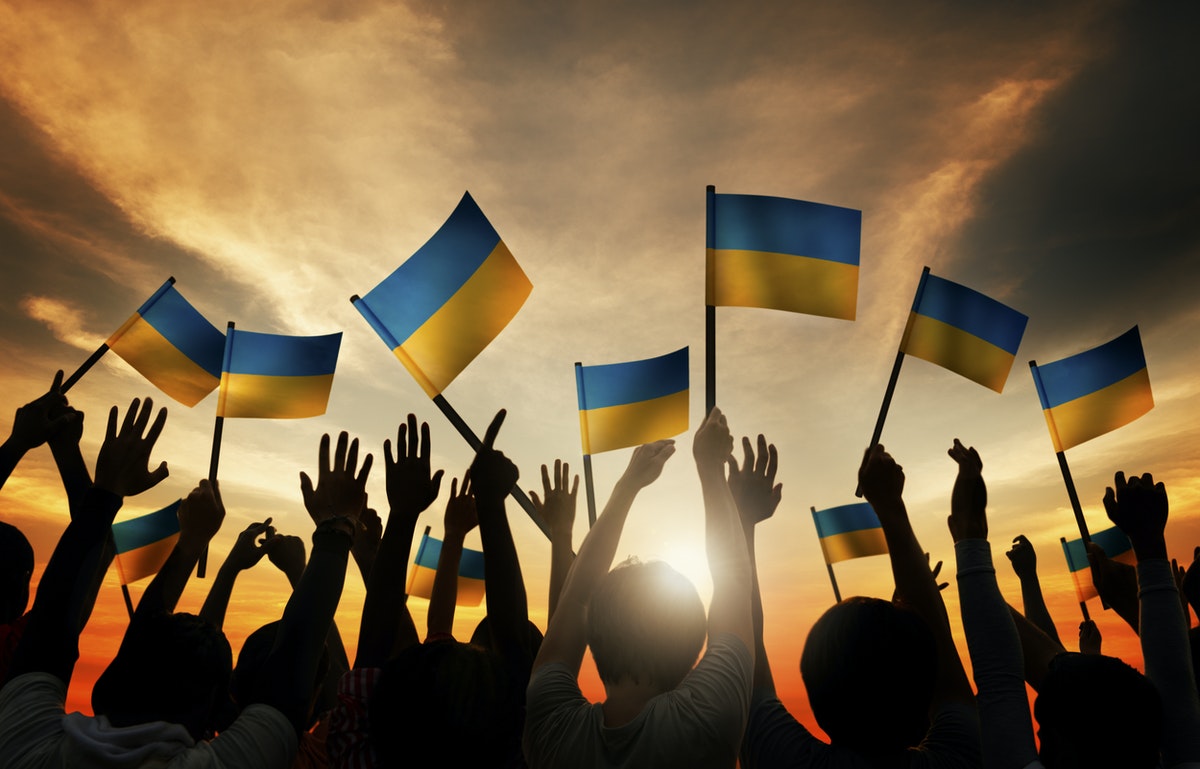
Ukraine is one of the post-Soviet Block countries. It borders Poland, Russia, Belarus, Slovakia, Hungary, Romania, and Moldova. It has access to The Black Sea and Azov Sea. And Ukrainian e-commerce is no longer “emerging” in the basic sense.
Online shopping is routine for millions of people, digital payments are normal, and delivery expectations are clear. Consumers know what good service looks like and switch fast when they do not get it. For brands, platforms, and sellers, Ukraine feels less experimental and more operational now. After all, the internet usage in Ukraine sits above 80% of the population, which places the country close to many Central and Eastern European markets.
That connectivity drives e-commerce usage directly. Online retail now plays a steady role in household spending, even when offline retail remains important. And in this text, you will find some information about the state of the e-commerce market in Ukraine. Let’s start with a short overview.
Ukrainian e-commerce overview
Ukrainian e-commerce continues to grow at a moderate but stable pace going into 2026. Top cities dominating the market include Kyiv, Lviv, and Odessa. According to industry research, total online retail turnover reached approximately UAH 256 billion in 2025, equal to roughly $7 billion USD, with year-on-year growth close to 7%. Moreover, ECDB research shows that online revenue for 2025 reached $4,862 and that the trajectory for future revenues is rising. That’s really promising.

This growth rate is slower than the sharp spikes seen earlier in the decade, but that is not a bad sign. It reflects a market that is settling into predictable demand cycles. E-commerce now accounts for around 10% of total retail sales in Ukraine. That share is lower than in Western Europe, which leaves space for further expansion.
Market structure is dominated by a few strong domestic platforms. Rozetka, Prom.ua, and Allo remain the most recognized names, especially in electronics, household goods, apparel, and cosmetics. They combine marketplace models with direct retail, which helps them control delivery quality and customer service.
International platforms also play a role in Ukrainian e-commerce, mainly for low-cost goods and wide product selection. AliExpress remains popular for accessories and electronics add-ons, while Amazon and European stores are used more selectively due to delivery costs and timelines. Ukrainian consumers often check local options first, especially when delivery speed matters.
Mobile commerce defines the market structure. More than 55% of e-commerce traffic in Ukraine now comes from smartphones, and mobile conversion rates continue to improve year over year.
This pushes sellers to optimize for mobile checkout, page speed, and in-app browsing. Desktop still matters for higher-value purchases, but discovery often starts on a phone. If mobile experience feels slow or confusing, users drop off quickly.
Product categories driving online sales are fairly consistent:
- Electronics,
- home goods,
- beauty products,
- fashion and apparel,
- and children’s items
generate the highest volumes. In 2025, the average online order value reached around UAH 1,320, with shoppers placing 17 to 18 orders per year on average.
Consumer behavior in Ukraine
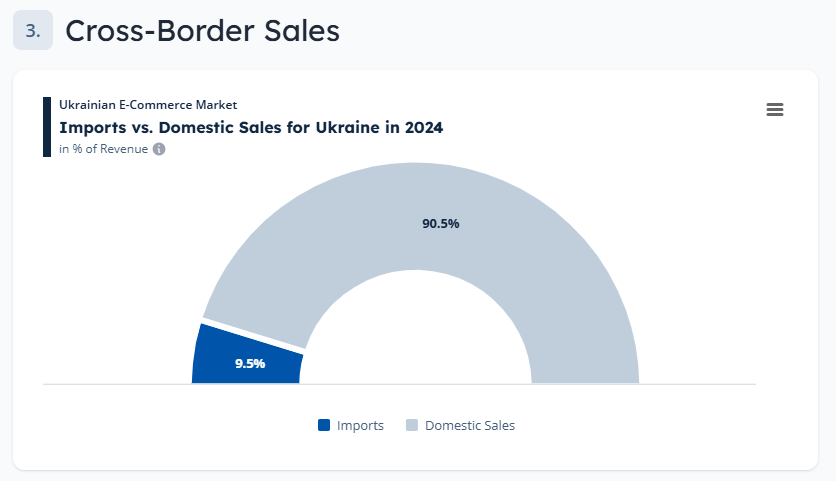
For Ukrainian consumers, the price is the main determinant. They are also curious about products from across the western border, which are perceived as better quality and not easily available, especially in the country’s interior. In 2024, imports accounted for 9.5%, so we can see that domestic sales are still a preferable choice for Ukrainians.
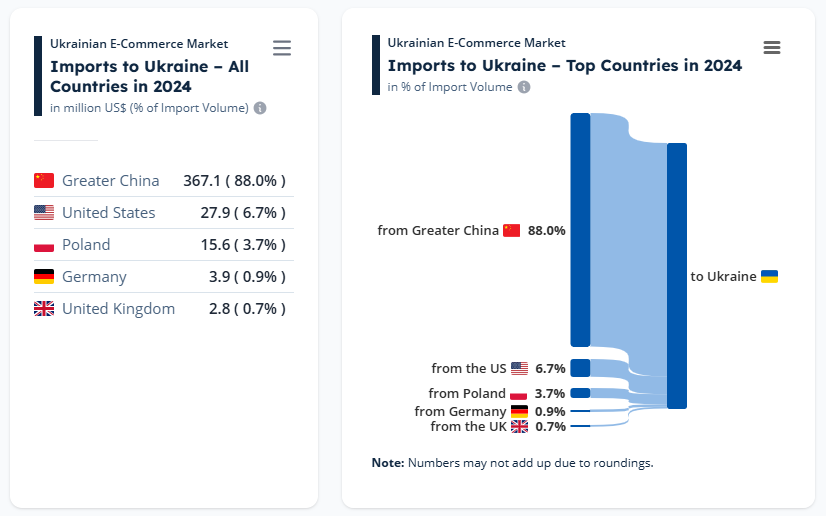
But when it comes to imports, Ukraine’s main trading partners are China, the United States, Poland, Germany, and the United Kingdom.
Ukrainian consumers have relatively little confidence in sellers, which shapes their behavior and habits. This is why they are not very convinced about online shopping. However, only about 4% of people aged 18–54 have never purchased anything online, which places Ukraine among digitally mature consumer markets. Among the rest, 16% shop online weekly and 43% at least once a month. This means weekly browsing and buying isn’t unusual — especially among younger adults and city dwellers.
Shopping frequency is quite high for this part of Europe. Around 16% of consumers shop online weekly, while over 40% shop at least once per month. This pattern holds strongest in urban areas, but adoption continues to rise in smaller cities as logistics coverage improves.
Age matters, but not dramatically. The most active group sits between 25 and 34 years old, though usage among consumers aged 35–44 continues to grow. Younger shoppers tend to browse via social media and mobile apps, while older users often rely on familiar marketplaces and search engines.
Price sensitivity remains a defining trait. Ukrainian consumers compare options carefully and expect promotions to be real, not inflated discounts. Flash sales, bundle pricing, and loyalty bonuses influence decisions strongly. Many shoppers check two or three platforms before completing a purchase, even for everyday items.
Trust plays a central role in conversion. Buyers rely heavily on ratings, written reviews, seller history, and delivery transparency. Marketplaces that clearly show seller feedback perform better than standalone stores without visible social proof. This behavior explains why large platforms still dominate product discovery. Many users check marketplaces or brand apps casually, without an immediate purchase goal. So, sellers who maintain visibility through remarketing, app notifications, or social content stay top-of-mind.
Ukrainian payment methods
Cards and digital wallets sit at the center of checkout flows, especially on mobile. You still see cash on delivery in some categories and regions, but the default expectation is clear: pay online and get instant confirmation.
Card infrastructure is wide. Ukraine has hundreds of thousands of POS-enabled locations, which supports strong everyday card habits that spill into online shopping too. One market analytics summary notes 518,400 retail locations equipped with POS terminals as of late 2024, which is a solid signal of card maturity in daily life.
Mobile wallets matter, since mobile shopping is normal. Apple Pay and Google Pay are widely used for in-store payments and online checkouts through tokenized card flows.
So a practical takeaway for stores is simple: if your checkout supports cards but not wallet buttons, you lose impatient mobile buyers. Local payment pages often list Apple Pay and Google Pay as baseline methods alongside Visa and Mastercard.
Bank-led ecosystems also shape payments. Ukraine has strong digital banking adoption and users trust app-based flows. Installment payments are common for higher-value goods like electronics. That matters for e-commerce conversion because customers often decide based on monthly cost, not full price. Many local payment setups highlight installment options through major banks, especially for consumer tech.
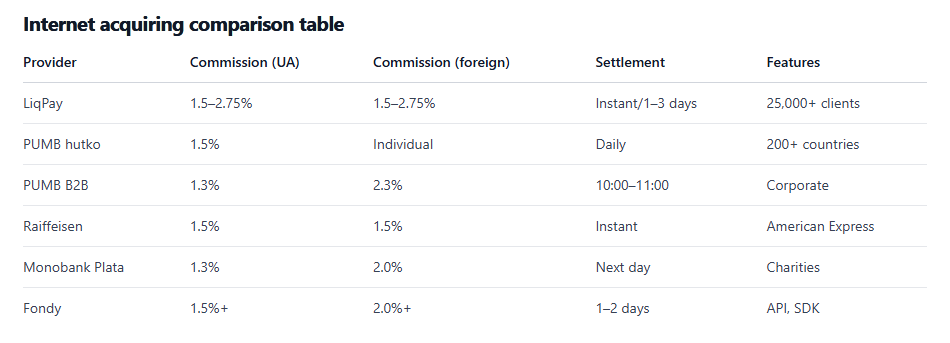
However, in Ukraine, traditional card acquiring usually costs merchants around 1.2%–2.75% per transaction, often with monthly fees of UAH 300–500, depending on the bank and setup. Internet acquiring for e-commerce sits at similar levels, most often 1.3%–1.5% for Ukrainian cards and up to 2.0%–2.75% for foreign cards, which directly eats into margins at scale. An alternative is QR payments via IBAN transfers, which come with 0% merchant commission and instant settlement, since they work as direct bank transfers rather than card transactions.
Social media in Ukraine
Social media is one of the biggest levers for discovery in Ukraine. Shoppers do not only “scroll for fun.” They use social platforms to track brands, spot deals, check comments, watch product demos and decide if a store feels legit.
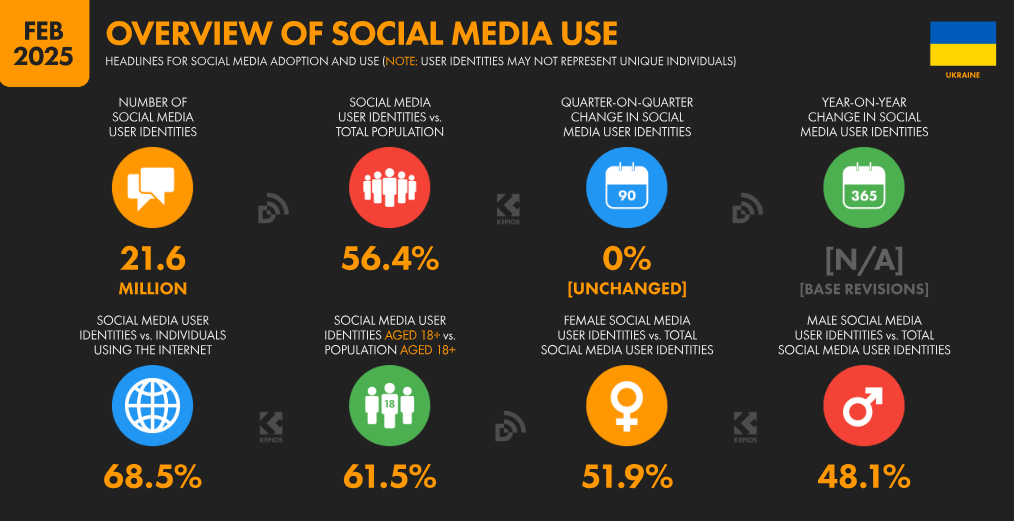
At the start of 2025, Ukraine had 21.6 million social media user identities, equal to 56.4% of the population. That number continues to shift as platforms change reporting methods, but it frames the scale of social influence on shopping behavior.
Going into 2026, Instagram remains a major channel for consumer categories like beauty, fashion, food products, local services and creator-led stores. DataReportal’s 2026 report shows Instagram ads reached 31.3% of the population. That reach is a strong proxy for how many people you can realistically target with paid social.
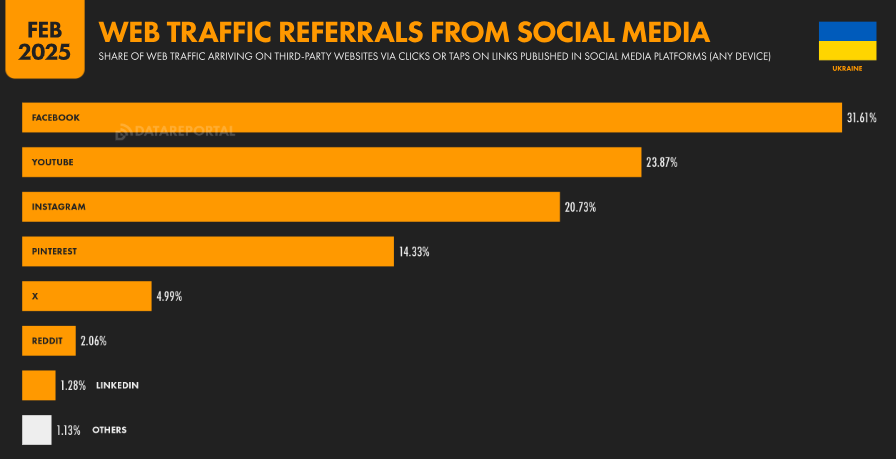
If you want a simple picture of where traffic comes from, for February 2025, they was led by Facebook (31.61%), then YouTube (23.87%) and Instagram (20.73%). This is referral share, not total usage, but it’s useful when you think about click-driven e-commerce funnels.
YouTube matters more than many sellers expect. It supports product education, reviews, unboxings and “how it works” content that reduces hesitation for higher-value orders. It also acts as a trust engine because comments and creator reputation shape purchase confidence.
TikTok is also a real commercial layer, especially for impulse-friendly categories. Sellers who do best there usually lean into quick demos, real people on camera and clear pricing. The buyers are fast, but they still check social proof before they pay. This pushes brands to keep a consistent presence across TikTok, Instagram and a store page that looks credible.
Another angle is social as customer support. Buyers ask questions in comments and DMs, not only by email. If your response time is slow, the buyer moves on. This is not about fancy brand voice. It is about being reachable and clear.
If you sell in Ukraine, social media is often where brand trust gets built first. Marketplaces still win on convenience, but social channels shape “which brand do I trust enough to try.”
Logistics in Ukraine
Logistics is the make-or-break layer for Ukrainian e-commerce in 2026. Shoppers expect fast delivery, predictable tracking and flexible pickup options. Home delivery matters, yet pickup points and parcel lockers often win because they fit real routines.
Nova Poshta is a key player in last-mile delivery. The company handled massive parcel volumes recently and keeps expanding its network. Ukrainian News reported that Nova Poshta delivered 480 million parcels and cargoes in 2024, which shows the scale of parcel-based commerce moving through one operator alone.
Parcel lockers have become a mainstream delivery method. Nova Post announced it had launched a network of over 28,600 parcel locker locations across Ukraine, calling it Europe’s largest parcel locker network inside a single country. It also reported 8,410 new devices installed in 2024, with many placed in residential complexes and shopping centers.
Network breadth is also visible in service point counts. A January 2026 update reported that by early January 2026 Nova Poshta’s network comprised more than 50,000 service points, including 15,900 branches and 34,200 parcel lockers. This is an important number because it explains why pickup-based delivery is so convenient for buyers.
And cross-border delivery is growing as more Ukrainian buyers look for products from the EU and global stores. The friction points are usually the same: delivery time, customs clarity and total landed cost. Stores that show delivery estimates and costs early get better conversion than stores that hide those details until late checkout steps.
Last words on Ukrainian e-commerce
Ukraine’s e-commerce market is built on three clear pillars: mobile-first shopping habits, social-led discovery and strong pickup-based logistics. That mix shapes what “good” looks like for buyers. They want transparent pricing, fast answers and a checkout that works on a phone without extra steps.
If you plan to enter Ukraine or scale there, think like a buyer first. Make mobile your default, build trust with clear policies and visible reviews, then pick logistics partners that match how Ukrainians actually receive parcels today.
We have hope that thanks to this overview, you have gained some valuable insights. If you are interested, you can find an article about other Eastern European countries like Lithuania.