Best subscription billing software: recurring billing platforms compared
Compare the best subscription billing software. Find billing platforms for recurring billing, usage-based pricing, subscription management and global payments.
Subscription billing gets complicated fast. A simple monthly plan is easy to launch. Things change once customers upgrade mid-cycle, add seats, consume credits, use more API calls or pay through different methods in different markets.
The best subscription billing software helps SaaS companies automate billing, manage subscription changes and keep recurring revenue predictable without turning every pricing update into an engineering project.
You’ll learn
- Which subscription billing software fits different SaaS billing models
- When to choose a billing platform, payment processor or Merchant of Record
- What to look for in subscription billing before your pricing becomes difficult to manage
- How recurring billing software handles upgrades, usage, invoices and failed payments
Subscription billing software: what it actually does
lmanages the commercial side of recurring products. It can create subscription plans, collect recurring payments, calculate proration, issue invoices, handle failed payments and support billing changes across the subscription lifecycle.
A subscription billing platform sits between your product, customer records, payment infrastructure and finance team. It can automate recurring billing, but it also gives teams more control over pricing models, subscription terms and billing logic.
This matters because SaaS billing rarely stays simple. A company may begin with one monthly plan, then add annual contracts, team-based pricing, usage-based billing, discounts, add-ons, free trials or enterprise agreements. Manual billing tasks become harder to manage as soon as those models overlap.
Best subscription billing software for SaaS
The best subscription management software depends on how you charge, where you sell and how much billing complexity your team can handle. Some tools give developers maximum control. Others reduce tax and compliance work. A few are built for high-volume subscription management and recurring billing across several markets.
Stripe Billing: best subscription billing platform for flexible SaaS pricing
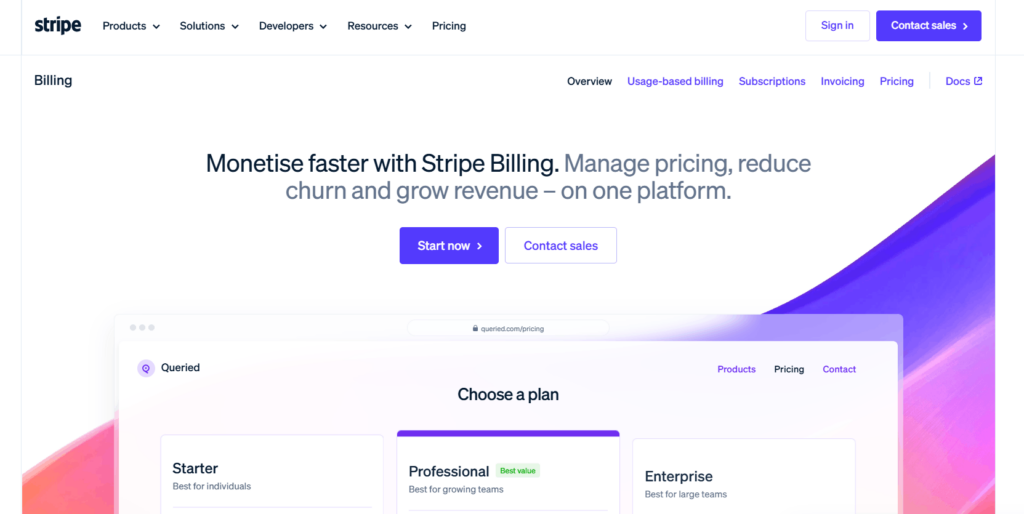
Stripe Billing is one of the strongest choices for SaaS companies that want flexible billing logic and close control over payment infrastructure. It supports recurring billing, usage-based billing, hybrid pricing, metered usage, credits, invoices and subscription changes.
Stripe Billing works especially well when a company expects its pricing model to evolve. A SaaS product may start with a flat monthly subscription, then add per-seat pricing, API usage, overages or AI credits. Stripe can support those billing scenarios in one billing platform, which helps product and finance teams avoid rebuilding the billing system every time the commercial model changes.
The platform is developer-friendly, but that is also the trade-off. Stripe gives teams flexibility, yet some companies will need engineering support to set up advanced workflows, subscription lifecycle management and custom billing rules. It can be a strong fit for product-led SaaS companies that have technical resources and want to manage subscription billing inside a wider payment stack.
Choose Stripe Billing when you need a flexible subscription billing solution for recurring payments, usage-based billing and custom pricing models.
Paddle: best subscription billing solution for SaaS companies that want a Merchant of Record
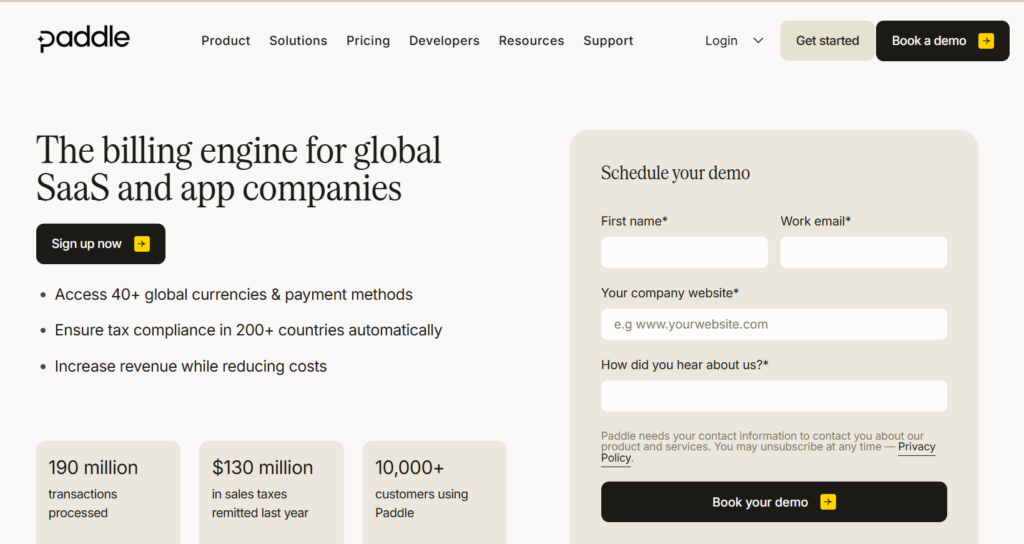
Paddle is different from a standard payment processor. It operates as a Merchant of Record, which means it takes responsibility for payments, tax calculation, tax remittance, compliance, refunds and chargebacks.
That model can be attractive for SaaS companies selling globally. Instead of building internal processes around VAT, sales tax, invoicing rules and payment compliance, the business uses Paddle as the legal seller of record. This can reduce the operational burden for smaller SaaS teams or companies expanding into multiple markets.
Paddle combines subscription billing, payments and tax management in one platform. It can support recurring billing, subscription plans, payment retries and revenue optimization, while also removing some of the liabilities that come with managing global billing and payments directly.
The trade-off is control. A company that wants highly customized billing infrastructure or a wide choice of payment processors may prefer a more modular setup. Paddle is most compelling when simplicity, tax coverage and compliance matter more than owning every part of the payment stack.
Choose Paddle when your subscription business sells internationally and wants to reduce the operational complexity of tax and compliance.
Chargebee: best subscription management software for scaling SaaS billing
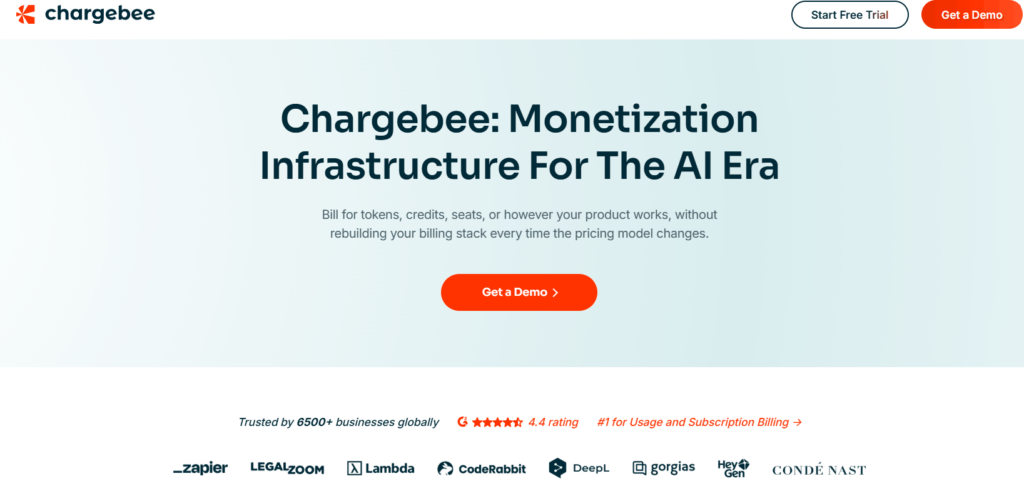
Chargebee is a subscription management platform built for SaaS companies that have outgrown simple recurring payments. It supports subscription billing, pricing experiments, invoicing, payments, revenue recognition and lifecycle management.
Its biggest advantage is billing flexibility for teams that do not want every commercial change to become an engineering ticket. A SaaS company can use Chargebee to manage subscription pricing models, discounts, ramp pricing, seat-based plans, usage charges, contract terms and different billing cycles.
Chargebee is particularly useful once billing and revenue operations become connected. Sales teams may negotiate custom plans. Finance may need billing and revenue recognition to line up. Customer success may need account management tools for upgrades, pauses and subscription changes. Chargebee helps create a shared billing layer across those teams.
The platform may be more than an early-stage startup needs. But for SaaS companies with growing recurring revenue, several pricing models and enterprise billing requirements, it can prevent billing complexity from spreading across spreadsheets, product logic and finance systems.
Choose Chargebee when subscription management and billing need to support complex pricing, finance workflows and growth-stage SaaS operations.
Recurly: best recurring billing software for retention and payment recovery
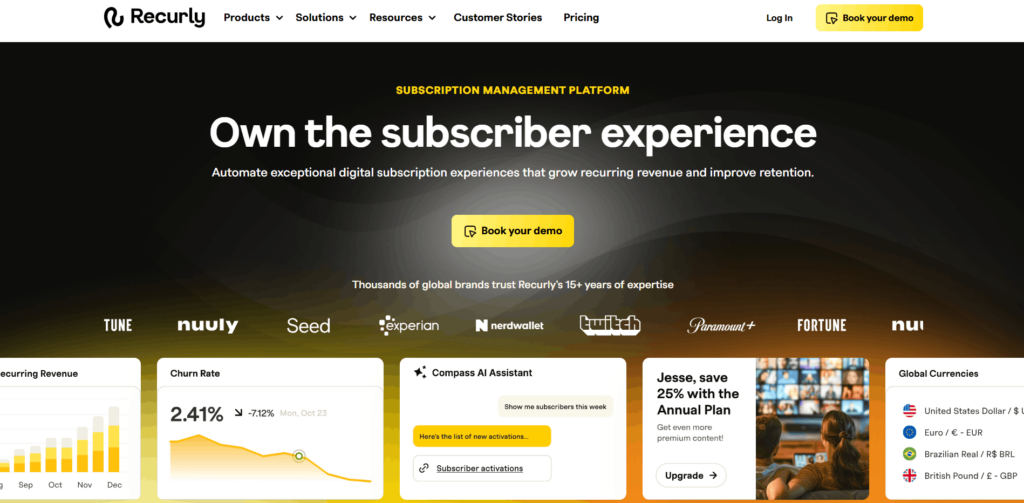
Recurly is a recurring billing platform built for businesses that want to manage subscriptions while reducing involuntary churn. Its platform combines subscription management, recurring billing, payment orchestration, invoicing and churn-reduction tools.
The focus is not only on getting the first payment. Recurly helps companies manage recurring revenue through the full subscription lifecycle, including renewals, failed payments, retries, plan changes and cancellation workflows. This can make it useful for subscription businesses where retention matters as much as acquisition.
Recurly can also support a range of subscription billing models, including fixed recurring plans, add-ons, trials and more complex billing scenarios. Its billing and invoicing features can work well for companies that need global billing and payment coverage but do not want to build recovery workflows from scratch.
It is a strong fit for high-volume subscription businesses, including B2B SaaS, digital services, media and subscription commerce. It may be less attractive for teams that need highly technical usage metering or developer-led pricing infrastructure.
Choose Recurly when payment recovery, recurring revenue protection and subscription lifecycle management are more important than building every billing element in-house.
Orb: best for usage-based billing and event-driven SaaS pricing
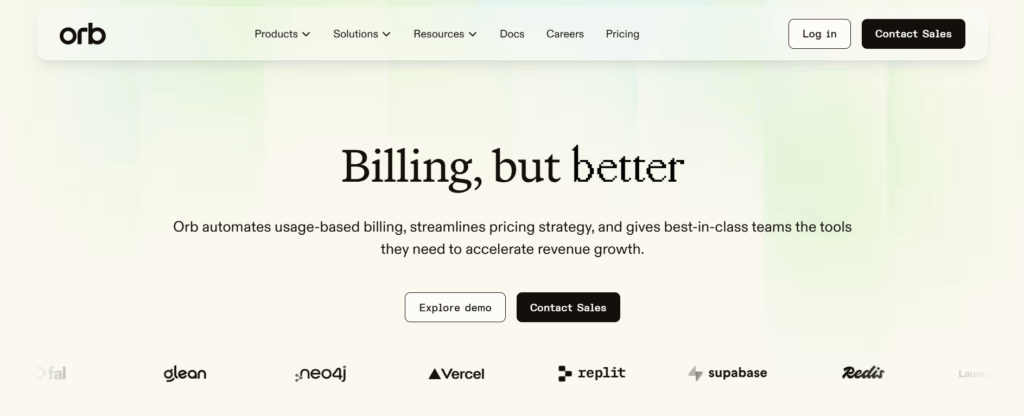
Orb is a more specialized billing platform for SaaS companies with complex usage-based billing. It is designed for products that charge based on API calls, data volume, compute time, credits, seats, tokens or other measured usage.
This type of billing model is common in AI, developer tools, data platforms and infrastructure products. These businesses may need to track large volumes of usage events, apply pricing rules in real time and show customers clear usage data before the invoice arrives.
Orb can help teams separate product usage tracking from billing logic. That gives finance and product teams more control over how they create subscription pricing, define overages and manage custom billing arrangements.
It is not the right fit for every subscription business. A company with a simple monthly plan may not need this level of metering. Orb is more useful when the pricing model depends on what customers consume, not only how many users they have.
Choose Orb when your SaaS billing model is usage-led and product events need to flow directly into billing.
Maxio: best for B2B SaaS finance and contract-heavy billing
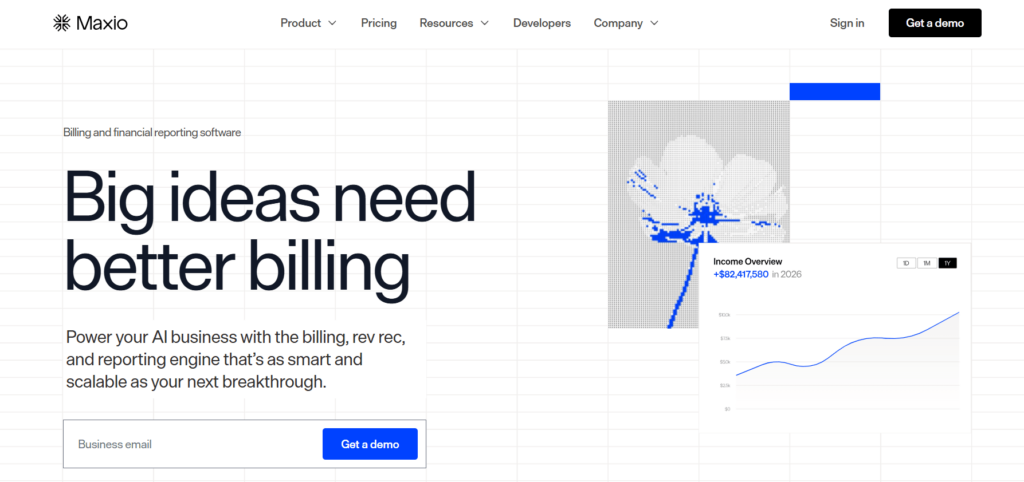
Maxio is built around B2B SaaS billing, financial operations and reporting. It can be a strong fit for companies that sell annual contracts, custom enterprise plans, seat-based subscriptions or negotiated agreements.
The platform helps businesses manage subscription billing and revenue operations together. That may include billing schedules, invoicing, subscription changes, revenue reporting and contract management. It is useful when sales-led SaaS companies need more than a self-serve checkout and a basic recurring payment flow.
Maxio can help teams manage recurring revenue while keeping finance, account management and customer success aligned. A contract change should not require manual updates in three different systems. The billing platform should act as the commercial record of what a customer bought, when they pay and how that agreement changes over time.
It may be too finance-heavy for a product-led startup with simple monthly subscriptions. It is more relevant for B2B SaaS companies with complex billing, negotiated contracts and a growing finance team.
Choose Maxio when billing and revenue operations need to support enterprise contracts, account management and financial reporting.
Lago: best open-source recurring billing software for engineering-led teams
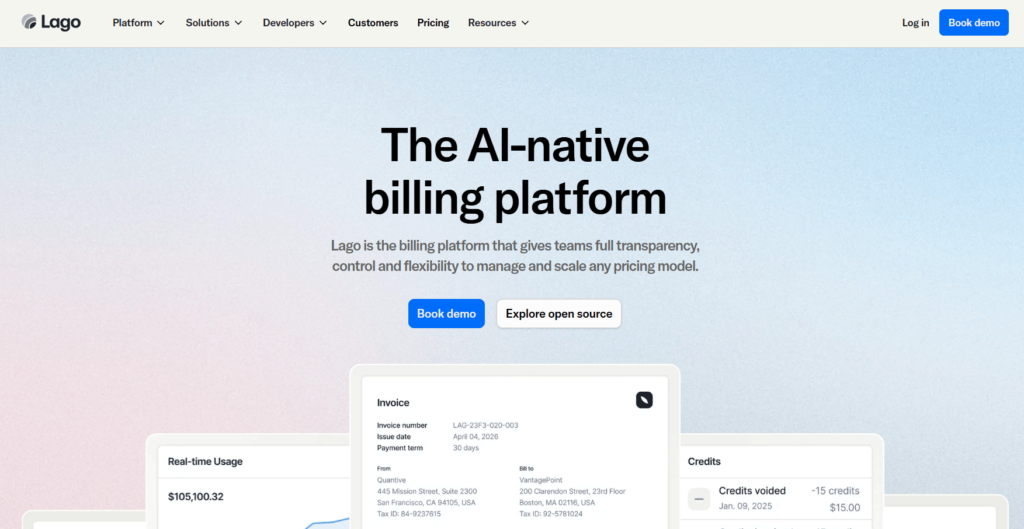
Lago is an open-source billing platform aimed at engineering-led SaaS companies. It is particularly relevant for usage-based billing, custom pricing logic and businesses that want more control over billing infrastructure.
The platform can support recurring billing applications, metering, invoicing and billing logic around consumption-based products. This makes it useful for developer tools, AI products and SaaS companies that need custom billing behavior but prefer to keep more of the stack under their own control.
Lago may appeal to teams that want to avoid a rigid billing solution. It can support custom billing scenarios and gives developers more room to integrate billing with product events, internal systems and reporting workflows.
The trade-off is operational responsibility. Open-source or developer-first billing systems can require more technical ownership than an all-in-one subscription billing service. A smaller team with no billing engineering capacity may be better served by a more managed platform.
Choose Lago when your team wants an engineering-friendly recurring billing platform with more control over how billing infrastructure works.
Subscription billing software comparison table
| Tool | Best for | Billing model strength | Merchant of Record | Best fit |
| Stripe Billing | Flexible SaaS pricing | Recurring, usage-based and hybrid billing | No | Product-led SaaS with technical resources |
| Paddle | Global SaaS compliance | Recurring billing with tax and compliance coverage | Yes | SaaS companies selling internationally |
| Chargebee | Scaling SaaS operations | Complex subscription pricing, invoicing and rev rec | No | Growth-stage SaaS with several pricing models |
| Recurly | Retention and recurring revenue | Subscription lifecycle and payment recovery | No | High-volume digital subscription businesses |
| Orb | Usage-based SaaS | Metered, event-driven and consumption billing | No | AI, API and infrastructure products |
| Maxio | B2B SaaS finance | Contract-led billing and SaaS financial operations | No | Sales-led SaaS with enterprise agreements |
| Lago | Developer-led billing | Usage-based, custom and open-source billing | No | Engineering-heavy SaaS teams |
Subscription billing vs payment processing vs Merchant of Record
A billing platform, payment processor and Merchant of Record can overlap, but they do different jobs.
Subscription billing software manages the billing process
Subscription billing software helps companies create plans, invoice customers, apply discounts, manage subscription changes and automate recurring billing. It is where billing logic, subscription lifecycle management and recurring revenue operations come together.
Payment processors collect payments
A payment processor helps a business accept payment. It may support cards, bank transfers, wallets and local methods. It does not automatically solve subscription management, tax handling, invoice rules or revenue recognition.
A Merchant of Record takes legal responsibility for the sale
A Merchant of Record acts as the legal seller to the customer. It usually handles tax collection, remittance, compliance, refunds and chargebacks. This can simplify global online subscription billing, especially for SaaS companies selling digital products across many countries.
The right choice depends on how much of the billing and payments stack your company wants to manage itself.
What to look for in subscription billing software
Support for your subscription billing model
The billing platform should support how you charge today and how you expect to charge next year. That may include monthly subscriptions, annual contracts, per-seat pricing, usage-based billing, credits, add-ons or hybrid pricing.
A rigid subscription billing system can become expensive when the pricing model changes. Look for a tool that can manage recurring revenue without forcing you to rebuild the billing process every time a new subscription plan launches.
Billing automation and invoice handling
Manual billing creates unnecessary errors. Look for billing automation that can generate invoices, apply taxes, handle proration and automate recurring billing according to the right billing cycle. Subscription platforms handle invoices sent to customers, while finance teams still need a process for bills received from vendors. Accounts payable approval software routes those bills to the correct reviewer and records each decision before payment.
The platform should also support billing and invoicing for exceptions. A large customer may need a manual invoice, purchase order reference or custom payment terms. The best recurring billing software does not force every customer into the same checkout flow.
Payment methods, retries and recurring payments
Recurring payments fail. Cards expire, customers change banks and payments get declined. A strong billing solution should support dunning, payment retries and clear customer communication around failed payments.
This is one of the most practical ways to reduce billing errors and protect recurring revenue. Billing and payments need to work together, not as separate systems.
Usage-based billing and product events
Usage-based billing is increasingly common in SaaS, especially in AI and API products. The software should be able to track usage, calculate charges and present customers with clear information about what they consumed.
For complex subscription pricing, check whether the tool can handle usage events, overages, credits, prepaid balances and custom rate cards. These details become important once billing complexity moves beyond basic monthly subscriptions.
Subscription lifecycle management and account changes
Customers upgrade, downgrade, pause, cancel, add seats and change payment methods. A subscription management platform should handle those subscription changes cleanly.
Look for lifecycle management features that allow teams to manage subscription terms, account changes, contract management and customer communication without creating manual billing tasks.
Reporting, revenue recognition and finance integration
Billing and revenue are closely connected, but they are not identical. A payment may arrive today while revenue needs to be recognized over several months.
Finance teams should check reporting, billing and revenue recognition features before choosing a tool. This matters even more for annual contracts, prepaid plans and complex subscription billing models.
How SaaS billing changes as a company grows
Early-stage SaaS billing may be simple: one plan, one payment processor and one billing cycle. Growth changes the equation.
Early stage: basic recurring billing
At this stage, a company may need only a simple recurring billing solution with subscription plans, payment collection and basic invoice generation. Stripe Billing can often cover this requirement, especially if the product team already uses Stripe.
Growth stage: pricing experiments and subscription management
As SaaS companies add monthly and annual plans, discounts, trials, seat-based pricing and customer-specific agreements, subscription management becomes harder. Teams need better billing automation, clearer subscription lifecycle management and less dependence on manual billing.
Chargebee and Recurly become more relevant here because they can support a wider range of pricing and retention workflows.
Scale stage: complex billing and revenue operations
At scale, SaaS billing may involve contracts, billing scenarios, region-specific payment methods, usage data, custom terms and finance reporting. The company may need a management platform that can handle billing, account management and revenue operations together.
This is where Maxio, Chargebee or a developer-first tool such as Lago may become more relevant, depending on the billing model.
Choosing the right subscription billing solution
The right subscription billing platform should fit your business model, not force your business model to fit a vendor’s demo environment.
Choose Stripe Billing if your product and engineering teams need flexibility
Stripe Billing is a strong choice when you want to build custom billing logic, support several pricing models and keep payments close to the product stack.
Choose Paddle if tax and compliance are slowing international growth
Paddle can simplify subscription billing services for SaaS companies that want a Merchant of Record to handle tax, payments, compliance and billing operations.
Choose Chargebee if pricing and billing are becoming a cross-functional problem
Chargebee is a strong fit when product, sales, finance and customer success teams all need to work from the same subscription management and billing layer.
Choose Recurly if failed payments and retention are a major issue
Recurly can help companies manage recurring revenue, recover failed payments and improve subscription lifecycle management.
Choose Orb or Lago if usage data drives how you charge
Usage-led SaaS companies should evaluate billing tools that connect product events with pricing and invoicing. A standard recurring billing platform may not be enough.
Choose Maxio if enterprise contracts drive billing complexity
Maxio is more relevant when custom billing, contract management and finance reporting matter as much as payment collection.
Key takeaways
- The best subscription billing software depends on pricing model, payment setup, global tax needs and internal technical capacity.
- Stripe Billing suits flexible SaaS pricing, while Paddle is strong for companies that want Merchant of Record support.
- Chargebee and Recurly are better suited to subscription management and recurring billing at scale.
- Usage-based SaaS companies should evaluate billing infrastructure built for metering, credits and consumption data.
- A billing platform should support the full subscription lifecycle, not only the first payment.
FAQ
What is subscription billing software?
Subscription billing software helps businesses manage recurring payments, subscription plans, invoices, renewals, upgrades, downgrades and payment recovery. It automates subscription billing so teams do not need to manage every billing cycle manually.
What is the difference between subscription management and recurring billing?
Recurring billing is the process of charging customers on a repeated schedule. Subscription management covers the wider lifecycle, including plan changes, cancellations, upgrades, payment methods, trials and customer account changes.
Does Stripe Billing work for usage-based billing?
Yes. Stripe Billing supports recurring, usage-based and hybrid pricing models. SaaS companies can use it for subscriptions, metered usage, credits, overages and other consumption-based billing scenarios.
What is a Merchant of Record?
A Merchant of Record is the legal entity responsible for selling to the end customer. It handles payments, tax collection, tax remittance, compliance, refunds and chargebacks. Paddle is one example of a Merchant of Record platform.
Which billing platform is best for SaaS?
The best billing platform depends on the SaaS billing model. Stripe Billing is strong for flexible product-led billing. Paddle suits international SaaS companies that want tax and compliance handled. Chargebee, Recurly and Maxio fit more complex subscription management and recurring billing needs.
Can subscription billing software reduce billing errors?
Yes. Subscription billing software can reduce billing errors by automating invoices, proration, payment retries, tax calculations, subscription changes and billing schedules. The result is a more consistent billing process across customers and plans.