Marketplace management software: 8 tools for multichannel sellers
Compare 8 marketplace management software tools for listings, stock and orders, including OTTO, Kaufland and other DACH channels.
Selling on one marketplace can be handled from its native dashboard. Add Amazon, eBay, OTTO or Kaufland and the workload changes quickly. Stock, prices, product data and orders must stay aligned across every channel.
Marketplace management software gives sellers one place to control those moving parts. The right system cuts repetitive work, lowers overselling risk and makes expansion into DACH channels easier.
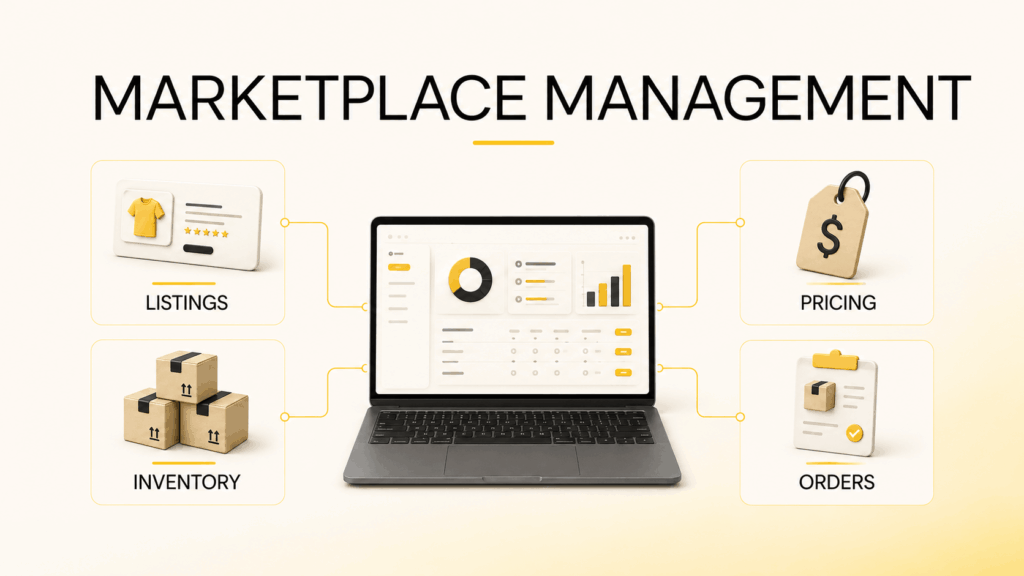
What is marketplace management software?
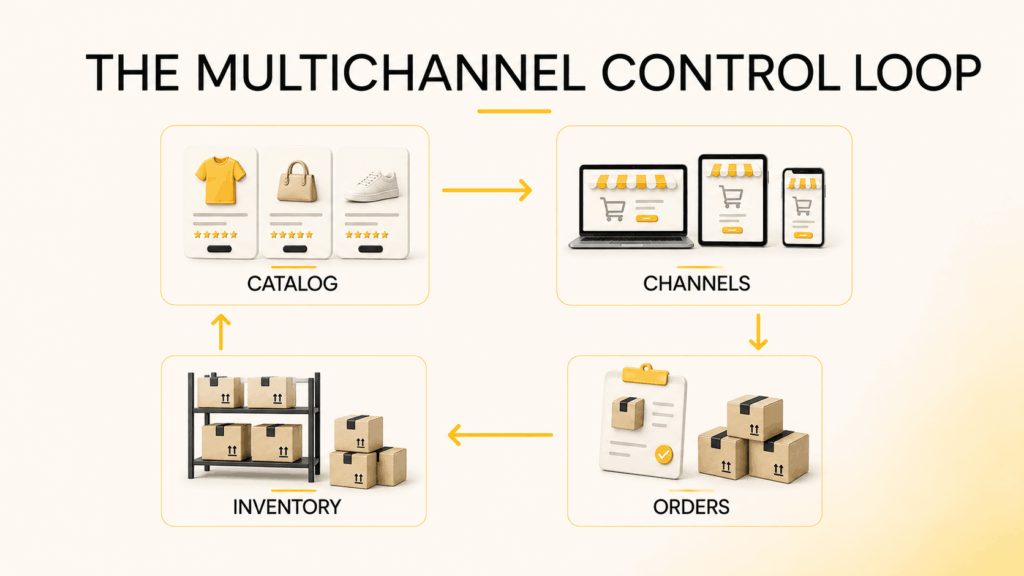
The software helps a retailer list and sell products across multiple marketplaces from one interface. It imports product data from an ecommerce platform, ERP or PIM, then adapts that data to each sales channel.
A typical platform can publish listings, sync stock, update prices, import orders and return fulfillment status to each channel. Without a central system, a delayed stock change can create overselling, cancellations and poor seller metrics.
Marketplace management software vs. multi-vendor marketplace platforms
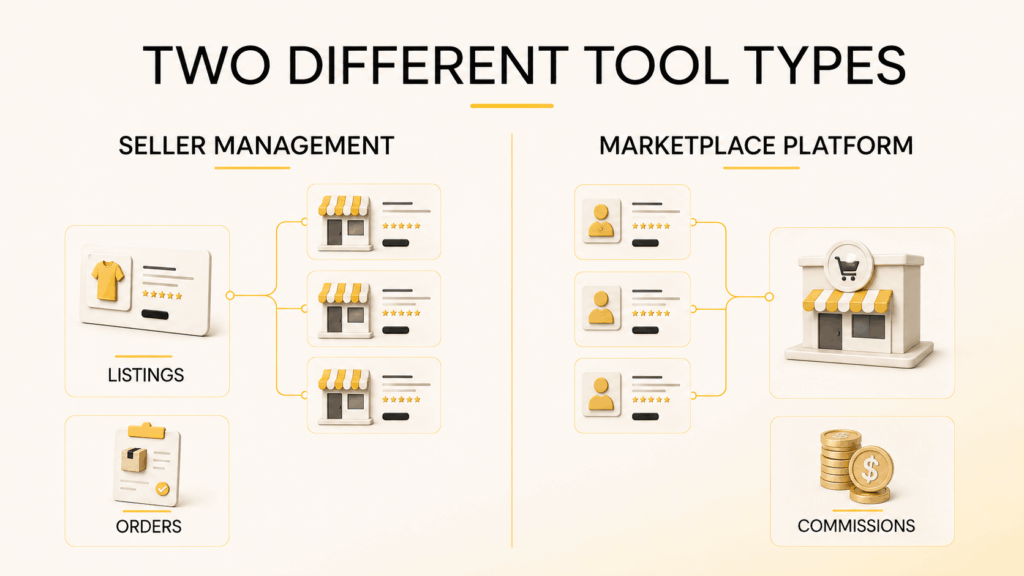
The terms sound similar but describe two different products.
A seller management tool supports brands operating on channels such as Amazon, eBay or OTTO. A multi-vendor marketplace platform is for a company building its own destination and onboarding third-party sellers. Marketplacer and similar software solutions sit in the second category.
Seller tools need listing, inventory and order management features. Platform builders need vendor management, commissions and seller portals.
Core marketplace management capabilities
Listing management
Multichannel listing software turns a central catalog into channel-ready product listings. Rules adapt titles, categories and required attributes. Validation catches missing EANs, images and compliance fields.
Inventory sync
Stock updates help sellers manage inventory across storefronts. When an item sells, the available quantity changes elsewhere. Safety buffers protect against sync delays.
Pricing and repricing
Price automation can apply channel fees, margin floors and promotions. Some tools add competitive repricing for buy-box markets without allowing prices to fall below a set limit.
Order routing and returns
Central order processing sends purchases to the correct warehouse or third-party logistics provider. Tracking and return data flow back to source systems. The operational details appear in our guide to returns management software for DACH ecommerce.
Analytics
Cross-channel analytics combine sales, fees, cancellations and stock-outs. They help separate marketplace growth from profitable growth.
Must-have features checklist
Before selecting a marketplace management solution, check for:
- Direct API connections to every priority channel
- Product data mapping and category templates
- Near-real-time inventory and price updates
- Bulk listing edits with channel-specific rules
- Order routing, cancellations, returns and tracking sync
- Error queues that explain rejected listings
- Separate user permissions and audit history
- ERP, PIM, warehouse and ecommerce platform integration
- DACH tax, EPR and product-compliance fields
- Reporting for margin, fees and seller-performance metrics
A long connector list can hide shallow connections. Ask which fields move in each direction and how quickly stock changes appear. A feed-only connector may leave fulfillment in a separate workflow.
Best marketplace management software compared
Product details and public pricing were checked in August 2026. Connector coverage can vary with country, plan and marketplace approval.
| Tool | Best for | Marketplaces supported | DACH marketplace coverage | ERP integration | Pricing model |
| channelengine | Sellers operating across multiple channels | Over 1300 marketplaces and online channels, including Amazon, eBay, Zalando and others | Strong: OTTO, Zalando, Kaufland, MediaMarktSaturn among others | API plus ready-made plugins for Shopify, Adobe Commerce, SAP, Microsoft Business Central, NetSuite, and more | Pricing is based on your GMV and integration requirements, with performance fees tied to the growth they help you achieve |
| Channable | Retailers needing feed and listing control | Amazon, eBay, Zalando and thousands of channel templates | Strong: OTTO, Kaufland, Zalando and MediaMarktSaturn are listed | API plus ecommerce and data-source connectors | Tiered subscription; order management is an add-on |
| Sellbrite | Smaller Shopify-led sellers | Amazon, eBay, Etsy, Walmart, Google and Newegg | Limited: mainly Amazon and eBay | Shopify, BigCommerce and WooCommerce; limited ERP depth | Public monthly tiers based on order volume |
| Rithum | Enterprise brands with complex global operations | Broad marketplace and retailer network | Coverage depends on contracted connections | Enterprise API, feeds and commerce integrations | Custom quote |
| Zentail | US-focused Amazon and Walmart sellers | Amazon, Walmart, eBay and selected store channels | Limited beyond Amazon and eBay | Store connectors and API | Custom quote |
| CedCommerce | Merchants wanting channel-specific store apps | Amazon, eBay, Walmart, TikTok Shop and others | Kaufland integration is available; other coverage varies | Shopify, WooCommerce, Adobe Commerce and BigCommerce apps | Subscription per connector or bundle |
| Productsup | Large brands managing product data at scale | Global marketplaces, retailers and marketing channels | Strong: Amazon, eBay, OTTO and Kaufland | API and enterprise data feeds | Custom quote |
| PlentyONE | DACH retailers wanting ERP and channel management together | More than 150 marketplaces, stores and sales channels | Strong: Amazon, eBay, OTTO, Kaufland and Zalando | Native ERP plus connectors | From €59 per month; higher editions add scale |
| JTL | German merchants needing warehouse-led operations | Amazon, eBay and more than 25 marketplace connections | Strong: OTTO, Kaufland and MediaMarktSaturn | JTL-Wawi is the ERP; extensions support other systems | Modular pricing with channel and transaction costs |
Sellbrite and Zentail lean toward North American channels. Channable and Productsup emphasize product data. PlentyONE, channelengine and JTL add German-native operations that international comparisons often omit.
The DACH marketplace mix
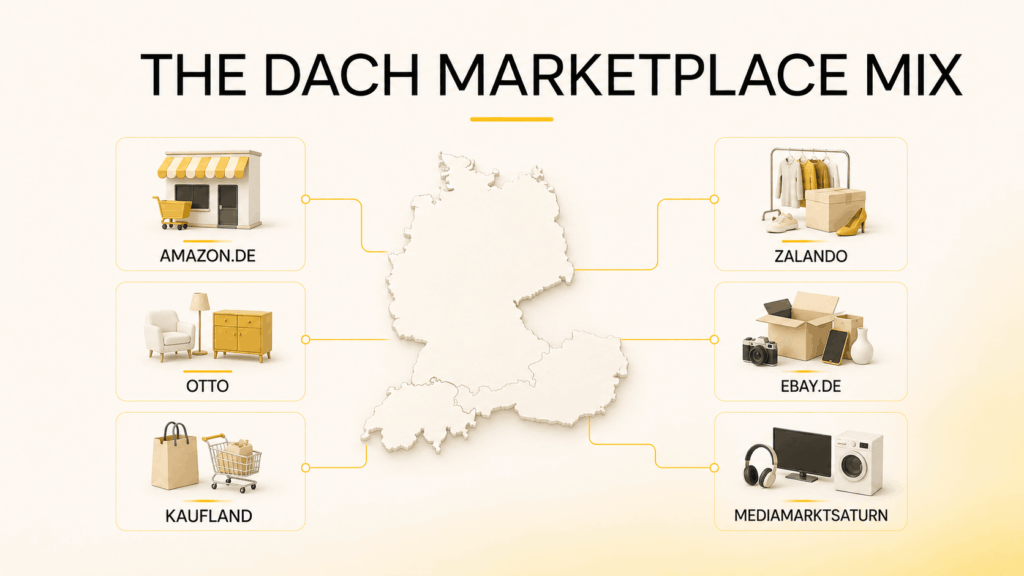
Germany requires more than an Amazon connector. Sellers may need OTTO, Kaufland.de, Zalando Partner Program, eBay.de and MediaMarktSaturn Marketplace. Our overview of online marketplaces in Germany helps prioritize them. The Amazon Germany guide covers the largest channel separately.
Connector presence doesn’t guarantee seller access. OTTO reviews applications from eligible European legal entities. Sellers need the correct VAT setup, German-language support and EU-based shipping. Tracked delivery is mandatory and the monthly base fee is €99.90.
Kaufland requires an EAN or GTIN for every product, reachable support and an EU return address. Zalando offers approved integrators, direct connection and zDirect, but partners still face product, logistics and compliance checks.
German attributes, EPR fields and channel-specific return flows must work before launch. Merchants also expect Xentral connections and DATEV exports, even through middleware.
B2B vs. B2C marketplace operations
B2C tools prioritize consumer listings, stock velocity, competitive prices and parcel fulfillment. B2B selling adds customer-specific catalogs, tiered pricing, minimum quantities, payment terms and approval workflows.
Some suites support both models. Confirm that the B2B channel accepts the required product data and preserves contract prices instead of sending one public offer.
How to choose a multichannel seller platform
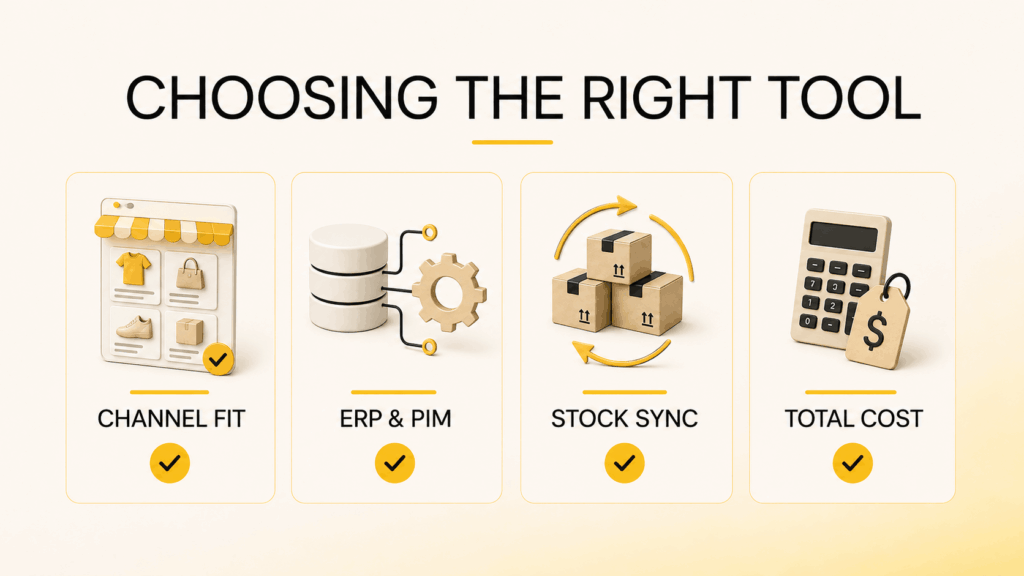
Start with a channel matrix, not a product demo. List the countries, marketplaces, order volumes and source systems required for the next two years. The broader guide to ecommerce platforms in DACH can help map the surrounding stack.
Test real products, including a variant-heavy item and a regulated SKU. Verify listing errors, stock latency, partial refunds and order updates.
Model platform fees, connector modules, order charges and implementation. The workflow must still work when the catalog and daily order count grow.
FAQ
What does marketplace software do?
It connects a seller’s catalog and operating systems with several marketplaces. The software can publish listings, synchronize inventory, update prices, import orders and return tracking details to each channel. Advanced products also automate repricing, returns and reporting.
How is marketplace software different from regular ecommerce software?
An ecommerce platform runs the seller’s own online store. Marketplace software connects that store, ERP or catalog with external channels such as Amazon, OTTO and eBay. Some suites combine both functions, but each marketplace still has separate data and operating rules.
How much does multichannel management software cost?
Entry-level products may charge a monthly fee based on orders, SKUs or connected channels. Enterprise platforms usually use custom pricing. Extra costs can include implementation, premium connectors, API access and transaction charges. Compare total annual cost at expected volume.
Can these tools support B2B selling?
Yes, if the tool and target channel support B2B catalogs, customer-specific prices, minimum quantities and payment terms. Many products were designed around B2C workflows, so test account permissions, price lists and order approval before committing.
Does it integrate with existing systems?
Most tools connect with Shopify, BigCommerce, Adobe Commerce or WooCommerce. Enterprise products also offer ERP, PIM, warehouse and third-party logistics integrations through APIs or middleware. Confirm the exact fields, sync frequency and ownership of failed transactions.
Final thoughts
The software becomes valuable once native portals create too much manual work. For DACH sellers, connector depth matters more than a global channel count. Test OTTO, Kaufland, Zalando and MediaMarktSaturn explicitly, with PlentyONE, channelengine and JTL on the shortlist when ERP operations drive the project.