Best loyalty programs in Germany for online shoppers (2026)
Compare the best loyalty programs in Germany in 2026, including PAYBACK, Lidl Plus, DeutschlandCard, IKEA Family, Douglas Beauty Card and more.
Germany has no shortage of loyalty schemes, but the best programs do more than hand out occasional coupons. They make rewards easy to understand, work across online and offline channels and give shoppers a clear reason to come back.
For online customers, that matters even more. A good loyalty program should work without a plastic card, connect naturally to an app or customer account and make it simple to earn or redeem benefits during checkout.
Below are some of the strongest loyalty programs available to shoppers in Germany in 2026. For broader retail context, our top online stores in Germany ranking shows where many German shoppers already spend online.
Best loyalty programs in Germany at a glance
| Loyalty program | Best for | Main reward | Online use | App |
| PAYBACK | Everyday shopping across many brands | Points and coupons | Yes | Yes |
| Lidl Plus | Grocery and Lidl online shopping | Points, rewards and coupons | Yes | Yes |
| DeutschlandCard | Multi-brand shopping | Points and rewards | Yes | Yes |
| IKEA Family | Home and furniture | Points, member prices and perks | Yes | Yes |
| Douglas Beauty Card | Beauty shopping | Points, discounts and status benefits | Yes | Yes |
| BahnBonus | Rail travel and travel partners | Points, rewards and status | Yes | Yes |
| Miles & More | Travel and partner shopping | Miles | Yes | Yes |
| HUGO BOSS XP | Fashion and brand experiences | Points, levels and member benefits | Yes | Yes |
How we selected the programs
This list focuses on programs that are available in Germany and offer meaningful benefits for customers who shop, book or manage purchases online.
We looked at five things:
- how easy the program is to join and use;
- whether rewards can be earned or used online;
- how clear the earning and redemption mechanics are;
- the breadth of benefits;
- how useful the program is beyond a single occasional purchase.
The ranking is not based on one universal points-to-euro formula because the programs work very differently. Some reward repeat purchases with points, while others focus on member prices, travel rewards or status benefits.
1. PAYBACK
PAYBACK remains one of the most useful loyalty programs for shoppers in Germany because it is not tied to one retailer.
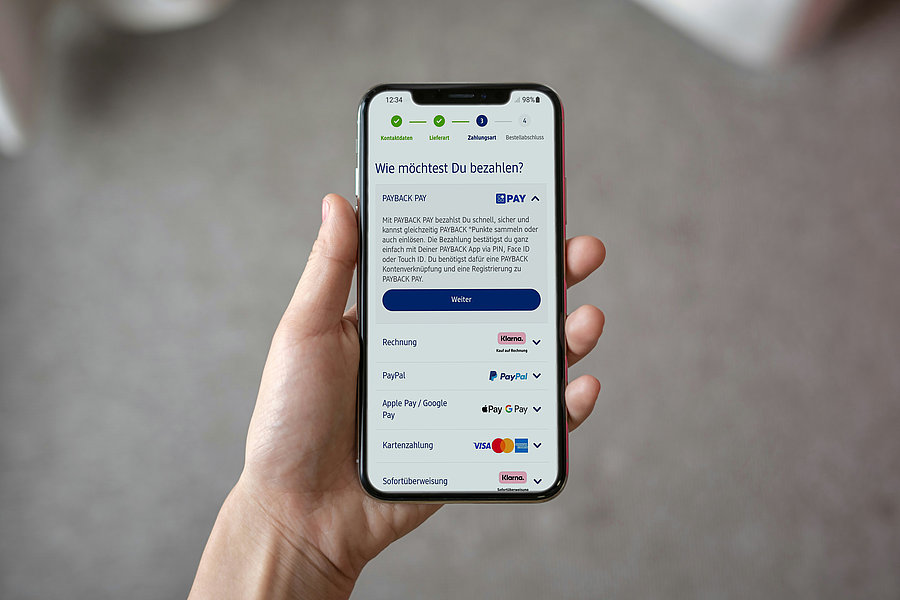
Members can collect points at major participating brands and through hundreds of online shops. In many cases, the standard rate is one PAYBACK point for every €2 spent, although the exact earning rate depends on the partner. One point is worth one cent.
The real value comes from the size of the ecosystem. Shoppers can collect points across categories such as beauty, fashion, travel, electronics and everyday retail, then combine them in one account.
Coupons are also a major part of the program. Activating an eCoupon before shopping can multiply the number of points earned on a purchase.
For online shoppers, PAYBACK is particularly strong because the platform lists around 700 online shops where members can collect points. Some brands let users enter their PAYBACK number directly during checkout, while others require shoppers to start their purchase through the PAYBACK online shopping portal.
Best for: shoppers who want one loyalty account across many retailers.
Watch out: earning rates and exclusions vary by partner, so it is worth checking the conditions before a larger purchase.
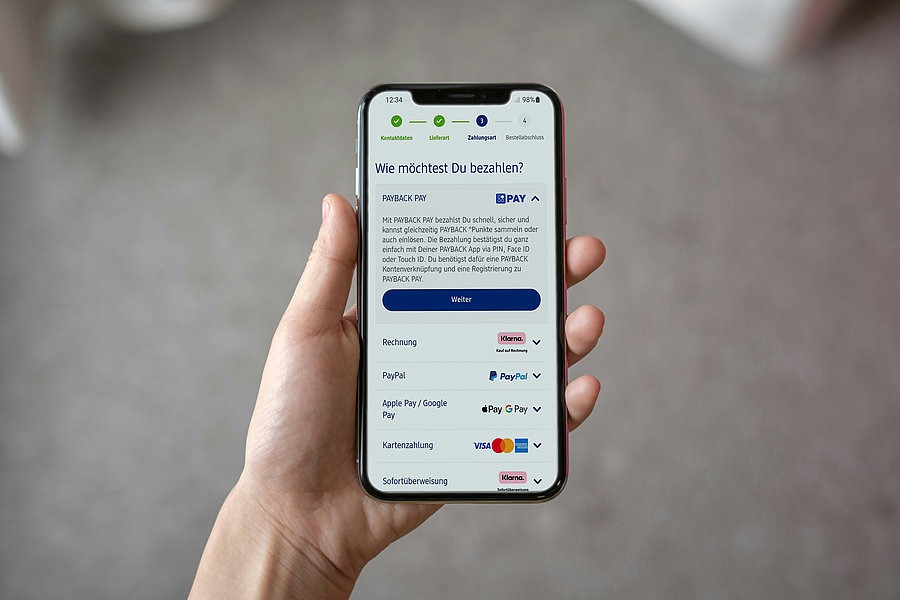
PAYBACK is also part of a wider shift toward app-led retail. See our 2026 guide to the top shopping apps in Germany for a broader view of loyalty, grocery, marketplace and retail apps.
2. Lidl Plus
Lidl Plus became much more interesting as a loyalty program in Germany in June 2026.
The app now includes Lidl Points, with one point awarded for every euro spent. Customers can collect points both in Lidl stores and in the Lidl online shop, giving the program a clear omnichannel structure.
Members can use their points for a choice of more than 200 rewards. These include products, value coupons and discounts for the Lidl online shop. Lidl Points remain valid for 24 months.
The existing Lidl Plus features also remain important. Members can activate personalized coupons, access exclusive offers and use app-based promotions.
This makes Lidl Plus one of the strongest options for customers who regularly buy groceries at Lidl but also use lidl.de for non-food purchases.
Best for: frequent Lidl customers who shop both offline and online.
Watch out: many coupons have individual conditions, minimum spend requirements or limited validity.
3. DeutschlandCard
DeutschlandCard is still active in Germany in August 2026, but it now comes with an important caveat: the program is scheduled to end on 30 November 2026. That makes it useful mainly for existing members who still have points to collect or redeem rather than as a long-term loyalty choice.
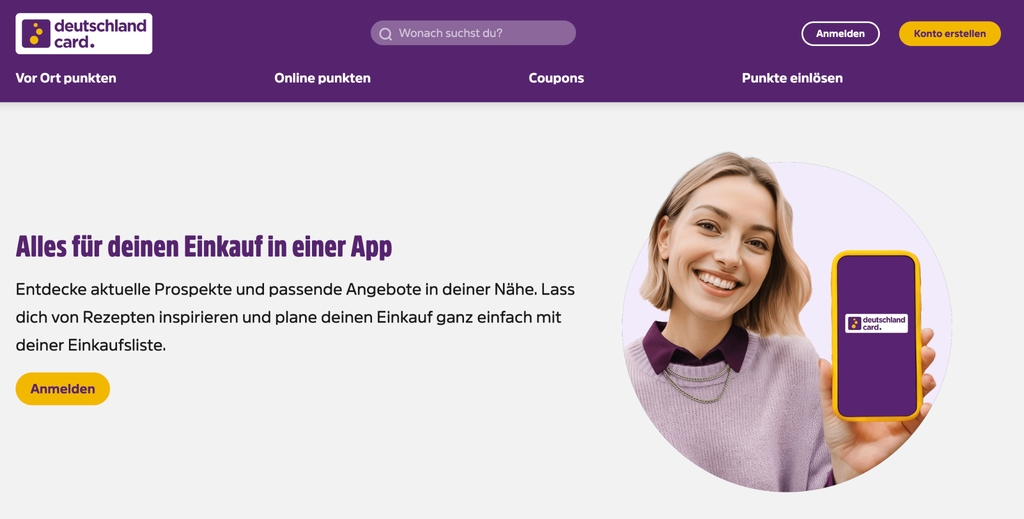
Historically, DeutschlandCard has been one of PAYBACK’s best-known multi-partner alternatives. An earlier consumer comparison of PAYBACK and DeutschlandCard highlighted the familiar model: collect points, activate coupons and redeem rewards across participating retailers.
Its online shopping flow lets members start a session through DeutschlandCard and continue to participating shops. Points may remain pending until the order is fully paid and the return window has closed.
If you already have a DeutschlandCard balance, check the current redemption rules and use remaining points before relying on the program for future shopping.
Best for: existing DeutschlandCard members who want to use their remaining balance in 2026.
Watch out: because the program is being discontinued, it is no longer the strongest long-term alternative to PAYBACK.
4. IKEA Family
IKEA Family has become more reward-focused than many shoppers may remember.
The free membership combines member prices, practical services, digital purchase history and a loyalty bonus. In Germany, members can earn one point for every €5 spent across IKEA stores, IKEA.de, the IKEA app, IKEA restaurants and selected services.
Points can later be exchanged for rewards and coupons. Examples include shopping discounts and food-related rewards.
The program is also useful even before a customer earns enough points for a reward. IKEA Family members receive special member prices on selected products, digital access to receipts, selected workshops and events and other account-level benefits.
For online shoppers, purchases made while logged into an IKEA Family account can be connected to the membership automatically.
Best for: customers who buy furniture, homeware or services from IKEA more than once a year.
Watch out: IKEA Family is primarily valuable inside the IKEA ecosystem rather than across multiple retailers.
5. Douglas Beauty Card
Douglas Beauty Card is one of the more developed retailer-specific loyalty programs in German beauty ecommerce.
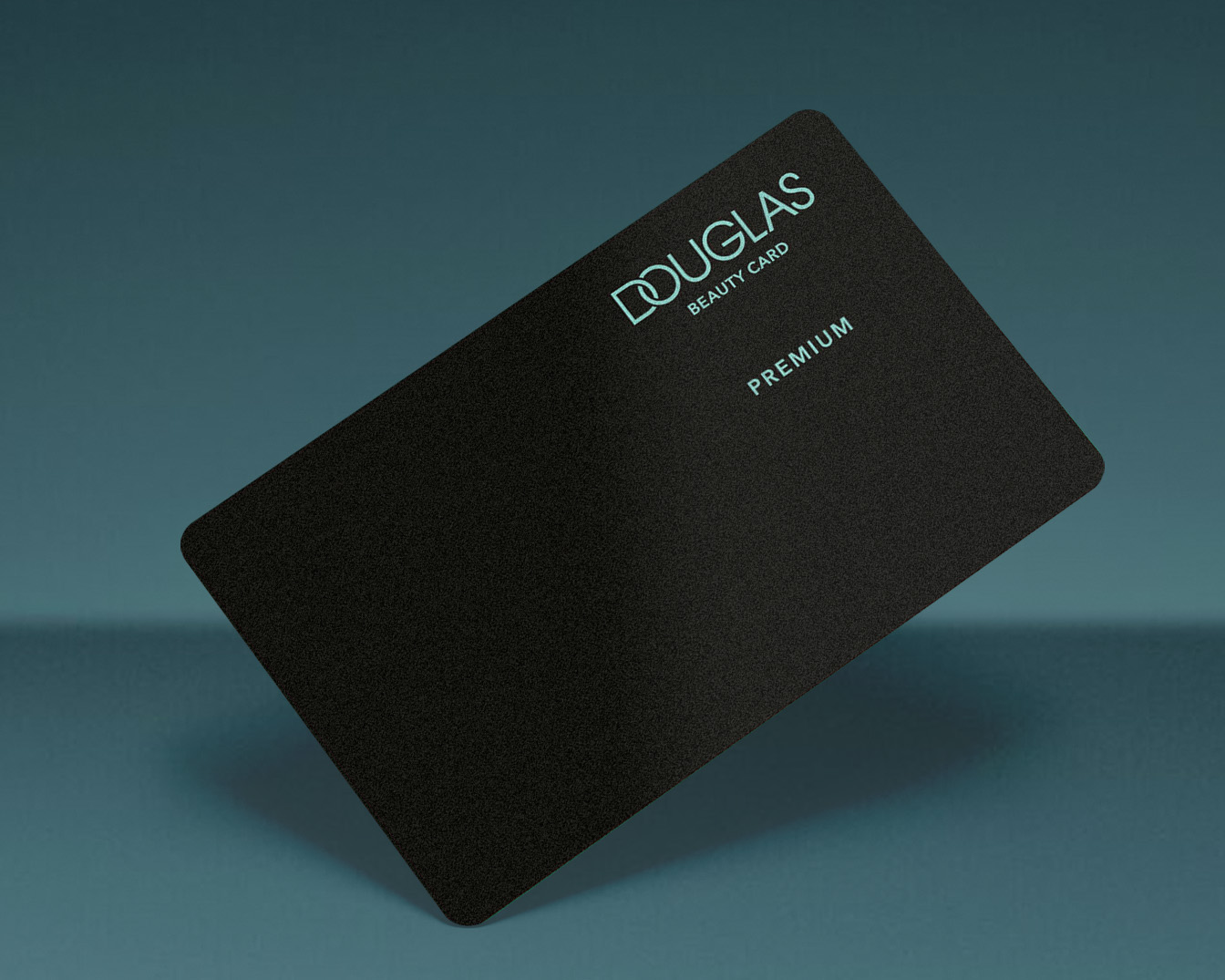
The program uses two types of points. Customers earn one Beauty Point and one Status Point for each euro spent.
Beauty Points can be exchanged for direct discounts, while Status Points determine the customer’s level in the program. The structure includes Beauty, Gold and Platinum tiers, with additional benefits unlocked at higher levels.
Customers can collect points on douglas.de, in the Douglas app and in stores. Beauty Points can also be redeemed directly in the online basket.
The program goes beyond simple discounts. Depending on status, members can receive birthday benefits, member-only promotions, early access to selected launches and invitations to events.
Best for: regular beauty shoppers who buy from Douglas online and offline.
Watch out: Beauty Points and Status Points serve different purposes, so redeeming Beauty Points does not reduce the Status Point balance.
6. BahnBonus
BahnBonus is the Deutsche Bahn loyalty program and is a much better fit for this category than treating BahnCard itself as a loyalty scheme.
Members collect reward points and status points on eligible Deutsche Bahn tickets, BahnCard purchases and selected partner transactions. For many eligible rail purchases, customers receive one reward point and one status point for every euro spent.
Reward points can be exchanged for benefits such as free journeys, upgrades and seat reservations. Status points are used to unlock BahnBonus status levels.
Because most train tickets are now bought digitally, BahnBonus works naturally as an online loyalty program. The BahnBonus app also shows the current points balance, rewards and member offers.
Best for: frequent rail travelers and customers who regularly book Deutsche Bahn online.
Watch out: the program is strongest for travel rather than general ecommerce.
7. Miles & More
Miles & More is best known as a frequent-flyer program, but it also has a large shopping component.
Members can earn miles with participating online shops by starting their purchase through the Miles & More shopping area, entering their service card number and continuing to the partner store.
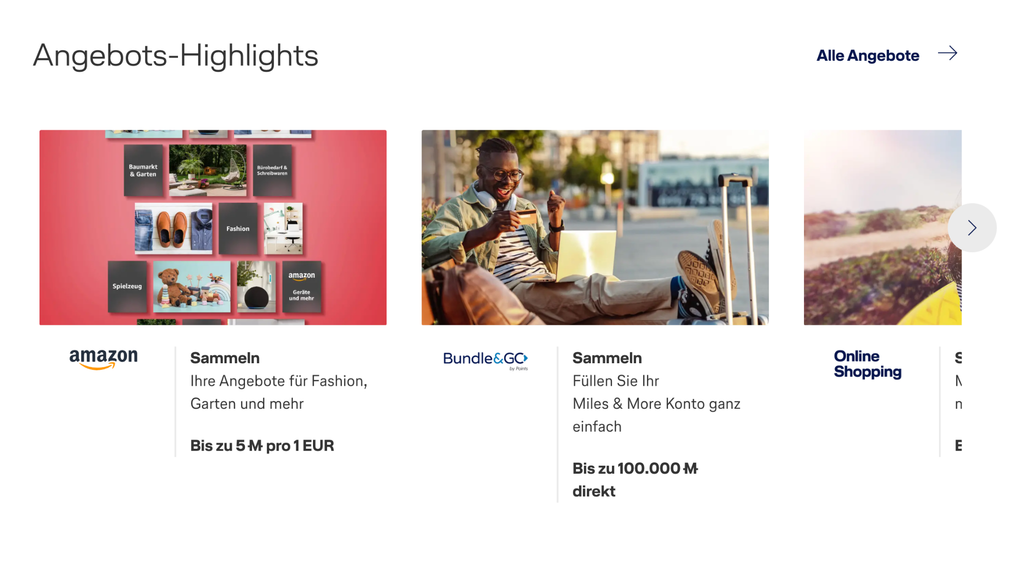
The partner network spans categories such as travel, electronics, beauty, fashion and food. Miles can later be used for flight rewards, upgrades, vouchers and products in the Worldshop.
That makes Miles & More useful for shoppers who already collect miles through Lufthansa Group airlines or other travel partners. Everyday shopping can add incremental miles to the same balance.
Best for: frequent travelers who want their online purchases to support a travel rewards balance.
Watch out: the value of a mile depends heavily on how it is redeemed, so it is not as transparent as a fixed cashback percentage.
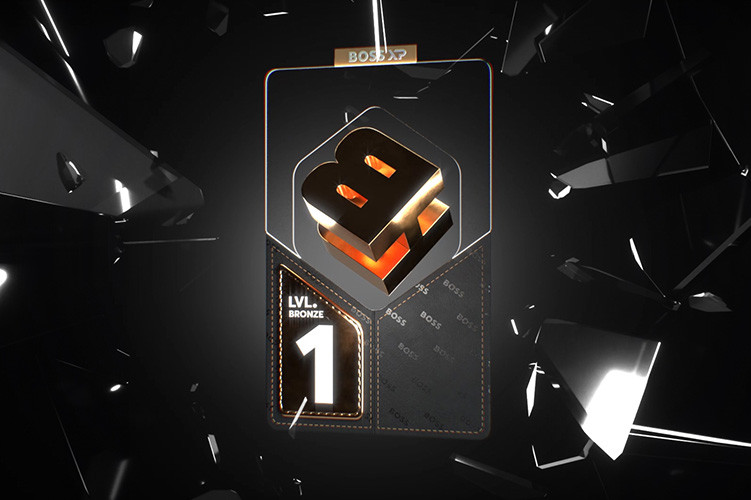
8. HUGO BOSS XP
HUGO BOSS XP is one of the more interesting examples of a brand building a loyalty experience around more than discounts.
The program combines levels and points with digital member experiences inside the HUGO BOSS ecosystem. HUGO BOSS documented the Germany and France rollout of XP after the initial UK launch, and the program is integrated with the HUGO BOSS app.
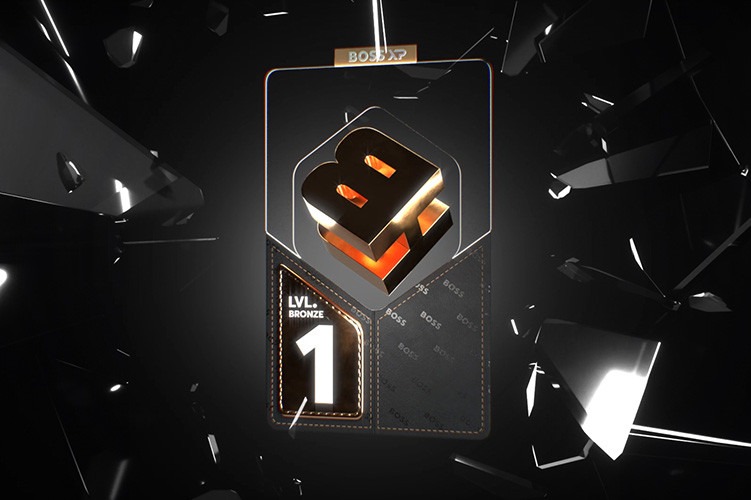
Members can receive access to special offers, products and brand experiences. HUGO BOSS has also experimented with Web3 elements as part of XP, which makes the program different from traditional supermarket-style points schemes.
For shoppers who already buy BOSS or HUGO products, XP creates a more personalized online and offline relationship with the brand.
Best for: loyal HUGO BOSS customers who value access and experiences as much as discounts.
Watch out: this is a single-brand program, so it will not suit shoppers looking for broad everyday earning opportunities.
Other loyalty and rewards programs worth knowing
The eight programs above are the strongest fits for the main ranking, but several other rewards programs are still worth keeping on your radar.
- Shell ClubSmart remains relevant for drivers. Members can collect and redeem Shell ClubSmart points on eligible purchases and rewards.
- ROSSMANN App is better described as an app-led coupon and promotion ecosystem than a permanent classic points club. ROSSMANN regularly runs app-based loyalty actions, and its digital coupons can also apply to eligible online orders.
- myBahnCard should not be confused with BahnBonus. It is a discounted BahnCard product for younger travelers, with details available on Deutsche Bahn’s myBahnCard page. BahnBonus is the actual loyalty program.
- dm continues to participate in PAYBACK rather than running a separate broad points currency. Customers can review the current PAYBACK options at dm.
Which loyalty program is best for online shopping in Germany?
There is no single winner for every customer.
If you want to collect rewards across many retailers, PAYBACK is the easiest starting point because of its broad online partner network.
If most of your spending happens with one retailer, a specialist program can be more valuable. Lidl Plus, IKEA Family and Douglas Beauty Card all now connect online purchases with points or member benefits.
For travel, BahnBonus and Miles & More are stronger because rewards can be used toward journeys and travel-related benefits.
A simple rule works well: choose one or two broad programs for everyday shopping, then add retailer-specific memberships only for brands you use frequently.
What German shoppers should look for in a loyalty program
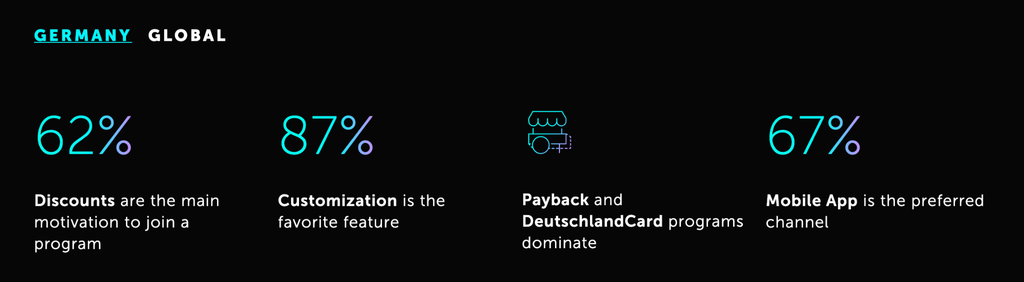
The most attractive loyalty programs tend to make the value obvious. Older Statista research on what makes loyalty programs appealing in Germany found that practical mechanics such as points, rewards and promotions mattered more than novelty for many consumers.
Clear rewards
Customers should understand what they receive without having to calculate a complicated conversion every time they shop.
Online and offline connection
Programs are more useful when points, coupons and purchase history follow the customer across the app, website and store.
Relevant offers
Personalized offers can be useful, but only when they genuinely reduce noise. A smaller number of relevant coupons is often more valuable than a constant stream of generic promotions.
Easy redemption
A loyalty balance is only useful if customers can actually spend it. Programs that let users apply points or rewards directly at checkout remove a major source of friction.
Sensible expiry rules
Points that disappear too quickly can make a program frustrating. Always check the expiry policy before deciding where to concentrate your spending.
Loyalty programs, data and privacy in Germany
Loyalty apps can create detailed customer profiles because they connect purchases, coupons, devices and sometimes location or payment information.
For retailers, that makes transparency important. Customers should be able to understand what data is collected, why it is used and which marketing permissions are optional.
For shoppers, it is worth checking the privacy settings inside each app rather than accepting every personalization option automatically.
Loyalty programs depend on first-party customer data, so consent and transparency matter. For the legal context, see our updated guide to GDPR and data privacy in Germany.
Are cashback programs replacing points?
Not completely.
Cashback is attractive because the value is immediate and easy to understand. Market reports have tracked the expansion of Germany’s loyalty sector for years, including forecasts from MarketResearch.com and Research and Markets. Traditional points programs, however, can offer more flexibility through multiplier coupons, status levels, experiences or partner ecosystems.
The strongest programs increasingly mix several mechanics. A customer may earn points on the purchase, activate a personalized coupon and later redeem the balance as a direct discount.
That hybrid model is likely to remain common because it gives retailers more ways to reward different types of customers.
FAQ
What is the biggest loyalty program in Germany?
PAYBACK describes itself as Germany’s largest bonus program and has more than 30 million users. Its biggest advantage is the breadth of its partner ecosystem, including hundreds of online shops.
Is PAYBACK better than DeutschlandCard?
PAYBACK currently has the broader brand recognition and a very large online shopping network. DeutschlandCard can still be useful because its partner mix is different. Some shoppers use both and choose the program that matches the retailer they are buying from.
Can I collect loyalty points when shopping online in Germany?
Yes. PAYBACK, DeutschlandCard, Lidl Plus, IKEA Family, Douglas Beauty Card, Miles & More and several other programs support online earning. The exact process differs: some require you to log into the retailer account, while others require you to start the purchase through a loyalty portal.
Is Lidl Plus a points program now?
Yes. Lidl introduced Lidl Points in Germany in June 2026. Customers earn one point for each euro spent and can collect points in Lidl stores and the Lidl online shop.
Is BahnCard a loyalty program?
Not exactly. BahnCard is primarily a discount product for Deutsche Bahn tickets. BahnBonus is Deutsche Bahn’s dedicated loyalty program, with reward points, status points and member benefits.
Final thoughts
Germany’s loyalty market is moving toward simpler digital programs that connect online shopping, apps and physical stores.
PAYBACK remains the broadest everyday option, while Lidl Plus has become much more competitive after adding points in 2026. IKEA Family and Douglas Beauty Card are strong examples of retailer-specific programs, while BahnBonus and Miles & More work best for customers who want their spending to support travel rewards.
The best program is ultimately the one that matches where you already spend money. Joining every loyalty scheme creates noise. Choosing a few that fit your actual shopping habits is much more likely to produce rewards you will use.
Loyalty is only one part of the checkout experience. Our guide to payment methods used by German ecommerce businesses explains the payment preferences retailers also need to account for.