European ecommerce overview: Greece
Learn how Greek consumers shop: from payment habits and logistics challenges to top e-commerce categories and social media trends shaping online buying.
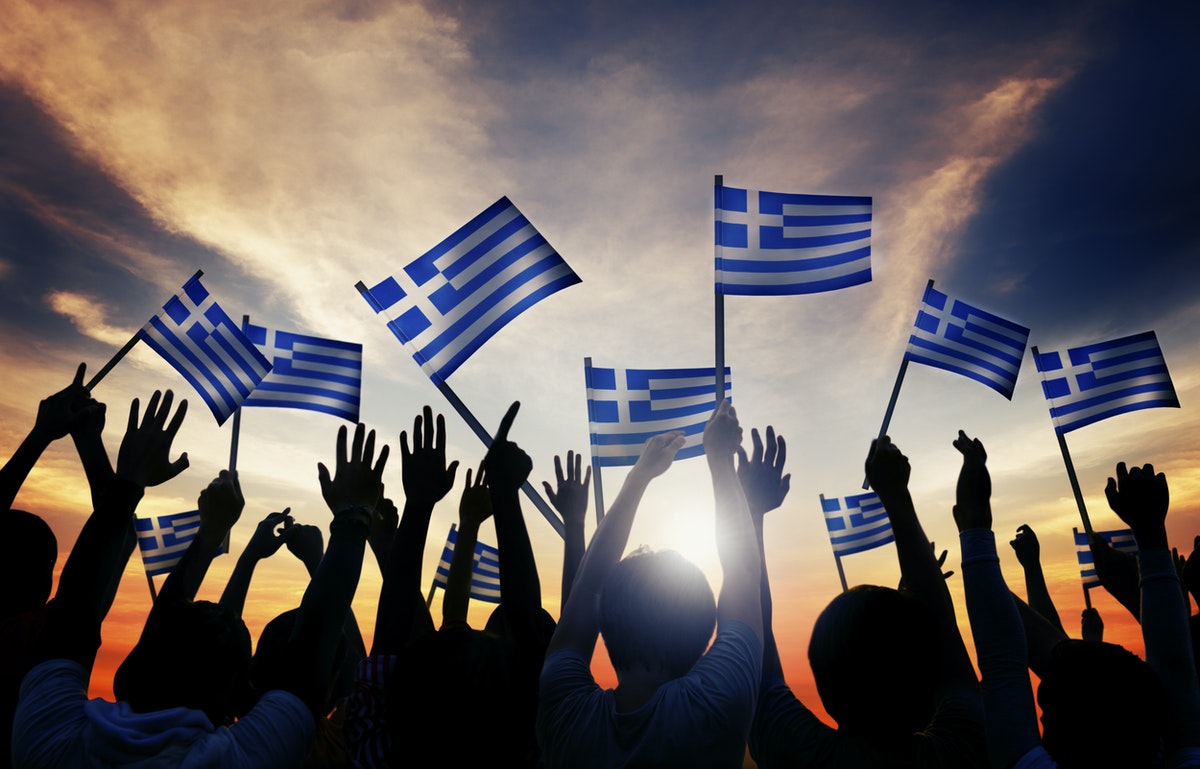
Greece is a country in Southeast Europe. It borders four countries: Albania, North Macedonia, Bulgaria, and Turkey. Greece has a great history and is the cradle of culture, making it a popular tourist destination. But how about e-commerce in this country? How about shopping behavior? The social media? Most used payment methods?
We will analyze these parts of the Greek market today. Let’s begin our overview.
Greek e-commerce overview
Greece is having a pretty lively moment in its economy, and you can feel it in the e-commerce space too. Growth has stayed surprisingly steady. The country closed 2024 with a 2.3% rise in GDP, beating both the EU average and the eurozone average by more than double. The Greek e-commerce market is supposed to reach $34.63 billion in 2025, and as much as $55.72 billion by 2030.

For a small market, that momentum matters. Consumption carried most of the weight again, covering nearly 70% of GDP. People are simply spending more, which keeps online retail moving.
To the top categories in Greek e-commerce belong:
- Fashion & apparel. In 2023, it was the largest category, with online customers spending about €849.4 million in Greece.
- Beauty & personal care. It’s marked with a strong CAGR, 12.3%.
- Food & beverages. Roughly 27.21% of the Greek e-commerce market in 2024 was food & beverage.
- Consumer electronics. With about 28% in a category breakdown.
There’s also a shift in how the economy is built. Investments picked up late in the year, especially in construction and housing. Housing investment alone jumped over 29%, which hints at more stability and more disposable income. When people feel secure at home, they shop more online.
Tourism still plays a huge part. Exports grew by 1% mostly because travellers spend heavily during their trips, and some of that spending shows up in local consumption. The twist is how seasonal the data looks: Q4 consumption softened to 0.9% simply because tourism ended. That seasonality also affects online shops, especially those selling local products, gifting, or travel-related goods.
By mid-2025, the economy kept expanding. Q2 GDP rose 0.6% quarter-to-quarter, and 1.7% year-on-year. The per-capita figure hit $5,958, slightly higher than last year.

It’s still modest compared to richer EU markets, but the direction is positive. For Greek e-commerce, a stable, growing middle class creates a healthier environment: more card usage, more online orders, and more trust in digital services.
Consumer behavior in Greece
Greek shoppers are getting comfortable with online buying. According to a government-commercial guide, about 86% of Greeks are internet users and 58% shop online. They do a lot of homework before they buy:
- price comparisons,
- checking reviews,
- exploring options.
That means your store’s product pages and clarity matter a lot.
Consumers also respond to social media and digital recommendations. In research on furniture-ecommerce behaviour, Greek buyers said that the top purchase driver was online ads and social networking platforms like Facebook and Instagram – they influenced much of the buying process.
That suggests your brand story, visuals, and influencer or UGC support can really sway decisions.
Moreover:
- Greeks highly appreciate local products.
- There’s a strong value placed on convenience and trust.
- Delivery speed, flexible payment options, and easy returns are becoming non-negotiable.
Payment methods in Greece
Greek online buyers still like their cards. One recent report by Nexi Greece says about 57% of online transactions are made via cards (debit or credit). Cards are familiar, trusted, and accepted nearly everywhere in Greek ecommerce. If you’re running a webshop for Greece, you definitely want seamless card-checkout.
Next up: digital wallets and mobile payments. Many Greek consumers prefer PayPal (49%), wallets like Apple Pay and Google Pay, and local wallet apps. For instance, 66% of Greeks value mobile payment speed and almost 30% prefer wallets over cards for point-of-sale. Digital wallets matter more when you prepare your e-commerce for Greece.
Also strong: instant bank transfers and “pay-direct” style methods. Greece has a local system called IRIS (via DIAS), which allows instant transfers online using an IBAN or mobile number. That helps especially for shoppers who don’t want to use a card or prefer bank-based payments.
While less dominant in pure online transactions, cash on delivery (COD) still appears in Greece, especially for first-time buyers, rural regions, or where trust in payment is lower.
Greek social media
Around 73.5% of Greece’s population was active on social media as of January 2025. That’s roughly 7.32 million social-media user identities in a country of about 10 million. This shows a strong digital footprint—most people are connected and reachable online.

When you dig into specific platforms, a few patterns stand out. On Instagram, there were about 4.89 million users in Greece by late 2025 (around 44.9 % of the population). The majority were women (52.4%). On Facebook, roughly 7.19 million users (about 66% of the population) were active.

Time spent and habits matter too. A recent trend shows that daily use of social media in Greece exceeds 2 hours on average. Younger users lean into TikTok and Instagram for video and trends, while older users stick with Facebook for community, groups, and news. That means if you’re prepping marketing for the Greek market, adding short, slick videos, stories, and reels is smart – they hit relevance and attention where it matters.
One more angle: Greek users are turning to platforms for inspiration, reviews and shopping research. The high overall adoption means brands should view social media as a direct marketing channel, not just a “nice to have”. Since a lot of users are using mobiles (Greece had 139% mobile connections relative to population in early 2025), social ads, mobile-first content and seamless “shop from feed” experiences will resonate.
So when you think about your Greek e-commerce – give social media a central role. Reach users where they already are. Make content that fits the device and platform.
Logistics in Greece
In Greece, transport, storage and delivery operations contribute a strong portion of the economy, with logistics making up around 7.5% of Gross Value Added at one point. The country is strategically placed too — think of ports that serve as major entry points for goods. That means you have advantages for international flows if you’re selling cross-border.
For ecommerce, the last-mile delivery challenge is front and centre. Many Greeks expect flexible delivery options — home to door, but also pick-up points and lockers. Lockers are gaining traction: one leading courier in Greece, ACS, has rolled out smart lockers in partnership with KEBA.
That said, logistics isn’t without its issues. Greece ranks relatively low among developed markets in terms of logistics risk and ease of trading, which signals room for improvement in delivery reliability and infrastructure. The many islands and mountainous regions mean that reaching all consumers quickly is harder than in flat, condensed markets.
Also, supply-chain disruptions and the need for more automation and digitalisation are real. A sector survey noted that since the pandemic, companies have accelerated their investments in tech and model innovation.

For your online store aiming at Greece, the takeaway is this:
- build in logistics flexibility from day one
- offer pick-up points or lockers in big cities
- make clear what delivery times will look like in more remote regions
If you can optimise last-mile costs without sacrificing the experience, you’ll have an edge. With the Greek e-commerce growth, brands that master the delivery piece stand a good chance of standing out.
To sum up
Greece’s consumers see e-commerce potential. So if you have ever been interested in entering this market, feel free to use this knowledge from the article above.
There are also more articles about other European countries such as Spain, Hungary, or Poland.